What is a Search Index: The Technical Blueprint of Modern Information Retrieval
A search index is a specialized database or data structure maintained by search engines like Google or Bing. It stores organized records of billions of web pages discovered by crawlers. When a user executes a query, the search engine q...
A search index is a specialized database or data structure maintained by search engines like Google or Bing. It stores organized records of billions of web pages discovered by crawlers. When a user executes a query, the search engine queries this index—rather than scanning the entire live web—to instantly retrieve matching documents ranked by relevance.
Contents
Understanding how a search engine processes, organizes, and retrieves digital information requires moving past the simple user-facing interface and examining the underlying architecture of modern information retrieval. As web ecosystems expand in 2026, the mechanics of indexing remain the foundational bedrock determining how content visibility, website architecture, and technical search engine optimization (SEO) function.
The Anatomy of Information Retrieval: Core Concepts of Indexing
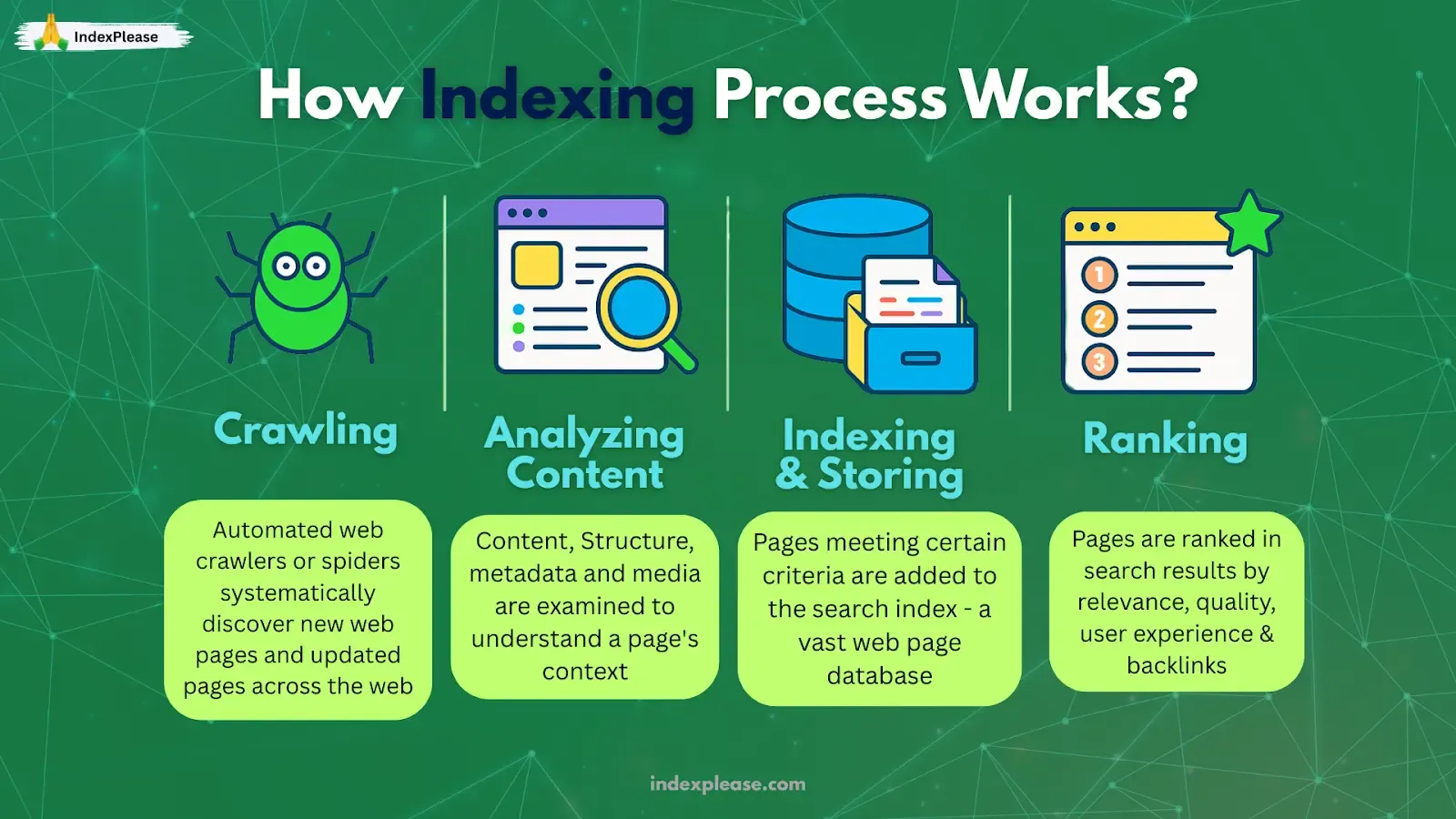
Before data can be retrieved, it must be captured and cataloged. The lifecycle of web discovery moves through distinct phases: crawling, parsing, indexing, and serving. A search index acts as the central repository where structured data waits for algorithmic evaluation.
When web crawlers (often referred to as spiders or bots) traverse the internet, they download raw HTML documents, JavaScript files, images, and other digital assets. The search engine's parsing system then strips away unnecessary elements like styling tags, comments, and boilerplate code, isolating textual content, structural headers, metadata, and links.
This processed information undergoes normalization. Text is converted to lowercase, punctuation is stripped, and stemming or lemmatization algorithms reduce words to their root forms (e.g., converting "running," "runs," and "ran" to "run"). The engine then builds an inverted index, mapping specific terms directly to the precise documents where they appear, alongside positional data to gauge proximity and context.
| Pipeline Phase | Primary Function | Technical Output |
|---|---|---|
| Crawling | Discovering and downloading URLs across the web via links and sitemaps. | Raw HTML documents and media assets. |
| Parsing | Analyzing document structure, extracting text, links, and metadata. | Cleaned document trees and isolated token streams. |
| Indexing | Organizing tokens into an inverted index mapping words to documents. | Highly compressed, searchable database records. |
| Serving | Evaluating queries against the index and ranking results using algorithms. | Ordered Search Engine Results Pages (SERPs). |
How an Inverted Index Powers Sub-Second Queries
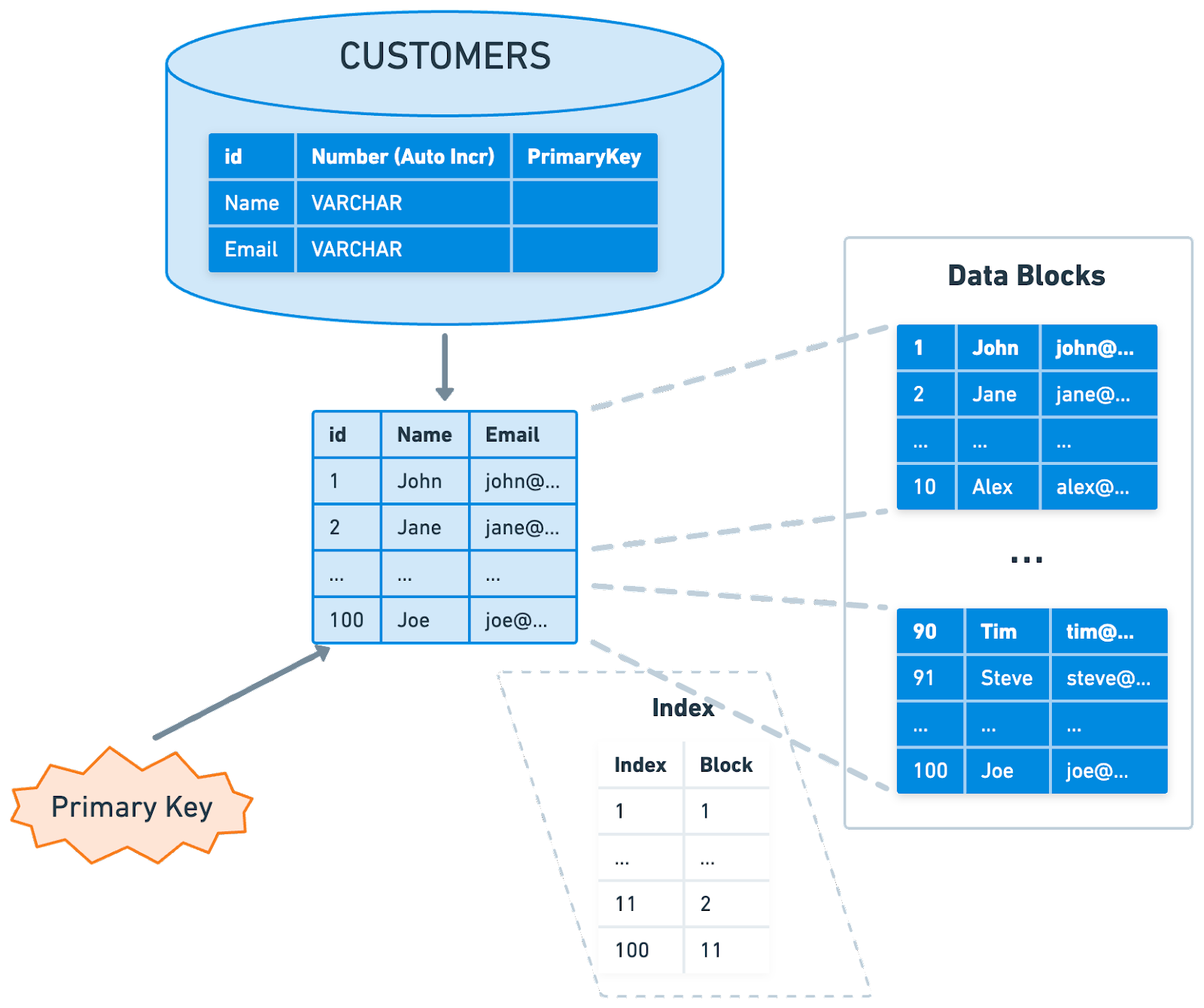
The primary engineering marvel behind any search index is the inverted index data structure. Traditional databases store data row by row, where each row represents a document containing various words. Searching this structure for a specific keyword would require scanning every single document from start to finish—an impossible computational feat when evaluating billions of pages in milliseconds.
An inverted index reverses this relationship. Instead of mapping documents to words, it maps words (or terms) to the documents that contain them.
Imagine three simple documents:
- Document 1: "search engines index pages quickly"
- Document 2: "search algorithms rank pages based on relevance"
- Document 3: "quick search results require optimized infrastructure"
The resulting inverted index looks like this:
- algorithms: Doc 2
- based: Doc 2
- index: Doc 1
- infrastructure: Doc 3
- on: Doc 2
- pages: Doc 1, Doc 2
- quick: Doc 1, Doc 3
- rank: Doc 2
- relevance: Doc 2
- results: Doc 3
- search: Doc 1, Doc 2, Doc 3
- optimized: Doc 3
- on: Doc 2
- require: Doc 3
When a user searches for "quick search," the search engine looks up "quick" (Docs 1, 3) and "search" (Docs 1, 2, 3), finds the intersection (Document 1 and Document 3), and passes these candidates to the ranking algorithms. This mathematical shortcut eliminates the need for brute-force text scanning.
Technical Requirements for Index Inclusion
Achieving inclusion in a commercial search index is not guaranteed simply by publishing a web page. Search engine crawlers operate under strict resource budgets—often termed crawl budget—and apply rigorous quality thresholds before committing resources to store a document in their index.
To ensure efficient indexing, webmasters and technical professionals must optimize several foundational elements:
- Server Accessibility: Web servers must respond with appropriate HTTP status codes (primarily 200 OK for valid pages). Frequent 5xx server errors or prolonged timeouts cause crawlers to abandon the request.
- Crawl Directives: Robots.txt files and HTML meta robots tags (e.g.,
noindex) communicate explicit permissions. Misconfigured directives can accidentally block search engines from accessing critical directories. - Canonicalization: Duplicate content forces search engines to waste index space. Implementing self-referencing canonical tags (
rel="canonical") clarifies which URL version represents the master document. - Structured Data Markup: Schema.org JSON-LD markup provides explicit semantic context, helping parsers categorize entities, relationships, and content types accurately.
- Renderability: Modern search engines execute JavaScript to render dynamic pages. If crucial content is hidden behind complex client-side rendering frameworks without server-side rendering (SSR) or dynamic rendering fallbacks, the indexer may miss it entirely.
Indexing Paradigms: Traditional vs. Mobile-First and Vector Indexing
The mechanics of search indices have evolved significantly alongside hardware capabilities and data science breakthroughs. Understanding the differences between architectural approaches highlights how modern search engines operate.
The Evolution of Indexing Architecture Traditional search engines relied strictly on keyword matching, Boolean operators, and basic TF-IDF (Term Frequency-Inverse Document Frequency) scoring models. As computational power increased, engines shifted toward semantic understanding, moving from simple text strings to complex vector embeddings and neural network representations.
Comparative Overview of Indexing Models
| Indexing Model | Core Mechanism | Primary Advantage | Primary Limitation |
|---|---|---|---|
| Keyword/Inverted Index | Maps exact text tokens and stems to document IDs. | Extremely fast, reliable for literal text matching. | Struggles with synonyms, intent, and contextual ambiguity. |
| Mobile-First Index | Evaluates and indexes the mobile variant of a document as the primary version. | Reflects modern user consumption patterns accurately. | Penalizes sites with degraded mobile functionality or hidden content. |
| Vector / Semantic Index | Converts text into high-dimensional numerical embeddings using machine learning. | Captures deep contextual meaning, concepts, and semantic relationships. | High computational overhead requiring specialized hardware infrastructure. |
Step-by-Step Guide to Verifying and Optimizing Index Status
Ensuring that a website's pages reside within a search engine's index requires proactive monitoring and technical auditing. Relying on organic visibility alone is insufficient; digital strategists must use programmatic verification tools.
- Conduct an Advanced Operator Audit: Use search engine query operators (such as
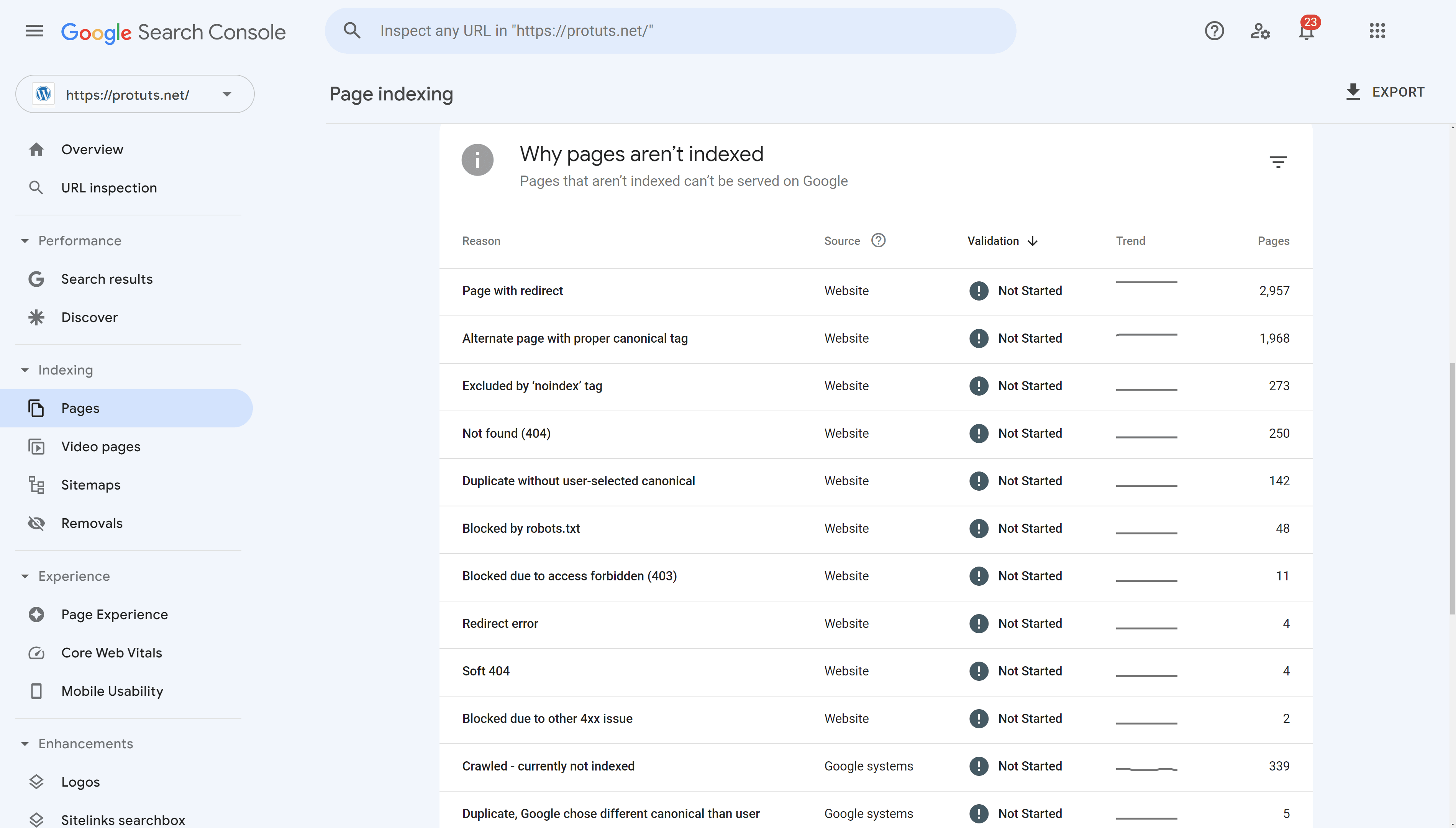
site:yourdomain.com) to review the volume of indexed URLs and identify unexpected pages appearing in the index. - Utilize Webmaster Tool Portals: Access official publisher platforms (such as Google Search Console or Bing Webmaster Tools) to inspect the specific coverage status of every URL within your site architecture.
- Analyze URL Inspection Data: Input priority landing pages into the inspection tool to verify the exact crawl timestamp, HTTP header response, canonical selection, and rendered HTML view recorded by the search engine.
- Audit XML Sitemaps: Maintain clean, error-free XML sitemaps containing only canonical, indexable URLs with 200 OK status codes. Remove redirected, broken, or blocked URLs to preserve crawler efficiency.
- Monitor Log Files: Analyze server access logs to observe bot behavior patterns, confirming whether crawlers are successfully discovering new updates or wasting resources on low-value pagination loops.
Common Indexing Pitfalls and Troubleshooting Strategies
Technical friction points frequently prevent search engines from maintaining an up-to-date, clean index of a website. Recognizing these failures allows developers to implement rapid remediation protocols.
- Orphan Pages: Pages that lack internal links leading to them from other discovered pages often evade crawler discovery. Solution: Integrate all essential pages into a logical site navigation hierarchy and XML sitemap.
- Parameter Bloat: Dynamic URL parameters generated by filtering, sorting, or tracking can create infinite URL combinations, overwhelming the index with duplicate content. Solution: Implement URL parameter handling controls in webmaster tools and apply strict canonical tags.
- Soft 404 Errors: Pages that return a 200 OK status code while displaying a "Page Not Found" message trick the search engine into indexing useless content. Solution: Ensure dead pages return true 410 Gone or 404 Not Found HTTP status headers.
- Aggressive Caching or CDN Blocks: Content Delivery Networks or Web Application Firewalls (WAFs) configured with overly aggressive bot-challenge walls can block search engine crawlers entirely. Solution: Whitelist verified search engine bot IP ranges and user-agents within firewall configurations.
Frequently Asked Questions
What is the difference between crawling and indexing?
Crawling is the discovery and downloading phase where bots find web pages via links, while indexing is the subsequent organization, parsing, and storage of that content in a searchable database. A page must be crawled successfully before it can be processed and added to an index.
Why are some of my web pages not showing up in the search index?
Pages may be omitted due to technical blocks like noindex tags or robots.txt rules, low content quality or duplication, poor internal linking (orphan status), or server-side timeout errors during crawl attempts. Reviewing webmaster tool coverage reports is the fastest way to diagnose the exact cause.
Does updating a web page automatically update the search index?
No, updating content does not instantly alter the index. The search engine must re-crawl and re-parse the modified URL before its internal index records reflect the new changes. Publishers can request expedited re-processing using official webmaster inspection tools.
What is an inverted index and why is it used?
An inverted index is a database architecture that maps specific words directly to the documents containing them, rather than mapping documents to their words. This structure allows search engines to retrieve matching documents instantly without scanning every file on the web.
How can I check if a specific page is currently indexed?
You can verify index status by entering the exact URL into your search engine's URL inspection tool or by searching for the specific URL using the site: operator in the search bar (e.g., site:https://example.com/page-url).
Conclusion
A search index serves as the vital bridge between published digital content and users seeking information. By understanding how crawlers parse documents, how inverted indices process queries at scale, and how technical impediments disrupt indexing workflows, digital strategists can build resilient, high-performing websites optimized for modern search architecture. Maintaining clean technical foundations ensures continuous discoverability and robust organic visibility in an increasingly complex digital landscape.
Image Gallery