Understanding Auto Insurance in Garland, Texas
Navigating auto insurance in Garland, Texas, requires balancing state legal requirements with local financial risks, such as heavy Dallas-Fort Worth metroplex traffic and severe weather. Texas mandates minimum 30/60/25 liability limits...
Navigating auto insurance in Garland, Texas, requires balancing state legal requirements with local financial risks, such as heavy Dallas-Fort Worth metroplex traffic and severe weather. Texas mandates minimum 30/60/25 liability limits, but local road conditions and storm exposure usually warrant higher coverage limits, comprehensive options, and uninsured motorist protection to secure complete financial safety.
Contents
Texas Auto Insurance Laws: Minimums vs. Recommended Coverage
Texas operates under a traditional fault-based (tort) system for motor vehicle accidents. The driver who causes a collisions is legally responsible for compensating injured parties and paying for property damage. To legally operate a vehicle in Garland or anywhere in Texas, drivers must demonstrate financial responsibility.
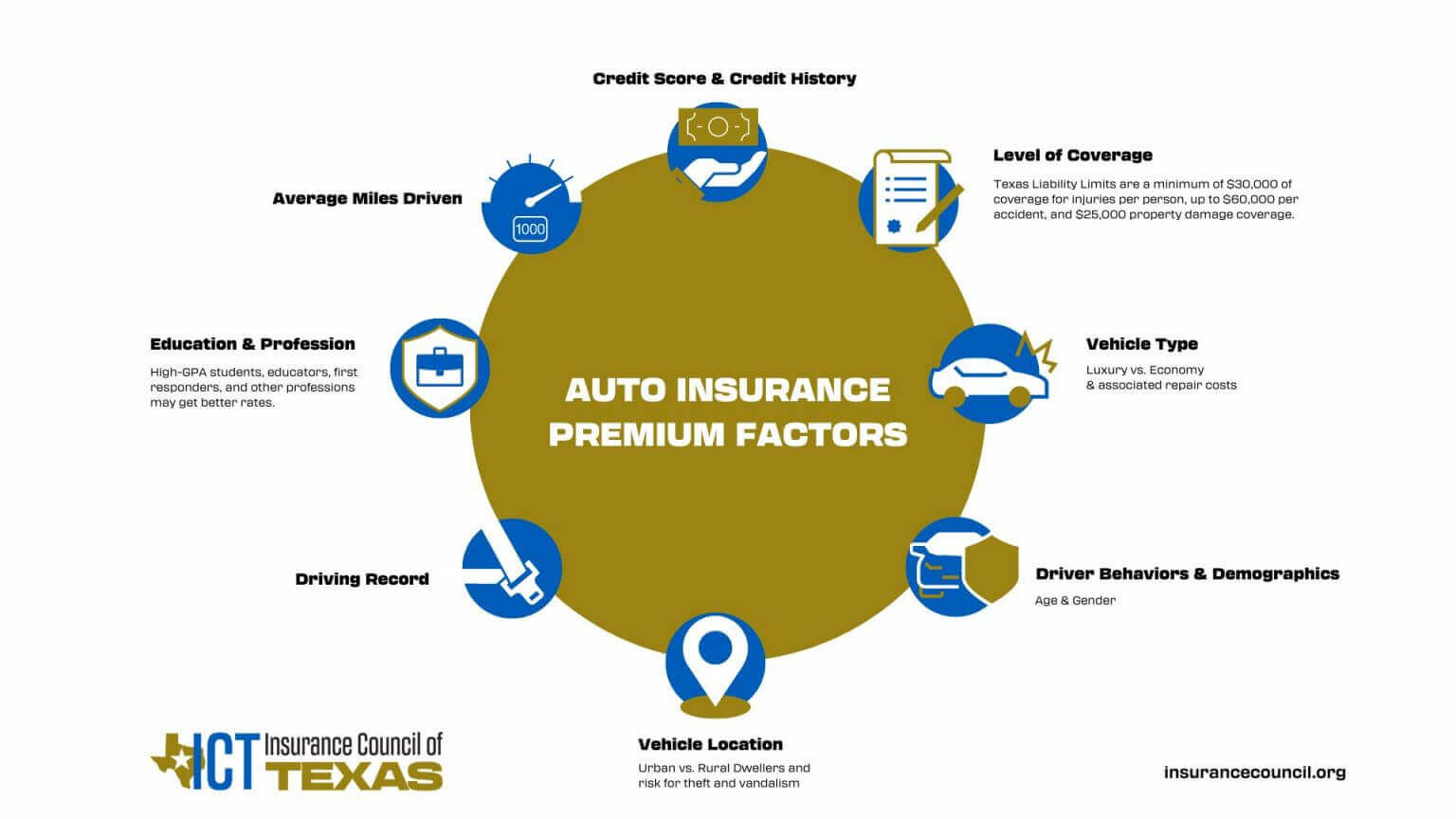
The state mandates standard minimum liability coverage limits, often referred to as 30/60/25 coverage:
- $30,000 for bodily injury per person in a single accident.
- $60,000 total for bodily injury per accident when multiple people are injured.
- $25,000 for property damage per accident.
While carrying state minimum limits satisfies the law, relying solely on 30/60/25 coverage leaves Garland drivers exposed to immense personal liability. Modern vehicle costs and medical expenses frequently exceed these lower limits. For instance, if you cause a multi-vehicle collision on Interstate 635 resulting in $45,000 of structural damage to another vehicle, your standard $25,000 property damage limit leaves you personally responsible for the remaining $20,000 out-of-pocket.
To shield personal savings and assets from court judgments, insurance professionals and financial planners generally advocate for significantly higher limits, such as 100/300/100 ($100,000 per person bodily injury, $300,000 per accident bodily injury, and $100,000 property damage) or an umbrella insurance policy.
Drivers can review official state auto insurance guidelines through the Texas Department of Insurance, which oversees policy standards and consumer protections across the state.
Key Local Risk Factors Driving Auto Insurance Rates in Garland
Insurance premiums in Garland are calculated using regional statistical risk profiles. Garland's geography, population density within Dallas County (and partially Collin County), and traffic infrastructure directly influence local insurance pricing.
1. High-Density Traffic Corridors
Garland sits along some of the busiest commuter thoroughfares in the Dallas-Fort Worth metroplex. Daily traffic along Interstate 635 (LBJ Freeway), President George Bush Turnpike (PGBT), Interstate 30, and State Highway 78 increases the statistical probability of commuter collisions. Stop-and-go conditions combined with high speed limits elevate both the frequency and severity of insurance claims.
2. Severe Weather and Hail Vulnerability
North Texas is located in a high-risk severe weather belt susceptible to destructive spring supercell storms. Garland routinely experiences severe thunderstorm outbreaks featuring large hail, strong straight-line winds, and localized flash flooding near low-lying drainage areas like Duck Creek. Hail damage claims frequently result in total-loss vehicle write-offs or costly dent restoration, directly inflating comprehensive insurance pricing across Garland zip codes (such as 75040, 75041, 75042, 75043, and 75044).
3. Uninsured and Underinsured Motorist Rates
Despite strict state requirements, a notable percentage of Texas drivers operate vehicles without active insurance policies. When an uninsured driver collides with your vehicle on a local surface street like Centerville Road or Broadway Boulevard, recovering compensation directly from the at-fault driver is difficult. This regional risk makes supplemental uninsured motorist coverage essential for local motorists.
Essential Auto Insurance Coverage Types Explained
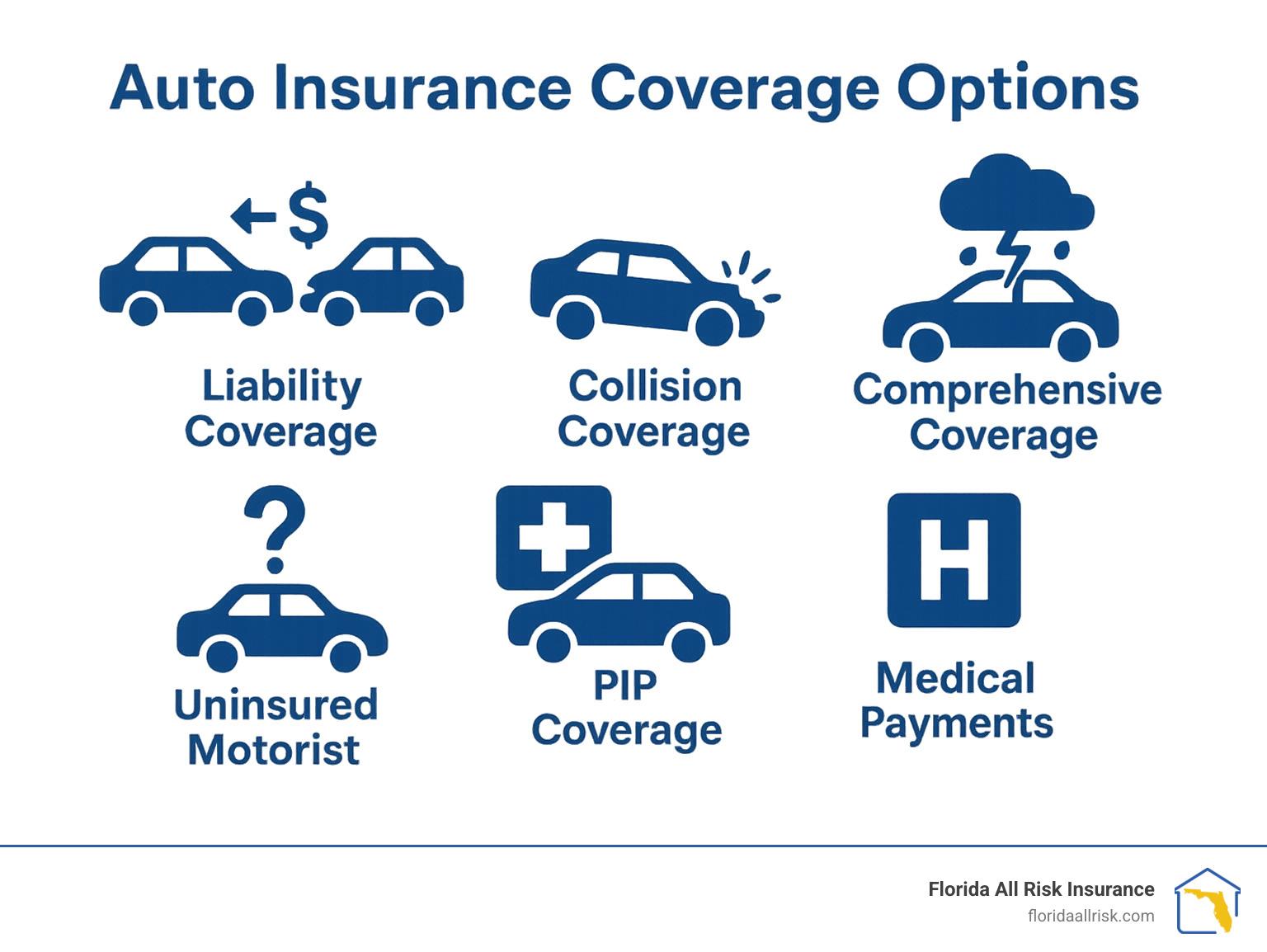
A complete auto insurance policy for a Garland vehicle consists of several distinct policy elements. Understanding how these policy types function helps policyholders build tailored financial protection.
- Garland Auto Policy Structure
- Liability Coverage
- Bodily Injury
- Property Damage
- Physical Damage
- Collision
- Comprehensive (Hail & Flood)
- Medical & Uninsured
- PIP / MedPay
- UM / UIM
- Liability Coverage
Liability Coverage
Liability insurance pays for bodily injury and property damage you cause to other people. It never covers damage to your own vehicle or your own personal medical bills.
- Bodily Injury Liability: Covers emergency care, ongoing medical bills, loss of income, and legal defense expenses if an injured party sues you.
- Property Damage Liability: Covers repairs or fair-market replacement values for damaged third-party vehicles, structures, utility poles, or fencing.
Comprehensive and Collision Coverages
Physical damage coverages protect your own vehicle asset, regardless of who caused the incident.
- Collision Coverage: Pays to repair or replace your vehicle after a crash with another vehicle, a tree, a guardrail, or a rollover incident. If your car is financed or leased, your lender will mandate collision coverage.
- Comprehensive Coverage: Covers non-collision vehicle loss, including hail damage, falling tree branches, windstorms, flood immersion, fire, vandalism, animal strikes, and total theft. Given North Texas weather conditions, maintaining a reasonable deductible (such as $500) on comprehensive coverage is vital.
Personal Injury Protection (PIP) vs. Medical Payments (MedPay)
Texas law requires auto insurance companies to include Personal Injury Protection (PIP) in every auto quote unless the policyholder explicitly rejects the coverage in writing.
- Personal Injury Protection (PIP): Pays medical bills, ambulance fees, and 80% of lost wages incurred by you and your passengers following a crash, regardless of fault.
- Medical Payments (MedPay): Covers medical and funeral expenses for policy occupants but does not cover lost wages or non-medical costs.
Uninsured/Underinsured Motorist Coverage (UM/UIM)
Uninsured/Underinsured Motorist coverage steps in when an at-fault driver either carries no insurance or maintains policy limits too low to pay for your actual damages. UM/UIM also protects you and your vehicle in hit-and-run scenarios. Like PIP, insurers in Texas must offer UM/UIM, and any waiver of this coverage must be documented in writing.
Garland Auto Insurance Cost Breakdown & Coverage Comparison
Selecting insurance requires weighing upfront premium costs against out-of-pocket risk during a loss event. Below is a structural comparison of policy configurations common to Garland drivers.
| Coverage Level | Typical Policy Configuration | Best Suited For | Key Financial Benefits | Risk Profile |
|---|---|---|---|---|
| State Minimum Liability | 30/60/25 Limits; No Physical Damage | Older vehicles with low resale value; strict budget limits | Lowest monthly premium costs | High out-of-pocket exposure for vehicle damage, weather events, or major injuries |
| Standard Mid-Tier | 50/100/50 Limits; $1,000 Collision & Comp Deductibles; PIP Included | Paid-off vehicles worth $5,000–$15,000; budget-conscious daily drivers | Balanced protection against moderate traffic claims | Moderate risk; elevated deductibles during weather events |
| Comprehensive Optimal | 100/300/100 Limits; $500 Deductibles; UM/UIM & PIP Included | Financed or leased vehicles; daily DFW highway commuters | Full asset defense, severe weather hail coverage, lost wage protection | Minimal out-of-pocket financial risk during accidents |
| High Asset Protection | 250/500/100 Limits + Umbrella; Low Deductibles; Full Rental Car Coverage | Homeowners, business owners, and high net worth individuals | Comprehensive liability coverage shielding personal savings and equity | Lowest overall exposure; higher monthly premium outlay |
Policy pricing across Garland varies depending on specific risk variables, including your driving history, vehicle make and model, annual mileage, credit-based insurance score, and exact zip code.
For example, vehicles parked in northern Garland (zip code 75044) near the Richardson border may see minor premium variances compared to southern Garland (zip code 75041 or 75043) due to hyper-local claim statistics, vehicle theft rates, and garage parking availability.
Verifying Compliance and Maintaining Valid Coverage in Texas
Texas operates an automated, real-time insurance verification program known as TexasSure.
TexasSure links state vehicle registration databases managed by the Texas Department of Motor Vehicles with policy databases provided by licensed insurance carriers. Law enforcement officers and county tax offices use TexasSure to instantly verify whether a vehicle operating on Texas roads maintains continuous financial responsibility.
Penalties for Driving Uninsured in Garland
Operating a vehicle without valid auto insurance in Texas results in progressive civil penalties and legal consequences:
- First Offense: Fines between $175 and $350, plus court fees.
- Subsequent Offenses: Fines ranging from $350 to $1,000, potential vehicle impoundment, driver license suspension, and mandatory annual driver license surcharges.
- SR-22 Requirement: Repeat offenders or drivers caught driving without insurance during an accident may be required to file an SR-22 certificate of financial responsibility. An SR-22 is a form submitted by your insurer directly to the state verifying that you maintain active continuous liability coverage.
To complete annual vehicle registration in Dallas County or Collin County, drivers must present valid proof of coverage meeting state minimum requirements if the electronic TexasSure verification system cannot confirm the policy status automatically.
Actionable Strategies to Lower Auto Insurance Premiums in Garland
High density and weather risks do not mean Garland residents must pay exorbitant premiums. Implementing targeted cost-reduction strategies can lower monthly policy expenses without reducing critical coverage limits.
- Premium Reduction Strategies
- Multi-Policy Bundling
- Telematics / Usage-Based
- Defensive Driving Course
- Deductible Adjustments
1. Multi-Policy Bundling
Combining auto insurance policies with homeowners, condo, or renters insurance under a single insurance carrier remains one of the most effective discounts. Insurers often apply discounts ranging from 10% to 25% across all bundled policies.
2. Complete State-Approved Defensive Driving Courses
Drivers who take a defensive driving course approved by the Texas Department of Licensing and Regulation (TDLR) can earn a discount on their auto insurance policy. Many insurance providers offer a premium discount (typically valid for three years) for completing these state-sanctioned courses.
3. Enroll in Telematics or Usage-Based Programs
Most major insurers offer telematics programs that track real-time driving habits via mobile applications or vehicle plug-in devices. Drivers who avoid hard braking, late-night driving on routes like I-635, and excessive speeding can secure immediate participation discounts and ongoing rate reductions.
4. Optimize Physical Damage Deductibles
Raising your collision and comprehensive deductibles from $250 to $500 or $1,000 can lower your annual premium costs. However, ensure you keep adequate liquid savings in an emergency fund to cover the higher deductible if hail damage or a collision occurs.
5. Review Credit-Based Insurance Scores
In Texas, insurers are legally permitted to use credit-based insurance scores to calculate premium rates. Maintaining a strong credit history by paying bills promptly and managing debt balances helps drivers secure lower baseline auto rates.
Frequently Asked Questions
What is the minimum auto insurance required in Garland, Texas?
Texas law requires all drivers to carry minimum liability limits of 30/60/25. This includes $30,000 for bodily injury per person, $60,000 total bodily injury per accident, and $25,000 for property damage caused to others.
Does standard auto insurance cover hail damage in Garland?
Standard liability insurance does not cover hail damage. To protect your vehicle against North Texas hail storms, you must purchase optional comprehensive coverage, which pays for repair costs or vehicle replacement after non-collision weather damage.
Can insurance companies in Texas reject my Personal Injury Protection (PIP)?
No. Texas insurance law mandates that insurance providers include Personal Injury Protection (PIP) in every primary policy quote. If you choose not to carry PIP, Texas law requires you to reject the coverage explicitly by signing a written waiver.
How does TexasSure track my auto insurance coverage?
TexasSure is an electronic database matching state vehicle registration records with insurance policy data supplied by licensed insurance carriers. It allows local Garland police officers and the DMV to confirm whether a vehicle is covered in real time.
Will driving on tolls like the President George Bush Turnpike (PGBT) affect my insurance rates?
Driving on tollways does not automatically increase your base insurance premiums. However, regular highway commuting increases overall annual mileage and collision risk exposure, which insurers use when calculating regional auto rates.
What happens if I am hit by an uninsured driver in Dallas County?
If an uninsured driver hits your vehicle, your standard liability coverage will not pay for your repairs or medical expenses. You must rely on Uninsured/Underinsured Motorist (UM/UIM) coverage, Personal Injury Protection (PIP), or your own collision coverage to cover losses.
Practical Recommendations for Garland Drivers
To secure optimal protection and competitive rates in Garland:
- Audit Your Policy Coverage Annually: Evaluate your liability limits. Upgrade from state minimums to 100/300/100 limits to shield personal savings from escalating medical and property claims across the DFW metroplex.
- Verify Hail Coverage: Review your policy declarations page to confirm that comprehensive coverage is active with an affordable deductible ahead of the spring severe weather season.
- Request Available Discounts: Contact your insurance carrier to apply bundling discounts, verify defensive driving credits, and ask about usage-based telematics savings.
- Compare Quotes Regularly: Obtain detailed quotes from multiple insurance companies licensed by the Texas Department of Insurance every 12 to 18 months to ensure your current rates remain competitive for your specific Garland zip code.
Image Gallery