Finding Accredited Physical Therapy Assistant Schools: A Comprehensive Guide for 2026
To find accredited physical therapy assistant (PTA) schools, you should primarily utilize the official directory provided by the Commission on Accreditation in Physical Therapy Education (CAPTE). This is the only agency recognized by t...
To find accredited physical therapy assistant (PTA) schools, you should primarily utilize the official directory provided by the Commission on Accreditation in Physical Therapy Education (CAPTE). This is the only agency recognized by the U.S. Department of Education to accredit PTA programs, ensuring you are eligible for licensure exams upon graduation.
Contents
The path to becoming a Physical Therapy Assistant (PTA) is both rewarding and rigorous. As of 2026, the demand for rehabilitative services continues to grow, driven by an aging population and an increased focus on non-opioid pain management. However, the first and most critical step in this career path is ensuring that your chosen education provider meets national standards. Attending a non-accredited program can result in a total loss of tuition and time, as you will be ineligible to sit for the national licensing examination.
Why CAPTE Accreditation is Mandatory
In the United States, the Commission on Accreditation in Physical Therapy Education (CAPTE) serves as the gatekeeper for the profession. Accreditation is a voluntary, non-governmental process of peer review that guarantees a program meets established standards of quality and relevancy.
If you graduate from a program that is not CAPTE-accredited, you cannot sit for the National Physical Therapy Examination (NPTE), administered by the Federation of State Boards of Physical Therapy (FSBPT). Passing the NPTE is a legal requirement for licensure in all 50 states, the District of Columbia, Puerto Rico, and the U.S. Virgin Islands. Therefore, the search for a school must begin and end with its accreditation status.
Accreditation Status Levels
When searching the CAPTE database, you may encounter different statuses for programs:
- Accredited: The program has met all standards and is in good standing.
- Candidate for Accreditation: This is a pre-accreditation status. While it indicates the program is progressing toward full accreditation, students should exercise caution, as graduation from a program that fails to achieve full accreditation by the time of completion may jeopardize licensure eligibility.
- Probationary Accreditation: This indicates that the program has deficiencies that must be corrected within a specific timeframe. While students can still graduate and take the NPTE, a probationary status suggests potential instability in faculty, resources, or curriculum.
How to Search for Accredited PTA Programs
Finding the right school involves more than just a search engine query. You must use verified tools to ensure the data is current for the 2026 academic year.
Using the CAPTE Directory
The most reliable method is the CAPTE Find a Program tool. This database allows you to filter schools by:
- Geographic Location: Search by state or proximity to a specific zip code.
- Program Type: Most PTA programs result in an Associate of Applied Science (AAS) or an Associate of Science (AS) degree.
- Instructional Format: You can filter for traditional on-campus programs or hybrid models that combine online didactic coursework with in-person clinical labs.
Reviewing Program Outcomes
Once you have a list of accredited schools, you must evaluate their performance. CAPTE requires all programs to publish specific "Student Achievement Measures" on their websites. You should look for:
- NPTE Pass Rates: Look for a three-year weighted average. A high pass rate (above 85-90%) indicates the curriculum effectively prepares students for the rigors of the national exam.
- Employment Rates: This measures the percentage of graduates who find employment as a PTA within six months of passing the licensure exam.
- Graduation Rates: Extremely low graduation rates may signal a lack of student support or overly prohibitive academic hurdles.
Admission Requirements and Prerequisites
Admission into accredited PTA programs is highly competitive. In 2026, most programs utilize a "point-based" admission system where applicants are ranked based on their academic history and experience.
Academic Prerequisites
Before applying to the technical phase of a PTA program, you must generally complete 15 to 30 credits of general education. Common prerequisites include:
- Anatomy and Physiology I & II (with labs): These are the most critical courses for the field.
- Medical Terminology: Essential for documenting patient care.
- Physics or Kinesiology: Understanding the mechanics of human movement.
- General Psychology: Necessary for understanding patient behavior and motivation.
- English Composition and Mathematics: Core competencies for professional communication and dosage calculations.
Clinical Observation Hours
Many accredited schools require applicants to complete "observation hours" under the supervision of a licensed Physical Therapist (PT) or PTA. Typically, programs require between 20 and 50 hours. Expert advice suggests completing these hours in at least two different settings—such as an outpatient orthopedic clinic and an inpatient skilled nursing facility—to demonstrate a broad understanding of the profession.
Comparing Costs and Program Types
The cost of a PTA education varies significantly depending on the institution type. Since the terminal degree is an associate degree, students have several pathways to choose from.
Community Colleges vs. Private Technical Schools
Community Colleges are generally the most cost-effective route. Tuition is subsidized for local residents, often keeping the total program cost under $15,000. However, these programs are often the most competitive and may have long waiting lists.
Private Technical or Career Colleges often offer "accelerated" programs that can be completed in 18 months rather than the traditional 24. While these programs provide a faster route to the workforce, they can cost between $30,000 and $50,000. Students must weigh the benefit of entering the workforce sooner against the higher debt load.
| Program Type | Typical Duration | Estimated Total Tuition (2026) | Best For |
|---|---|---|---|
| Public Community College | 2 Years (5 Semesters) | $10,000 – $18,000 | Budget-conscious students |
| Private Technical School | 1.5 – 2 Years | $30,000 – $55,000 | Students seeking fast-track options |
| Hybrid/Online Programs | 2 Years | $20,000 – $35,000 | Working professionals with limited local options |
| University-Based PTA | 2 Years | $25,000 – $40,000 | Students wanting a traditional campus life |
The Role of Clinical Education
A hallmark of an accredited PTA program is the clinical education component. CAPTE standards require that students complete a minimum number of full-time clinical hours (usually around 500 to 700 hours depending on the program).
These are not just "shadowing" opportunities; they are integrated internships where students provide hands-on care under the supervision of a Clinical Instructor (CI). When evaluating schools, ask about their clinical affiliations. A program with a wide network of local hospitals, sports medicine clinics, and pediatric facilities offers a more diverse learning experience, which can be a significant advantage when applying for your first job in 2026.
Financial Aid and Scholarships
Given the rising cost of healthcare education, navigating financial aid is essential. Most accredited PTA programs are eligible for federal financial aid via the Free Application for Federal Student Aid (FAFSA).
In addition to federal grants and loans, students should look for specialized scholarships:
- APTA Scholarships: The American Physical Therapy Association (APTA) offers several awards for minority students and those demonstrating high academic achievement.
- State-Specific Grants: Many states have "Workforce Shortage" grants that provide tuition reimbursement for students entering healthcare fields.
- Employer Sponsorship: Some large healthcare systems or "contract" therapy companies offer tuition assistance in exchange for a commitment to work at their facilities for two years post-graduation.
Common Pitfalls to Avoid
When searching for accredited PTA schools, stay vigilant against "degree mills" or programs that claim to be "nationally accredited" but lack CAPTE recognition.
- Institutional vs. Programmatic Accreditation: A school may be institutionally accredited (meaning it can accept federal financial aid), but if the PTA program specifically is not CAPTE-accredited, the degree is useless for licensure.
- Fully Online Programs: Beware of any program claiming to be 100% online. Physical therapy is a manual, hands-on profession. While didactic portions can be online, CAPTE requires in-person laboratory instruction and clinical rotations.
- Out-of-State Licensure: If you attend an accredited school in one state but plan to work in another, check the specific state board requirements via the FSBPT website. While CAPTE is national, some states have additional requirements regarding background checks or local jurisprudence exams.
Frequently Asked Questions
Can I become a PTA through an online-only school?
No. While many accredited schools offer "hybrid" programs where the lectures are delivered online, you must attend in-person lab sessions at a campus or satellite facility and complete hundreds of hours of hands-on clinical rotations at healthcare facilities. CAPTE does not accredit 100% online PTA programs because the profession requires physical skill mastery.
How do I verify a school's NPTE pass rate?
Accredited programs are required by CAPTE to publish their NPTE pass rates on their official website. Usually, this information is found under a tab labeled "Program Outcomes," "Student Success," or "Accreditation." If a school does not clearly display this data, it is a significant red flag.
What is the difference between an AAS and an AS degree for PTAs?
An Associate of Applied Science (AAS) is designed to lead directly to employment and often includes more technical, hands-on credits. An Associate of Science (AS) is often designed with more general education requirements to facilitate a smoother transfer to a four-year university if you later decide to pursue a Doctor of Physical Therapy (DPT) degree. Both are acceptable for licensure as long as the program is CAPTE-accredited.
Is there a "bridge program" from PTA to Physical Therapist (PT)?
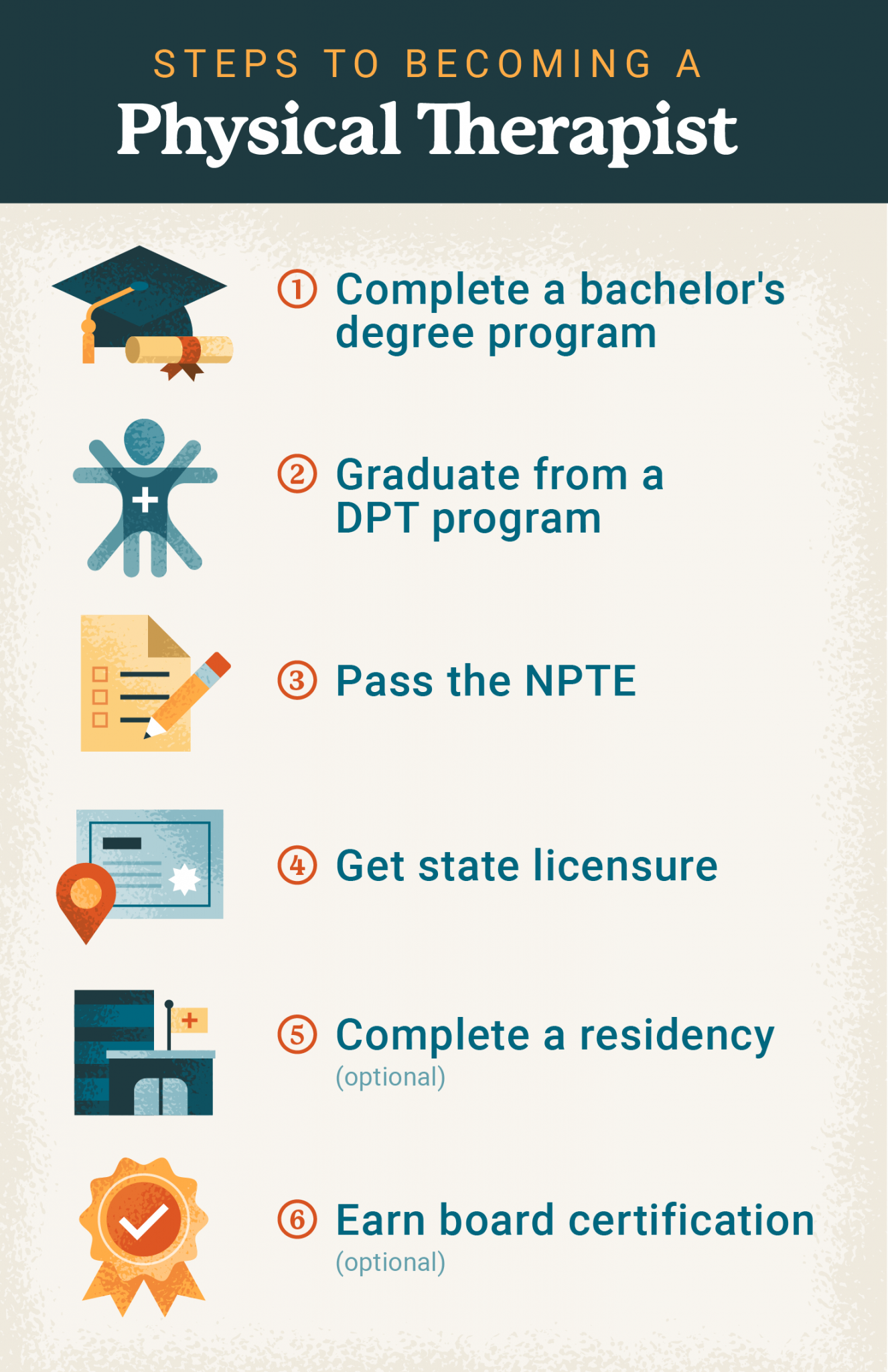
Yes, several accredited universities offer PTA-to-PT bridge programs. However, these are highly competitive and usually require the PTA to have several years of clinical experience and a bachelor's degree before entering the DPT phase. Most PTAs who wish to become PTs eventually have to complete a full DPT program.
What happens if my school loses accreditation while I am enrolled?
If a program loses its accreditation, CAPTE often works with the institution to "teach out" currently enrolled students so they can still graduate from an accredited program. However, this is a complex and stressful process. This is why checking for a "Probationary" status before enrolling is crucial.
Final Recommendation
Your first move should be to visit the CAPTE online directory and create a shortlist of schools within your desired geographic area. Once you have a list, cross-reference their NPTE pass rates and tuition costs. Contact the program directors of your top three choices to attend an information session or tour the laboratory facilities. Choosing an accredited school is not just about meeting a legal requirement; it is about ensuring you have the clinical competence to safely and effectively treat patients in the 2026 healthcare environment.
Image Gallery