Supercharger for Jeep XJ Explained: Power, Kits, and Installation Guide
Supercharging a Jeep Cherokee XJ involves installing a belt-driven air compressor to the 4.0L Inline-6 engine to increase air intake and combustion pressure. This modification typically yields a 40% to 60% increase in horsepower and to...
Supercharging a Jeep Cherokee XJ involves installing a belt-driven air compressor to the 4.0L Inline-6 engine to increase air intake and combustion pressure. This modification typically yields a 40% to 60% increase in horsepower and torque, providing the low-end grunt necessary for technical off-roading and improved highway passing without the "spool-up" delay associated with turbochargers.
Contents
The Jeep Cherokee XJ, produced between 1984 and 2001, remains one of the most iconic SUVs in automotive history. While its AMC-designed 4.0L Inline-6 engine is legendary for its durability and "tractor-like" torque, it often struggles when owners add heavy steel bumpers, winches, roof racks, and oversized 33-inch or 35-inch tires. As we look at the landscape in 2026, many XJ enthusiasts are turning to forced induction to modernize the performance of these classic rigs. Supercharging is the most common path because its power delivery aligns perfectly with the Jeep’s mechanical strengths.
Why Supercharge the Jeep 4.0L Inline-6?
The 4.0L engine is a long-stroke, low-revving power plant. In its factory configuration, it produces approximately 190 horsepower and 225 lb-ft of torque. However, the peak power occurs relatively high in the RPM range, whereas off-roaders need torque immediately.
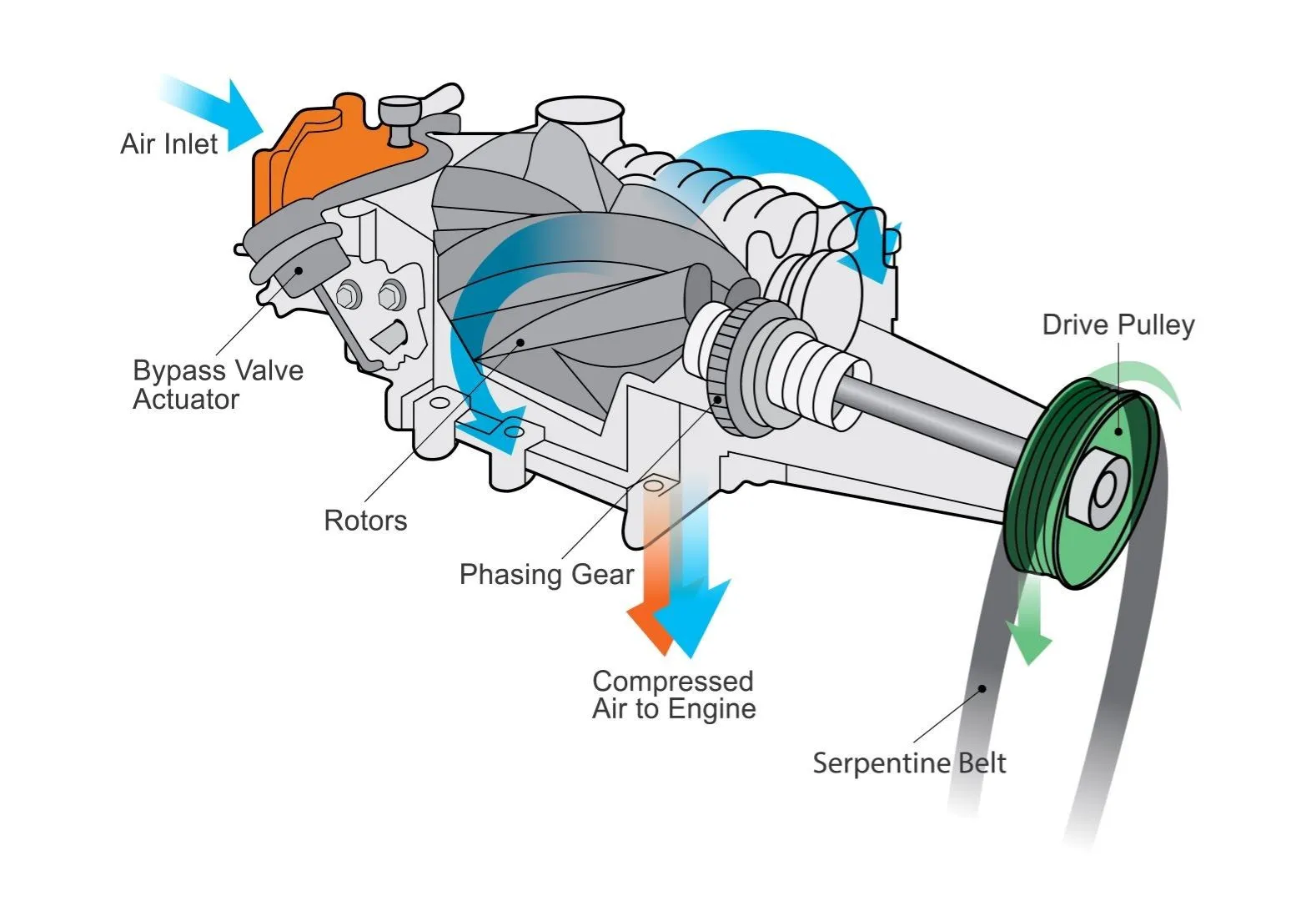
Instant Torque Delivery is the primary reason superchargers are preferred over turbochargers for the XJ. A supercharger is driven directly by the engine's crankshaft via a serpentine belt. As soon as you step on the gas, the blower is spinning and compressing air. This eliminates "turbo lag," providing a linear power curve that feels like a much larger displacement engine (like a V8) rather than a modified small engine.
Furthermore, the 4.0L engine is an ideal candidate for boost due to its cast-iron block and head. These components handle the increased cylinder pressure and heat of forced induction far better than many modern aluminum engines. When kept within the "safe" range of 6 to 8 pounds of boost (psi), the 4.0L can maintain its famous longevity while delivering 260 to 280 horsepower.
Types of Superchargers for the XJ
If you are researching a "supercharger for Jeep XJ explained," you will encounter two primary designs: the Roots-style (or Twin-Screw) and the Centrifugal supercharger.
Roots and Twin-Screw (Positive Displacement)
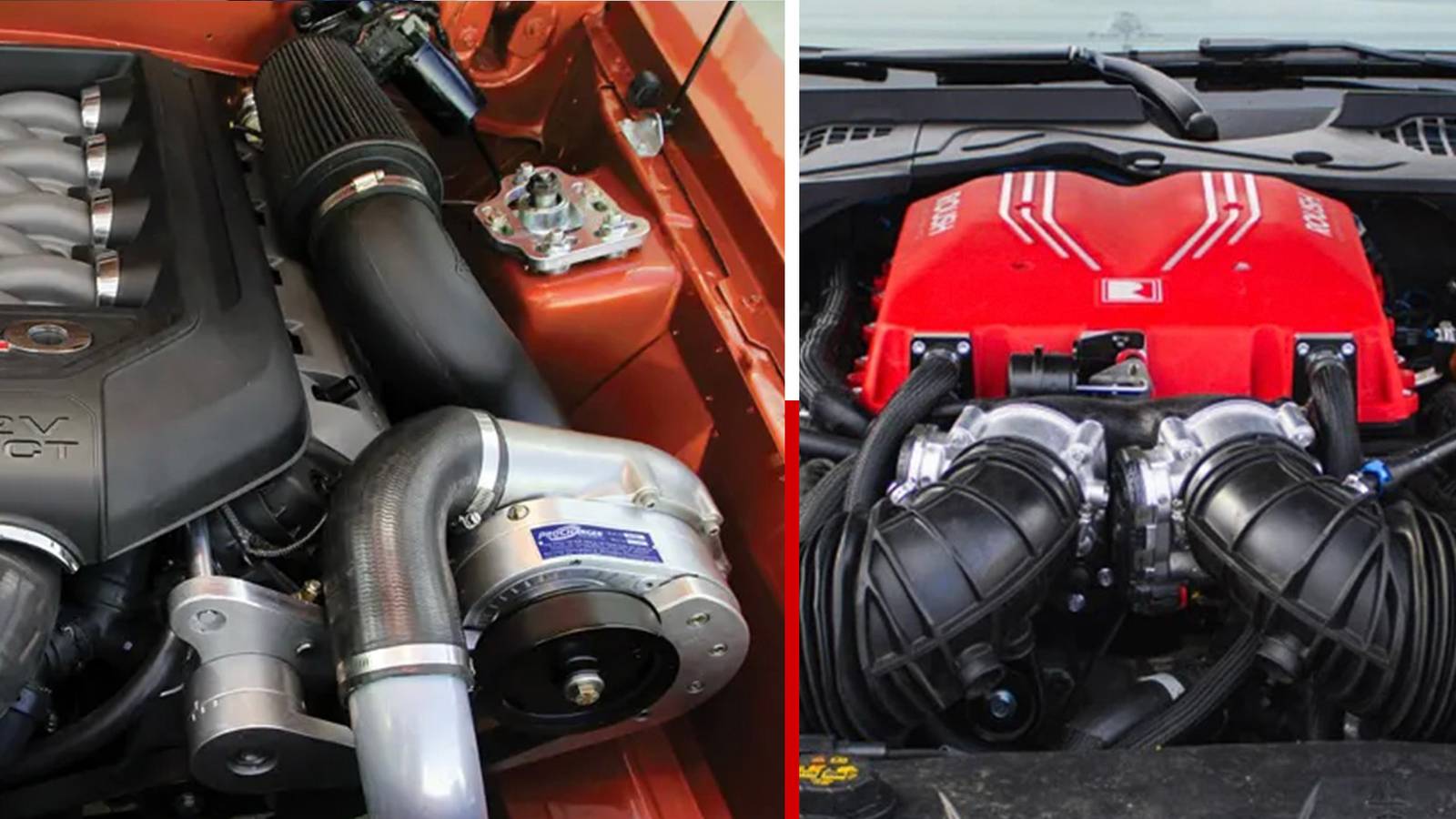
These are the most common blowers found in Jeep XJ kits, such as those from Boosted Technologies or Sprintex. These units sit on top of or to the side of the engine and pump a fixed volume of air per revolution.
- Pros: Maximum torque at very low RPM; simpler packaging; classic "blower" whine.
- Cons: High discharge temperatures (heat soak); often requires a specialized intake manifold or adapter.
Centrifugal Superchargers
A centrifugal supercharger, like those from ProCharger, looks like the compressor housing of a turbocharger but is belt-driven.
- Pros: More efficient at high RPM; easier to add an air-to-air intercooler.
- Cons: Power builds exponentially with RPM, meaning you don't get much "punch" at the low speeds used for rock crawling.
Current Market Options: Kits and DIY Solutions
As of 2026, the market for Jeep XJ superchargers has stabilized into three main categories: premium bolt-on kits, refurbished legacy kits, and the "Junkyard" DIY approach.
1. The Sprintex / NewRugged Twin-Screw Kits
The Sprintex unit is widely considered the gold standard for the XJ. It uses a high-efficiency twin-screw design that generates less heat than a traditional Roots blower. These kits are often "complete," meaning they include the blower, brackets, serpentine belt, and sometimes fueling upgrades. They are prized for their clean installation and ability to fit under the stock XJ hood—a tight space that often requires engine mount spacers or hood venting for other kits.
2. Boosted Technologies (Eaton M90 Conversions)
Boosted Technologies has long been a favorite for providing affordable kits built around the Eaton M90 supercharger (originally found on Ford Thunderbirds and Pontiac Grand Prixs). These kits provide the mounting hardware and manifold adapters to bolt a refurbished Eaton unit onto the 4.0L. It is a rugged, time-tested solution that favors reliability over peak efficiency.
3. The DIY Eaton M62 "Junkyard" Swap
For the budget-conscious builder, adapting an Eaton M62 from a 1990s Buick Park Avenue is a popular route. This requires significant fabrication, including custom brackets and a "7th injector" setup or a customized MAP (Manifold Absolute Pressure) sensor. While the cheapest entry point, it requires the most technical knowledge to ensure the engine doesn't run lean and melt a piston.
Technical Requirements: Beyond the Blower
Simply bolting on a supercharger is only half the battle. To "explain" the supercharger for a Jeep XJ fully, we must address the supporting modifications required to prevent engine failure.
Fueling Upgrades
The factory fuel injectors on an XJ (especially the 19lb or 21lb units) cannot provide enough fuel for a pressurized intake charge. When you add more air, you must add more fuel to maintain a safe air-fuel ratio (AFR).
- Larger Injectors: Most kits require moving to 24lb or 30lb injectors.
- High-Flow Fuel Pump: Ensuring consistent pressure at the rail is vital.
- 7th Injector Kits: Some older designs use a single additional injector placed before the supercharger to provide extra fuel and help cool the intake charge through evaporation.
Engine Management and Tuning
The Jeep XJ uses a speed-density system. The factory ECU does not understand "boost"—it only knows vacuum.
- 1987–1990 (Renix): These are the most difficult to tune and often require a standalone fuel controller.
- 1991–1995 (OBD-I): These require "piggyback" controllers like the Split Second FTC, which intercept signals and modify fuel/spark timing.
- 1996–2001 (OBD-II): These are the most desirable for supercharging. The ECU can be flashed or remapped using software like HP Tuners or specialized tunes from Flyin' Ryan Performance.
Heat Management
Supercharging creates heat. Because the XJ engine bay is notoriously cramped and lacks airflow, heat soak is a major concern. Owners often install hood louvers, high-flow electric fans, or triple-core aluminum radiators to compensate for the additional thermal load the supercharger places on the cooling system.
Comparison of XJ Supercharging Paths
| Feature | Sprintex Twin-Screw | Eaton M90 (Kit) | DIY Eaton M62 |
|---|---|---|---|
| Typical Cost | $3,500 - $5,000 | $2,000 - $3,500 | $800 - $1,500 |
| Boost Level | 6 - 9 psi | 5 - 7 psi | 5 - 6 psi |
| HP Gain (Est.) | 70 - 100 hp | 50 - 80 hp | 40 - 60 hp |
| Complexity | Moderate (Bolt-on) | Moderate | High (Fabrication) |
| Hood Clearance | Excellent | Requires spacers | Often requires cutting |
Installation and Maintenance Considerations
Installing a supercharger kit typically takes a competent home mechanic 10 to 15 hours. The process involves removing the factory intake manifold (in some kits), rerouting the serpentine belt, installing the blower unit, and wiring the tuning computer.
Once installed, maintenance requirements increase. You must monitor the supercharger's internal oil level (most Eaton and Sprintex units have a self-contained oil reservoir) and replace the oil every 30,000 to 50,000 miles. Furthermore, the serpentine belt will experience more stress, requiring more frequent inspections for cracking or slipping.
It is also highly recommended to use Premium 91 or 93 octane fuel exclusively. Forced induction increases the risk of "pre-detonation" or knock, which can destroy an engine in seconds. Higher octane fuel is more stable under pressure, providing a necessary safety margin.
Common Obstacles and Troubleshooting
The most frequent issue encountered after supercharging an XJ is belt slip. If the pulley alignment is off by even a millimeter, the belt can chirp or jump off the track. Using a high-quality "Gatorback" or heavy-duty green belt is a standard fix.
Another common problem is "leaning out" during open-loop transition. This occurs when the driver goes to Wide Open Throttle (WOT), and the ECU takes a moment to switch from economy mode to power mode. Professional tuning is the only way to smooth out this transition and protect the engine.
Is a Supercharger Right for Your XJ?
If you use your Jeep as a dedicated rock crawler or a daily driver that needs to keep up with modern traffic, a supercharger is a transformative upgrade. It preserves the character of the 4.0L engine while removing its greatest weakness: the lack of power under load. However, if your engine has high mileage (over 200,000 miles) or low oil pressure, the added stress of boost may accelerate a mechanical failure. Always perform a compression and leak-down test before investing in a supercharger.
FAQ
Can a stock Jeep XJ engine handle 10 psi of boost?While the iron block is strong, the factory ring gaps and head bolts are not designed for double-digit boost. Most experts recommend staying between 5 and 7 psi for long-term reliability. Going higher usually requires "forged" internals and head studs.
Will supercharging my XJ ruin my gas mileage?Under normal cruising, the impact is minimal (1–2 MPG loss) because the supercharger has a bypass valve that reduces drag when you aren't on the gas. However, under boost, the fuel consumption increases significantly to match the extra air.
Does a supercharger work with an automatic transmission?Yes, the AW4 automatic transmission found in most XJs is quite robust and handles the extra power well. However, installing an external transmission cooler is highly recommended to manage the heat generated by the increased torque.
Do I need an intercooler for an XJ supercharger?An intercooler is not strictly required for low-boost applications (under 7 psi), but it is beneficial. Because the XJ has limited space, many owners use water-methanol injection instead of a traditional air-to-air intercooler to lower intake temperatures.
Will a supercharger interfere with my air conditioning?Most modern kits are designed to relocate the AC compressor or work around it. However, some DIY kits require removing the AC to make room for the blower. Always verify clearance if you live in a warm climate.
Is it better to supercharge or V8 swap an XJ?A V8 swap (like an LS) provides more ultimate power but is significantly more expensive and complex, requiring a new transmission, cooling system, and custom wiring. A supercharger is a "weekend project" that keeps the original Jeep drivetrain intact.
Recommendation for Next Steps:Before purchasing a kit, perform a full diagnostic on your current engine. If the 4.0L is healthy, start by upgrading your fuel injectors and cooling system. This "prep work" ensures that once the supercharger is installed, your Jeep is ready to handle the power safely.
Image Gallery