Honda Pilot Off-Road Setup: Choosing the Best Tires for Performance and Durability
To optimize a Honda Pilot for off-road use, the most effective upgrade is a set of high-quality All-Terrain (A/T) tires. For 2026 models and older, downsizing to 17 or 18-inch wheels allows for a thicker sidewall, which improves tracti...
To optimize a Honda Pilot for off-road use, the most effective upgrade is a set of high-quality All-Terrain (A/T) tires. For 2026 models and older, downsizing to 17 or 18-inch wheels allows for a thicker sidewall, which improves traction and comfort on uneven terrain while protecting your rims from damage.
Contents
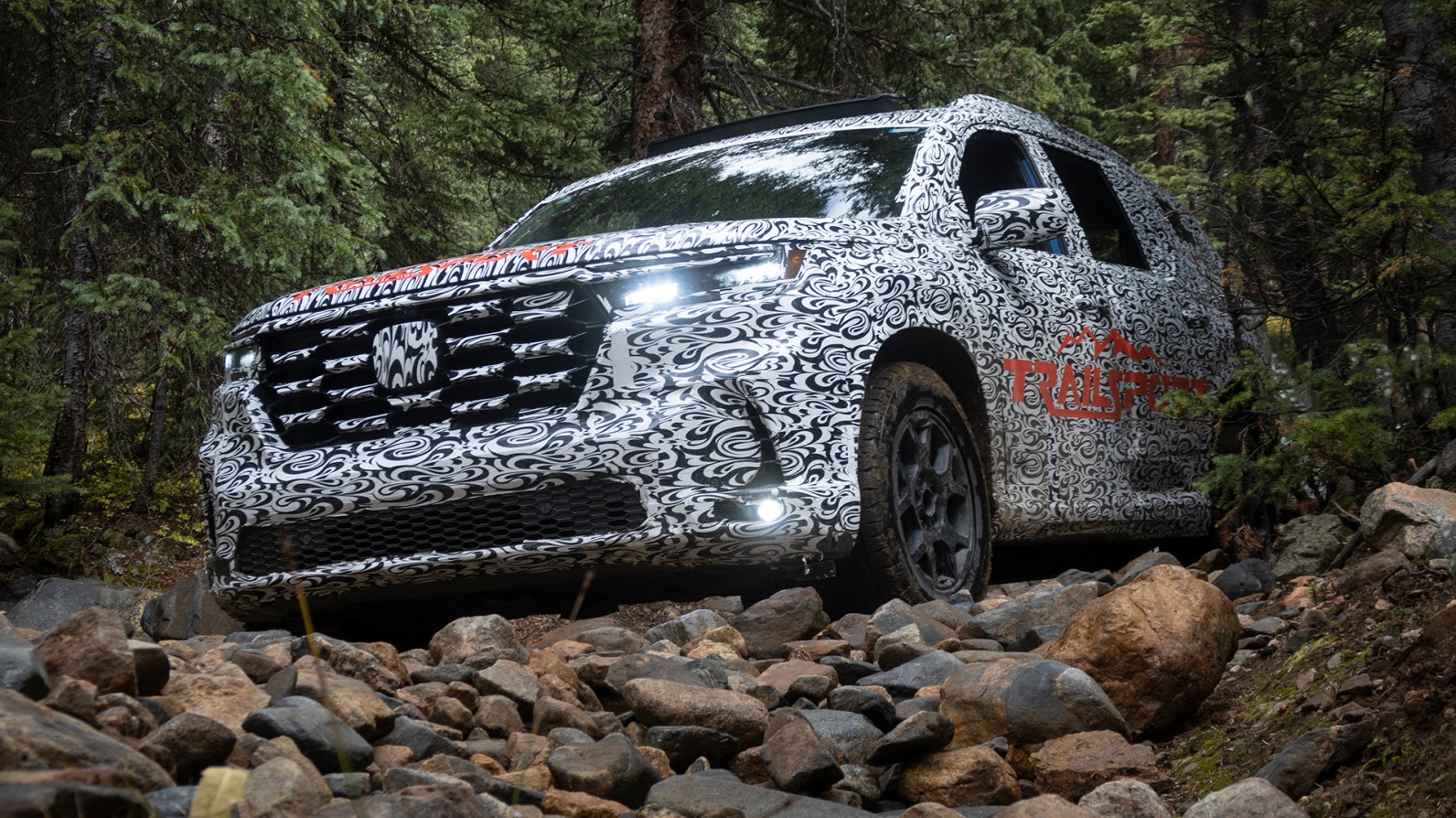
Building an off-road-capable Honda Pilot requires a departure from the "mall crawler" mentality. While the Pilot—particularly in its TrailSport iteration—is a formidable soft-roader, its performance is fundamentally limited by its contact patch. The factory tires on most trims are optimized for fuel efficiency and low road noise, prioritizing tarmac over trails. When you transition to a dedicated off-road setup, tires become the primary tool for maximizing the i-VTM4 (Intelligent Variable Torque Management) all-wheel-drive system’s potential.
Understanding the Honda Pilot Platform and AWD Constraints
Before selecting tires, it is vital to understand the mechanical architecture of the Honda Pilot. Unlike body-on-frame SUVs with low-range transfer cases, the Pilot utilizes a unibody construction and a sophisticated torque-vectoring AWD system. In 2026, the i-VTM4 system remains one of the best in its class, capable of sending 70% of torque to the rear axle and 100% of that torque to either the left or right wheel.
However, this system relies heavily on wheel speed sensors and traction data. An overly aggressive or incorrectly sized tire can disrupt these calculations. If a tire is too heavy (high unsprung weight), it increases the rotational inertia, making the braking system work harder and potentially slowing the reaction time of the torque-vectoring clutches. Therefore, the "right" tire is not just the biggest one that fits; it is the one that balances grip with the vehicle's engineering limits.
The Wheel Diameter Dilemma: 18-inch vs. 20-inch
Most high-trim Honda Pilots (Elite, Touring) come standard with 20-inch wheels. For off-roading, these are a significant liability. A 20-inch wheel leaves very little room for tire sidewall. When driving over sharp rocks or deep ruts, a thin sidewall is easily pinched between the obstacle and the rim, leading to a "pinch flat" or a cracked wheel.
By 2026, the consensus among Honda overlanders is to downsize to an 18-inch or even a 17-inch wheel.
- 18-inch Wheels: These are the standard on the TrailSport trim. They offer a balanced compromise, providing enough sidewall for "airing down" (lowering tire pressure to increase the footprint) while maintaining sharp handling on the highway.
- 17-inch Wheels: These provide the maximum possible sidewall. If you plan on frequenting "Level 3" trails or rocky paths, 17-inch wheels allow the tire to wrap around obstacles, significantly increasing mechanical grip.
Tire Categories: A/T, R/T, and M/T Explained
Choosing the right category depends on your specific use case. In 2026, the lines between these categories have blurred due to advancements in rubber compounds, but the fundamental differences remain.
All-Terrain (A/T) Tires
This is the gold standard for the Honda Pilot. Modern A/T tires, such as the Falken Wildpeak A/T4W or the BFGoodrich All-Terrain T/A KO3, use silica-infused compounds that remain flexible in freezing temperatures while providing "biting edges" for dirt and gravel. They are designed to be relatively quiet on the highway, which is crucial for a family-oriented vehicle like the Pilot.
Rugged-Terrain (R/T) Tires
R/T tires are a hybrid between All-Terrain and Mud-Terrain. They feature large shoulder blocks for aesthetics and mud evacuation but a tighter center tread for on-road stability. These are excellent for Pilot owners who want a more aggressive "look" without the extreme vibration of a full mud tire. However, they are heavier, which will noticeably impact the Pilot’s fuel economy.
Mud-Terrain (M/T) Tires
Generally, M/T tires are discouraged for the Honda Pilot. They are exceptionally heavy, loud, and perform poorly on wet pavement or ice. Given that the Pilot lacks a dedicated low-range gear, the added rotational mass of an M/T tire can put undue stress on the transmission and CV axles during technical climbs.
Critical Specifications: Load Ratings and Weight
When shopping for tires, many owners overlook the Load Index and Ply Rating. Most Pilot tires are "Standard Load" (SL) or "Extra Load" (XL). Some off-road tires are "Load Range E" (10-ply rated), designed for heavy-duty trucks.
While a Load Range E tire is nearly puncture-proof, it is overkill for a Pilot. An E-rated tire is significantly stiffer and heavier, leading to a harsh ride that can make the Pilot feel "jittery" on washboard roads. For the best ride quality in 2026, look for tires with an SL or XL rating that specifically mention reinforced sidewalls (like the Kevlar-reinforced Goodyear Wrangler series).
Sizing and Clearance: How Big Can You Go?
The most common question for a Honda Pilot off-road setup is: "What is the largest tire I can fit without rubbing?"
On a stock 4th Generation Pilot (2023–2026), the factory size is typically 255/60R18 (approx. 30 inches).
- No Lift: You can usually move up to a 265/60R18 or a 255/65R18 without significant rubbing on the inner fender liner.
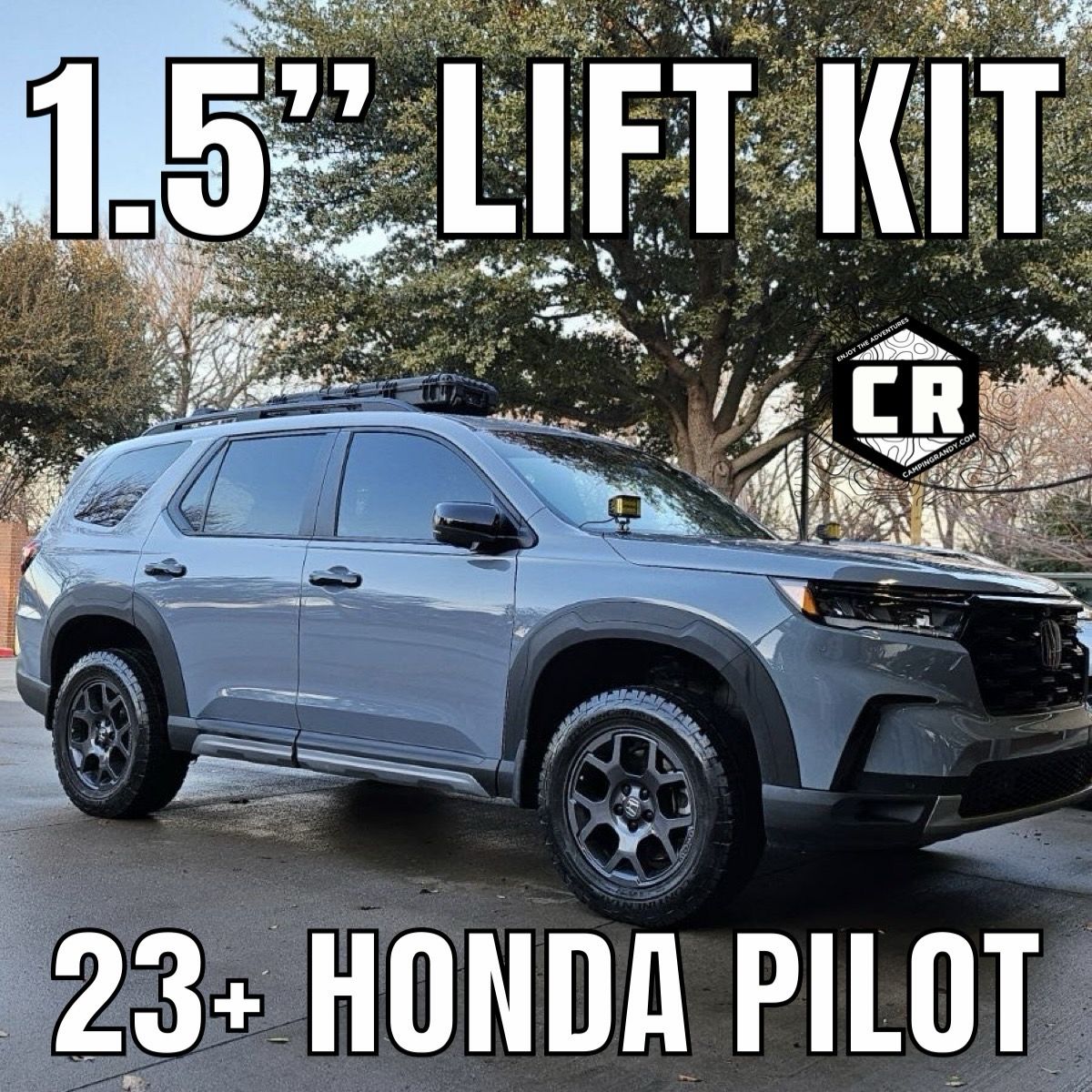
- With a 1.5 to 2-inch Lift: Many owners install a leveling or lift kit (such as those from HRG Engineering or Traxda). With a lift, you can comfortably run a 265/65R18 (approx. 31.5 inches).
Going beyond 31.5 inches usually requires "trimming" the plastic wheel well liners or modifying the "pinch weld" behind the front tires. In 2026, the 265/60R18 remains the "sweet spot" for those who want better ground clearance without compromising the vehicle's safety sensors and Adaptive Cruise Control (ACC) calibration.
Comparison of Top Off-Road Tires for Honda Pilot (2026)
| Tire Model | Category | Primary Strength | Noise Level | Snow Rating (3PMSF) |
|---|---|---|---|---|
| Falken Wildpeak A/T4W | All-Terrain | Wet/Snow Traction | Low | Yes |
| BFGoodrich KO3 | All-Terrain | Sidewall Durability | Moderate | Yes |
| Nitto Ridge Grappler | Rugged-Terrain | Aggressive Aesthetics | Moderate | No (Most Sizes) |
| Continental TerrainContact A/T | All-Terrain | On-Road Comfort | Very Low | No |
| Toyo Open Country A/T III | All-Terrain | Light Weight | Low | Yes |
The Impact of Off-Road Tires on Daily Driving
It is essential to manage expectations regarding performance trade-offs. Installing a dedicated off-road tire setup will change the vehicle's dynamics in three specific areas:
- Fuel Economy: Expect a drop of 1 to 3 MPG. The increased rolling resistance and weight require the engine to work harder to maintain speed.
- Speedometer Accuracy: If you increase the tire diameter (e.g., from a 30-inch to a 31.5-inch tire), your speedometer will read slower than your actual speed. At 65 mph, you may actually be traveling at 68 mph.
- Braking Distance: All-terrain tires have larger tread voids, which means less rubber is in contact with the pavement during an emergency stop. On dry asphalt, your stopping distance will increase slightly compared to factory highway tires.
Essential Maintenance for Off-Road Setups
Once you have chosen your tires, maintenance becomes even more critical. Off-road driving often leads to uneven tire wear.
- Rotation Frequency: Rotate your tires every 5,000 miles. Because A/T tires have deeper lugs, they are prone to "cupping" if left in the same position for too long.
- Alignment: If you install a lift kit or larger tires, a professional alignment is mandatory. Incorrect toe or camber settings will destroy a new set of $1,200 tires in less than 10,000 miles.
- Pressure Monitoring: When off-roading, you may drop your pressure to 20-25 PSI for better traction. Ensure you have a portable air compressor to bring them back to the door-jamb recommended PSI (usually 32-35 PSI) before driving at highway speeds.
Frequently Asked Questions
Does installing off-road tires void my Honda warranty?
No, the installation of aftermarket tires does not void your entire vehicle warranty. However, under the Magnuson-Moss Warranty Act, if a failure occurs in a related component (like a wheel bearing or CV axle), the dealership may deny that specific claim if they can prove the larger, heavier tires caused the failure.
Do I need a full-size spare tire?
Yes. If you increase your tire size, the factory "donut" or even the stock-sized spare will be a different diameter than your new tires. Running mismatched diameters on an AWD system like i-VTM4 can cause severe damage to the rear differential clutches. Always match your spare to your primary set.
Can I keep my 20-inch wheels and just buy off-road tires?
You can, but options are limited. Tires like the Nitto Terra Grappler G2 are available in 20-inch sizes. However, you will lose the ability to "air down" effectively, and the ride quality on rocky trails will be significantly harsher compared to an 18-inch setup.
What is the "3PMSF" symbol and why does it matter?
The Three-Peak Mountain Snowflake (3PMSF) symbol indicates the tire has passed specific tests for severe snow traction. For a Honda Pilot used in northern climates, choosing an A/T tire with this rating ensures you don't need to swap to dedicated winter tires.
Will larger tires affect the Honda Sensing safety suite?
Minor increases in tire size (under 3%) typically do not interfere with the radar or camera systems. However, extreme lifts or very large tires can change the pitch of the vehicle, potentially requiring a recalibration of the Forward Collision Warning and Lane Keeping Assist systems.
Final Recommendation: The Best Setup for 2026
For the majority of Honda Pilot owners looking to venture off-grid, the ideal setup is a 265/60R18 Falken Wildpeak A/T4W mounted on a high-quality 18-inch wheel. This configuration offers the best balance of off-road durability, winter performance, and daily drivability. It fits most 4th-generation Pilots with minimal to no rubbing and complements the i-VTM4 system without adding excessive weight. If you frequently encounter sharp rocks, prioritize a tire with a reinforced sidewall over a more aggressive tread pattern to ensure you make it back to the pavement without a flat.
Image Gallery