What Happened to The Trust Company of New Jersey After Its Merger?
After its 2004 acquisition by North Fork Bancorporation, The Trust Company of New Jersey (TCNJ) was fully integrated into North Fork’s operations, resulting in the retirement of the TCNJ brand. In 2006, North Fork was subsequently acqu...
After its 2004 acquisition by North Fork Bancorporation, The Trust Company of New Jersey (TCNJ) was fully integrated into North Fork’s operations, resulting in the retirement of the TCNJ brand. In 2006, North Fork was subsequently acquired by Capital One Financial Corp. Consequently, as of 2026, all legacy TCNJ accounts, branches, and assets are part of Capital One N.A.
Contents
The disappearance of The Trust Company of New Jersey marked the end of an era for Hudson County banking. For decades, TCNJ was a staple of the New Jersey financial landscape, known for its deep local roots and the colorful leadership of Siggi Wilzig. However, the consolidation wave of the early 2000s transformed the regional banking sector, moving local institutions into the hands of national giants. Understanding what happened to the bank requires looking at two major successive mergers and the operational shifts that followed for customers and the community.
The First Transition: The North Fork Bancorporation Merger (2004)
The definitive end of The Trust Company of New Jersey as an independent entity occurred on May 13, 2004. North Fork Bancorporation, based in Melville, New York, completed its acquisition of TCNJ in a deal valued at approximately $726 million. At the time, TCNJ operated about 75 branches, primarily in Northern New Jersey, with a significant concentration in Hudson County.
North Fork’s motivation was primarily geographic expansion. Before the merger, North Fork had a limited footprint in New Jersey. By acquiring TCNJ, they instantly gained a massive, loyal customer base and a dominant physical presence in the Jersey City and Journal Square areas. For TCNJ shareholders, the deal provided a significant premium on their stock, but for customers, it meant the beginning of a multi-stage rebranding process.
During this phase, TCNJ branches were rebranded as North Fork Bank. The transition involved moving all TCNJ "core" banking systems—the digital ledgers that hold account information—over to North Fork's platform. This is a critical technical step in any merger. It meant that while the physical buildings stayed the same, the software running the ATMs and the logic behind interest calculations changed to the North Fork standard.
The Second Transition: The Capital One Acquisition (2006)
The North Fork era was relatively short-lived. In December 2006, the financial services giant Capital One Financial Corp acquired North Fork Bancorporation for approximately $13.2 billion. This was a monumental shift in the banking industry, as Capital One—then known primarily as a credit card company—sought to become a major player in retail banking.
This second merger effectively swallowed the legacy TCNJ assets into one of the largest financial institutions in the United States. By 2008, the North Fork signs (which had replaced the TCNJ signs just a few years prior) were replaced again, this time with the red and blue Capital One logo. For long-time New Jersey residents, this represented the final step in the "nationalization" of their local bank.
From a 2026 perspective, these transitions are viewed as the blueprint for modern banking consolidation. The assets of TCNJ moved from a local powerhouse to a regional leader, and finally to a "Big Four" style national competitor.
What Happened to Legacy Accounts and Records?
When a bank like TCNJ is merged, it does not simply vanish; it undergoes a legal process called "Successor in Interest." This means that the acquiring bank (eventually Capital One) becomes legally responsible for all the debts, deposits, and contracts of the original bank.
Account Migration and Numbers
Initially, most TCNJ customers kept their account numbers, but as the systems were integrated into Capital One, many were eventually issued new account and routing numbers. If you were a TCNJ customer in 2004, your old checks and deposit slips became obsolete within a year of the North Fork merger. By 2026, any legacy TCNJ routing number would likely trigger a redirection or be rejected by modern Automated Clearing House (ACH) systems, requiring the use of the current Capital One routing transit number.
Historical Financial Records
Finding records from the original Trust Company of New Jersey in 2026 can be challenging but not impossible. Capital One maintains an archive of its predecessor institutions' records as required by federal record-retention laws (typically 7 years for most transactional data, though some records are kept longer). However, for records dating back to the pre-2004 era, the physical documents have largely been digitized or moved to deep-storage facilities.
Unclaimed Property
One of the most common questions regarding defunct banks involves "lost" money. If a TCNJ account was left inactive during the mergers, the funds did not disappear into Capital One’s profits. Instead, after a period of dormancy (usually three to five years), the funds were "escheated" to the State of New Jersey’s Unclaimed Property Administration. In 2026, individuals searching for old TCNJ assets should start their search with the New Jersey Department of the Treasury rather than the bank itself.
The Fate of the Iconic Journal Square Headquarters
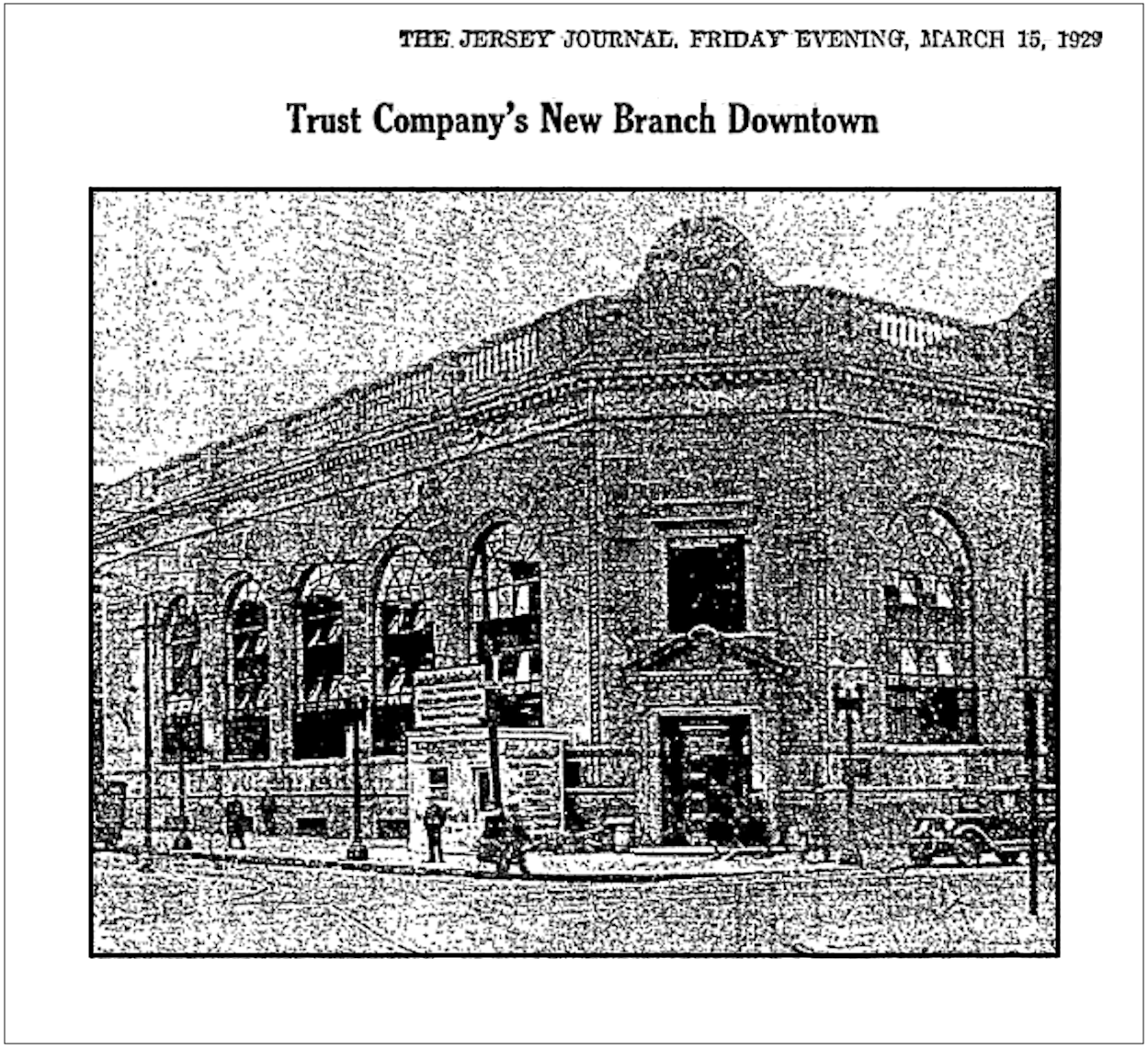
The Trust Company of New Jersey was synonymous with its headquarters: the 11-story building at 35 Journal Square in Jersey City. Built in the late 1920s, this architectural landmark served as the nerve center for the bank's operations.
Following the mergers, the building's role changed significantly. While it continued to house a retail bank branch on the ground floor (transitioning from TCNJ to North Fork to Capital One), the upper floors were no longer needed as a corporate "headquarters" for a national entity based in Virginia. The building remains a significant historical site in Jersey City, often cited as a prime example of the city’s early 20th-century commercial growth. Its preservation is a point of local pride, representing the era when Journal Square was the undisputed commercial heart of the region.
Comparison of Entity Evolution
The following table outlines the timeline and the shifts in scale from the original local institution to the current national owner.
| Feature | The Trust Company of NJ (Pre-2004) | North Fork Bank (2004-2006) | Capital One N.A. (2026 Status) |
|---|---|---|---|
| Primary Region | Hudson County/North NJ | NY Tri-State Area | National / International |
| Corporate Parent | Independent | North Fork Bancorp | Capital One Financial Corp |
| Approx. Branches | 75 | 350+ (Total) | 250+ (Legacy region) |
| Core Identity | Relationship Banking | Commercial Real Estate | Digital-First / Café Banking |
| Status of Brand | Defunct | Defunct | Active |
The Legacy of Siggi Wilzig
You cannot discuss what happened to TCNJ without mentioning its longtime leader, Siggi Wilzig. A Holocaust survivor who rose to become the president and chairman of the bank, Wilzig was a legendary figure in New Jersey. His leadership style was intensely personal and fiercely independent.
Many analysts believe that the merger with North Fork only became possible after Wilzig’s passing in 2003. He had spent decades resisting takeover attempts, viewing the bank as a fortress of local stability. After his death, the board of directors moved toward the North Fork deal, recognizing that the era of the small, independent commercial bank was ending due to increased regulatory costs and the need for massive technological investment.
Technical Impacts on Debt and Mortgages
For customers who had loans or mortgages with TCNJ at the time of the merger, the transition was largely administrative. Under the law, the terms of a fixed-rate mortgage cannot be changed just because a bank is sold.
- Servicing Rights: The right to collect payments was transferred first to North Fork and then to Capital One.
- Escrow Accounts: Property tax and insurance escrows were migrated to the new parent company’s tax department.
- Lien Releases: If a TCNJ mortgage was paid off years after the merger, the "Satisfaction of Mortgage" document would be signed by an officer of Capital One, acting as the successor in interest to The Trust Company of New Jersey.
In 2026, if you are trying to clear a title on a property that has an old TCNJ lien listed, you must contact Capital One’s lien release department. They hold the legal authority to sign off on TCNJ-era encumbrances.
Frequently Asked Questions
Can I still cash a check written on a Trust Company of New Jersey account?
No. In 2026, a check from TCNJ is considered stale-dated by more than two decades. Furthermore, the routing number printed on the check is no longer active for processing. If you find an old, uncashed TCNJ check, the funds have likely been sent to the State of New Jersey as unclaimed property.
What happened to TCNJ stock?
When North Fork acquired TCNJ in 2004, shareholders typically received a combination of cash and North Fork stock. When Capital One then bought North Fork in 2006, those North Fork shares were converted into Capital One shares or cash. If you believe you still own original TCNJ paper certificates, they have "canceled" value but represent a claim to Capital One shares or merger proceeds. You would need to contact Capital One's Transfer Agent (Computershare) to begin a recovery process.
Where can I find TCNJ employment records for a pension or background check?
As the successor in interest, Capital One’s Human Resources department is the repository for legacy employment data. However, due to the age of the records, they may only be able to provide basic verification of dates of employment rather than detailed performance or salary histories.
Is there any way to get a TCNJ-branded debit card or checkbook today?
No. The brand was retired in 2004. All current banking materials are issued under the Capital One brand. The original TCNJ logo and branding are now historical artifacts, occasionally found in museum collections or local historical archives in Jersey City.
How do I find out if I have an old safe deposit box at a TCNJ branch?
If the branch is still open as a Capital One location, you can visit with your identification and key. If the branch closed during the consolidation, the contents of the safe deposit boxes were moved to a central vault or, eventually, turned over to the New Jersey Unclaimed Property Administration if the rental fees went unpaid for several years.
Final Recommendation for Legacy Customers
If you are a former customer or an heir seeking information about assets once held by The Trust Company of New Jersey, your first action in 2026 should be to search the New Jersey Unclaimed Property Administration website. Given the 22 years since the initial merger, any dormant funds are almost certainly in state custody. For active loan issues or lien releases, contact the Capital One Corporate Offices and specifically request the "Successor in Interest" department to handle legacy TCNJ documentation.
Image Gallery