Minimum Mutual Fund Investment: What You Need to Know in 2026
Navigating the minimum mutual fund investment requirements in 2026 depends heavily on the specific fund house, account type, and whether you commit to automated monthly contributions. While historical thresholds often started at $1,000...
Navigating the minimum mutual fund investment requirements in 2026 depends heavily on the specific fund house, account type, and whether you commit to automated monthly contributions. While historical thresholds often started at $1,000 to $3,000, modern digital brokerages and fractional shares have lowered initial hurdles, with many institutional and retail funds now allowing entry points as low as $0 to $100 under systematic investment plans.
Contents
Understanding Mutual Fund Minimums and Structural Requirements
The initial investment required to purchase shares in a mutual fund is determined by the fund manager and the issuing financial institution. This capital requirement is designed to cover administrative overhead and ensure that the fund has sufficient asset mass to execute its investment strategy efficiently.
Fund minimums are typically split into two primary categories: initial purchase requirements and subsequent purchase requirements. The initial purchase requirement represents the barrier to entry for opening a new position in the fund. Subsequent investment minimums govern how much additional capital you must contribute during later deposits, which are generally set at much lower price points, such as $50 or $100.
Understanding these entry barriers requires looking at the operational mechanics behind mutual funds. Unlike exchange-traded funds (ETFs) that trade on an open exchange throughout the day at market-determined prices, mutual funds process transactions once per trading day at the Net Asset Value (NAV) calculated after market close. Managing these end-of-day allocations for thousands of accounts introduces administrative costs, which historically justified high initial minimums.
Types of Investment Minimums Explained
Fund providers apply different thresholds based on account structures, tax optimization goals, and distribution channels. Evaluating these variations helps investors optimize their capital allocation without running afoul of account restrictions.
- Standard Retail Accounts: These traditional taxable brokerage accounts usually carry the highest cash minimums, frequently ranging from $1,000 to $5,000 for actively managed equity and fixed-income funds.
- Retirement Accounts: Individual Retirement Accounts (IRAs) and Roth IRAs often feature lower initial investment thresholds, sometimes discounted by $500 to $1,000 compared to taxable counterparts to encourage long-term retirement savings.
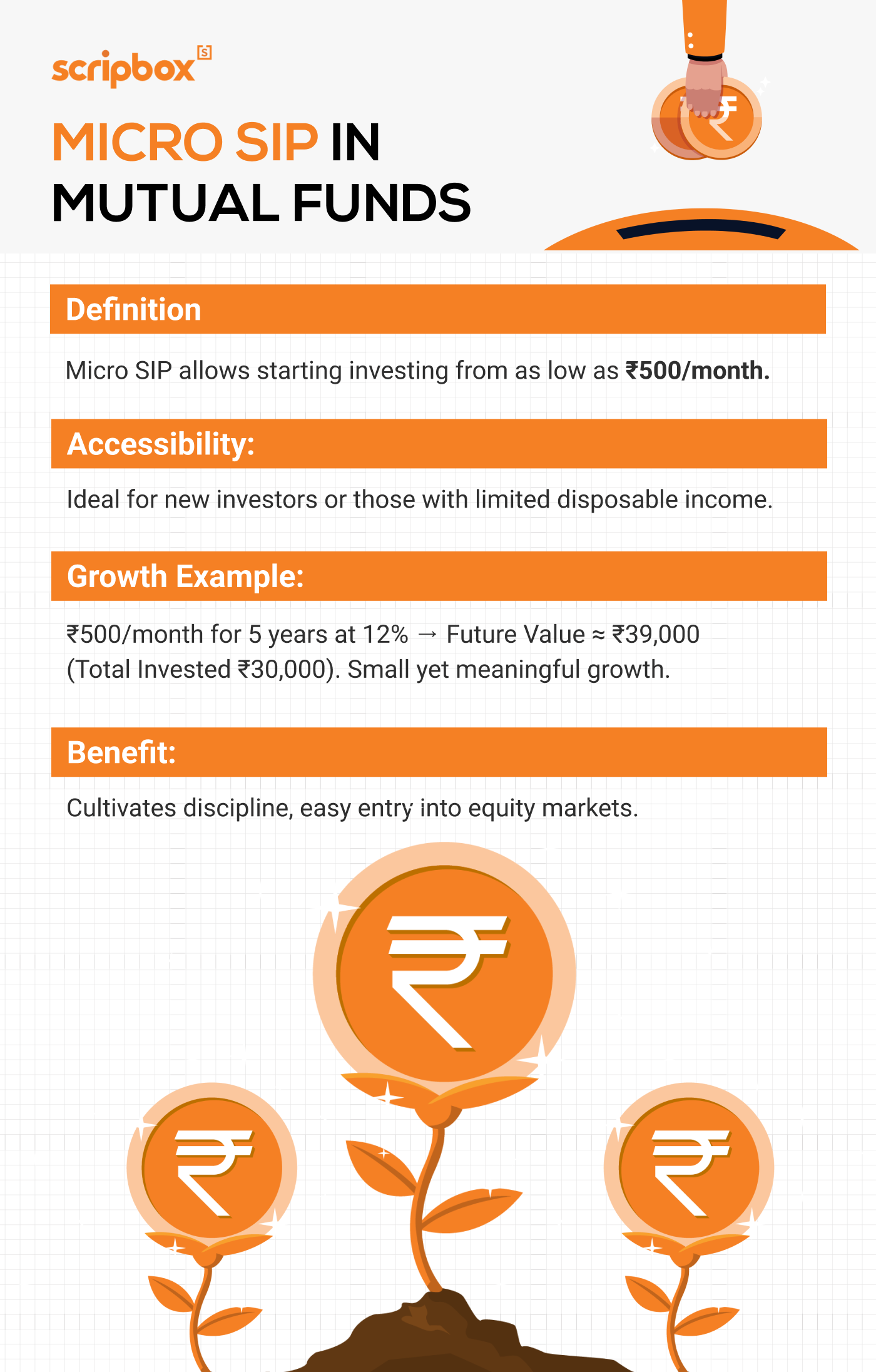
- Automatic Investment Plans (AIP): Investors who link a bank account to execute recurring monthly transfers can often bypass standard minimums entirely or reduce them to nominal amounts like $10 or $25 per month.
- Institutional Share Classes: Reserved for high-net-worth individuals, pensions, or endowments, these classes require massive capital commitments—often starting at $100,000 to $1,000,000—in exchange for significantly lower expense ratios.
Minimum Investment Comparison Across Fund Categories
Different asset classes and management styles utilize distinct operational models, which directly influence their respective entry barriers. The following table outlines standard investment thresholds and structural characteristics across major fund types.
| Fund Category | Typical Initial Minimum | Typical Subsequent Minimum | Primary Fee Structure | Operational Focus |
|---|---|---|---|---|
| Index Mutual Funds | $0 - $3,000 | $1 - $100 | Very Low Expense Ratio | Tracks broad market benchmarks passively |
| Actively Managed Funds | $1,000 - $5,000 | $50 - $100 | Moderate to High Expense Ratio | Outperforms benchmarks via professional management |
| Target-Date Retirement Funds | $0 - $1,000 | $1 - $50 | Low to Moderate Expense Ratio | Automatically shifts asset allocation over time |
| Institutional Share Classes | $100,000 - $1,000,000 | $1,000+ | Lowest Expense Ratio | High-capital institutional portfolios |
| Specialty / Sector Funds | $2,000 - $5,000 | $100 - $250 | Moderate to High Expense Ratio | Concentrated exposure to specific industries or themes |
The Mechanics of Automatic Investment Plans (AIP)
For many retail investors, meeting a lump-sum minimum of $3,000 poses a cash-flow challenge. To solve this, asset management firms and online brokerages promote Automatic Investment Plans.
An AIP allows an investor to bypass standard upfront minimums by committing to a recurring transfer schedule—usually monthly or quarterly—from a linked checking or savings account. For example, a fund with a $3,000 initial minimum might waive that requirement entirely if the investor agrees to set up an automatic monthly contribution of $50 or $100.
Operational Guidelines for Automatic Transfers
Consistency and Compliance Maintaining an active AIP is a strict contractual condition for waiving lump-sum minimums. If automatic transfers are repeatedly canceled or returned due to insufficient funds, the brokerage reserves the right to liquidate positions or convert the account to a standard retail tier.
Pros and Cons of Mutual Fund Investment Minimums
Evaluating the structural trade-offs of investment minimums helps clarify whether mutual funds align with your capital strategy or if alternative vehicles like ETFs are more appropriate.
Advantages
- Built-in Discipline: High initial thresholds and AIP commitments enforce regular, systematic saving habits over long horizons.
- Professional Oversight: Capital pooled past the minimum allows portfolio managers to execute complex asset allocation and rebalancing strategies without running into cash drag.
- Access to Scale: Lower net expense ratios on certain fund tiers become accessible once capital scales past initial milestones.
Disadvantages
- Capital Lock-In: Large initial minimums can trap significant liquidity in a single asset, reducing portfolio diversification for smaller portfolios.
- Cash Drag Risks: Accumulating enough capital to meet minimums can leave money sitting idle in low-yield cash accounts rather than working in the market.
- inflexibility Compared to ETFs: Unlike ETFs, which can be purchased for the price of a single fractional share, mutual fund minimums force lump-sum capital deployment.
Step-by-Step Guide to Navigating Fund Minimums
Executing your investment strategy while managing minimum requirements requires a methodical approach to broker selection and capital deployment.
- Assess Your Total Investable Capital: Calculate how much liquid capital you can comfortably deploy without disrupting your emergency fund or short-term liabilities.
- Select the Right Brokerage Platform: Choose a custodian or brokerage that offers low-minimum proprietary index funds or waives transaction fees for partner fund families.
- Check Account-Specific Waivers: Review the fund prospectus to determine if opening an IRA or utilizing an Automatic Investment Plan lowers the barrier to entry.
- Evaluate Alternative Vehicles: If minimums remain too restrictive, consider trading equivalent Exchange-Traded Funds (ETFs), which require capital equal to only one share price.
- Execute and Monitor: Fund the account, set up recurring contributions if utilizing a waiver, and monitor expense ratios against portfolio performance.
Common Mistakes and Troubleshooting
Investors frequently encounter operational roadblocks when attempting to navigate fund minimums across different brokerages. Avoiding these pitfalls ensures smooth portfolio management.
- Overlooking Subsequent Minimums: Meeting the initial $1,000 threshold does not mean you can add arbitrary micro-amounts later; check subsequent minimums before scheduling irregular top-ups.
- Confusing Brokerage Minimums with Fund Minimums: Holding cash in a brokerage account is distinct from meeting a specific mutual fund's investment minimum. You must explicitly route the cash purchase order into the fund.
- Neglecting Automatic Plan Penalties: Failing to maintain minimum balances or letting automated transfers fail can trigger penalty fees or automatic account closure by the institution.
Frequently Asked Questions
What is the absolute lowest minimum for a mutual fund?
Many modern brokerages and index fund providers set initial minimums to $0 if you establish an automatic monthly investment plan. Otherwise, standard minimums typically start between $500 and $3,000 for retail accounts.
Can I buy fractional shares of a mutual fund to bypass minimums?
Unlike ETFs, traditional mutual funds do not utilize fractional share trading in the open market; instead, you purchase a specific dollar amount, and the fund allocates exact fractional units based on the end-of-day NAV. However, some platforms allow dollar-based investing that mimics fractional entry under specific plan rules.
Do retirement accounts lower mutual fund investment minimums?
Yes, many fund families offer reduced initial investment thresholds for Individual Retirement Accounts (IRAs) to encourage long-term tax-advantaged savings. Reductions typically range from $500 to $1,000 off standard retail minimums.
What happens if my mutual fund balance drops below the minimum?
If market depreciation causes your account balance to fall below the minimum threshold, most fund houses will not force a liquidation. However, failing to make required subsequent investments or missing automatic plan contributions can trigger administrative warnings or account conversion fees.
Are institutional mutual funds accessible to individual investors?
Institutional share classes are generally restricted to pensions, endowments, and high-net-worth clients due to high minimums starting at $100,000 or more. Individual investors can sometimes access similar strategies via retail share classes or exchange-traded equivalents.
Conclusion and Strategic Recommendation
Navigating minimum mutual fund investment requirements requires matching your available capital with the right account structure and funding mechanism. By leveraging automatic investment plans and zero-minimum brokerages, modern investors can bypass legacy entry barriers and build diversified portfolios efficiently. Review fund prospectuses carefully, utilize automated savings to unlock fee waivers, and align your vehicle selection with your long-term financial plan.
Image Gallery