Exploring the Edge of VR, AR, and AI: The Convergence of Spatial Computing and Intelligence
In 2026, exploring the edge of VR, AR, and AI involves leveraging edge computing to offload complex spatial rendering and multimodal AI inference from wearable devices to localized servers. This convergence minimizes latency, enables p...
In 2026, exploring the edge of VR, AR, and AI involves leveraging edge computing to offload complex spatial rendering and multimodal AI inference from wearable devices to localized servers. This convergence minimizes latency, enables photorealistic environments, and provides real-time contextual intelligence, effectively overcoming the hardware constraints of mobile headsets and smart glasses.
Contents
The Convergence of Three Pillars: A 2026 Perspective
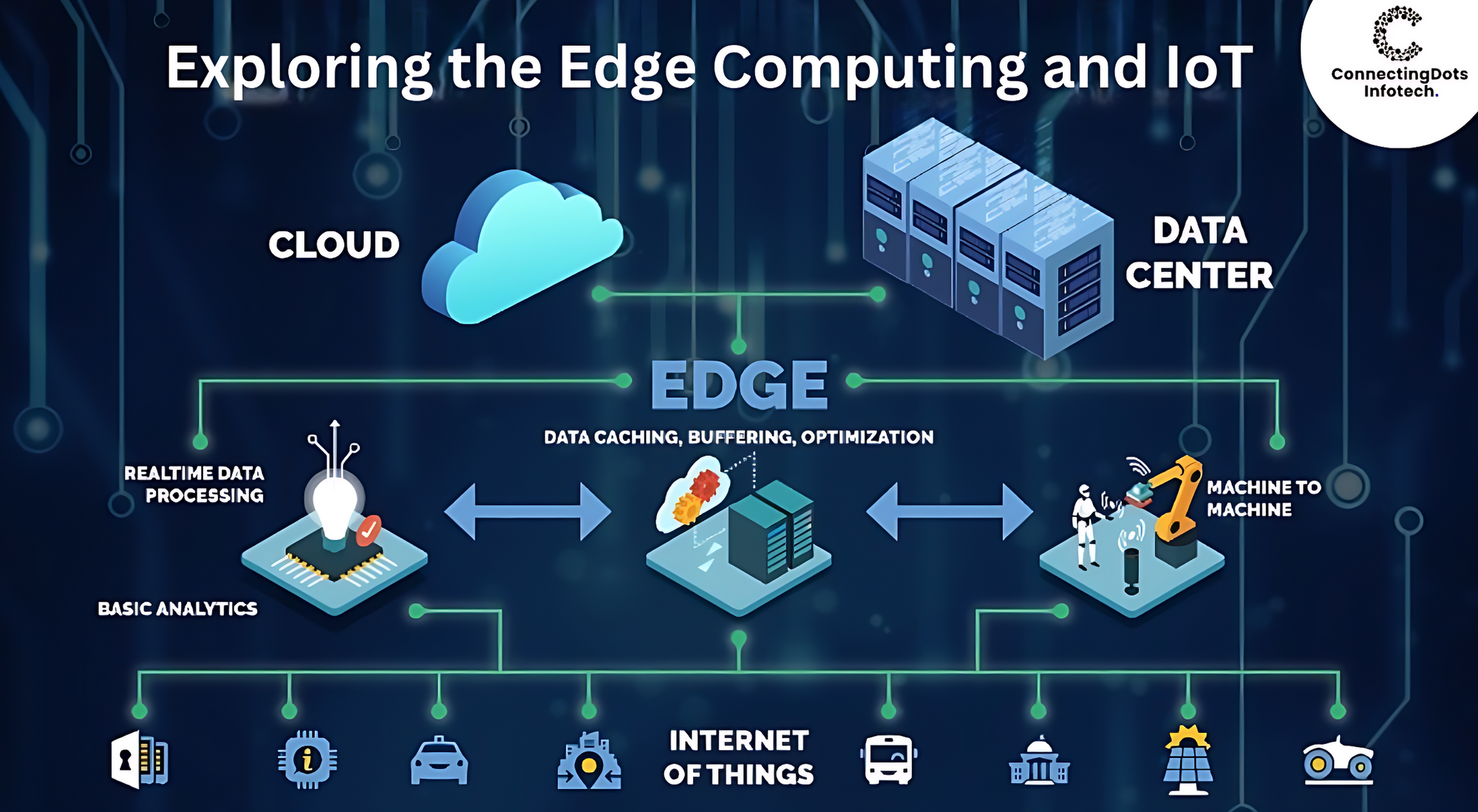
The technological landscape of 2026 is defined by the seamless integration of Virtual Reality (VR), Augmented Reality (AR), and Artificial Intelligence (AI). This trinity, often collectively referred to under the umbrella of Spatial Computing, has moved beyond standalone applications into a unified ecosystem. At the heart of this evolution is Edge Computing, the decentralized infrastructure that allows data to be processed closer to the user rather than in a distant data center.
The "Edge" represents two distinct but related concepts. First, it refers to the literal edge of the network—Multi-access Edge Computing (MEC) hubs and local 5G/6G nodes—which provide the low-latency bandwidth required for immersive experiences. Second, it refers to the "cutting edge" of innovation, where Generative AI now creates dynamic 3D environments on the fly. In 2026, we are no longer limited by the "walled gardens" of individual devices; instead, we operate in a distributed computing environment where the heavy lifting is shared between the headset, the local edge server, and the cloud.
The Role of Edge Computing in XR Performance
One of the primary bottlenecks for high-fidelity VR and AR has historically been the trade-off between device weight and processing power. To achieve true presence—the feeling of actually being in a virtual space—latency must remain below 20 milliseconds. If processing occurs in a centralized cloud, the "round-trip" time for data often exceeds this threshold, leading to motion sickness in VR or "floaty" graphics in AR.
Distributed Rendering Architectures
In 2026, the industry has standardized Split Rendering. In this model, the wearable device handles basic tracking (6 Degrees of Freedom) and late-stage warping, while the edge server handles complex ray-tracing and physics simulations. This allows for lightweight AR glasses that look like standard eyewear but possess the graphical power of a high-end workstation.
Bandwidth and 5G/6G Integration
The rollout of advanced 5G-Advanced and early 6G trials has been instrumental. These networks offer the high throughput necessary to stream uncompressed or lightly compressed 8K video per eye. Organizations such as the 3GPP have established protocols specifically for XR (Extended Reality) traffic, ensuring that spatial data packets are prioritized over less time-sensitive background data.
Artificial Intelligence: The Brain of the Spatial Interface
AI is the primary catalyst transforming VR and AR from passive viewing tools into interactive, intelligent assistants. By 2026, the transition from Large Language Models (LLMs) to Large Multimodal Models (LMMs) is complete. These models don't just understand text; they understand the 3D geometry of the user's room and the objects within it.
Semantic Scene Understanding
Through AR glasses, AI performs real-time Semantic Labeling. As a user walks through a factory or a hospital, the AI identifies equipment, retrieves maintenance logs via API, and overlays instructions directly onto the physical object. This is not pre-programmed; the AI "sees" and interprets the environment dynamically.
Generative Environments and Digital Twins
In the VR sector, Generative AI now allows for the creation of "on-demand" environments. Users can describe a setting—"A 1920s jazz club in Paris with realistic acoustics"—and the AI generates the 3D assets, lighting, and spatial audio in seconds. This capability is vital for the development of Digital Twins, where real-world physical systems are mirrored in a virtual space for simulation and stress-testing.
Technical Specifications and Comparative Architectures
Choosing the right deployment strategy depends on the specific requirements of the application, such as mobility, visual fidelity, and security. The following table compares the three dominant processing architectures available in 2026.
| Feature | On-Device Processing | Edge Computing (MEC) | Centralized Cloud |
|---|---|---|---|
| Latency | < 5ms (Ultra-low) | 10ms - 30ms (Low) | > 100ms (High) |
| Visual Fidelity | Limited by mobile silicon | High (Workstation grade) | Ultra-High (Server grade) |
| Battery Impact | High (Drains quickly) | Low (Offloaded tasks) | Low (Offloaded tasks) |
| Mobility | Highest (Works offline) | High (Requires 5G/6G) | Moderate (Requires Fiber/Wi-Fi) |
| Best Use Case | Basic UI, simple games | Enterprise AR, AAA VR | Asynchronous simulations |
Practical Applications at the Edge
Healthcare and Remote Surgery
The "edge" of VR and AI is perhaps most visible in the medical field. Surgeons now use AR overlays to see "through" a patient’s skin using real-time MRI data. By processing this data at the hospital's local edge server, there is zero perceptible lag between the surgeon's movements and the digital overlay, which is critical for patient safety.
Industrial Maintenance and Training
In 2026, heavy industries have moved away from paper manuals. Technicians equipped with AR headsets receive "Just-in-Time" training. AI monitors their hand movements and provides corrective feedback if a bolt is not tightened to the correct torque or if a safety protocol is skipped. This data is logged to a central server to ensure regulatory compliance and to refine future AI training models.
The Future of Remote Collaboration
Spatial computing has redefined the "office." Rather than 2D video calls, teams meet in persistent virtual spaces where AI-driven avatars replicate subtle facial expressions and body language in real-time. Edge computing ensures that spatial audio is perfectly synced, allowing for natural "over-the-shoulder" conversations that were previously impossible in digital environments.
Implementation Challenges and Solutions
Despite the advancements of 2026, several hurdles remain for those exploring the edge of these technologies.
- Privacy and Data Sovereignty: Spatial computing devices collect immense amounts of data about a user's physical environment. Processing this at the edge, rather than the cloud, helps keep sensitive data within a local or corporate network, but robust encryption and "Privacy by Design" frameworks are mandatory.
- Interoperability: For the "Metaverse" concept to function, assets must be portable across different hardware. The Khronos Group continues to update standards like OpenXR and Vulkan to ensure that an AI-generated 3D model in one ecosystem can be used in another.
- Thermal Management: Even with offloading, the sensors and displays in VR/AR headsets generate significant heat. Active cooling and the use of specialized silicon (such as the 2026 iterations of the Snapdragon XR series or Apple’s R-series chips) are essential for long-term comfort.
Frequently Asked Questions
Do I need a 5G or 6G connection to use edge-based AR?
While basic AR functions can work offline using on-device processing, high-fidelity features like real-time AI object recognition and complex 3D overlays require the high bandwidth and low latency of 5G-Advanced or 6G. Without these, you may experience lag or a reduction in visual quality as the system reverts to simpler on-device models.
Is edge computing more expensive than traditional cloud VR?
Initially, the infrastructure costs for edge computing are higher because it requires localized server deployments. However, for enterprise users, the ROI is realized through reduced bandwidth costs over the long term and significantly improved performance that enables use cases—like remote surgery or precision manufacturing—that are impossible with traditional cloud latency.
How does AI improve the battery life of VR headsets?
AI improves battery life through a technique called Foveated Rendering. Eye-tracking sensors determine exactly where the user is looking, and the AI instructs the GPU to render only that small area in full detail. The peripheral areas are rendered at a lower resolution, drastically reducing the power consumption of the display and processor.
Can old VR headsets use these new edge features?
Most legacy hardware lacks the necessary radios (e.g., 5G/6G modems) and sensor arrays to fully utilize 2026-era edge AI. However, some "tethered" headsets can benefit if they are connected to a PC or a local hub that acts as a bridge to the edge network.
Are there privacy risks with AI "seeing" my home?
Yes, this is a significant concern. Current 2026 regulations in many jurisdictions require "On-Device Edge Obfuscation," where sensitive environmental data (like faces or documents) is blurred or stripped at the local device level before any data is sent to an edge server for AI processing.
Final Recommendation for Adoption
To successfully explore the edge of VR, AR, and AI, organizations should prioritize infrastructure readiness. Before investing in a fleet of headsets, ensure your local network supports Wi-Fi 7 or 5G-Advanced to handle the high-throughput data streams. Start with a "Pilot at the Edge"—deploying a localized MEC node for a specific high-value use case, such as specialized training or design visualization—before attempting a full-scale global rollout. By focusing on the synergy of localized processing and intelligent software, you can unlock the true potential of spatial computing without being tethered by the limitations of current hardware.
Image Gallery