Understanding the Endowment Effect Bias: Why We Overvalue What We Own
The endowment effect bias is a cognitive phenomenon where individuals assign a higher value to an object simply because they own it. This psychological tendency leads people to demand more to give up an item than they would be willing...
The endowment effect bias is a cognitive phenomenon where individuals assign a higher value to an object simply because they own it. This psychological tendency leads people to demand more to give up an item than they would be willing to pay to acquire it, often resulting in irrational economic decisions and market inefficiencies.
Contents
In behavioral economics, the endowment effect serves as a cornerstone for understanding why human decision-making frequently deviates from classical rational models. While traditional economic theory suggests that a person’s "willingness to pay" (WTP) should equal their "willingness to accept" (WTA) for the same good, real-world behavior consistently proves otherwise. As we navigate the complex financial and consumer landscapes of 2026, recognizing this bias is essential for investors, marketers, and consumers alike to ensure objective valuation and strategic clarity.
The Psychological Foundation: Why Possession Changes Perception
The endowment effect was first formally identified and named by Richard Thaler, who later won the Nobel Prize in Economic Sciences. However, its roots are deeply intertwined with Prospect Theory, developed by Daniel Kahneman and Amos Tversky. Understanding why this bias occurs requires looking at three primary psychological mechanisms.
Loss Aversion
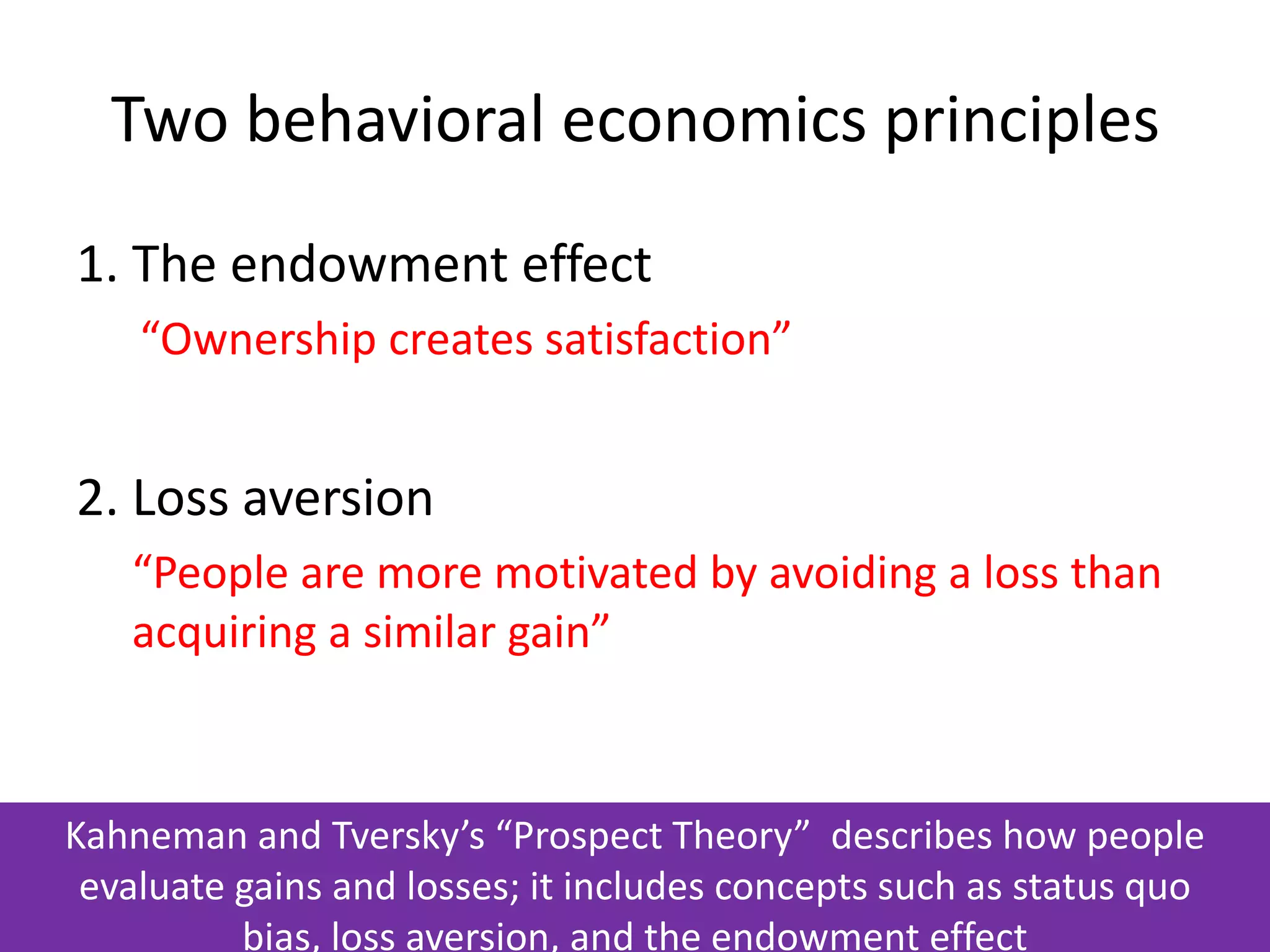
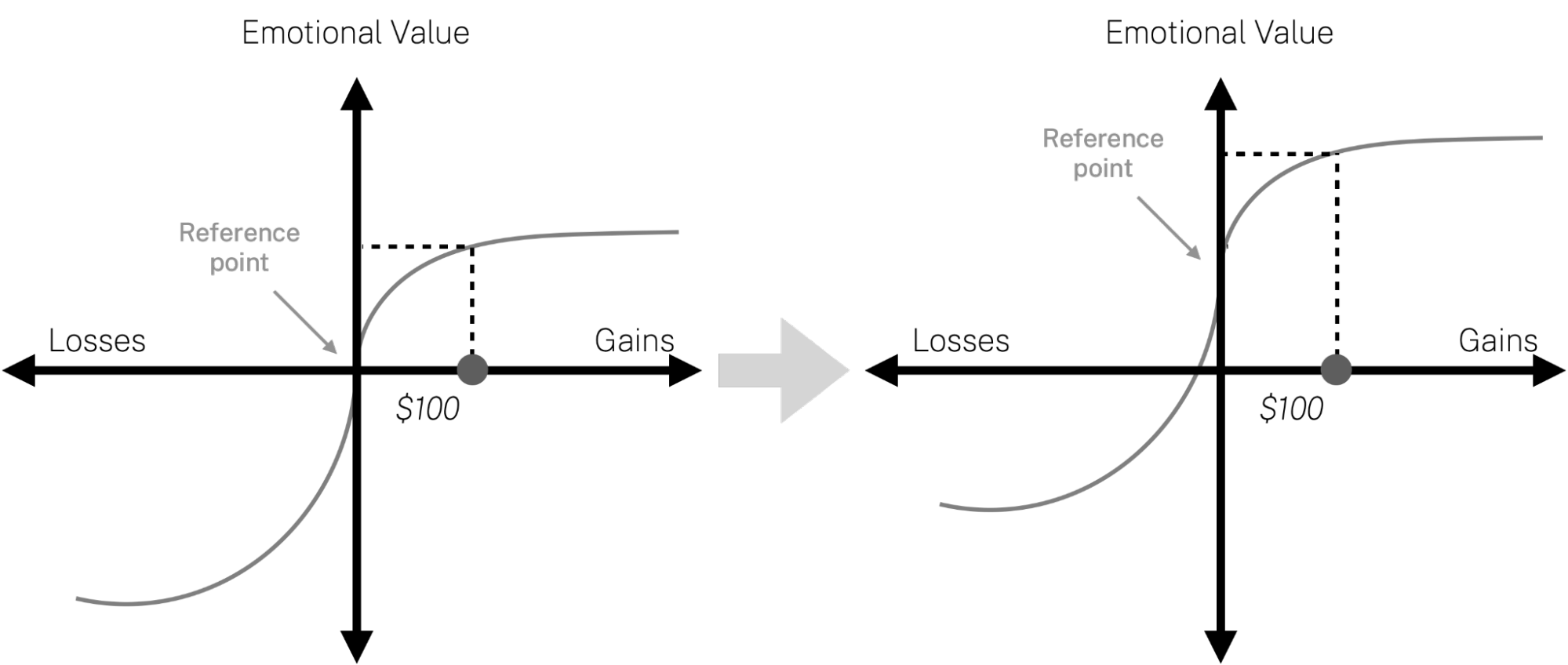
At the heart of the endowment effect lies loss aversion—the principle that the pain of losing something is psychologically twice as powerful as the pleasure of gaining something of equal value. When we own an item, giving it up is framed by the brain as a "loss." To compensate for this perceived pain, we subconsciously inflate the price we are willing to accept to part with it. Kahneman’s research suggests that for most people, the ratio of loss aversion is roughly 2:1, meaning the discomfort of losing $100 is twice as intense as the joy of gaining $100.
The Mere Ownership Effect
Ownership creates a psychological bond between the individual and the object. Research indicates that once an item enters a person’s "possession," it becomes part of their extended self-identity. This connection happens almost instantaneously. In famous experiments, participants given a chocolate bar or a coffee mug immediately began to view the item as an extension of their personal space, making them reluctant to trade it even for an item of objectively higher value.
Evolutionary Biology and Survival
From an evolutionary standpoint, the endowment effect may have served as a survival mechanism. In environments of scarcity, holding onto resources (food, tools, or territory) was more critical than the potential gain of acquiring new, unproven resources. While our modern environment in 2026 is vastly different, our neurological hardwiring still prioritizes the security of "the bird in the hand."
Classic Experiments: The Cornell Mug Study
To understand the mechanics of the endowment effect, one must look at the seminal experiment conducted by Daniel Kahneman, Jack Knetsch, and Richard Thaler in 1990. The study involved a simple set of coffee mugs and a group of university students.
The researchers divided participants into three groups:
- Sellers: These students were given a mug and asked for the minimum price they would accept to sell it.
- Buyers: These students were shown the mug and asked for the maximum price they would pay to buy it.
- Choosers: These students were given a choice between receiving a mug or a specific amount of money.
The results were startling and remain a benchmark in behavioral science. The median selling price (WTA) was consistently double the median buying price (WTP). The "sellers" valued their mugs at approximately $7.12, while "buyers" were only willing to pay $2.87. This gap—often called the WTA-WTP disparity—is the quantifiable footprint of the endowment effect.
| Participant Role | Perspective | Average Valuation (Example) | Psychological Driver |
|---|---|---|---|
| Buyer | Acquisition of a new asset | $3.00 | Evaluation of utility vs. cost |
| Seller | Loss of an existing asset | $7.00 | Loss aversion and identity attachment |
| Chooser | Neutral choice between options | $3.50 | Comparison of market value |
Real-World Implications Across Industries
The endowment effect is not merely an academic curiosity; it has profound impacts on various sectors of the economy. In 2026, as data-driven decision-making becomes even more prevalent, recognizing where this bias skews data is critical.
The Real Estate Market
One of the most visible displays of the endowment effect occurs in housing. Homeowners often develop deep emotional attachments to their property, remembering memories made within the walls. Consequently, sellers frequently list their homes at prices significantly higher than comparable market sales (comps). This "sentimental premium" can lead to houses sitting on the market for months, as sellers refuse to "lose" the value they have internally assigned to their home.
Financial Markets and Investing
Investors frequently fall prey to the endowment effect when they hold onto underperforming stocks. Because they own the shares, they perceive them as more valuable than the market does. This bias often pairs with the Sunk Cost Fallacy, where the investor continues to pour resources into a losing position because they are psychologically unable to accept the "loss" of parting with their "endowed" asset. Professional traders often combat this by asking: "If I didn't own this stock today, would I buy it at its current price?"
Marketing and "The Puppy Dog Close"
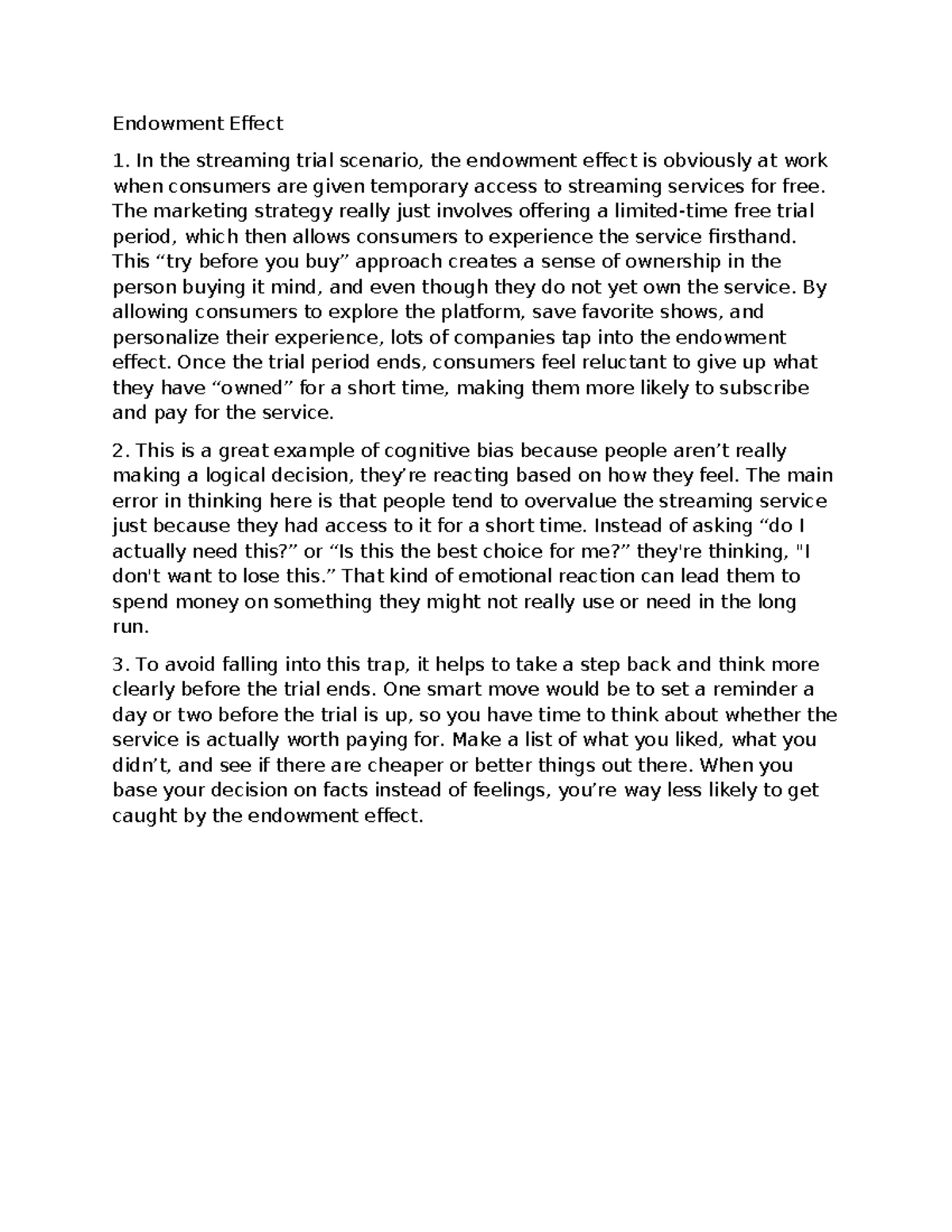
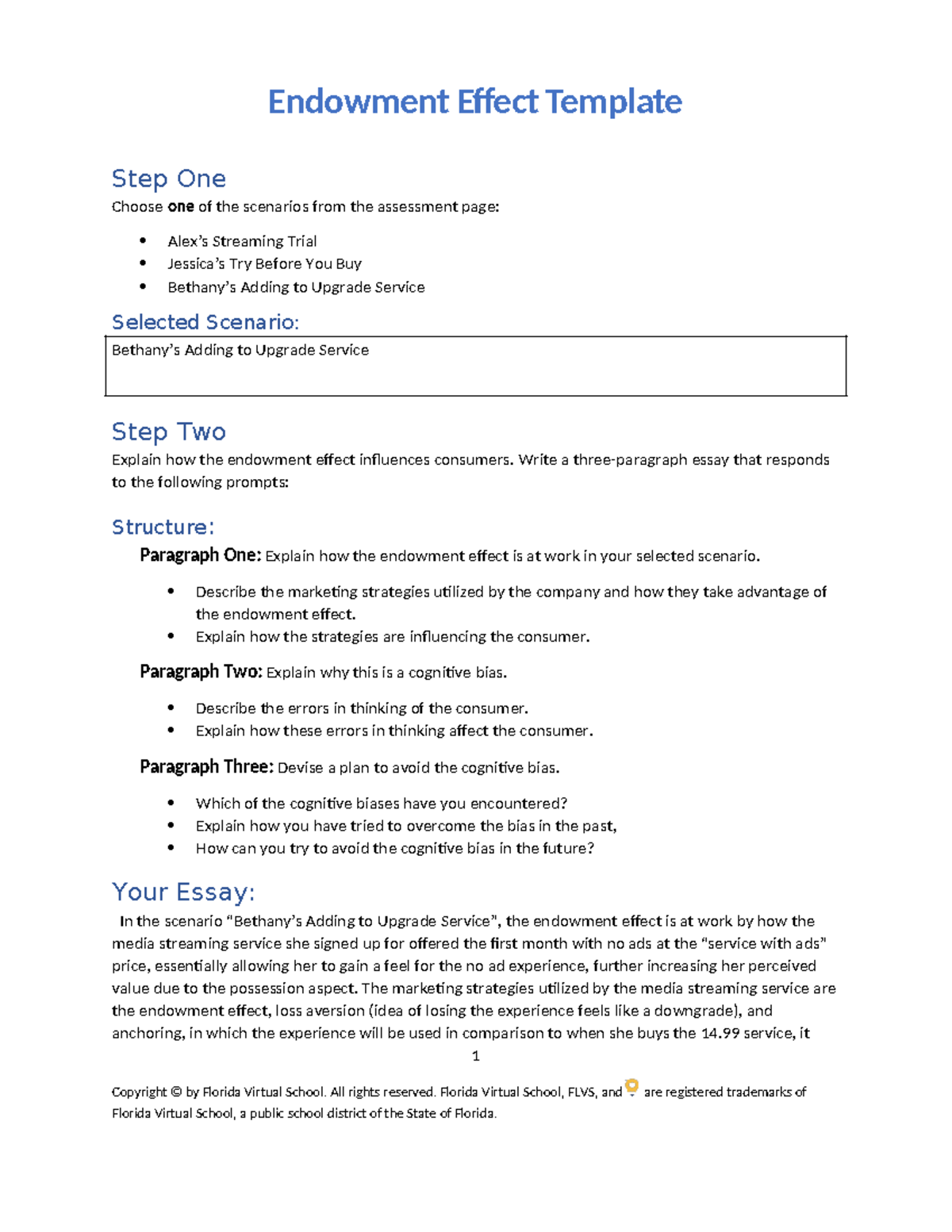
Marketers have long exploited the endowment effect to drive sales. Strategies such as "30-day money-back guarantees," free trials, and "freemium" software models are designed to get the product into the consumer's hands. Once the consumer "owns" the service for a month, the prospect of losing access feels like a loss rather than a simple choice not to buy. This makes them much more likely to pay for the full subscription than they would have been before the trial began.
Distinguishing Related Biases
The endowment effect often overlaps with other cognitive shortcuts. To master behavioral finance, one must distinguish between these nuances:
- The IKEA Effect: This is a subset of the endowment effect where individuals value items more highly because they built or created them. The labor involved increases the sense of ownership and attachment.
- Status Quo Bias: This is the preference for the current state of affairs. While the endowment effect focuses on the value of an object, status quo bias is the broader tendency to avoid change because the potential losses of changing feel more significant than the potential gains.
- Scarcity Heuristic: While the endowment effect increases value through ownership, the scarcity heuristic increases value based on how difficult an item is to acquire.
Strategies to Mitigate the Endowment Effect Bias
Because the endowment effect is an unconscious process, it cannot be "turned off" entirely. However, it can be managed through deliberate "de-biasing" techniques.
1. The "As-If" Buying Test
When deciding whether to sell an item or an investment, imagine you do not own it. Ask yourself: "If I had the cash equivalent of this item's current market value, would I spend that cash to buy it right now?" If the answer is no, you are likely holding the item due to the endowment effect rather than its objective utility.
2. Opportunity Cost Analysis
Shift your focus from what you are losing (the item) to what you are gaining (the liquidity or the alternative). By framing a sale as the acquisition of capital rather than the loss of an object, you can neutralize the effects of loss aversion. Detailed frameworks for this can be found through resources like the American Economic Association.
3. Seek Third-Party Valuations
In high-stakes environments like real estate or business acquisitions, utilize objective third parties who have no emotional attachment to the asset. Appraisers and algorithmic valuation tools (common in 2026 fintech) provide a baseline that is free from the owner’s psychological inflation.
4. Deliberate "Psychological Detachment"
Before entering a negotiation, acknowledge the bias. Research published in the Journal of Consumer Research suggests that simply being aware of the endowment effect can reduce its impact. Practice viewing assets as "inventory" or "tools" rather than extensions of yourself.
Frequently Asked Questions
Does the endowment effect apply to digital assets?
Yes. Studies in the mid-2020s have shown that users experience the endowment effect with digital goods, such as in-game items, NFTs, and even social media handles. Once a user customizes or "owns" a digital space, their valuation of it spikes significantly compared to non-owners.
Is the endowment effect universal across all cultures?
While the bias is widespread, some research suggests its intensity varies. Cultures that emphasize collective ownership or have different perspectives on personal identity may exhibit a less pronounced endowment effect than highly individualistic societies. However, the core mechanism of loss aversion appears to be a near-universal human trait.
Can the endowment effect be beneficial?
In some contexts, yes. It can create a sense of stability and satisfaction with what one has, reducing the constant urge to consume new goods (the "hedonic treadmill"). It also fosters a sense of stewardship, as people are more likely to care for and maintain items they value highly.
How does the endowment effect impact legal settlements?
In legal disputes, plaintiffs often overvalue the "loss" they suffered, while defendants undervalue the "cost" of the settlement. This WTA-WTP gap is a major hurdle in mediation. Professional mediators use de-biasing techniques to help both parties move toward a realistic market valuation of the damages.
Does the effect weaken with professional experience?
Research, including studies by John List, suggests that professional traders and experienced collectors are less susceptible to the endowment effect in their area of expertise. Constant exposure to buying and selling helps these individuals view items as "goods for exchange" rather than "possessions for keeping."
Final Recommendation
To make better financial and personal decisions in 2026, you should perform a "portfolio audit" twice a year. Examine your significant possessions—stocks, real estate, or even high-value collectibles—and apply the "Would I buy this today?" test. If you find yourself holding onto assets that you wouldn't buy at their current price, you are likely paying an "endowment tax" to your own psychology. By consciously detaching your identity from your assets, you can unlock capital and mental energy for opportunities that offer genuine growth rather than just the comfort of the familiar.
Image Gallery