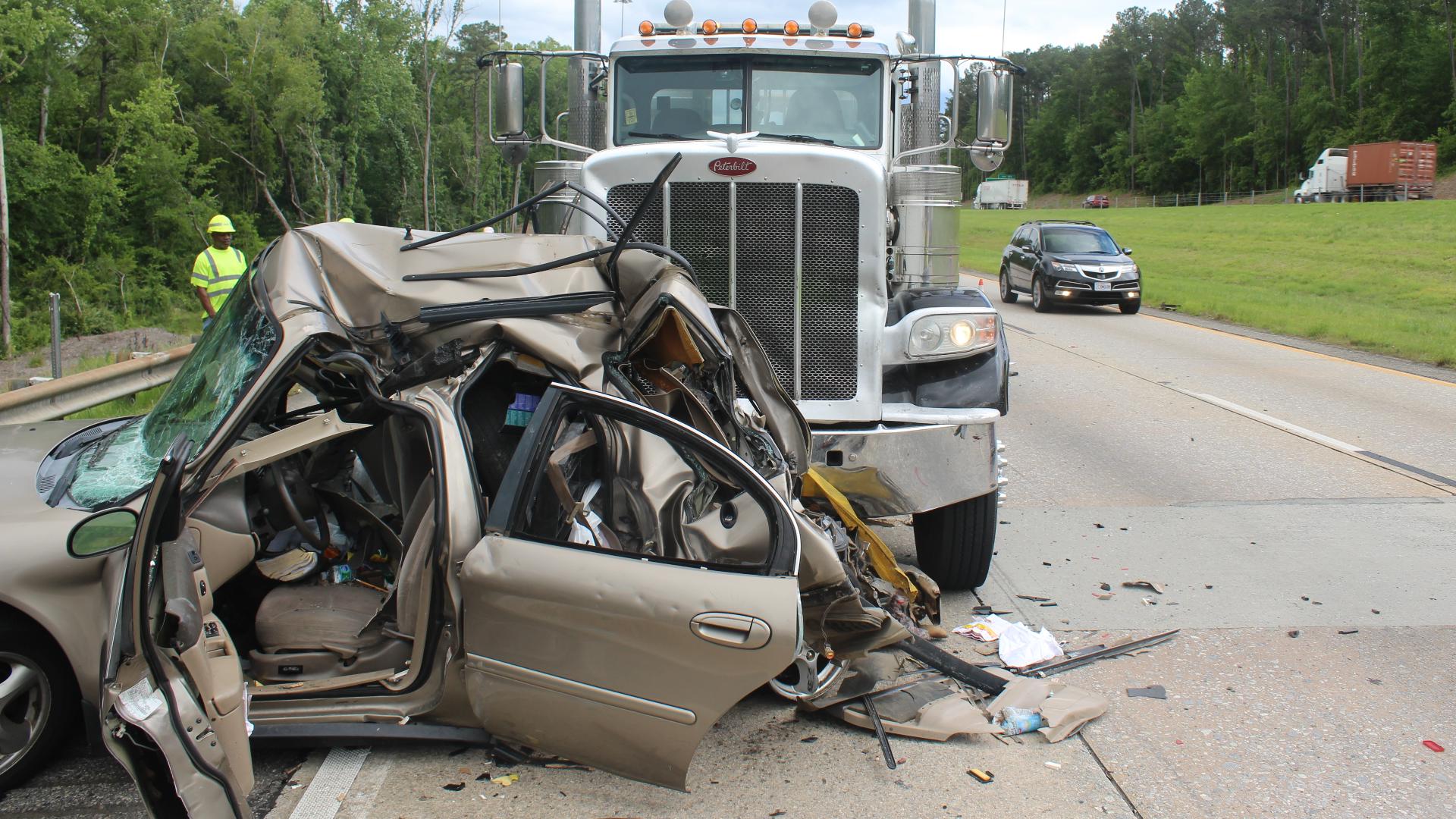
Truck Accident Attorney in Macon Georgia: Navigating Complex Commercial Vehicle Claims
Hiring a truck accident attorney in Macon, Georgia, is essential for victims seeking to recover damages after a collision with a commercial motor vehicle. These specialized lawyers manage complex litigation involving federal safety reg...
Hiring a truck accident attorney in Macon, Georgia, is essential for victims seeking to recover damages after a collision with a commercial motor vehicle. These specialized lawyers manage complex litigation involving federal safety regulations, multi-party liability, and high-stakes insurance negotiations to ensure victims receive fair compensation for medical bills, lost income, and suffering.
Contents
In 2026, the logistics landscape in Middle Georgia remains one of the busiest in the Southeastern United States. Macon serves as a critical junction where Interstate 75 and Interstate 16 converge, facilitating a massive volume of freight moving between the Port of Savannah, Atlanta, and Florida. While this commerce fuels the local economy, it also results in a high frequency of catastrophic commercial vehicle accidents. Navigating the legal aftermath of these incidents requires a sophisticated understanding of both Georgia state law and federal transportation mandates.
The Strategic Importance of Local Counsel in Macon
Macon-Bibb County presents a unique legal environment for personal injury litigation. A local truck accident attorney brings indispensable knowledge regarding the specific traffic patterns of the "Macon Split" and the tendencies of local courts. In 2026, as freight volumes continue to rise, the complexity of these cases has scaled accordingly.
Commercial truck accidents are fundamentally different from standard passenger vehicle collisions. The sheer mass of a fully loaded semi-truck—often weighing up to 80,000 pounds—means that even low-speed impacts can result in life-altering injuries or fatalities. Legal representation in Macon must account for the specific logistics hubs located nearby, such as major distribution centers for national retailers, which often involve third-party logistics providers and complex layers of corporate liability.
Furthermore, a local attorney is familiar with the Georgia Department of Public Safety (DPS) Motor Carrier Compliance Division, which often handles the initial investigation of commercial wrecks in Bibb County. Accessing these specialized accident reports and understanding the nuances of local law enforcement's findings can be the difference between a successful claim and a denial.
Determining Liability: The Multi-Party Challenge
One of the primary reasons to retain a specialized truck accident attorney in Macon is the difficulty of identifying all liable parties. Unlike a typical car accident where you generally sue the other driver, a trucking accident often involves a web of entities:
- The Truck Driver: Liability may stem from driver fatigue, impaired driving, or violation of traffic laws.
- The Trucking Company (Carrier): Under the legal doctrine of respondeat superior, employers are often responsible for the actions of their drivers. Additionally, carriers can be held liable for negligent hiring, training, or retention practices.
- The Cargo Loaders: If a trailer is improperly loaded, causing a "shift" that leads to a rollover or jackknife, the third-party company responsible for loading the freight may be at fault.
- Maintenance Providers: If a mechanical failure—such as brake failure or a tire blowout—was caused by substandard service, the maintenance contractor may be joined in the lawsuit.
- Manufacturers: If a defective part contributed to the crash, a product liability claim may be pursued against the manufacturer of the truck or its components.
In Georgia, the Direct Action Statute (O.C.G.A. § 40-1-112) provides a significant advantage for victims. This law allows a plaintiff to sue the motor carrier’s insurance company directly in certain circumstances, which can streamline the process of securing a settlement or judgment.
Federal Regulations and the "Black Box" Evidence
Trucking is a heavily regulated industry. Attorneys must be well-versed in the Federal Motor Carrier Safety Regulations (FMCSRs), which dictate everything from how many hours a driver can be on the road to mandatory drug testing protocols.
Hours of Service (HOS) Violations
The Federal Motor Carrier Safety Administration (FMCSA) sets strict limits on driving time to prevent driver fatigue. When an accident occurs in Macon, an attorney will immediately move to secure the driver’s Electronic Logging Device (ELD) data. In 2026, these digital logs are the gold standard for proving that a driver exceeded their legal limits, a common factor in long-haul accidents passing through Georgia.
The Electronic Control Module (ECM)
Modern trucks are equipped with an ECM, commonly referred to as a "black box." This device records critical telemetry data in the seconds leading up to a crash, including:
- Vehicle speed
- Braking activity
- Throttle position
- Steering angles
- Engine RPMs
An experienced Macon truck accident attorney will issue a spoliation letter immediately following the accident. This legal notice prevents the trucking company and their insurers from destroying or altering this digital evidence, which is often the most objective proof of negligence available.
Comparative Negligence in Georgia
Georgia follows a modified comparative negligence rule (specifically the 50% bar). This means that a victim can recover damages as long as they are less than 50% responsible for the accident. However, their total compensation will be reduced by their percentage of fault.
For example, if a jury determines that a truck driver was 80% at fault for an illegal lane change on I-75, but the plaintiff was 20% at fault for speeding, a $1,000,000 award would be reduced to $800,000. Trucking companies and their high-powered legal teams frequently use this rule to shift blame onto the victim. A skilled attorney anticipates these tactics, using accident reconstruction experts to prove the primary negligence lay with the commercial operator.
Compensation Categories in Trucking Litigation
The damages available in a Macon truck accident case are typically categorized into economic and non-economic losses. Given the severity of these crashes, the financial stakes are often in the millions.
| Damage Type | Description | Common Examples |
|---|---|---|
| Economic Damages | Quantifiable financial losses resulting from the injury. | Medical bills (past and future), lost wages, loss of earning capacity, and property damage. |
| Non-Economic Damages | Subjective, non-monetary losses related to the victim's quality of life. | Pain and suffering, emotional distress, loss of consortium, and permanent disfigurement. |
| Punitive Damages | Awarded to punish the defendant for "willful misconduct" or "entire want of care." | DUI accidents, excessive speeding, or intentional falsification of safety logs. |
In Georgia, punitive damages are generally capped at $250,000 unless it can be proven that the defendant acted with a specific intent to cause harm or was under the influence of alcohol or drugs (O.C.G.A. § 51-12-5.1). In high-speed truck collisions, proving a "conscious indifference to consequences" is a high bar that requires meticulous legal work.
The Litigation Process: What to Expect
The journey from accident to compensation is rarely swift. Trucking companies are backed by massive insurance policies, often starting at $750,000 and reaching into the tens of millions for large fleets. These insurers have rapid-response teams that arrive at accident scenes in Macon within hours to begin building a defense.
1. Investigation and Evidence Preservation
Your attorney will hire private investigators and accident reconstructionists to visit the site, photograph skid marks, and inspect vehicle damage. They will also gather the "driver qualification file," which contains the driver’s training records, medical certificates, and employment history.
2. Filing the Insurance Claim or Lawsuit
While many cases settle out of court, a Macon attorney must be prepared to file a formal lawsuit in the Bibb County Superior Court or Federal District Court if the insurance company refuses to offer a fair settlement. The mere threat of a trial often forces higher settlement offers during the mediation phase.
3. Discovery and Depositions
This is the formal exchange of information. Both sides will answer written questions (interrogatories) and provide sworn testimony in depositions. Your attorney will depose the truck driver, the fleet safety manager, and expert witnesses to uncover inconsistencies in the defense's story.
4. Settlement or Trial
Most 2026 trucking cases reach a settlement during mediation. However, if a carrier denies liability despite clear evidence, the case will proceed to a jury trial. Having a litigator with a proven track record in Middle Georgia courts is vital at this stage.
Frequently Asked Questions
What is the statute of limitations for a truck accident in Georgia?
In Georgia, you generally have two years from the date of the accident to file a personal injury lawsuit (O.C.G.A. § 9-3-33). If the accident resulted in a wrongful death, the two-year clock begins on the date of the person's passing. It is crucial to act much sooner, however, as physical evidence disappears and digital logs can be legally purged by trucking companies after a certain period if no legal hold is placed on them.
How much does it cost to hire a truck accident attorney in Macon?
Most truck accident lawyers operate on a contingency fee basis. This means there are no upfront costs to the victim. The attorney covers all investigative and filing expenses, and they only receive a percentage of the final settlement or court award. If the attorney does not win the case, the client typically owes no legal fees.
Can I still sue if the truck driver was from out of state?
Yes. Because the accident occurred in Macon, Georgia, the Georgia courts have jurisdiction over the incident. Furthermore, the Federal Motor Carrier Safety Regulations apply to all interstate commercial drivers, regardless of their home state. A local Macon attorney can handle the complexities of serving legal papers to out-of-state corporations.
Why is the trucking company's insurance company calling me?
The insurance adjuster’s goal is to minimize the payout. They may offer a "quick settlement" that seems substantial but likely fails to cover long-term medical needs or future lost wages. You are not required to give a recorded statement to the carrier's insurance company, and doing so without an attorney can severely damage your claim.
What should I do immediately after a truck accident in Macon?
First, ensure your safety and call 911 so the Macon-Bibb County Fire Department or Police can respond. Seek immediate medical attention, even if you feel fine, as adrenaline often masks serious internal injuries. If possible, take photos of the scene, the truck’s USDOT number, and the license plates. Finally, contact a specialized attorney before speaking with any insurance representatives.
Professional Recommendation for Accident Victims
If you or a family member has been involved in a collision with a commercial vehicle in Middle Georgia, the most critical step you can take is to secure legal counsel immediately. The disparity in resources between an individual victim and a multi-billion dollar trucking corporation is vast. A specialized truck accident attorney in Macon acts as an equalizer, utilizing expert testimony and federal regulatory knowledge to build a compelling case for maximum recovery. Delaying action allows critical evidence—such as tire marks, witness memories, and electronic data—to fade or be destroyed.
Image Gallery