Unlevered vs Levered Capital Structures Explained: Key Differences and Financial Impact
Unlevered capital structure refers to a company financed entirely by equity, while a levered capital structure incorporates both equity and debt. The fundamental difference lies in financial risk and cost: unlevered structures avoid in...
Unlevered capital structure refers to a company financed entirely by equity, while a levered capital structure incorporates both equity and debt. The fundamental difference lies in financial risk and cost: unlevered structures avoid interest obligations and default risk, whereas levered structures utilize debt to potentially amplify returns for shareholders while introducing the mandatory burden of interest payments.
Contents
Understanding the Foundation of Capital Structure
Every business must decide how to fund its operations, growth, and long-term asset acquisitions. This decision, known as capital structure, represents the specific mix of debt and equity used to finance operations. At its simplest level, this boils down to a fundamental choice: do you rely solely on your own capital and retained earnings (unlevered), or do you borrow funds from creditors to fuel your objectives (levered)?
The concept of leverage in finance is analogous to mechanical leverage. Just as a physical lever allows a person to lift a heavy object with less force, financial leverage allows a firm to control a larger asset base with a smaller amount of equity. However, this power works in both directions. While it can magnify earnings when business conditions are favorable, it can equally accelerate losses during downturns.
The Unlevered Capital Structure: Equity-Only Financing
An unlevered firm operates without any debt. In this scenario, the company's assets are funded entirely through shareholder equity. Because there are no creditors, the company has no interest expenses to pay, nor is it subject to the restrictive covenants often found in loan agreements.
Primary Characteristics
- Zero Interest Risk: Without debt, the company cannot default on interest payments. This provides a significant cushion during periods of economic volatility or declining revenue.
- Full Ownership: Because all financing comes from equity holders, there is no dilution of ownership interest to debt holders, though the company may have issued shares to various investors.
- Simplicity: The lack of debt instruments simplifies the financial statements. Investors do not need to calculate debt-to-equity ratios or evaluate the company's ability to service interest obligations.
The Trade-off
While an unlevered structure is safe, it is often criticized for failing to optimize the cost of capital. Debt is generally cheaper than equity because interest payments are tax-deductible and lenders take less risk than equity investors. By avoiding debt entirely, an unlevered firm may inadvertently increase its Weighted Average Cost of Capital (WACC), which can make it more expensive to fund new projects compared to competitors who utilize debt efficiently.
The Levered Capital Structure: Combining Debt and Equity
A levered capital structure introduces borrowed funds into the financing mix. These funds can come from various sources, including bank loans, corporate bonds, or other credit facilities. By introducing debt, management aims to benefit from the tax shield provided by interest payments and the ability to expand operations without immediately issuing more shares.
The Role of Financial Leverage
The primary motivator for choosing a levered structure is the potential for increased Return on Equity (ROE). If a company can borrow money at a 5% interest rate and invest it in projects that earn a 10% return, the excess profit accrues to the shareholders. Effectively, the company is using other people's money to generate higher returns for its owners.
Risks and Constraints
- Financial Distress: The most significant downside of a levered structure is the fixed nature of debt obligations. If a company fails to meet its interest payments, it can be forced into bankruptcy, even if the underlying business model remains viable.
- Covenants: Lenders often impose restrictive covenants—rules that limit the company's ability to pay dividends, take on more debt, or make specific capital expenditures. These can limit management's flexibility.
- Increased Volatility: Leverage magnifies both upside and downside performance. When earnings fall, interest must still be paid, which can quickly turn a profitable quarter into a net loss for common shareholders.
Key Comparison: Unlevered vs. Levered
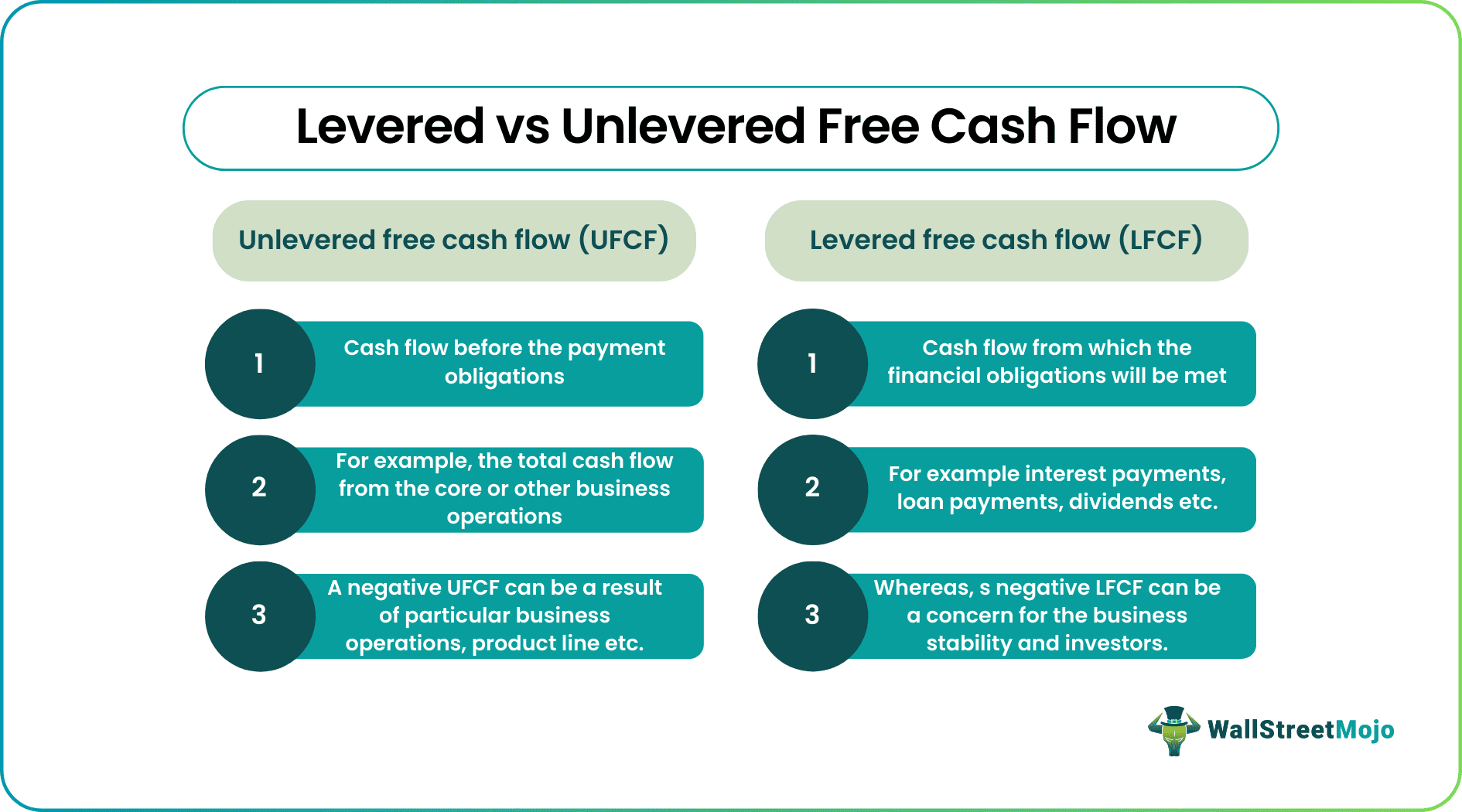
| Feature | Unlevered Structure | Levered Structure |
|---|---|---|
| Primary Funding | Equity only | Debt and Equity |
| Fixed Obligations | None | Interest and Principal payments |
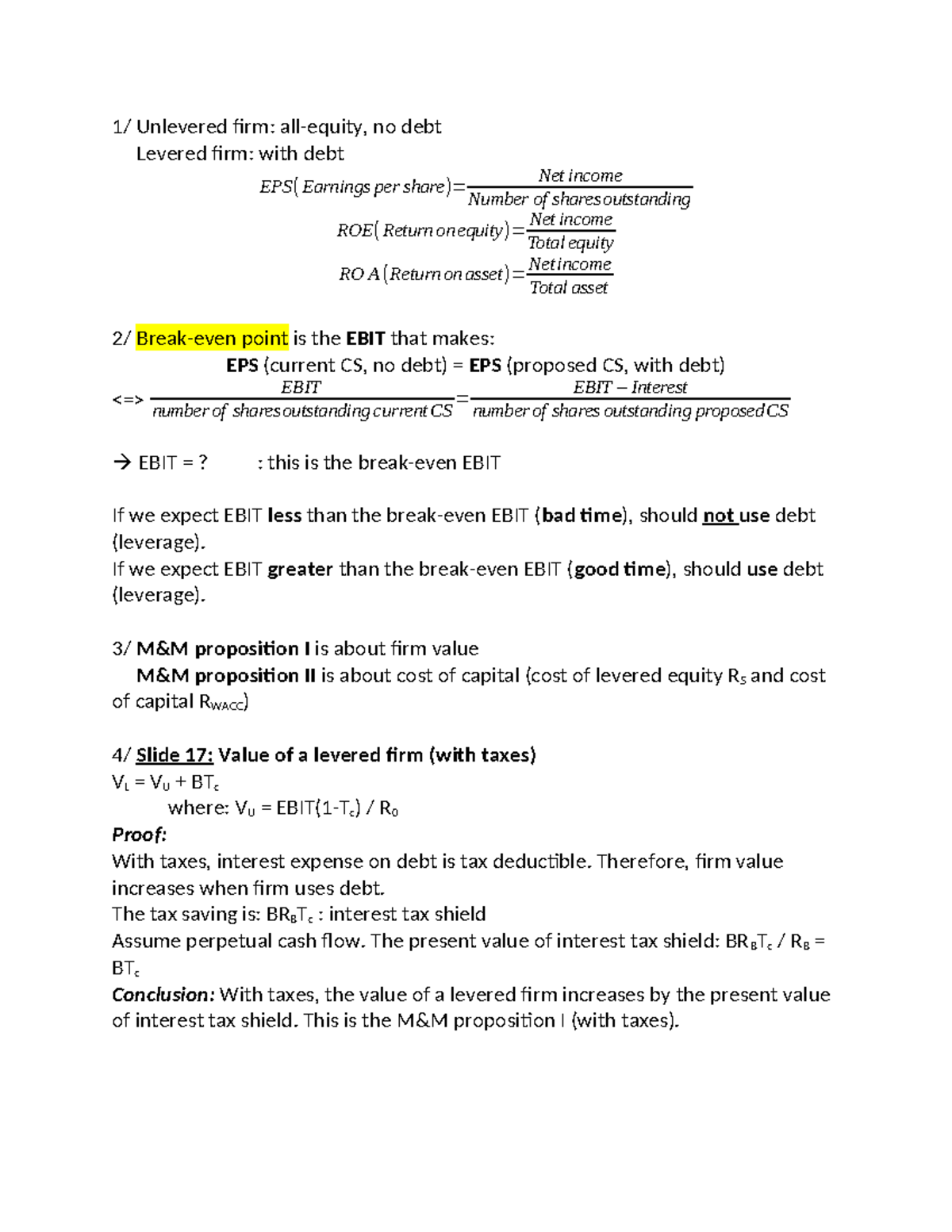
| Tax Impact | No interest tax shield | Interest is generally tax-deductible |
| Financial Risk | Low; no risk of default | Higher; risk of insolvency |
| Return Potential | Steady, proportional to growth | Potentially higher ROE via leverage |
| Management Control | High autonomy | Subject to lender covenants |
Factors Influencing the Choice
The decision between unlevered and levered structures is not arbitrary. It depends on several variables specific to the company's stage of growth and industry characteristics.
- Industry Stability: Companies in stable, cash-flow-predictable industries (such as utilities) can comfortably handle higher levels of debt. Conversely, technology startups or cyclical industries often prefer lower leverage to protect against unpredictable revenue streams.
- Tax Environment: Since interest payments are tax-deductible in many jurisdictions, high-tax-bracket companies may favor debt to lower their effective tax rate.
- Growth Phase: Mature companies with steady cash flows are better positioned to service debt. Younger companies with high growth prospects but low current cash flows are often better suited for an unlevered or equity-heavy structure.
- Market Conditions: As of 2026, the prevailing interest rate environment significantly impacts the cost-benefit analysis of leverage. When interest rates are low, borrowing is more attractive; when rates are high, the burden of debt can stifle growth.
Navigating the Trade-offs: The Optimal Capital Structure
In corporate finance theory, the goal is often to find the "optimal capital structure"—the specific ratio of debt to equity that minimizes the company's WACC and maximizes the value of the firm.
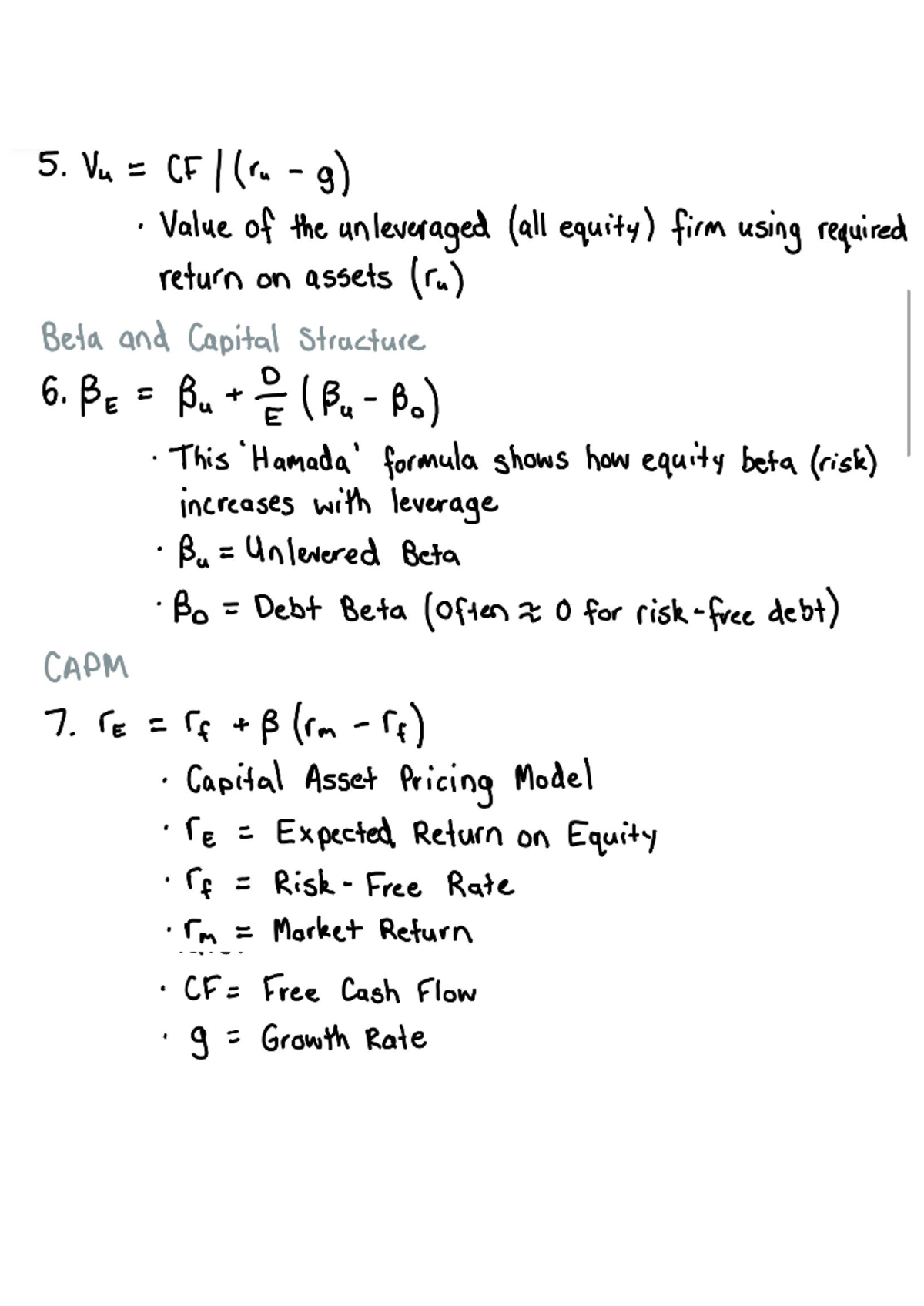
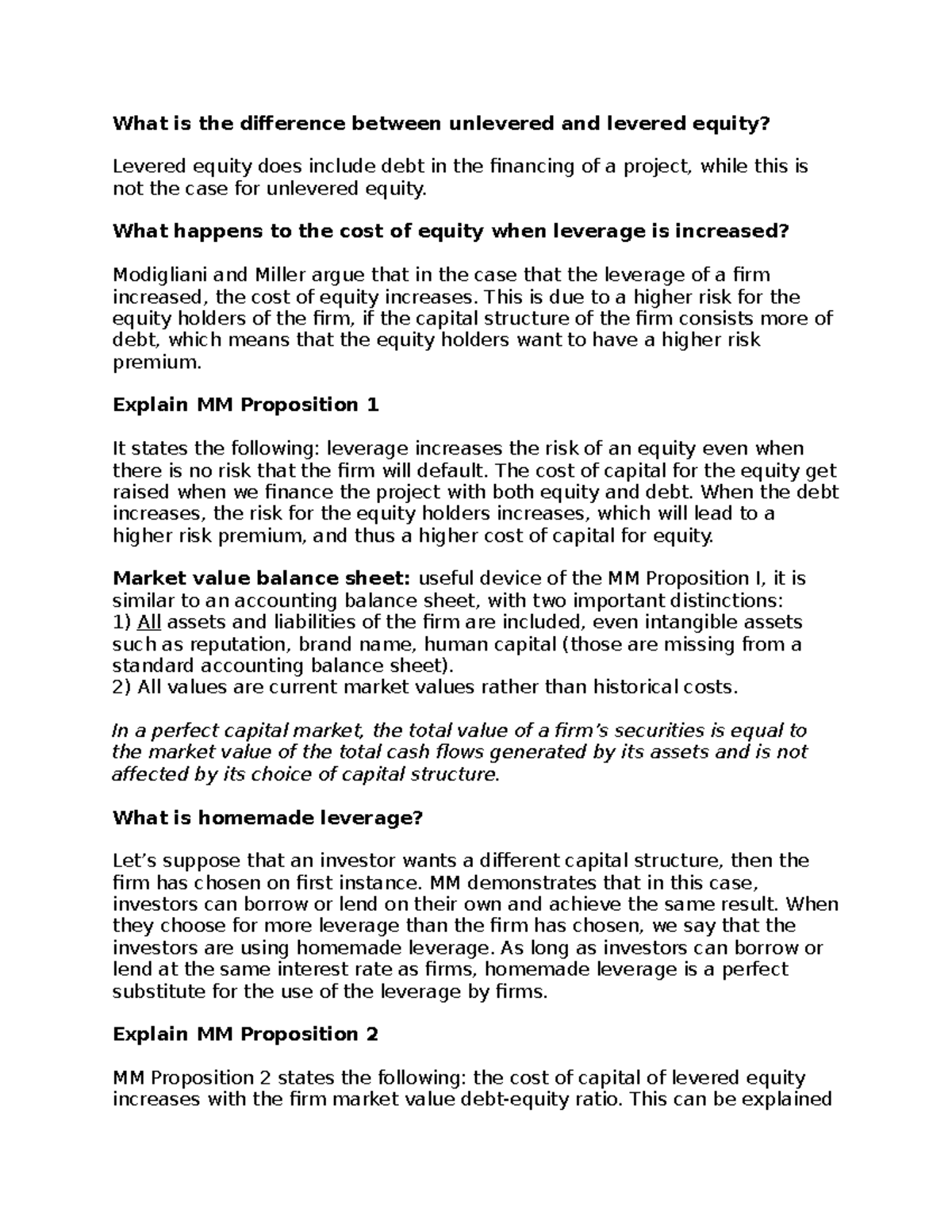
The Modigliani-Miller theorem suggests that in a perfect market, the value of a firm is independent of its capital structure. However, in the real world, markets are imperfect due to taxes, bankruptcy costs, and information asymmetry. Therefore, most CFOs aim for a balance. They utilize enough debt to benefit from the tax shield and lower cost of capital, but they maintain enough equity to keep the risk of financial distress at a level acceptable to shareholders and credit rating agencies.
Frequently Asked Questions
1. Does a levered company always have a higher return on equity than an unlevered company? No. Leverage only increases ROE if the return on the assets purchased with debt exceeds the cost of that debt. If the business performs poorly, leverage will decrease ROE and can lead to a negative return for shareholders.
2. Is it possible for a company to be too unlevered? Yes. From a finance perspective, if a company has zero debt, it may be underutilizing its balance sheet. By failing to take on moderate amounts of debt, the company might be paying a higher overall cost of capital than necessary, which can hinder its competitiveness in capital-intensive markets.
3. What happens to the share price when a company adds debt? The market's reaction depends on the purpose of the debt. If investors believe the debt will be used for high-return projects, the share price may rise. If investors believe the debt increases the risk of bankruptcy without providing a commensurate boost to growth, the share price may fall.
4. Can an unlevered company pay dividends? Yes. An unlevered company can pay dividends from its retained earnings and operational cash flow. There are no debt covenants preventing dividend payments, giving the board of directors greater discretion in how to distribute profits to shareholders.
5. How do creditors view the difference between these structures? Creditors generally prefer a mix of debt and equity. While a completely unlevered company is safe, a company with a reasonable amount of debt is often seen as a better manager of capital. However, if the levered structure involves too much debt, creditors will demand higher interest rates to compensate for the increased risk of default.
Next Steps for Evaluating Capital Structure
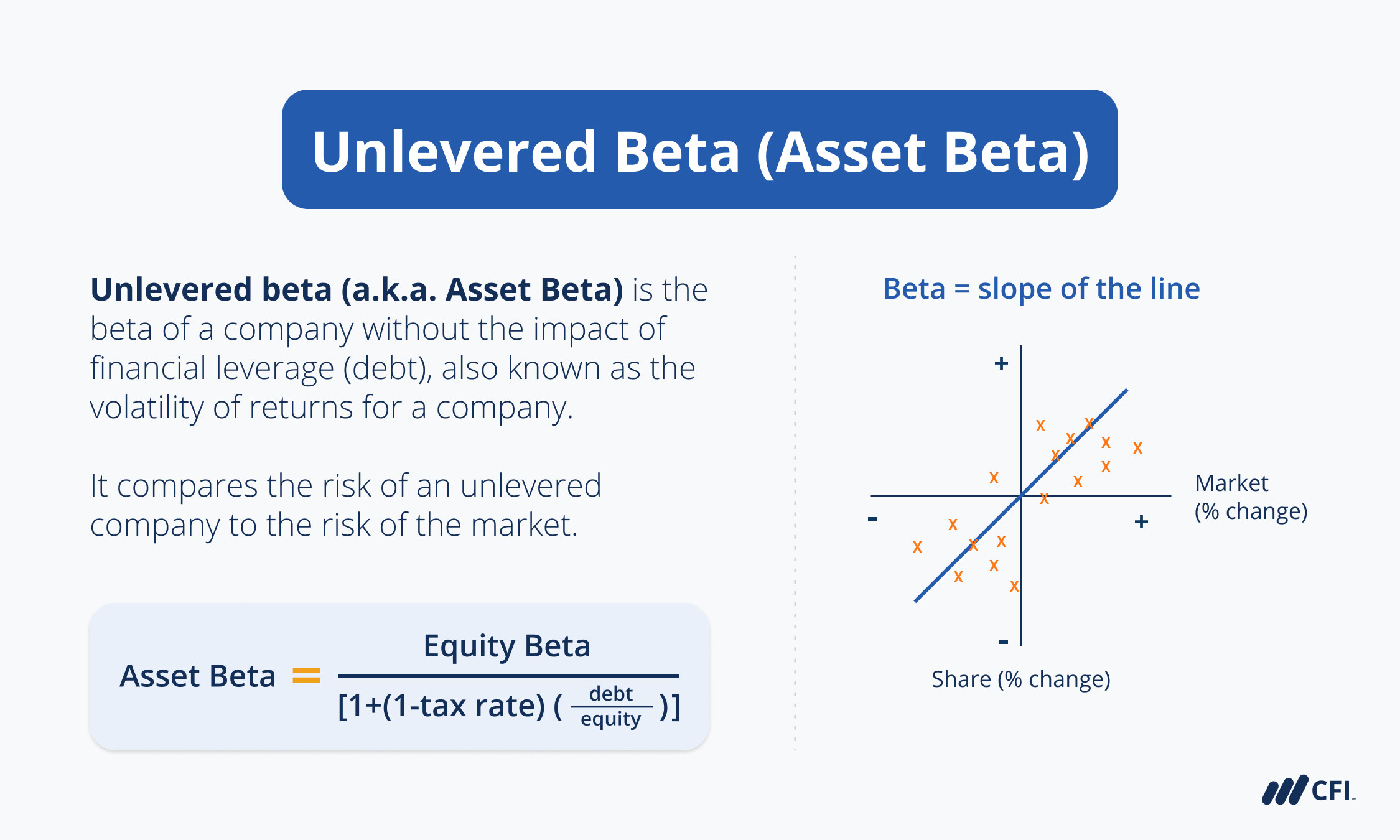
If you are evaluating a company's financial health, begin by analyzing its balance sheet and statement of cash flows. Calculate the Debt-to-Equity ratio to determine the extent of current leverage. Examine the Interest Coverage Ratio—calculated as Earnings Before Interest and Taxes (EBIT) divided by Interest Expense—to assess how easily the company can cover its debt obligations.
If you are a business owner or financial officer, consider conducting a sensitivity analysis on your interest costs. Determine how your profitability would change if interest rates were to rise or if your revenue were to drop by 20%. This stress test will help you determine the maximum level of leverage your operations can safely sustain without compromising your long-term solvency.
Image Gallery