Understanding Standard Mortgages: Definition, Core Features, and How They Work
A standard mortgage is a secured, long-term loan used by individuals to purchase or refinance residential real estate, where the property serves as financial collateral. The borrower repays the principal amount along with interest over...
A standard mortgage is a secured, long-term loan used by individuals to purchase or refinance residential real estate, where the property serves as financial collateral. The borrower repays the principal amount along with interest over a predetermined term—typically 15 or 30 years—following a structured amortization schedule established by the mortgage lender.
Contents
What Is a Standard Mortgage? Definition and Legal Foundations
A standard mortgage is a legally binding financial agreement between a homebuyer (the mortgagor) and a financial institution (the mortgagee), such as a bank, credit union, or non-bank mortgage lender. The agreement grants the lender a legal lien on the purchased real estate. This lien gives the lender the right to take possession of the property through legal foreclosure if the borrower defaults on repayment obligations.
From a legal and structural perspective, a standard mortgage consists of two primary documents signed at settlement:
- The Promissory Note: A legally enforceable promise to pay that outlines the financial terms of the loan, including the total principal balance, interest rate, payment due dates, loan duration, and default penalties.
- The Mortgage Instrument or Deed of Trust: The legal document registered in public land records that encumbers the real estate title, creating the security interest (lien) in favor of the lender.
Standard mortgages differ significantly from exotic or non-conforming financial products (such as interest-only loans, balloon mortgages, or reverse mortgages). Standard loans adhere to conventional underwriting guidelines, feature fully amortizing payment schedules, and do not contain negative amortization clauses or high-risk features.
Disclaimer: Mortgage rules, regulatory guidelines, and interest rate environment details discussed here provide general educational analysis. Mortgage requirements vary by jurisdiction and lender. Consult a licensed mortgage broker or financial advisor before executing debt instruments.
Core Features of a Standard Mortgage
While individual loan programs vary based on lender policies and government regulations, every standard mortgage relies on several key features that dictate how interest accrues, how monthly payments are split, and how ownership equity accumulates over time.
| Standard Monthly Mortgage Payment (PITI) | |
|---|---|
| Principal & Interest | Escrow Account |
| (Reduces balance & pays bank) | (Taxes & Property Insurance) |
1. Loan Principal and Interest
The principal represents the actual dollar amount borrowed to acquire the property, excluding fees and interest charges. The interest is the fee charged by the lender for granting credit, calculated as an annualized percentage of the outstanding principal balance. In standard home loans, interest accrues monthly on the remaining unpaid principal.
2. Fully Amortizing Payment Schedules
Standard home loans utilize fully amortizing payment structures. Under an amortization schedule, every monthly payment is divided between principal reduction and interest charges. In the initial years of a standard mortgage, the vast majority of each monthly installment goes toward paying accrued interest. As the loan matures and the remaining principal balance shrinks, a larger percentage of each installment applies directly toward reducing the principal balance.
3. Loan Term (Duration)
The loan term defines the fixed period during which the debt must be repaid in full. The two standard benchmarks in residential lending are:
- 30-Year Fixed Term: Offers lower monthly payments spread across 360 months, making homeownership accessible, though total lifetime interest costs are higher.
- 15-Year Fixed Term: Requires higher monthly payments across 180 months, but significantly reduces lifetime interest paid and builds equity at a much faster rate.
4. Down Payment and Loan-to-Value (LTV) Ratio
The down payment is the initial cash contribution paid upfront by the buyer toward the purchase price. The difference between the purchase price and the down payment dictates the initial principal balance.
Lenders assess risk using the Loan-to-Value (LTV) ratio:
$$\text{LTV Ratio} = \left( \frac{\text{Loan Amount}}{\text{Appraised Property Value}} \right) \times 100$$
A conventional standard mortgage often targets an 80% LTV ratio (a 20% down payment). Borrowers placing less than 20% down are typically required to pay Private Mortgage Insurance (PMI) to offset the lender's credit risk.
5. Escrow Accounts (PITI Structure)
Most standard mortgages incorporate an escrow account managed by the loan servicer. Instead of paying only Principal and Interest (P&I), the borrower’s total monthly payment reflects PITI:
- Principal
- Interest
- Taxes (Real Estate Property Taxes)
- Insurance (Homeowners Insurance & Flood/PMI if applicable)
The servicer collects the tax and insurance portions each month, holds them in an escrow reserve account, and pays property tax authorities and insurance providers on the homeowner's behalf when bills come due.
Primary Categories of Standard Mortgages
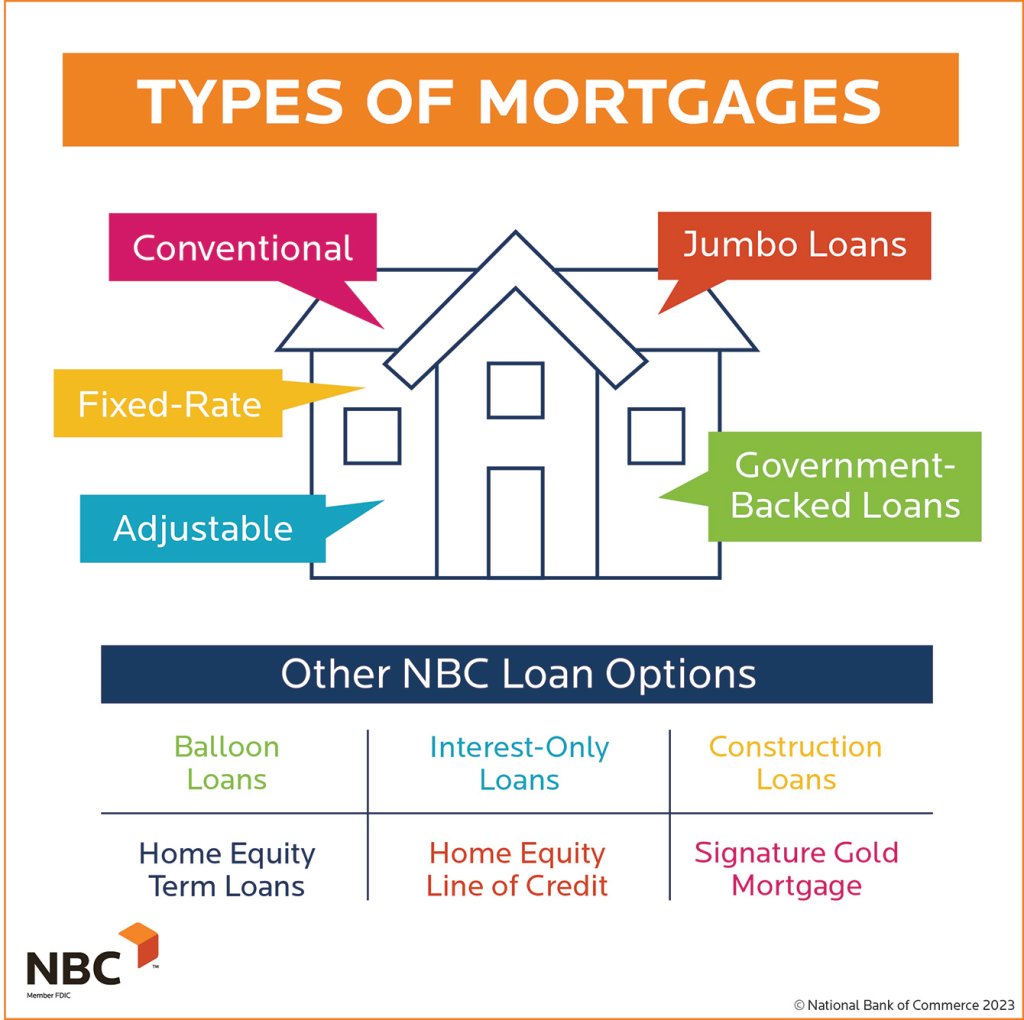
Standard mortgages fall into distinct legal and financial categories based on their interest rate structures and underlying underwriting backed by government entities or private institutions.
Fixed-Rate Mortgages (FRMs)
A fixed-rate mortgage maintains an identical interest rate for the entire lifespan of the loan. The primary advantage of a fixed-rate loan is financial predictability; the principal and interest portion of the monthly payment remains unchanged whether market interest rates rise or fall. This structure protects homeowners from inflation and fluctuating capital markets.
Adjustable-Rate Mortgages (ARMs)
An adjustable-rate mortgage (hybrid ARM) features an initial period of fixed interest, after which the rate adjusts periodically based on a benchmark economic index (such as the Secured Overnight Financing Rate, or SOFR) plus a predetermined lender margin. Common standard hybrid structures include:
- 5/1 ARM: Fixed interest for the first 5 years, adjusting annually thereafter.
- 7/1 ARM: Fixed interest for the first 7 years, adjusting annually thereafter.
- 10/1 ARM: Fixed interest for the first 10 years, adjusting annually thereafter.
ARMs usually include structural rate caps that limit how much the interest rate can increase during a single adjustment period and over the lifetime of the loan.
Conventional Conforming Loans
Conventional mortgages are non-government-insured loans that comply with the underwriting criteria established by government-sponsored entities like Fannie Mae (Federal National Mortgage Association) and Freddie Mac (Federal Home Loan Mortgage Corporation). These criteria include baseline credit scores, maximum DTI ratios, and conforming loan limits set annually by the Federal Housing Finance Agency (FHFA).
Government-Backed Mortgages
While conventional loans form the bedrock of standard lending, government agencies sponsor standardized mortgage programs designed to expand housing access:
- FHA Loans (Federal Housing Administration): Standard loans designed for lower-to-moderate-income borrowers, allowing lower down payments (as low as 3.5%) and lower minimum credit scores.
- VA Loans (U.S. Department of Veterans Affairs): Standardized loans for qualifying active-duty military service members, veterans, and surviving spouses, often offering zero down payment options and no ongoing mortgage insurance.
- USDA Loans (U.S. Department of Agriculture): Mortgages tailored for eligible rural and suburban home buyers meeting specific income thresholds.
Key Qualification Criteria for Borrowers
Lenders evaluate loan applicants against established credit risk parameters before approving a standard mortgage application.
| Standard Mortgage Qualification Pillars | ||
|---|---|---|
| Credit Score | DTI Ratio | Proof of Income |
| (620+ Benchmark) | (28/36% Standard) | (W-2s, Tax Returns, Bank) |
Credit Score Benchmarks
A borrower's credit score reflects historical debt management. For standard conventional loans, lenders generally require a minimum FICO score of 620. Borrowers with scores above 740 receive access to the lowest interest rates and reduced private mortgage insurance premiums.
Debt-to-Income (DTI) Ratios
The Debt-to-Income ratio compares a borrower's total monthly debt obligations to their gross monthly income. Lenders divide DTI into two metrics:
- Front-End Ratio: The percentage of income spent strictly on housing costs (PITI). Standard benchmarks target 28% or lower.
- Back-End Ratio: The percentage of income spent on all recurring debts combined (housing costs, student loans, car payments, minimum credit card payments). Standard limits generally cap at 36% to 43%, though qualified automated underwriting systems may approve up to 45% or 50% under compensatory factors.
Employment Verification and Liquid Reserves
Lenders require verifiable documentation of stable income over a minimum two-year history. Acceptable proof includes W-2 statements, recent pay stubs, tax returns, and 1099 records for self-employed individuals. Additionally, borrowers must show liquid assets sufficient to cover the down payment, closing costs, and post-closing cash reserves (typically 2 to 6 months of housing payments).
Side-by-Side Comparison of Standard Mortgage Types
The following table contrasts core specifications across primary standard mortgage options:
| Loan Feature | 30-Year Fixed Conventional | 15-Year Fixed Conventional | 7/1 Hybrid Adjustable-Rate (ARM) | FHA Standard Loan |
|---|---|---|---|---|
| Primary Advantage | Lowest standard monthly payment | Lowest total interest cost; fast equity build | Lower initial interest rate during fixed phase | Accessible credit & low down payment requirements |
| Typical Down Payment | 3% to 20% | 3% to 20% | 5% to 20% | 3.5% minimum |
| Interest Rate Stability | Completely fixed for 360 months | Completely fixed for 180 months | Fixed for 7 years; adjusts annually after | Completely fixed (or adjustable options) |
| Minimum Credit Score | Typically 620 | Typically 620 | Typically 620 to 640 | Typically 580 (for 3.5% down) |
| Mortgage Insurance | Required if LTV > 80% (PMI removable) | Required if LTV > 80% (PMI removable) | Required if LTV > 80% (PMI removable) | Mandatory upfront & annual MIP (often lifetime) |
| Ideal Borrower Profile | Long-term homeowners seeking stable budgets | High-income buyers prioritizing rapid debt payoff | Buyers planning to move or refinance within 7 years | First-time buyers with limited cash or lower credit |
Standard Closing Costs and Associated Fees
Securing a standard mortgage incurs administrative, legal, and regulatory fees beyond the purchase price of the home. These fees, collectively known as closing costs, typically range between 2% and 5% of the total loan principal.
Common standard fee categories include:
- Loan Origination and Underwriting Fees: Fees charged by the lender to process, evaluate, and establish the loan structure.
- Appraisal Fee: Paid to an independent third-party real estate appraiser who verifies the fair market value of the subject property to protect lender LTV requirements.
- Title Search and Title Insurance: Covers legal examination of property records to verify clean ownership transfer and protects the lender (and owner) against historical title defects or unrecorded liens.
- Discount Points: Optional upfront fees paid directly to the lender at settlement to buy down the ongoing interest rate (e.g., 1 point costs 1% of loan value to reduce the rate by ~0.25%).
- Prepaid Items: Upfront collections for initial escrow funding, including prorated property taxes and the first full year of homeowners insurance premiums.
Common Pitfalls to Avoid When Obtaining a Standard Mortgage
Borrowers navigating standard mortgage options frequently encounter financial missteps that increase lifetime borrowing costs or disrupt approval:
1. Taking on New Credit Before Settlement
Between mortgage pre-approval and final closing, lenders conduct a final credit review. Opening new credit cards, financing vehicles, or making large purchases on credit alters DTI ratios and credit scores, which can jeopardize final loan approval.
2. Underestimating Ongoing Homeownership Expenses
Focusing exclusively on the Principal and Interest (P&I) payment leads to financial strain. Homebuyers must account for property tax increases, annual homeowners insurance premium adjustments, homeowners association (HOA) dues, and ongoing routine maintenance reserves (typically 1% to 2% of the home's value annually).
3. Misunderstanding Private Mortgage Insurance (PMI) Provisions
Under the Homeowners Protection Act, homeowners with conventional standard loans have the right to request PMI cancellation once their principal balance reaches 80% of the original home value, and lenders must automatically terminate PMI at 78% LTV. Failing to monitor equity accumulation often leads borrowers to pay unnecessary insurance premiums long after reaching threshold requirements.
Frequently Asked Questions
What makes a mortgage "standard" compared to non-standard or exotic loans?
A standard mortgage features a fully amortizing payment structure, predictable repayment terms (typically 15 or 30 years), clear consumer disclosures governed by federal statutes (such as the Truth in Lending Act), and standard credit qualification benchmarks. Non-standard loans often include features like balloon payments, interest-only options, or negative amortization, which carry higher financial risks.
Is a 15-year or 30-year standard mortgage better for home buyers?
Neither loan structure is universally superior; selection depends on individual financial goals. A 30-year fixed mortgage offers lower mandatory monthly payments, providing monthly cash flow flexibility. A 15-year fixed mortgage carries slightly lower interest rates and slashes total lifetime interest paid by half or more, but demands significantly higher monthly cash outlays.
How does Private Mortgage Insurance (PMI) work on a standard conventional loan?
PMI is risk coverage that protects the lender—not the borrower—if the borrower defaults on loan obligations. It is required on standard conventional loans when the down payment is under 20% (LTV over 80%). Unlike government FHA mortgage insurance premiums, private mortgage insurance on conventional loans can be removed once the borrower establishes 20% equity in the property.
Can a standard mortgage be paid off early without financial penalties?
Most modern standard conventional and government-backed mortgages do not contain prepayment penalties. Borrowers can make extra principal payments monthly, make lump-sum contributions, or pay the entire loan balance off early without incurring additional fees, directly reducing the total interest paid over the life of the loan.
What is the difference between mortgage pre-qualification and pre-approval?
Pre-qualification offers an informal, unverified estimate of borrowing capacity based on self-reported financial data. Pre-approval is a rigorous underwriting evaluation where the lender verifies credit reports, income documentation, bank statements, and tax returns, issuing a conditional commitment to lend up to a specified dollar amount.
Actionable Next Steps for Homebuyers
If you are planning to secure a standard mortgage to purchase a home or refinance an existing property, follow this structured roadmap:
- Check Your Credit Profile: Obtain official credit reports from major credit bureaus. Dispute any reporting errors and pay down revolving credit balances to maximize your score before applying.
- Calculate Your Target Housing Budget: Determine a conservative monthly payment target based on the 28/36 DTI benchmark rather than borrowing the maximum amount a lender pre-approves.
- Save for Down Payment and Reserves: Accumulate cash reserves covering your target down payment, estimated closing costs (3% to 5%), and an emergency reserve fund equal to 3 to 6 months of expenses.
- Compare Offers Across Multiple Lenders: Request official Loan Estimates from at least three competing mortgage channels (commercial banks, credit unions, and independent mortgage brokers) within a 14-day window to minimize credit score impact while comparing interest rates, APRs, and lender fees.
Image Gallery