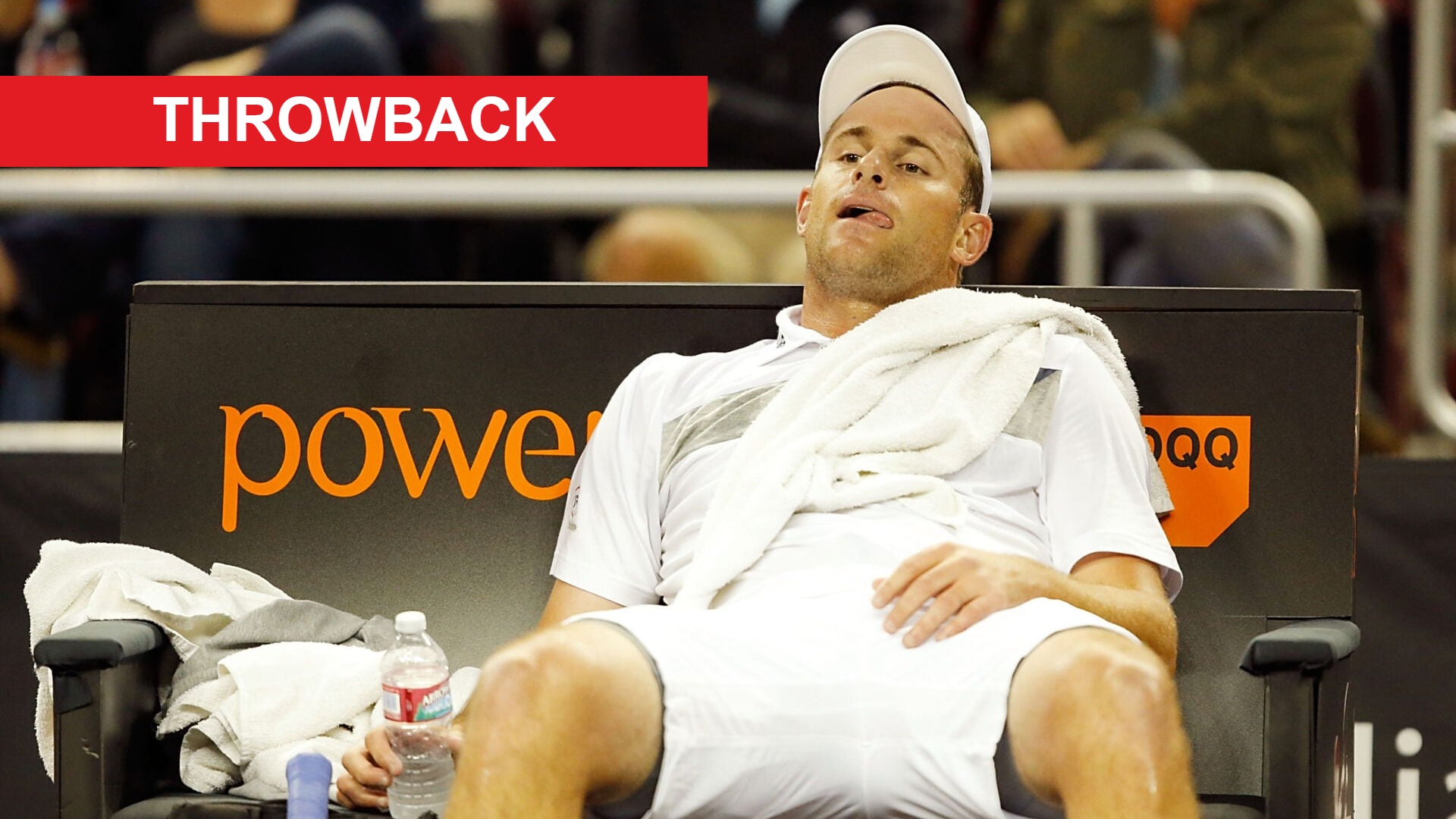
How Old Was Andy Roddick When He Retired from Professional Tennis?
Andy Roddick was 30 years old when he retired from professional tennis in August 2012, making his official announcement on his 30th birthday during the US Open. The retirement of American tennis star Andy Roddick marked the end of an e...
Andy Roddick was 30 years old when he retired from professional tennis in August 2012, making his official announcement on his 30th birthday during the US Open.
Contents
The retirement of American tennis star Andy Roddick marked the end of an era for men's tennis in the United States. As one of the premier players of the 2000s, Roddick captured the imagination of fans worldwide with his blistering serves, fierce competitive spirit, and deep patriotism for the sport. When a professional athlete steps away from the game at the relatively young age of 30, it prompts reflection not only on their career achievements but also on the physical and mental toll required to compete at the elite level of modern sports. Understanding the exact context of his retirement requires examining his early career milestones, the evolving landscape of men's tennis, and the precise circumstances that led him to hang up his racket in New York City.
Early Career and the Rise of an American Tennis Icon
Long before reaching the milestone that defined his retirement, Andy Roddick emerged as a prodigy within the American junior tennis system. Born in Omaha, Nebraska, in 1982, Roddick moved around during his childhood before settling in Boca Raton, Florida, where he honed his game alongside other aspiring professionals. His breakthrough year on the professional circuit arrived in 2003, a season that would forever alter his sporting legacy.
During the 2003 season, a 20-year-old Roddick captured his first and only Grand Slam singles title by winning the US Open, defeating Juan Carlos Ferrero in the final. That same year, he ascended to the number one spot in the Association of Tennis Professionals (ATP) rankings, a position he held for thirteen weeks. Characterized by a lethal, record-shattering serve that frequently exceeded 150 miles per hour, Roddick relied on an aggressive baseline style and sheer athleticism. He reached four additional Grand Slam finals—three at Wimbledon and one more at the US Open—falling each time to Roger Federer, who dominated the era alongside Rafael Nadal and Novak Djokovic.
The Physical and Mental Toll of Elite Competition
By the time Roddick reached his late twenties, the physical demands of playing at the highest level of professional tennis began to accumulate. The men's tour underwent a significant tactical shift during the mid-to-late 2000s, featuring longer baseline rallies, heavier topspin, and grueling physical exchanges that tested every muscle in an athlete's body. Roddick battled a series of injuries, including persistent shoulder issues, hip problems, and abdominal strains, which compromised the very weapon that defined his game: his serve.
| Milestone / Event | Year | Andy Roddick's Age | Significance |
|---|---|---|---|
| Birth Date | 1982 | 0 | Born in Omaha, Nebraska |
| US Open Victory | 2003 | 20 | Won his first and only Grand Slam singles title |
| World Number One Ranking | 2003 | 21 | Reached the summit of the ATP rankings |
| Reached Wimbledon Final | 2009 | 26 | Played a historic five-set epic against Roger Federer |
| Retirement Announcement | 2012 | 30 | Announced his retirement on his birthday at the US Open |
Beyond the physical wear and tear, the mental burden of carrying American men's tennis weighed heavily on his shoulders. For over a decade, sports media and fans looked to Roddick as the sole successor to legendary American champions like Pete Sampras and Andre Agassi. Every tournament loss was heavily scrutinized, and the relentless travel schedule left little room for recovery. By 2012, Roddick recognized that his body and mind could no longer sustain the unwavering focus required to contend for major titles against a younger, highly resilient generation of players.
The 2012 US Open and the Announcement
The setting for Roddick's retirement announcement was fittingly dramatic. On August 30, 2012—his 30th birthday—Roddick called a press conference ahead of his second-round match at the US Open in Flushing Meadows, New York. Surrounded by reporters, he officially announced that the tournament would be his final professional event.
| Retirement Factor | Description | Impact on Career |
|---|---|---|
| Chronic Injuries | Shoulder and hip ailments | Diminished serve velocity and baseline mobility |
| Era Competition | Facing Federer, Nadal, and Djokovic | Limited Grand Slam opportunities despite elite play |
| Mental Fatigue | Relentless global travel and media pressure | Reduced desire to maintain grueling daily training regimens |
| Personal Priorities | Desire to focus on family and foundation work | Catalyst for stepping away while still competitive |
Roddick explained that he had known for weeks that his career was drawing to a close. Rather than fading away quietly or playing through a diminishing ranking, he chose to orchestrate his departure on his own terms at the tournament that had brought him his greatest professional triumph nine years earlier. His final match took place on September 5, 2012, when he lost a hard-fought four-set encounter to Argentina's Juan Martín del Potro in the fourth round. The emotional farewell ceremony on Arthur Ashe Stadium court cemented his status as a beloved figure in American tennis history.
Post-Retirement Legacy and Impact on the Sport
Since stepping away from professional competition at age 30, Roddick has remained actively involved in the tennis ecosystem through broadcasting, commentary, and philanthropic work. Through the Andy Roddick Foundation, established during his playing days, he continues to support educational and youth development programs in underserved communities. His candid, often humorous perspective on the sport has made him one of the most respected analysts in tennis media, frequently breaking down modern player techniques and tactical evolutions.
Roddick's legacy extends far beyond his single Grand Slam title or his weeks at number one. He bridged the gap between the golden era of American dominance and the modern era of the "Big Three." His career serves as a benchmark for professionalism, sportsmanship, and resilience in the face of daunting era-defining opponents. By retiring at 30, Roddick preserved his physical well-being and transitioned successfully into the next chapter of his life, leaving behind a permanent imprint on the history of professional tennis.
Frequently Asked Questions
How many Grand Slam titles did Andy Roddick win?
Andy Roddick won one Grand Slam singles title during his career, defeating Juan Carlos Ferrero in straight sets to claim the 2003 US Open championship. He also reached four additional Grand Slam finals, finishing as the runner-up at Wimbledon in 2004, 2005, and 2009, and at the US Open in 2006.
What was the top speed of Andy Roddick's serve?
Roddick was renowned for having one of the fastest serves in tennis history. His career-high official serve speed reached 155 miles per hour (249.4 kilometers per hour), which he recorded during a Davis Cup match against Vladimir Voltchkov in 2004.
Why did Andy Roddick retire at age 30?
Roddick retired because of a combination of chronic physical injuries—particularly to his shoulder and back—mental fatigue from the relentless tour schedule, and a desire to step away while he was still competitive. He stated that he no longer had the physical capacity to train at the elite level required to win major tournaments.
Was Andy Roddick the last American man to win a Grand Slam singles title?
Yes, as of 2026, Andy Roddick remains the last American man to win a Grand Slam singles title in tennis, having secured the 2003 US Open trophy.
What is Andy Roddick doing now?
Following his retirement, Roddick transitioned into sports media, working as an analyst and commentator for major networks such as Fox Sports and the Tennis Channel. He also dedicates significant time to the Andy Roddick Foundation, which provides after-school and summer learning programs for children.
Image Gallery