What the Australian Rail Track Corporation Does: Role, Network, and Operations
The Australian Rail Track Corporation (ARTC) is an Australian Government-owned enterprise responsible for managing, maintaining, and developing over 8,500 kilometers of standard-gauge rail network across mainland Australia. ARTC acts a...
The Australian Rail Track Corporation (ARTC) is an Australian Government-owned enterprise responsible for managing, maintaining, and developing over 8,500 kilometers of standard-gauge rail network across mainland Australia. ARTC acts as the central infrastructure manager for the nation's interstate rail corridors, selling track access to freight and passenger train operators, coordinating train control, maintaining safety standards, and delivering major national rail projects.
Contents
Founded in 1998 following an agreement between the Commonwealth and State Governments, ARTC was created to establish a single, unified point of contact for rail freight operators seeking to move goods across state borders. Before its creation, rail transport across Australia was fragmented by state-based government authorities, each managing different access rules, technical standards, and operational systems.
Today, ARTC operates as a commercial entity under the Corporations Act 2001 and the Public Governance, Performance and Accountability Act 2013, with shares held jointly by the Minister for Finance and the Minister for Infrastructure, Transport, Regional Development and Local Government.
Core Functions of the Australian Rail Track Corporation
ARTC does not own or operate freight trains or commercial passenger services. Instead, it functions as the "track landlord" and network controller. Its primary responsibilities can be broken down into five distinct operational areas:
| Network Management & Asset Control | Train Control & Access Allocation | Infrastructure Delivery & Capital Investments |
|---|---|---|
| • Track maintenance• Safety & signaling• Engineering standards | • Timetabling & pathing• ACCC-regulated access• Train dispatching | • Inland Rail delivery• Corridor upgrades• Capacity expansion |
1. Network Asset Management and Track Maintenance
ARTC maintains thousands of kilometers of steel rail, concrete and timber sleepers, ballast, bridges, tunnels, and signaling systems. Rail infrastructure faces extreme conditions across the Australian continent, from severe heat in the Outback to intense heavy-haul coal freight demands in regional New South Wales.
ARTC executes continuous preventative maintenance, routine inspections, and large-scale asset replacement programs. Key engineering activities include:
- Rail re-railing and grinding: Extending the operational life of steel tracks by removing surface defects and reprofiling rail heads.
- Resleepering: Replacing aging wooden sleepers with durable concrete alternatives capable of supporting heavier axle loads.
- Ballast cleaning and tamping: Maintaining track stability and drainage to ensure high-speed and heavy-load safety.
- Signaling and communication system upgrades: Transitioning legacy trackside signaling to modern digital train management systems.
2. Wholesale Track Access and Capacity Allocation
Rail freight operators—such as Pacific National, Aurizon, SCT Logistics, and Qube Logistics—as well as passenger services like NSW TrainLink and Journey Beyond (operator of the Indian Pacific and The Ghan) must purchase rights to run trains on ARTC track.
ARTC manages track access transparently and non-discriminatorily through formal access undertakings regulated by the Australian Competition and Consumer Commission (ACCC). ARTC sells "train paths"—scheduled time slots that grant an operator permission to move a train from an origin to a destination within a specific time window.
3. Train Control and Traffic Management
ARTC manages live train movements across its network through dedicated Train Control Centers located in strategic hubs such as Broadmeadow (Newcastle), Junee, Mile End (Adelaide), and Rocklea (Brisbane).
Network controllers act as the air traffic controllers of the railway. They monitor train movements in real time, adjust signaling to maintain safe separation between trains, prioritize traffic during delays, and coordinate emergency responses if incidents occur on the track.
4. Safety Enforcer and Engineering Standards Setter
ARTC establishes uniform engineering, environmental, and operational safeworking rules across its corridors. All rolling stock (locomotives and wagons) operating on the ARTC network must meet strict structural, mechanical, and safety specifications before gaining access. ARTC also manages network incidents, tracks environmental compliance (such as noise and emissions management), and conducts risk assessments along rail corridors.
5. Delivery of Major Infrastructure Capital Works
Beyond managing existing tracks, ARTC plans, funds, and executes mega-infrastructure projects intended to shift Australia’s freight burden from road to rail. The most prominent of these projects is Inland Rail, along with continuous capacity expansions in heavy-haul freight corridors.
The Geographical Scope of the ARTC Rail Network
The network managed by ARTC stretches across Queensland, New South Wales, Victoria, South Australia, and Western Australia (up to Kalgoorlie). It is broadly categorized into two major business networks:
- ARTC NATIONAL NETWORK
- INTERSTATE NETWORK
- ~7,700 km of standard gauge
- Connects capital cities
- Kalgoorlie to Brisbane corridor
- HUNTER VALLEY NETWORK
- ~850 km heavy-haul network
- Coal export supply chain
- High-density freight corridor
- INTERSTATE NETWORK
The Interstate Network
Spanning approximately 7,700 kilometers, the Interstate Network forms the economic backbone of Australia's overland freight system. It connects Australia’s mainland capital cities (Brisbane, Sydney, Melbourne, Adelaide) and extends west to Kalgoorlie, where it connects with Western Australia's state-managed network (operated by Arc Infrastructure) through to Perth.
Key freight movements on this network include general containerized freight, agricultural products (such as grain and livestock), steel, minerals, and interstate passenger train services.
The Hunter Valley Coal Network
The Hunter Valley Network in New South Wales comprises roughly 850 kilometers of track dedicated primarily to transporting thermal and coking coal from regional mines to the Port of Newcastle—the world's largest coal export port—as well as servicing local power stations.
Unlike the Interstate Network, the Hunter Valley rail line is a high-density, heavy-haul network designed for massive axle loads. ARTC manages this network under a specialized long-term access framework, coordinating closely with coal producers, train operators, and port terminal managers through the Hunter Valley Coal Chain Coordinator (HVCCC) to optimize throughput.
How Rail Operators Gain Access to ARTC Track
Operating a rail service on ARTC infrastructure requires meeting strict commercial, technical, and regulatory prerequisites. ARTC does not lease out physical tracks exclusively to individual companies; instead, it operates a shared-user access model.
STAGES TO OPERATE ON ARTC NETWORK
- ACCESS UNDERTAKING COMPLIANCE
- Demonstrate alignment with ACCC-approved access frameworks.
- COMMERCIAL ACCESS AGREEMENT
- Execute formal agreement defining train paths, pricing, and key terms.
- ROLLING STOCK & OPERATOR ACCREDITATION
- Obtain ONRSR safety accreditation; register locomotives and wagons.
- PATH ALLOCATION & LIVE SCHEDULING
- Secure scheduled time windows via ARTC Train Control.
Step 1: Regulatory Framework Alignment
Operators must negotiate access under terms governed by ARTC’s Access Undertakings approved by the ACCC. These undertakings protect competition by ensuring ARTC provides transparent, fair, and non-discriminatory pricing structure and path allocation rules across all commercial operators.
Step 2: Commercial Access Agreements
An operator signs a customized Access Agreement specifying:
- The route segments required (e.g., Melbourne to Adelaide).
- The frequency and timing of train paths (scheduled daily, weekly, or ad-hoc services).
- Axle load limits, train lengths, and speed capabilities.
- Applicable access tariffs based on gross ton-kilometers (GTK) and path reservation fees.
Step 3: Safety Accreditation and Rolling Stock Approval
Before a train can set wheels on ARTC track, the operator must be accredited by the Office of the National Rail Safety Regulator (ONRSR) under the Rail Safety National Law. Additionally, every locomotive, wagon, and piece of maintenance equipment must undergo engineering reviews to verify it meets ARTC's Route Standards, including loading gauges, braking performance, and wheel profile tolerances.
Major Infrastructure Projects: The Inland Rail Project
The flagship capital development managed by ARTC is Inland Rail, a 1,600-kilometer freight rail line designed to complete the spine of Australia’s national freight network between Melbourne and Brisbane via regional Victoria, New South Wales, and Queensland.
- INLAND RAIL CORRIDOR OVERVIEW
- Melbourne
- Existing Track Enhancements
- Regional NSW
- New & Upgraded Track Segments
- Brisbane
- Complex Freight Terminal Access
- Melbourne
Purpose and Strategic Goals of Inland Rail
- Transit Time Reduction: Designed to enable freight transit between Melbourne and Brisbane in under 24 hours, matching road transport transit times.
- Capacity and Scale: Engineered to accommodate double-stacked container trains up to 1,800 meters long, dramatically increasing load efficiency per journey.
- Supply Chain Resilience: Bypasses the congested Sydney metropolitan rail network, creating a direct, high-capacity inland corridor.
- Decarbonization and Safety: Shifts long-haul intermodal freight off highways, reducing carbon emissions and cutting heavy truck congestion on major highways like the Newell and Hume.
Delivery Approach
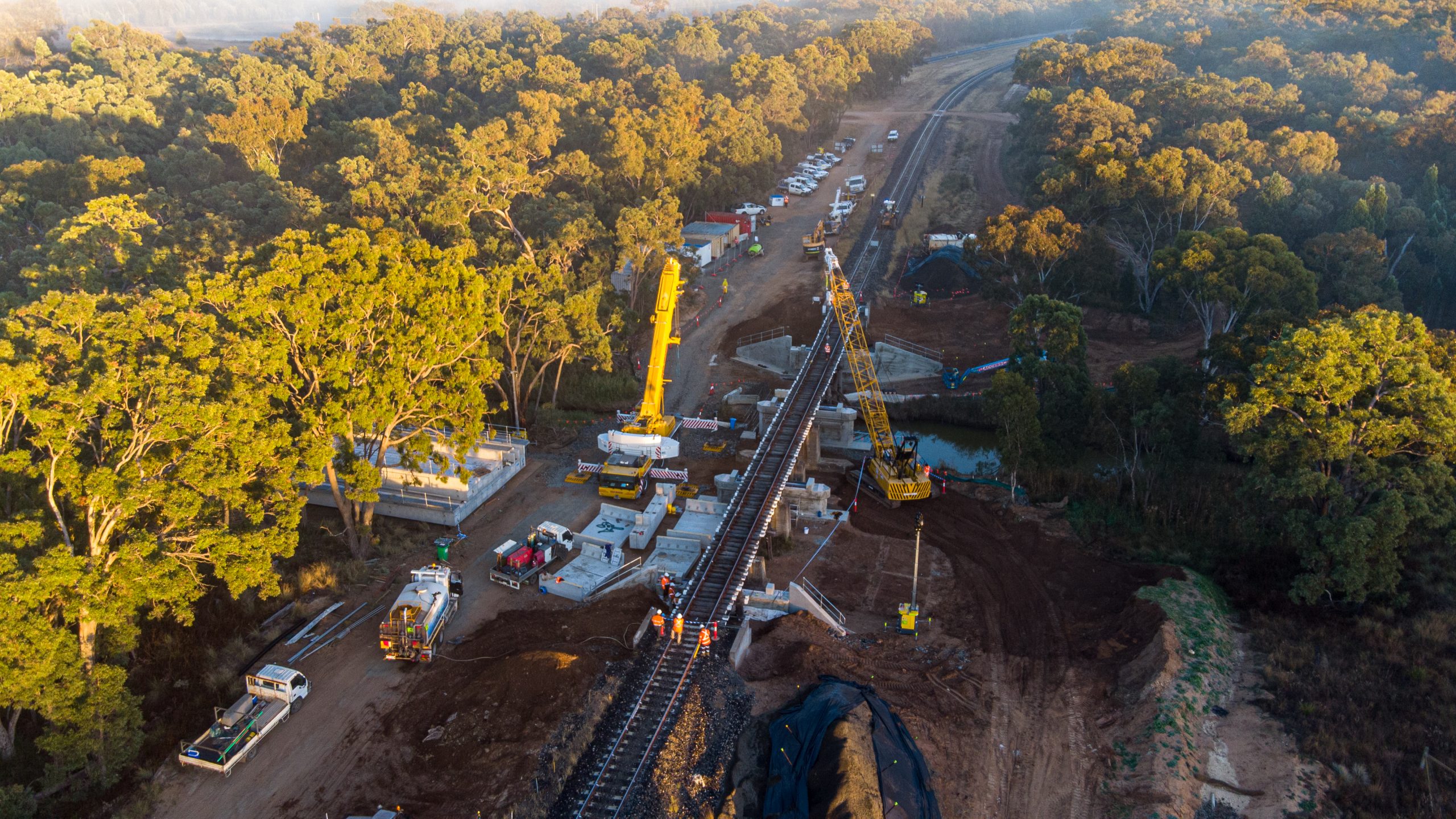
The delivery of Inland Rail involves upgrading hundreds of kilometers of existing track, constructing hundreds of kilometers of brand-new rail corridors, rebuilding bridges, and lowering track beds under overpasses to accommodate double-stacked trains. Following independent structural reviews by the Australian Government, ARTC manages the project through a dedicated subsidiary entity, prioritizing staged delivery—focusing initially on completing operational sections from Victoria through regional NSW to Parkes and Narromine.
Comparing ARTC to Other Australian Rail Network Managers
Australia’s railway landscape is divided between national freight corridors, state-owned suburban passenger networks, and privately owned mining railways. ARTC works alongside these entities but operates under a distinct national freight mandate.
| Authority / Entity | Ownership | Primary Jurisdiction / Scope | Main Focus |
|---|---|---|---|
| Australian Rail Track Corporation (ARTC) | Commonwealth Government | Interstate standard-gauge corridors & Hunter Valley (NSW, VIC, SA, WA, QLD) | Interstate freight, regional rail, heavy-haul coal, national projects |
| Sydney Trains / Transport for NSW | NSW State Government | Sydney Metropolitan Area | High-density urban passenger rail |
| Queensland Rail (QR) | QLD State Government | Queensland regional & South East QLD passenger network | Regional passenger, suburban transit, regional freight paths |
| Arc Infrastructure | Private (Brookfield Infrastructure) | Western Australian freight network (south-west region) | Grain, minerals, and general freight access in WA |
| BHP / Rio Tinto / Fortescue Railways | Private Mining Corporations | Pilbara region (Western Australia) | Private heavy-haul iron ore transport (closed networks) |
| Metro Trains Melbourne (MTM) | Private Operator (Franchise for VicTrack) | Melbourne Metropolitan Area | Suburban passenger rail |
Frequently Asked Questions
Does ARTC operate passenger or freight trains?
No. ARTC does not run its own commercial trains. It operates strictly as an infrastructure and network manager. ARTC sells track access and manages signaling for third-party operators, including commercial freight companies (e.g., Pacific National, Aurizon) and long-distance passenger operators (e.g., NSW TrainLink, Journey Beyond).
Who owns the Australian Rail Track Corporation?
ARTC is a Government Business Enterprise (GBE) owned entirely by the Commonwealth of Australia. Its shareholder ministers are the Minister for Finance and the Minister for Infrastructure, Transport, Regional Development and Local Government.
How is ARTC funded?
ARTC generates commercial revenue by charging rail operators access fees for using its track network. This commercial income is supplemented by equity injections and project-specific grant funding from the Australian Government for large-scale capital works, such as the Inland Rail project and interstate corridor enhancement programs.
Who regulates safety on the ARTC network?
Rail safety across ARTC’s network is regulated by the Office of the National Rail Safety Regulator (ONRSR), which enforces compliance with the Rail Safety National Law. Economic access and competition rules for track access are regulated by the Australian Competition and Consumer Commission (ACCC).
How does ARTC prioritize trains on its network?
Train priority is governed by network rules established under ARTC's Access Undertakings. Generally, scheduled passenger services and high-priority intermodal express freight trains receive high operational priority, followed by standard freight services, seasonal grain trains, and maintenance vehicles, ensuring overall network reliability and safety.
Practical Steps for Rail Operators and Stakeholders
Businesses looking to utilize or interact with ARTC network services should follow these operational steps:
- Review Access Frameworks: Consult the ACCC-approved Interstate Access Undertaking (IAU) or Hunter Valley Access Undertaking (HVAU) published on the official ARTC website to understand commercial terms, pricing structures, and capacity allocation policies.
- Obtain ONRSR Safety Accreditation: Ensure your operating entity holds valid accreditation under the Rail Safety National Law through the Office of the National Rail Safety Regulator.
- Submit Rolling Stock Protocols: Verify that all locomotives, wagons, and maintenance vehicles meet ARTC Route Standards before applying for registration on the network register.
- Engage ARTC Customer Logistics: Contact ARTC's customer service team to initiate path feasibility studies and commercial Access Agreement negotiations for preferred transport corridors.
Image Gallery