Comprehensive Guide to Vehicle Sales Tax by State in 2026
Vehicle sales tax is a state-mandated fee calculated based on the purchase price of a car and the specific tax laws of the state where the vehicle is registered. In 2026, rates range from 0% in five "tax-free" states to over 9% in high...
Vehicle sales tax is a state-mandated fee calculated based on the purchase price of a car and the specific tax laws of the state where the vehicle is registered. In 2026, rates range from 0% in five "tax-free" states to over 9% in high-tax jurisdictions when local county and municipal surcharges are factored in. Most states determine the final tax liability based on your primary residence, regardless of where the physical purchase occurs.
Contents
Understanding Vehicle Sales Tax Frameworks in 2026
Navigating the landscape of automotive taxation requires an understanding of how state and local governments categorize vehicle purchases. Unlike general consumer goods, vehicles are high-value assets that require registration, making tax collection unavoidable for the vast majority of American drivers. As of 2026, the tax you pay is generally composed of a base state rate and an additional local rate determined by your county or city of residence.
The "State of Registration" rule remains the most critical factor for buyers in 2026. If you live in New York but purchase a car in New Jersey, you will pay New York sales tax at the time of registration. Dealerships are equipped with reciprocity software to handle these transactions, often collecting the tax on behalf of your home state to streamline the process. However, for private party sales, the responsibility falls entirely on the buyer to pay the sales tax at the Department of Motor Vehicles (DMV) or equivalent agency before a title can be issued.
State vs. Local Tax Aggregation
While many consumers focus solely on the state-level tax rate, the "effective tax rate" often includes local levies that can significantly increase the total cost. In 2026, several metropolitan areas have introduced "Transit Taxes" or "Environmental Surcharges" to fund infrastructure and EV charging networks.
The Impact of Local Sur-Taxes
Many states cap their statewide vehicle sales tax at a moderate level, but allow counties and cities to add their own percentages. For instance, while a state might have a 4% base rate, a specific city within that state might add another 4.5%, bringing the total to 8.5%. Always use your specific zip code when calculating your total out-of-the-door price to avoid unexpected financial shortfalls at the dealership.
2026 Vehicle Sales Tax Rates by State
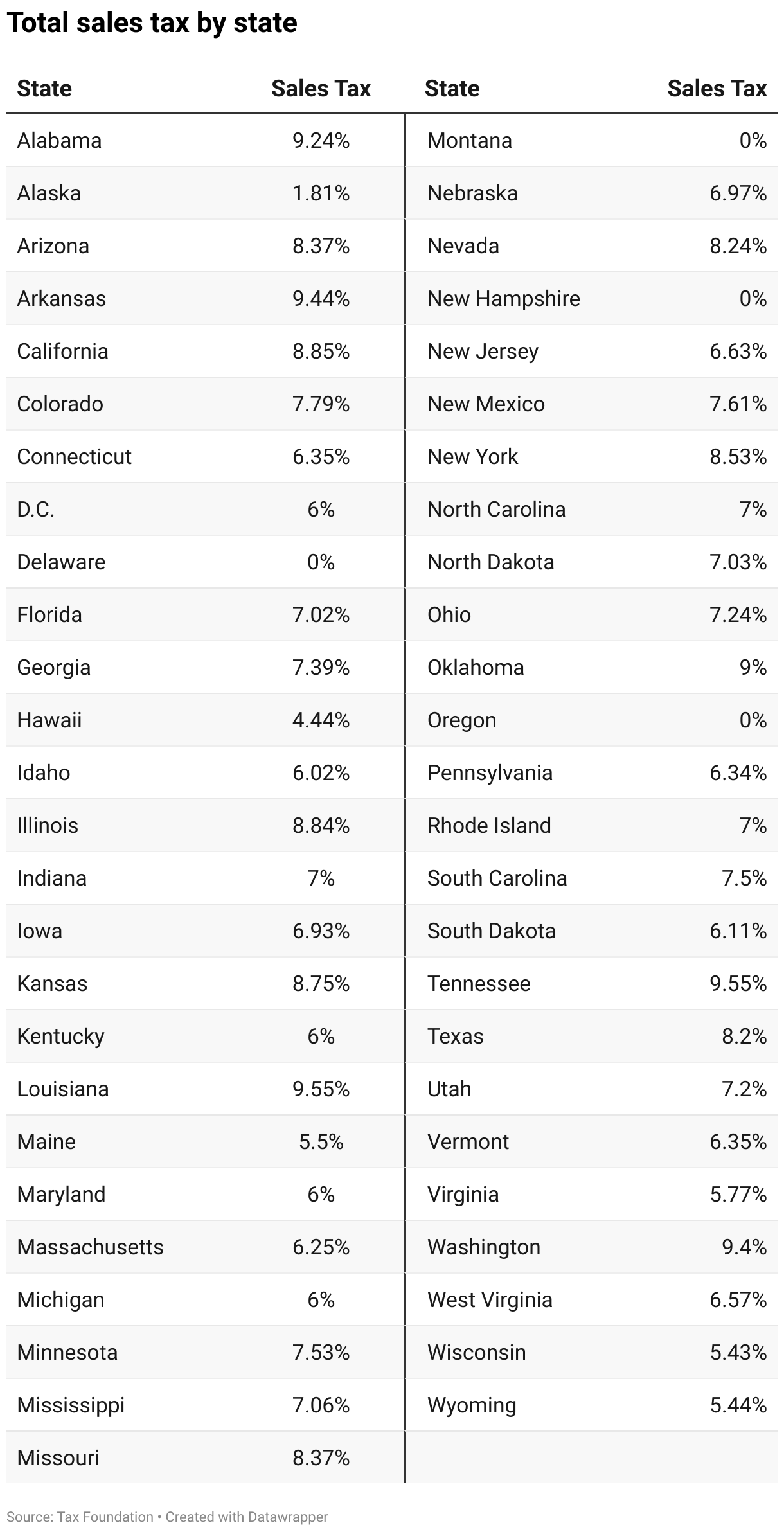
The following table provides the updated state-level sales tax rates for 2026. Please note that "Local Add-on Range" refers to the additional percentage typically charged by counties and municipalities.
| State | State Tax Rate (2026) | Local Add-on Range | Trade-In Credit Allowed? |
|---|---|---|---|
| Alabama | 2.00% | 0.5% - 4.0% | Yes |
| Alaska | 0.00% | 0.0% - 7.5% | Yes |
| Arizona | 5.60% | 0.1% - 5.1% | Yes |
| Arkansas | 6.50% | 0.0% - 5.1% | Yes |
| California | 7.25% | 0.1% - 3.5% | No |
| Colorado | 2.90% | 0.5% - 8.3% | Yes |
| Connecticut | 6.35% | 0.00% | Yes |
| Delaware | 0.00% | 4.25% (Doc Fee) | N/A |
| Florida | 6.00% | 0.0% - 2.5% | Yes |
| Georgia | 6.60% (TAVT) | 0.00% | Yes |
| Hawaii | 4.00% | 0.0% - 0.5% | No |
| Idaho | 6.00% | 0.0% - 3.0% | Yes |
| Illinois | 6.25% | 0.0% - 4.75% | Yes |
| Indiana | 7.00% | 0.00% | Yes |
| Iowa | 5.00% | 0.0% - 1.0% | Yes |
| Kansas | 6.50% | 0.0% - 4.5% | Yes |
| Kentucky | 6.00% | 0.00% | No |
| Louisiana | 4.45% | 0.0% - 7.0% | Yes |
| Maine | 5.50% | 0.00% | Yes |
| Maryland | 6.00% | 0.00% | Yes |
| Massachusetts | 6.25% | 0.00% | Yes |
| Michigan | 6.00% | 0.00% | Yes |
| Minnesota | 6.50% | 0.0% - 2.0% | Yes |
| Mississippi | 5.00% | 0.00% | Yes |
| Missouri | 4.225% | 0.0% - 6.0% | Yes |
| Montana | 0.00% | 0.00% | N/A |
| Nebraska | 5.50% | 0.0% - 2.0% | Yes |
| Nevada | 6.85% | 0.0% - 1.5% | Yes |
| New Hampshire | 0.00% | 0.00% | N/A |
| New Jersey | 6.625% | 0.00% | Yes |
| New Mexico | 4.00% | 0.00% | Yes |
| New York | 4.00% | 0.0% - 4.875% | Yes |
| North Carolina | 3.00% | 0.00% | Yes |
| North Dakota | 5.00% | 0.0% - 3.5% | Yes |
| Ohio | 5.75% | 0.0% - 2.25% | Yes |
| Oklahoma | 4.50% | 0.0% - 7.0% | Yes |
| Oregon | 0.00% | 0.5% (Privilege Tax) | N/A |
| Pennsylvania | 6.00% | 0.0% - 2.0% | Yes |
| Rhode Island | 7.00% | 0.00% | Yes |
| South Carolina | 5.00% | Max $500 IMF | Yes |
| South Dakota | 4.50% | 0.0% - 4.5% | Yes |
| Tennessee | 7.00% | 0.0% - 2.75% | Yes |
| Texas | 6.25% | 0.0% - 2.0% | Yes |
| Utah | 4.85% | 0.0% - 4.2% | Yes |
| Vermont | 6.00% | 0.00% | Yes |
| Virginia | 4.15% | 0.00% | No |
| Washington | 6.50% | 0.5% - 4.1% | Yes |
| West Virginia | 6.00% | 0.0% - 1.0% | Yes |
| Wisconsin | 5.00% | 0.0% - 1.75% | Yes |
| Wyoming | 4.00% | 0.0% - 2.0% | Yes |
The Mechanics of Trade-In Tax Credits
One of the most effective ways to lower your vehicle sales tax burden in 2026 is through a trade-in tax credit. In the majority of U.S. states, the value of your trade-in vehicle is subtracted from the purchase price of the new vehicle before the sales tax is calculated.
For example, if you are purchasing a new SUV for $50,000 in a state with a 7% sales tax rate, your tax bill would normally be $3,500. However, if you trade in your old car for a value of $20,000, you are only taxed on the "net price" of $30,000. This reduces your tax liability to $2,100, effectively saving you $1,400.
Exceptions to Trade-In Benefits
Not all states allow for this deduction. As of 2026, California, Hawaii, Kentucky, Maryland, and Virginia do not permit trade-in credits for sales tax purposes. In these states, you are taxed on the full purchase price of the new vehicle regardless of any trade-in value provided by the dealer.
Sales Tax on Private Party Transactions
Buying a car from an individual rather than a licensed dealership does not exempt you from sales tax. In 2026, state revenue departments have become increasingly sophisticated in tracking these transactions. When you bring the title to the DMV to transfer ownership, you must present a Bill of Sale.
If the reported purchase price on the Bill of Sale is significantly lower than the fair market value (FMV) of the vehicle, many states now use "book value" (such as Kelly Blue Book or NADA) to determine the tax owed. This prevents "under-the-table" deals where buyers and sellers report a $1 sale price to avoid taxes.
- Obtain a Bill of Sale: Ensure it includes the VIN, date, and actual price paid.
- Verify Fair Market Value: Check local guidelines to see if your state uses the actual price or the book value.
- Prepare for Immediate Payment: Most states require the sales tax to be paid within 15 to 30 days of the purchase date to avoid late penalties.
Tax Incentives for Electric Vehicles (EVs) in 2026
By 2026, the tax landscape for Electric Vehicles has matured significantly. While federal tax credits are often applied as "point-of-sale" rebates, several states offer additional sales tax exemptions or reductions to encourage zero-emission vehicle adoption.
- Full Exemptions: States like New Jersey and Washington have historically offered partial or full sales tax exemptions for qualifying new EVs, though these often have price caps (e.g., only applicable to vehicles under $55,000).
- Infrastructure Fees: Conversely, because EV owners do not pay gasoline taxes (which fund road maintenance), many states have introduced a "Road Use Fee" or a higher registration surcharge in 2026 to compensate for lost revenue. These fees are typically paid annually at the time of registration renewal.
Buying a Car Out-of-State: Reciprocity and Rules
A common misconception is that you can save money by driving to a state with no sales tax to purchase a vehicle. In reality, the tax is almost always determined by where you reside and register the vehicle.
If you live in a state with 6% sales tax and buy a car in a state with 0% tax, your home state will collect that 6% "Use Tax" when you apply for your plates. If you buy in a state with 4% tax, you will pay the 4% there and then pay the remaining 2% to your home state upon registration. This ensures that residents cannot bypass local tax obligations by shopping across state lines.
Strategies for Managing Your 2026 Tax Liability
While sales tax is largely fixed by law, there are legal ways to manage the total cost of acquisition:
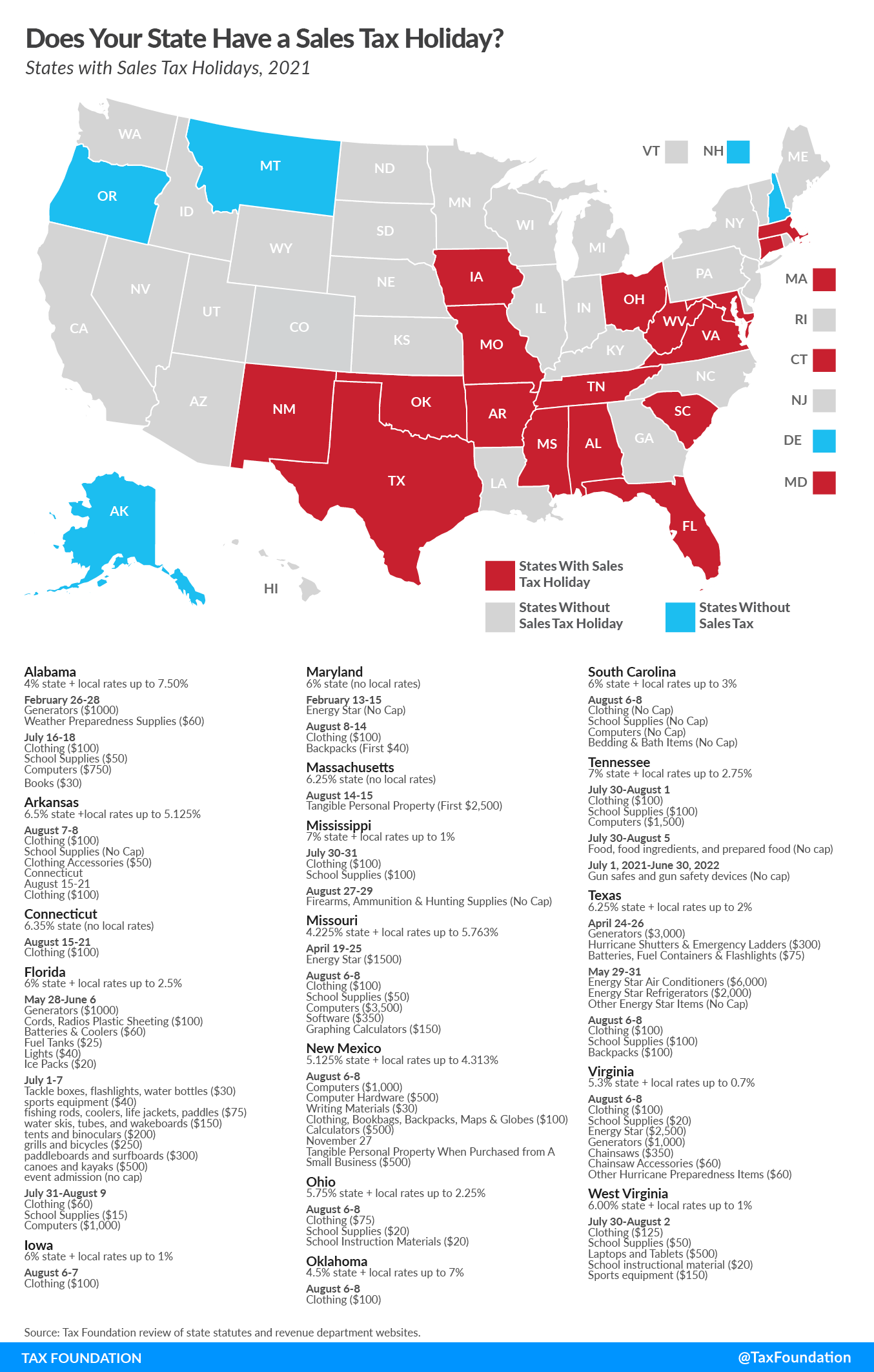
- Timing Your Purchase: Some states offer "Tax Holidays" for certain types of vehicles, though these are rare and usually target energy-efficient models.
- Military Exemptions: Active-duty military personnel may be eligible for sales tax exemptions or the ability to pay tax in their state of legal residency rather than where they are stationed.
- Disability Exemptions: Many states offer sales tax waivers for vehicles modified for drivers or passengers with specific physical disabilities.
- Business Deductions: If the vehicle is for commercial use, the sales tax may be deductible as a business expense or eligible for Section 179 depreciation, though this affects income tax rather than the upfront sales tax payment.
Frequently Asked Questions
Do I pay sales tax on a car I received as a gift?
In most states, a vehicle transferred as a "Bona Fide Gift" between immediate family members (parents, children, spouses) is exempt from sales tax. However, you must still file specific gift affidavits with the DMV, and some states may charge a nominal "Gift Tax" or administrative transfer fee rather than a percentage of the vehicle's value.
Can I include sales tax in my auto loan?
Yes, most lenders allow you to "roll in" the sales tax, registration fees, and documentation fees into the total loan amount. This reduces your out-of-pocket cost at the time of purchase but increases your monthly payment and the total interest paid over the life of the loan.
What is the "Sales Tax" vs. "Use Tax"?
Sales tax is collected by the merchant at the point of sale within the state. Use tax is the equivalent tax paid by a consumer for a high-value item (like a car) purchased outside their home state but brought into the state for use. For the end-user, the rate is identical; the terminology simply refers to where the transaction originated.
Which states have no vehicle sales tax in 2026?
Montana, New Hampshire, Oregon, and Delaware do not charge a state-level sales tax on vehicles. Alaska also has no state-level tax, though some individual boroughs or cities within Alaska may levy their own local taxes. Oregon charges a small "Privilege Tax" on dealers that is often passed to consumers, but it is significantly lower than traditional sales tax.
How is sales tax calculated on a leased vehicle?
Lease taxation varies significantly by state. In some states, you pay sales tax on the total value of the car upfront. In others, you only pay tax on the monthly lease payment. A few states even tax the "depreciation" portion of the lease. In 2026, most states have shifted toward taxing the monthly payment to make leasing more accessible.
Practical Steps Before Visiting the Dealership
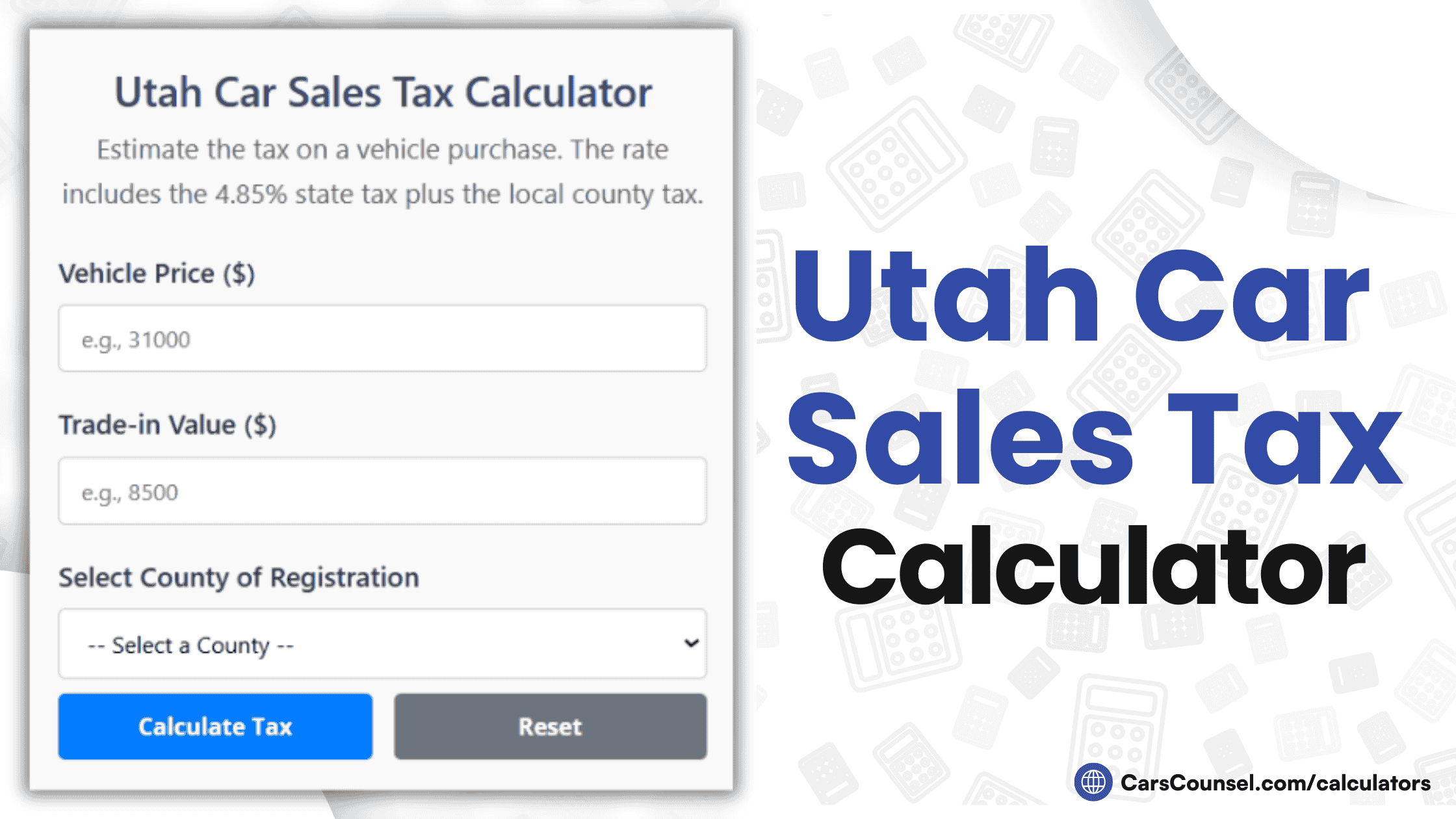
Before you sign a purchase agreement in 2026, perform a final audit of your tax obligations. Use a localized tax calculator that includes your specific county and municipal rates. Verify if your state allows for a trade-in credit, as this can be the difference between thousands of dollars in tax liability. Finally, ensure you have set aside funds for the documentation fee (doc fee), which is a separate dealer charge that is often taxable itself in many jurisdictions.
By understanding the specific tax nuances of your state of residence, you can accurately budget for your next vehicle purchase and avoid the "sticker shock" that often occurs when the final contract is presented.
Image Gallery