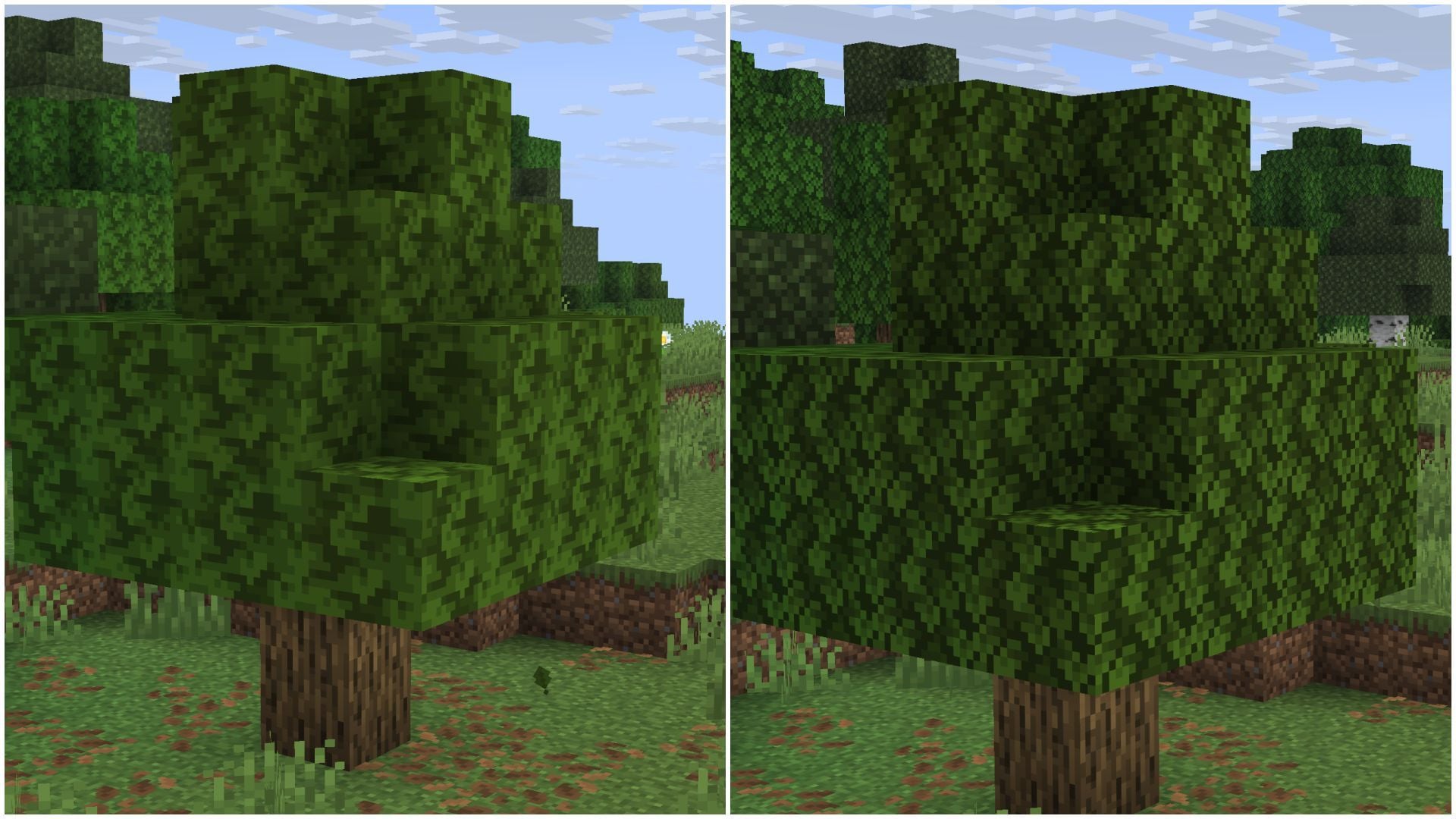
Comprehensive Guide to All Leaf Types in Minecraft (2026 Edition)
Minecraft features a rich variety of leaf blocks, each corresponding to a specific tree variant found across its diverse biomes. These blocks serve multiple functions beyond mere aesthetics, including obtaining saplings, apples, and st...
Minecraft features a rich variety of leaf blocks, each corresponding to a specific tree variant found across its diverse biomes. These blocks serve multiple functions beyond mere aesthetics, including obtaining saplings, apples, and sticks, as well as fueling certain automated mechanics. Understanding every leaf type allows builders, farmers, and redstone engineers to optimize their block palettes and resource generation strategies effectively.
Contents
Understanding Minecraft Leaf Blocks and Their Mechanics
Leaf blocks are fundamental decorative and functional blocks in Minecraft. Unlike standard solid blocks, leaves possess unique properties: they decay naturally when unsupported by wood, they are transparent to light, and players can safely pass through them using certain items or movement techniques.
With updates through 2026, the game features over a dozen distinct leaf variants. Each variant shares core programmatic behaviors while retaining unique visual textures and color palettes that match their respective tree types.
Natural Decay Mechanics and Player Intervention
When a tree trunk is fully mined, the remaining adjacent leaf blocks will generally begin to decay and disappear over a short period.
- The Support Rule: A leaf block checks for a log block within a 4-block radius (Manhattan distance). If no connected log is found within this range, the block is scheduled for decay.
- Player-Placed Immunity: Leaves placed manually by a player receive a persistent data tag that prevents natural decay, allowing builders to construct custom floating foliage or hedges without fear of destruction.
- Shears Harvesting: Mining any leaf block with Shears allows the player to collect the exact leaf block itself rather than relying on random drops like saplings or sticks.
Categorized Overview of All Leaf Types
The following breakdown details every official leaf type available in Minecraft, categorized by the tree species they originate from.
Overworld Wood Variants
The Overworld hosts the vast majority of tree variations, heavily tied to specific biomes like plains, forests, jungles, swamps, and deserts.
- Oak Leaves: The standard leaf type found in forest and plains biomes. They have a classic bright green hue that shifts subtly depending on the biome temperature. They drop oak saplings, sticks, and occasionally apples.
- Birch Leaves: Sourced from Birch Forests, these leaves feature a lighter, more yellowish-green color. They drop birch saplings and sticks.
- Spruce Leaves: Found predominantly in Taiga and Snowy Taiga biomes. Spruce leaves feature a dark, muted green color and can sometimes be found covered in snow textures in freezing regions.
- Jungle Leaves: Vibrant and lush, these leaves grow in Jungle biomes. They are notable for dropping cocoa beans in addition to jungle saplings and sticks.
- Acacia Leaves: Found in the Savanna biome, Acacia leaves have a distinct gray-green coloration that matches the dry, open landscape.
- Dark Oak Leaves: Thick and dense, these spawn exclusively in Dark Forest biomes. They have a deep, rich green texture and drop dark oak saplings and apples.
- Cherry Leaves: Introduced in modern updates and found in Cherry Grove biomes, these pink foliage blocks emit falling petal particle effects, adding high aesthetic value to builds.
- Mangrove Leaves: Sourced from Mangrove Swamps, these dark green leaves match the humid, muddy environment of their origin biome.
- Azalea and Flowering Azalea Leaves: Found naturally above Lush Caves, these come in two variants. Standard azalea leaves are a rich green, while flowering azalea leaves feature purple flower dots on the texture.
Specialized and Nether Variants
Beyond standard wood trees, unique dimensions and specialized mechanics introduce alternative foliage types.
- Azalea Variants: While related to the Lush Caves, they act as unique blocks that can be obtained by using bone meal on moss blocks.
- Nether Fungi (Wart Blocks): Nether wart blocks and nether-specific structures function similarly to leaves in terms of breaking speed and tool efficiency, though they do not decay.
- Cherry and Mangrove Propagules: While technically growing from specific items rather than traditional saplings, their leaf mechanics remain consistent with standard botanical rules.
Technical Specifications and Tool Efficiencies
Mining leaf blocks requires specific tool selections to optimize collection rates and speed. Utilizing the correct enchantments changes the yield of rare drops significantly.
| Leaf Type | Primary Biome Source | Best Harvesting Tool | Special Drops | Decay Immune When Player-Placed |
|---|---|---|---|---|
| Oak Leaves | Forest, Plains | Shears / Any Tool | Apple (0.5%), Sapling (5%), Stick | Yes |
| Birch Leaves | Birch Forest | Shears / Any Tool | Sapling (5%), Stick (2%) | Yes |
| Spruce Leaves | Taiga, Snowy Taiga | Shears / Any Tool | Sapling (5%), Stick (2%) | Yes |
| Jungle Leaves | Jungle | Shears / Any Tool | Cocoa Beans (2%), Sapling (5%) | Yes |
| Acacia Leaves | Savanna | Shears / Any Tool | Sapling (5%), Stick (2%) | Yes |
| Dark Oak Leaves | Dark Forest | Shears / Any Tool | Apple (0.5%), Sapling (5%) | Yes |
| Cherry Leaves | Cherry Grove | Shears / Any Tool | Cherry Sapling (5%), Stick (2%) | Yes |
| Mangrove Leaves | Mangrove Swamp | Shears / Any Tool | Propagule (5%), Stick (2%) | Yes |
| Azalea Leaves | Lush Caves | Shears / Any Tool | Azalea (2.5%), Stick (2%) | Yes |
| Flowering Azalea | Lush Caves | Shears / Any Tool | Flowering Azalea (2.5%) | Yes |
Enchantment Synergies
- Fortune III: Increases the drop rate of saplings and apples when breaking leaves with a Fortune-enchanted tool, though Shears cannot receive Fortune naturally in vanilla survival gameplay.
- Silk Touch: Applying Silk Touch to Shears is redundant since Shears naturally collect the leaf block, but using a Silk Touch tool (like a pickaxe) allows collection without Shears.
- Efficiency: Increases mining speed across all leaf variants, allowing for rapid clearing of large forest areas.
Step-by-Step Guide to Farming and Harvesting Leaves
Farming leaves efficiently requires an understanding of automated tree farms and manual harvesting techniques. Follow this structured process to maximize your resource collection.
- Select the Target Biome: Travel to the specific biome matching the leaf type you wish to collect to acquire initial saplings.
- Plant and Grow: Plant the corresponding sapling on dirt, grass, or moss, and apply bone meal to accelerate growth into a full tree.
- Equip Shears: Craft a pair of shears using two iron ingots arranged diagonally.
- Harvest or Clear: Break the leaves directly with the shears to collect the blocks for building, or mine them with an axe or bare hands if you only want saplings and apples.
- Establish a Farm: Build a designated area with high ceilings and clear walking paths to repeatedly grow and harvest your chosen leaf type.
Pros and Cons of Using Leaf Blocks in Builds
Utilizing various leaf types in architectural and landscaping projects offers distinct creative advantages and minor technical challenges.
- Pros:
- Textural Variety: Different green hues and color variants (like pink cherry leaves) allow for detailed gradients and depth in landscaping.
- Transparency: Leaves allow light to pass through, making them ideal for hidden lighting setups or realistic tree canopies.
- Particle Effects: Cherry leaves produce falling petals, adding dynamic ambient movement to builds.
- Cons:
- Fire Hazard: Most overworld leaves are highly flammable and can catch fire easily from lightning or nearby lava sources.
- Mob Spawning: While mobs generally do not spawn on transparent blocks like leaves, incorrect placement near solid blocks can alter mob routing.
- Accidental Decay: Forgetting to place player-placed leaves correctly near logs can lead to unexpected structural collapse if support rules are violated.
Frequently Asked Questions
How do you stop Minecraft leaves from decaying?
Player-placed leaf blocks automatically contain a persistent tag that prevents them from decaying, even if all nearby log blocks are removed. Alternatively, you can use Shears to harvest the leaf block and place it manually.
Can you grow leaves using bone meal?
You cannot apply bone meal directly to a leaf block. Instead, you apply bone meal to the corresponding sapling planted on dirt or moss to grow a full tree complete with its leaf canopy.
Which tool is best for breaking leaves quickly?
Shears are the intended tool for harvesting leaf blocks intact. While swords and hoes break leaves faster than bare hands, shears provide the highest efficiency and drop the block itself.
Do all leaf types drop apples?
No. Only Oak and Dark Oak leaves have a chance to drop apples natively when broken without shears. Other leaf types drop only their respective saplings, sticks, or unique items like cocoa beans.
Why are my placed leaves disappearing?
If leaves disappear after placement, it means they were obtained using a non-shear method or placed in a way that the game registers as naturally generated without a persistent tag, causing the decay algorithm to trigger.
Practical Recommendations for Builders
When planning large-scale landscaping projects, collect an abundance of various leaf types using enchanted shears to ensure you have a reliable supply. Combine different variants—such as mixing regular Oak with Spruce or Azalea leaves—to create realistic depth, shadowing, and texture gradients in custom custom forests and garden builds.
Image Gallery