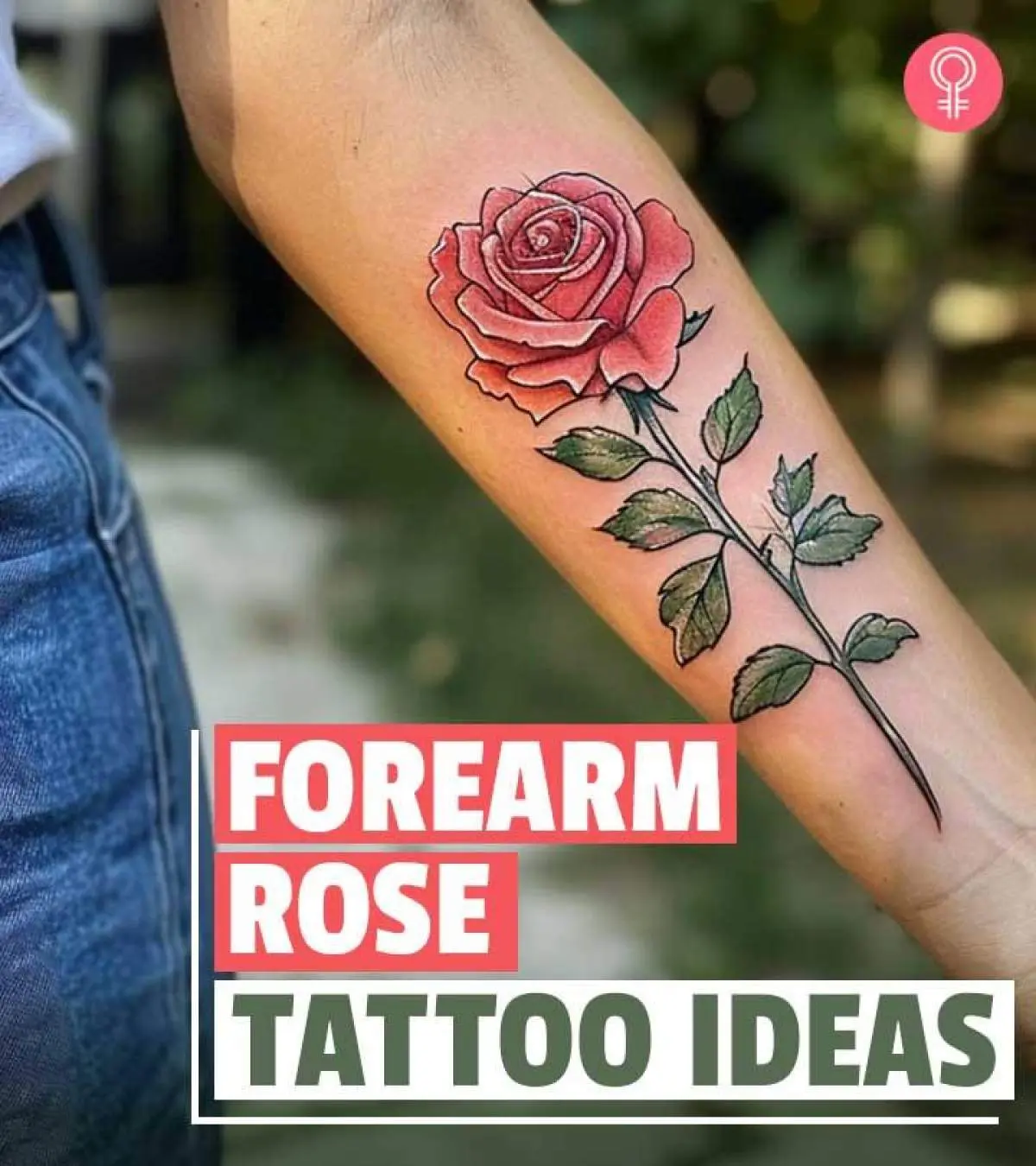
Forearm Floral Tattoos: Placement Mechanics, Style Guide, and Aging Analysis
Forearm floral tattoos blend botanical aesthetics with anatomical movement, offering exceptional versatility across inner, outer, and full-wrap placements. Successful designs require balancing style choices—such as fine-line, black-and...
Forearm floral tattoos blend botanical aesthetics with anatomical movement, offering exceptional versatility across inner, outer, and full-wrap placements. Successful designs require balancing style choices—such as fine-line, black-and-grey realism, or illustrative work—with skin elasticity and natural muscle twisting. Proper needle depth into the dermis ensures crisp line retention over time.
Contents
Anatomical Mechanics and Forearm Placement Strategy
Designing a floral tattoo for the forearm requires a deep understanding of human anatomy. Unlike flat canvas surfaces like the back or thigh, the forearm constantly twists, flexes, and elongates. The lower arm consists of two primary bones: the radius and the ulna. When you rotate your hand from palm-up (supination) to palm-down (pronation), the radius crosses over the ulna. This biomechanical motion alters the shape of any artwork resting on the skin above the flexor carpi radialis and brachioradialis muscles.
(No ASCII diagrams present - executing via structured technical description)
To ensure your botanical design maintains its visual structural integrity regardless of arm movement, an experienced tattoo artist aligns the focal points of the flowers with key anatomical landmarks.
Anatomical Placement PrincipleStems and vine elements should follow the natural muscle striations of the forearm. When main stems are aligned along the muscular flow rather than drawn in rigid straight lines, the artwork naturally fluidly flexes during pronation and supination without distorting flower petals or bud proportions.
Placement Zones Overview
- Ventral (Inner) Forearm: Characterized by smooth skin, minimal hair density, and high visual accessibility. This region provides an exceptional surface for delicate fine-line work and high-contrast shading. However, skin near the wrist crease is thinner and sits closer to nerve pathways, requiring precise depth control by the practitioner.
- Dorsal (Outer) Forearm: Features slightly thicker skin and higher melanin concentrations due to sun exposure. It offers a flatter visual plane when the arm rests in a natural neutral position. Outer forearm floral pieces hold up well against friction from clothing.
- Radial Edge (Thumb Side): An ideal canvas for elongated, single-stem floral arrangements such as lavender, wild poppies, or delphiniums. The natural contour of the arm accentuates tall, slender botanical shapes.
- Antecubital Fossa (Arm Ditch): The crease opposing the elbow. Placing flower petals extending into the ditch creates striking visual continuity, but this region features thin skin, high flex mobility, and elevated sensitivity during ink application.
Technical Tattoo Styles for Floral Forearm Designs
Floral motifs translate across virtually every major tattooing tradition. Selecting the right style dictates not only the aesthetic tone of the piece but also its long-term durability and maintenance requirements.
Fine-Line and Micro-Realism
Fine-line floral tattoos utilize tight needle configurations—typically single needles (1RL) up to three-round liners (3RL)—to recreate delicate botanical illustrations, micro-petals, and faint stippling.
- Technical Considerations: The stroke depth must remain precisely within the papillary layer of the dermis. Inserting ink too shallow leads to pigment loss during epidermal shedding; inserting ink too deep causes "blowouts," where ink diffuses sideways into subcutaneous fat layers.
- Longevity Profile: Fine-line work lacks heavy black outline borders. Consequently, gentle pigment spreading (phagocytosis) over five to ten years can soften minor details, requiring periodic touch-ups.
Black and Grey Realism
Using varying shades of diluted black ink (wash) combined with smooth magnum needle passes, black and grey realism creates realistic three-dimensional depth, light reflections on wet petals, and soft translucent shadows.
- Technical Considerations: Contrast management is vital. Without pure black saturated areas in the deepest recesses of the flower (such as under the sepals or inside the core), soft grey shading can wash out under sunlight over time.
Neo-Traditional and Illustrative
Neo-traditional floral art features bold black line weights combined with rich, saturated color palettes, architectural line variations, and stylized natural forms. Illustrative styles often incorporate woodcut or etching line techniques.
- Technical Considerations: Heavy outer lines protect the structural integrity of the design as the skin ages. Solid color packing (using larger magnum needle configurations like 9RM or 15RM) provides high visual impact and durability.
Style Comparison for Forearm Floral Tattoos
The table below outlines technical metrics, pain profiles, and long-term care expectations across the primary tattoo styles used for forearm floral arrangements.
| Tattoo Style | Technical Needle Setup | Primary Pain Index (1–10 Scale) | Sun Sensitivity | 10-Year Line Retention Rate | Recommended Touch-Up Frequency |
|---|---|---|---|---|---|
| Fine-Line Botanical | 1RL – 3RL (Tight Liners) | 3 – 5 (Mild to Moderate) | Very High | 60% – 70% (Softens significantly) | Every 3 to 5 Years |
| Black & Grey Realism | 3RL (Linework), 7RM–15RM (Magnums) | 4 – 6 (Moderate) | Moderate | 75% – 85% (Maintains form well) | Every 7 to 10 Years |
| Neo-Traditional Color | 7RL – 9RL (Bold Liners), 11M1 (Magnums) | 5 – 7 (Moderate to Elevated) | High (Color fading dependent) | 85% – 95% (High structural stability) | Every 8 to 12 Years |
| Illustrative Woodcut | 5RL – 7RL (Standard Liners), 3RL (Cross-hatching) | 4 – 5 (Moderate) | Moderate | 80% – 90% (Crisp outline stability) | Every 8 to 10 Years |
| Watercolor Floral | 3RL (Minimal Lines), 9RM–13RM (Soft Color Wash) | 4 – 6 (Moderate) | Extreme | 50% – 65% (Edging blurs without black boundaries) | Every 3 to 5 Years |
Botanical Symbolism and Compositional Frameworks
Flowers carry rich historical symbolism, making them highly personal subjects for body art. When designing a forearm piece, combining symbolic weight with anatomical flow ensures both personal meaning and visual balance.
Popular Floral Motifs and Their Aesthetics
- The Rose (Rosa family): Represents passion, balance, and defense (via thorns). The complex layer of overlapping petals provides an excellent test for shading depth. Roses fit exceptionally well on the broader top section of the forearm near the elbow.
- The Peony (Paeonia): Associated with prosperity, honor, and elegance in traditional Eastern and Western tattooing. The dense, ruffled volume of peony petals makes it an ideal motif for concealing old scars or serving as a anchor for a full forearm sleeve.
- Wildflowers and Botanical Assemblies: Combining flora like cosmos, ferns, lavender, and eucalyptus creates an organic, sweeping aesthetic. These designs wrap seamlessly around the flexor muscles, disguising arm symmetry differences.
- The Lotus (Nelumbo nucifera): Symbolizes purity, spiritual awakening, and resilience. Its naturally symmetrical, upward-reaching structure works best centered on the inner forearm or placed directly over the wrist flexor tendons.
(Compositional Flow Concept: Base of stem near wrist flexor -> Leaves wrapping radial bone -> Blossom resting over muscle belly)
Skin Anatomy, Pigment Longevity, and Aging Dynamics
Understanding how forearm skin interacts with tattoo pigment is critical for maintaining vibrant artwork over several decades.
Dermis Depth and Blowout Prevention
Human skin comprises three primary layers: the epidermis (outermost), the dermis (middle), and subcutaneous tissue (fat). Tattoo ink must be deposited precisely into the upper papillary dermis, roughly 1.5 to 2.0 millimeters beneath the skin surface.
Technical Execution WarningInner forearm skin is notably thinner than outer forearm skin. Applying excessive machine voltage or moving the hand too slowly over the flexor tendons forces ink into the subcutaneous layer. Subcutaneous ink spreads uncontrollably through fat cells, resulting in a permanent, bluish halo around lines known as a blowout.
Solar Radiation and Ink Degradation
The outer and inner forearms receive significant ambient sunlight throughout the year. Solar ultraviolet (UV-A and UV-B) radiation poses a primary threat to tattoo longevity:
- Chemical Breakup: UV rays penetrate the epidermis and strike pigment particles stored inside dermal macrophages.
- Phagocytosis Activation: Solar light energy breaks large ink pigment particles into microscopic fragments.
- Lymphatic Clearance: The immune system's lymphatic cells transport these smaller ink fragments away from the dermis, causing visible fading.
To review clinical guidance on skin protection and tattoo care, consult resource documentation provided by the American Academy of Dermatology Association.
Step-by-Step Execution Guide: Stencil to Healing
Achieving a high-quality floral forearm tattoo requires a structured process from preliminary consultation to final healing.
Step 1: Design Consultation and Scaling
Work with your artist to scale the floral artwork appropriately. A floral stencil that looks detailed on a digital tablet screen must be sized up slightly to prevent tiny petal gaps from blurring together as skin naturally ages.
Step 2: Dynamic Stencil Fitting
The artist applies the stencil while you stand in a neutral, relaxed stance.
- The stencil is applied with the arm resting naturally at your side.
- You will perform a series of movements: extending the arm, bending the elbow, and fully rotating the hand (pronation and supination).
- The artist verifies that key flower heads do not flatten unrealistically during movement. If distortion occurs, the stencil is adjusted to follow the arm's muscular axis.
Step 3: Outlining and Linework Calibration
The artist begins by establishing structural lines. High-grade stainless steel needles driven by specialized rotary or coil machines deposit pigment.
- Linework begins at the lower wrist area and works upward toward the elbow to prevent stencil wiping degradation.
- Voltage is carefully calibrated (typically between 6.0V and 8.5V depending on the rotary stroke length) to match the thickness of your forearm skin.
Step 4: Shading, Depth Packing, and Highlights
Once the outline is established:
- Smooth black-and-grey gradients or color transitions are packed using magnum needles.
- Selective pure white pigment highlights (titanium dioxide formulation) are applied sparingly along petal edges to create light reflection points.
Step 5: Medical-Grade Aftercare Application
Immediately after wiping the finished tattoo with an antiseptic solution, the artist applies a breathable polyurethane adhesive film (often referred to as medical skin film) or a traditional absorbent pad.
Aftercare Protocol OverviewLeave the initial medical adhesive film on for 24 to 48 hours to collect plasma, excess ink, and cellular debris. Remove under warm running water, wash gently with an unscented antibacterial cleanser, and apply a thin layer of specialized tattoo ointment or non-comedogenic lotion twice daily.
Scars, Skin Texture, and Concealment Considerations
Forearm skin frequently exhibits minor scars, stretch marks, or sun damage. Floral tattoos excel as natural concealment solutions because organic shapes lack rigid geometric symmetry.
- Scar Tissue Densities: Scars must be fully mature (typically pale white and at least 12 to 18 months old) before tattoo application. Scar tissue holds ink differently than healthy skin; it can absorb pigment unpredictably or bleed color.
- Designing Around Scars: An experienced artist places dense petal clusters, heavy black leaf shading, or intricate linework directly over scar tissue, while using lighter background elements on smooth surrounding skin to visually break up textural irregularities.
Frequently Asked Questions
Do forearm floral tattoos stretch if you gain or lose muscle tone?
Moderate muscle growth or fat loss on the forearm will not noticeably distort a floral tattoo. The forearm skin stretches uniformly; unless extreme weight changes occur rapidly, organic shapes like flowers naturally adapt to subtle changes in arm circumference without losing their proportion.
How painful is a forearm floral tattoo compared to other body locations?
Forearm tattooing generally falls into the low-to-moderate pain spectrum (3 to 6 out of 10). The mid-outer forearm is one of the least painful tattoo sites on the body. Sensitivity increases substantially as the needle moves closer to the wrist tendons, the radial bone edge, or into the antecubital fossa (arm ditch).
How do delicate fine-line floral tattoos age after 5 to 10 years?
All tattoo linework expands slightly over time as the body's immune system slowly processes ink particles. Fine-line floral tattoos naturally soften. Lines drawn with tight 1RL or 3RL needles will broaden slightly, and subtle shading will lighten. Adequate sun protection slows this process significantly.
What is the best way to prevent color fading on a broad forearm floral piece?
Protecting pigment integrity requires consistent UV care. Apply a broad-spectrum sunscreen with SPF 50 or higher to your healed tattoo whenever your forearms are exposed to direct sunlight. Keeping the skin moisturized daily maintains epidermal clarity, ensuring deep dermal pigments remain vibrant.
Can a floral design effectively cover an old, unwanted forearm tattoo?
Yes, floral designs are exceptional cover-up choices. The natural layering of dark leaves, overlapping petals, and rich background shading allows a skilled artist to hide old black ink lines within the dark recesses of a new flower structure without requiring a solid black block.
Preserving Your Floral Artwork
A forearm floral tattoo is a dynamic fusion of biological art and human anatomy. By choosing an experienced professional artist who understands anatomical twisting, skin thickness variations, and long-term ink retention mechanics, your botanical tattoo will remain a clear, beautiful feature for decades. Invest time in preliminary stencil fitting, maintain strict sun safety practices, and follow proper aftercare guidelines to protect your investment.
Image Gallery