Remington 11-48 Serial Number Lookup and Production Date Identification
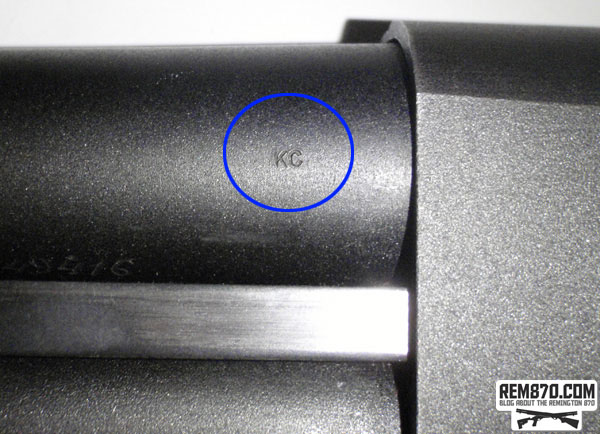
To determine the age of your Remington 11-48, locate the serial number on the left side of the receiver and cross-reference the two-letter barrel code stamped on the left side of the barrel near the receiver. While serial numbers for t...
To determine the age of your Remington 11-48, locate the serial number on the left side of the receiver and cross-reference the two-letter barrel code stamped on the left side of the barrel near the receiver. While serial numbers for the 11-48 were not perfectly sequential, the barrel code remains the industry-standard method for identifying the specific month and year of manufacture for these historic semi-automatic shotguns.
Contents
Historical Context and Design Evolution
The Remington Model 11-48 represents a significant milestone in firearms history. Introduced in 1948, it was the company’s first modern semi-automatic shotgun to feature a streamlined receiver, serving as a successor to the long-recoil Model 11. Because the production spanned from 1948 through 1968, identifying the exact year is vital for collectors, gunsmiths, and owners seeking correct parts.
Unlike modern firearms that utilize linear serial numbers tied to a central database, Remington utilized a "barrel code" system during this era. This system provides a two-letter or three-letter sequence that encodes the month and year of the barrel's manufacture. In most cases, the barrel was installed shortly after production, making it a highly reliable proxy for the age of the firearm.
Locating the Identification Markers
Before attempting to date your firearm, you must perform a safe, visual inspection. Ensure the chamber is empty and the magazine tube contains no shells.
- Serial Number: Look on the left side of the receiver, toward the bottom, near the trigger guard. This number is used for official records and registration, though it does not explicitly contain the date in a readable format.
- Barrel Date Code: Look on the left side of the barrel, just forward of the receiver. You will see a small, stamped sequence of two or three letters. The first letter represents the month, and the subsequent letter or letters represent the year of production.
Deciphering the Remington Barrel Code System
The date code system used by Remington is cyclical. Because the system was designed to repeat every few decades, you must use the model’s known production window (1948–1968) to narrow down the specific decade.
| Month Letter | Code | Year Letter | Code |
|---|---|---|---|
| January | B | 1948 | P |
| February | L | 1949 | R |
| March | A | 1950 | S |
| April | C | 1951 | T |
| May | K | 1952 | U |
| June | R | 1953 | W |
| July | E | 1954 | X |
| August | M | 1955 | Y |
| September | O | 1956 | Z |
| October | V | 1957 | A |
| November | X | 1958 | B |
| December | D | 1959 | C |
Note: For production years beyond 1959, the sequence continued through the 1960s. For example, 1960 is represented by D, 1961 by E, and so on. If your barrel code contains a letter not found in the standard charts, it may indicate a replacement barrel installed later in the gun's service life.
Technical Considerations for Maintenance in 2026
As of 2026, finding factory-original parts for the Remington 11-48 requires careful attention to the serial number range. Early production models (1948–1950) sometimes feature slight variations in internal machining compared to the late-production units of the mid-1960s.
Important Technical Warning
When performing maintenance on an 11-48 in 2026, always verify the friction ring orientation. The 11-48 is a long-recoil system. If the friction ring is configured incorrectly for the specific load being fired, you risk causing excessive stress on the receiver and the action spring, which can lead to cracks or mechanical failure.
Troubleshooting and FAQ
Is the serial number the best way to date my Remington 11-48? No. Remington’s serial numbers for the 11-48 were not strictly chronological in the way modern manufacturers track production. The barrel date code is the primary, industry-accepted metric for determining the age of your firearm.
What if my barrel date code and serial number seem mismatched? It is common for vintage firearms to have "replacement" barrels. If the barrel was replaced by a gunsmith, the date on the barrel will reflect the manufacturing date of the new barrel, not the receiver. Always prioritize the receiver serial number for registration purposes and the barrel code for age identification.
Where can I find official records for my serial number? Remington’s historical archives were decentralized during various corporate restructurings. While there is no public, searchable online database for 1948–1968 serial numbers, the Remington Society of America maintains the most comprehensive secondary records.
Can I still use steel shot in an 11-48? Most 11-48 barrels were choked for lead shot. Unless your barrel has been specifically modified or marked for steel shot, using modern, high-velocity steel ammunition can cause ring bulges or damage to the vintage choke constriction. Use bismuth or tungsten-matrix alternatives if you intend to hunt with the gun in 2026.
Does a low serial number increase the value of my 11-48? Generally, condition is the primary driver of value. While "first year of production" (1948) specimens hold interest for collectors, an 11-48 in excellent original condition, regardless of the serial number, will significantly outperform a well-worn early-model shotgun in market value.
Professional Maintenance Recommendations
To ensure your Remington 11-48 remains functional through 2026 and beyond, adhere to these maintenance protocols:
- Lubrication: Use a light, high-quality synthetic gun oil on the magazine tube. The long-recoil action relies on the friction ring moving smoothly against the tube; excessive grease or heavy oil will cause the action to sluggishly cycle or fail to eject.
- Spring Replacement: The main recoil spring is a consumable part. If you notice increased felt recoil or the action is failing to return to battery, replace the spring with a modern equivalent manufactured to the original specifications.
- Inspection: Periodically check the action bar for stress fractures, a common wear point in long-recoil shotguns.
If you are unsure of the internal condition of your firearm, consult a certified gunsmith who specializes in vintage Remington semi-automatics. Proper care will preserve the mechanical integrity of this classic firearm for future generations.
Image Gallery