Investing in Magic: The Gathering Cards: The 2026 Professional Strategy Guide
Investing in Magic: The Gathering (MTG) cards involves acquiring specific game pieces whose value is driven by scarcity, historical significance, and competitive demand. To succeed, investors focus on the "Reserved List," high-grade vi...
Investing in Magic: The Gathering (MTG) cards involves acquiring specific game pieces whose value is driven by scarcity, historical significance, and competitive demand. To succeed, investors focus on the "Reserved List," high-grade vintage assets, and limited-print serialized releases, leveraging the secondary market to generate long-term capital appreciation from this alternative asset class.
Contents
The Evolution of Magic as an Alternative Asset
Since its inception in 1993, Magic: The Gathering has transitioned from a niche hobby into a sophisticated alternative asset class. As of 2026, the market for MTG cards mirrors many aspects of the fine art and numismatic markets. While the game remains popular among players, a distinct segment of the community operates purely on financial speculation, treating "cardboard" as a hedge against inflation and traditional market volatility.
The primary driver of MTG’s investment value is the relationship between supply and demand. Unlike traditional equities, the supply of older cards is fixed or diminishing due to loss, damage, or "grading lock-up" (where cards are placed in permanent collections). Demand, conversely, is fueled by three distinct groups: players who need the cards for tournaments, nostalgic collectors who view the cards as historical artifacts, and pure investors looking for ROI.
Successful investing in this space requires more than just a passing knowledge of the game. It demands an understanding of print runs, set history, the impact of "Universes Beyond" collaborations, and the technical nuances of the professional grading industry. As we look at the landscape in 2026, the market has bifurcated into two primary sectors: the stable, blue-chip Vintage market and the high-volatility Modern speculative market.
The Reserved List: The Bedrock of MTG Investing
For any serious investor, the Reserved List is the most critical concept to master. Created in 1996 and revised in 2002 and 2010, the Reserved List is a selection of cards that Wizards of the Coast (WotC) has legally and publicly committed to never reprint in their original functional form. This policy ensures that the supply of these cards remains forever capped.
The Power Nine and Alpha/Beta Assets
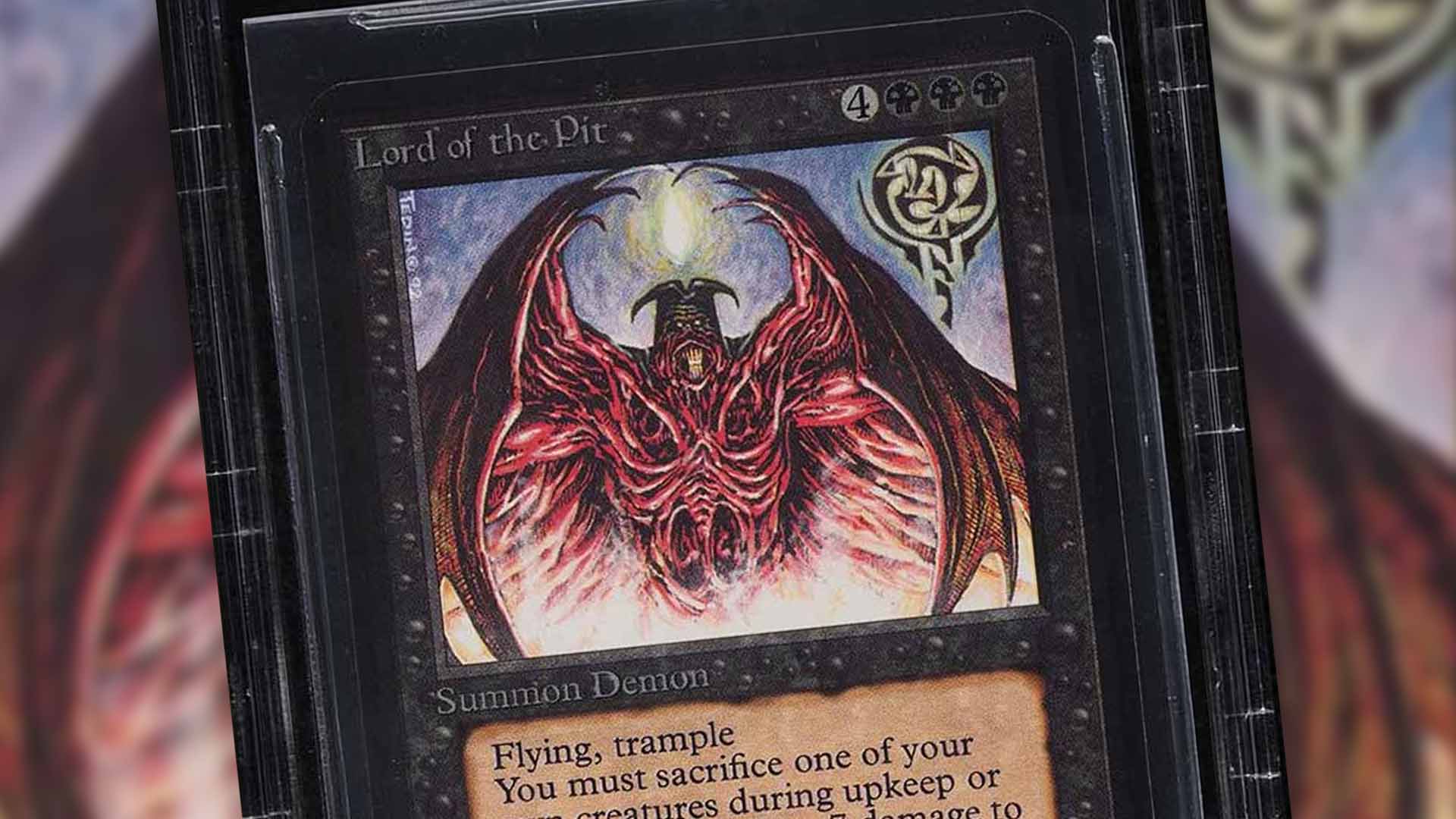
At the top of the Reserved List pyramid are the "Power Nine," a group of cards from the game’s earliest sets (Alpha, Beta, and Unlimited) that are considered the most powerful in the game's history. These include the Black Lotus, the five Moxen (Emerald, Jet, Pearl, Ruby, and Sapphire), Ancestral Recall, Time Walk, and Timetwister.
Investing in Alpha or Beta versions of these cards is equivalent to buying a blue-chip stock or a masterpiece painting. Their value is derived less from their utility in the game and more from their status as the "founding documents" of the TCG (Trading Card Game) industry. In 2026, these cards continue to command premium prices at major auction houses like Heritage Auctions and Sotheby’s.
Dual Lands and Eternal Staples
Below the Power Nine sit the "Dual Lands" (e.g., Underground Sea, Volcanic Island) from the Revised Edition and earlier. These cards provide two colors of mana with no drawbacks, making them essential for the "Legacy" and "Vintage" competitive formats. Because they are on the Reserved List and provide high utility, they represent a "Goldilocks" investment: they possess both high collectibility and high liquidity.
Professional Grading and Authentication
In the 2026 market, the "raw" (ungraded) price of a card is often significantly lower than its "slabbed" (professionally graded) counterpart. Professional grading provides two essential services: authentication and condition assessment.
The Big Three: PSA, BGS, and CGC
- PSA (Professional Sports Authenticator): Generally considered the standard for Alpha and Beta collectors. A PSA 10 "Gem Mint" rating can multiply the value of a card by 10x or more compared to its Near Mint (NM) raw price.
- BGS (Beckett Grading Services): Known for its "Black Label" 10s and sub-grades. High-end investors often prefer BGS for cards where the centering or corner quality is exceptional.
- CGC (Certified Guaranty Company): Having gained significant market share by 2026, CGC is often the choice for modern "error" cards or high-volume submissions due to their advanced imaging technology.
Investing in grading is a strategy in itself. Investors often hunt for "raw" cards that appear to be in Mint condition, purchase them at market price, and submit them for grading in hopes of securing a high score that instantly increases the asset's resale value. However, this carries the risk of the "grade pop" (population count); if too many cards receive high grades, the premium for that grade may diminish.
Modern Market Dynamics: Serialized Cards and Speculation
The landscape of MTG investing shifted dramatically between 2023 and 2026 with the introduction of serialized cards. These are limited-edition versions of cards, often numbered (e.g., "001/500"), found in "Collector Boosters."
The "One-of-One" Effect
The sale of the "One Ring" 1/1 card to the artist Post Malone in 2023 for a reported $2 million redefined what was possible for modern MTG cards. By 2026, Wizards of the Coast has integrated these "ultra-rare" chase cards into most major releases. For investors, these cards represent a high-risk, high-reward opportunity. Unlike Reserved List cards, their value is not based on historical significance but on artificial scarcity.
Universes Beyond
The "Universes Beyond" initiative, which brings outside IPs like The Lord of the Rings, Warhammer 40,000, and Final Fantasy into Magic, has expanded the investor pool. New capital has flowed into the game from fans of these franchises who may not even play MTG. Investing in these sets requires monitoring the popularity of the underlying IP and the unique mechanics of those specific cards that might not be reprinted due to licensing constraints.
Comparing MTG Investment Tiers
To build a balanced portfolio, investors should categorize their acquisitions by risk and liquidity. The following table outlines the primary tiers of MTG assets as of 2026.
| Asset Tier | Example Cards | Risk Level | Liquidity | Primary Value Driver |
|---|---|---|---|---|
| Vintage Blue-Chip | Alpha Black Lotus, Beta Moxes | Low | Medium | Historical Scarcity |
| Reserved List Staples | Gaea's Cradle, Underground Sea | Low | High | Competitive Demand / Fixed Supply |
| Serialized Chase | 1/500 Retro Frame Artifacts | High | Low | Artificial Scarcity |
| Modern Specs | Key "Staples" in Standard/Pioneer | Very High | Very High | Tournament Meta |
| Sealed Product | 1990s Booster Boxes, Secret Lairs | Moderate | Low | Unopened Premium |
Risk Mitigation: Reprints, Power Creep, and Liquidity
Investing in Magic is not without significant hazards. Investors must be aware of three primary threats to their capital.
The "Reprint Equity" Problem
For cards not on the Reserved List, Wizards of the Coast utilizes "reprint equity" to sell new sets. If a card becomes too expensive, WotC often reprints it in a "Masters" set or a "Secret Lair" drop. This can cause the price of the original version to plummet. Investors avoid this by focusing on the first printing of a card or "special" frames (like the 2024-2026 "Concept Praetors") that are harder to replicate.
Power Creep
"Power creep" refers to the tendency of newer cards to be more powerful than older ones. This can render once-valuable cards obsolete in competitive play, causing their price to crash. This is why many investors prefer the "Old School" or "Premodern" formats, where the card pool is fixed and immune to power creep.
Liquidity and Transaction Costs
Unlike stocks, you cannot sell a Magic card with the click of a button at the mid-market price. Selling via platforms like TCGplayer or Cardmarket involves fees (usually 10-15%), shipping costs, and the risk of mail loss. Selling to a "buylist" at a local game store (LGS) typically nets only 50-60% of the card's market value. Professional investors must account for these "exit costs" when calculating their expected ROI.
Storage, Security, and Insurance
As a portfolio grows, physical security becomes paramount. In 2026, many high-end investors utilize third-party vaults (such as those offered by PWCC or Heritage) to store their graded assets. This removes the risk of theft or fire at home and simplifies the selling process, as the cards are already authenticated and stored at the point of sale.
For those keeping cards at home, climate control is essential. Humidity can cause "foiling" (curling) on newer cards, which collectors disparagingly call "pringling." Furthermore, standard homeowner's insurance rarely covers high-value collectibles. Specialized riders or separate policies from companies like Collectible Shield or Manning & Kass are standard requirements for portfolios exceeding $25,000.
FAQ: Common Questions for MTG Investors
Is the Reserved List ever going to be abolished?
While rumors circulate every year, Wizards of the Coast has repeatedly reaffirmed their commitment to the policy. Many legal experts suggest that abolishing the list could lead to "promissory estoppel" lawsuits from high-end collectors. As of 2026, the Reserved List remains the safest bet for long-term stability.
How do I detect high-quality counterfeits?
The "Green Dot Test" remains the gold standard. Using a 60x jeweler's loupe, you must look for a specific pattern of red "L" dots in the green circle on the back of the card. Modern counterfeits from 2024 onwards have become sophisticated, so using a light test and weight test in conjunction with magnification is necessary.
Is it better to buy sealed boxes or individual cards (singles)?
Sealed booster boxes from the 1990s and early 2000s have historically outperformed singles because they offer "gambler's premium"—the possibility of pulling a high-grade hit. However, sealed product is bulky and expensive to ship. Most professional investors prefer "Blue-Chip" singles for ease of storage and faster liquidity.
Does the condition of the card really matter that much?
Yes. In the world of high-end MTG investing, the difference between "Near Mint" and "Lightly Played" can be thousands of dollars. For Alpha and Beta cards, a "Grade 10" is often worth exponentially more than a "Grade 9." Collectors are increasingly obsessed with perfection, making condition the single biggest factor in ROI.
Practical Recommendation for 2026
If you are beginning your journey into MTG investing, the most prudent strategy is to start with the Reserved List. Avoid the "hype cycles" of new set releases and "serialized" chases until you have a foundational portfolio of cards that cannot be reprinted. Focus on "Revised" Dual Lands as an entry point; they offer high liquidity and have a 30-year track record of appreciation. Always prioritize condition, buy a jeweler’s loupe immediately to verify authenticity, and never invest money that you might need to liquidate in a hurry, as the best returns in this market are realized over a 5-to-10-year horizon.
Image Gallery