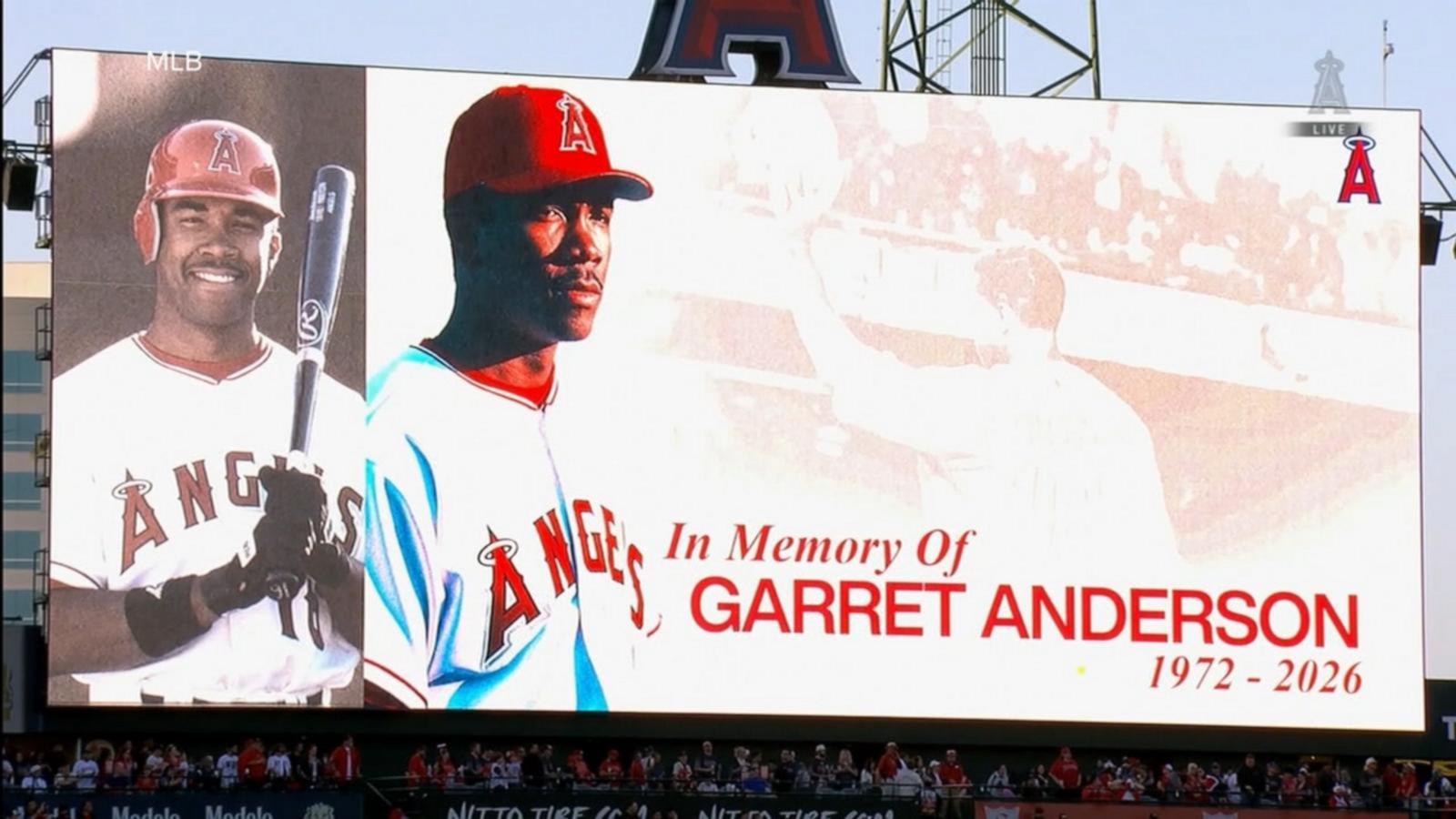
Garret Anderson’s Son: Trey Anderson’s Baseball Journey and Family Legacy
Trey Anderson, the son of former Major League Baseball star Garret Anderson, built his own path in baseball as a collegiate outfielder at Pepperdine University before being drafted by the Los Angeles Angels in 2014. Growing up in South...
Trey Anderson, the son of former Major League Baseball star Garret Anderson, built his own path in baseball as a collegiate outfielder at Pepperdine University before being drafted by the Los Angeles Angels in 2014. Growing up in Southern California under the guidance of an Angels Hall of Famer, Trey developed into an accomplished athlete who carried forward his family’s rich baseball tradition.
Contents
The Anderson Athletic Lineage: Garret Anderson’s Storied Career
To understand the expectations and background surrounding Trey Anderson, one must first look at the legendary baseball career of his father, Garret Anderson. Born and raised in Los Angeles, Garret attended Granada Hills High School before being selected by the California Angels in the fourth round of the 1990 Major League Baseball Draft.
Garret Anderson went on to spend 15 of his 17 Major League seasons with the Angels franchise, establishing himself as one of the most consistent outfielders of his era. Among his notable career accomplishments:
- 2002 World Series Champion: Played a pivotal role in leading the Anaheim Angels to their first World Series title in franchise history, driving in the game-winning run in Game 7 against the San Francisco Giants.
- Three-Time MLB All-Star: Selected to the All-Star team in 2002, 2003, and 2005.
- 2003 Home Run Derby Champion: Won the event during All-Star Weekend at U.S. Cellular Field in Chicago, defeating Albert Pujols in the final round.
- 2003 All-Star Game MVP: Named Most Valuable Player of the Midsummer Classic after hitting a home run and a double.
- Franchise Record Holder: Retired as the Angels' all-time leader in hits (2,368), runs scored (1,024), runs batted in (1,292), doubles (489), total bases (3,743), and extra-base hits (851).
- Angels Hall of Fame: Formally inducted into the Los Angeles Angels Hall of Fame in 2016 in recognition of his historic contributions to the organization.
Following his tenure with the Angels, Garret completed his playing career with brief stints for the Atlanta Braves (2009) and Los Angeles Dodgers (2010) before officially retiring. Throughout his 17-year career, Garret was renowned for his smooth left-handed swing, durable physical presence, and quiet, consummate professionalism.
Garret Anderson's Major League Career Timeline: 1990: Drafted by California Angels (4th Round) 1994: MLB Debut (July 27) 2002: World Series Champion & MLB All-Star 2003: Home Run Derby Champion & All-Star Game MVP 2008: Final Season with Angels 2010: Final MLB Season (Los Angeles Dodgers) 2016: Inducted into Angels Hall of Fame
Trey Anderson: Early Life and High School Athletics
Growing up as the son of an elite professional athlete provided Trey Anderson with early exposure to high-level baseball environments. While Garret was accumulating hit after hit at Angel Stadium in Anaheim, Trey was developing his foundational skill set on Southern California youth diamonds.
Trey attended Junípero Serra High School in Gardena, California, a institution widely recognized for producing premier athletic talent across baseball, football, and basketball. During his prep tenure at Serra High School, Trey established himself as a versatile, athletic outfielder:
- Fundamental Development: Benefited from high-school coaching that emphasized defensive coverage, base running discipline, and line-drive hitting mechanics.
- Multisport Exposure: Participated in competitive athletics that enhanced his overall speed and spatial awareness on the diamond.
- Recruiting Recognition: Earned attention from NCAA Division I scouts throughout the West Coast due to his functional athleticism, physical upside, and fundamental understanding of the game.
Rather than relying solely on his father's name, Trey earned his spot on college recruiting radars through steady performance in competitive Southern California travel leagues and high school conference play.
Collegiate Career at Pepperdine University
Upon graduating from prep school, Trey Anderson committed to play college baseball for the Pepperdine University Waves in Malibu, California. Pepperdine, a respected program within the West Coast Conference (WCC), provided a competitive environment for Trey to test his skills against top-tier collegiate pitching.
During his collegiate career with the Waves, Trey served primarily as an outfielder. The transition from high school to NCAA Division I baseball presented standard adjustment challenges, including adapting to higher pitch velocities, advanced breaking balls, and rigorous daily training schedules.
Key aspects of Trey's collegiate tenure included:
- Roster Depth and Versatility: Provided outfield depth across all three outfield positions, leveraging his agility and throwing arm.
- Development under Division I Coaching: Worked directly with Pepperdine’s coaching staff to refine his left-handed swing mechanics, mirroring elements of his father's stroke while tailoring his approach to modern collegiate pitching strategies.
- Academic and Athletic Balance: Completed his collegiate commitments while managing the demands of high-level student-athlete schedules.
Trey's time at Pepperdine solidified his reputation as a hard-working teammate who approached the game with the same unshakeable demeanor that defined his father's career.
The 2014 MLB Draft: Joining the Angels Organization
The connection between the Anderson family and the Angels organization came full circle during the 2014 Major League Baseball First-Year Player Draft.
In the 40th round (1,199th overall selection), the Los Angeles Angels drafted Trey Anderson as an outfielder out of Pepperdine University.
2014 MLB Draft Profile: Trey Anderson -------------------------------------------------- Player: Trey Anderson Drafting Team: Los Angeles Angels Draft Year: 2014 Round/Pick: Round 40, Pick 1,199 Position: Outfield (OF) School: Pepperdine University (Malibu, CA) High School: Junípero Serra HS (Gardena, CA) Father: Garret Anderson (Angels HOF)
While 40th-round selections are often ceremonial or developmental picks, the selection held deep sentimental and organizational significance. For the Angels franchise, drafting Trey was a tribute to Garret Anderson’s immense contributions to the team over 15 seasons. For Trey, it represented an opportunity to enter professional baseball within the exact organization where he grew up spending time in the clubhouse, dugout, and outfield grass.
Following the draft, Trey gained experience within minor league developmental settings, taking part in institutional instructional periods and organizational activities before transitioning into his post-playing career.
Comparing Father and Son: Statistical and Profile Overview
While comparing a Hall of Fame father to a collegiate/developmental son can be an uneven exercise, reviewing their shared background highlights the generational continuity in Southern California baseball.
| Attribute / Feature | Garret Anderson (Father) | Trey Anderson (Son) |
|---|---|---|
| Primary Position | Left Field / Outfield | Outfield |
| Batted / Threw | Left / Left | Left / Right |
| High School | Kennedy HS (Granada Hills, CA) | Serra HS (Gardena, CA) |
| College | None (Drafted out of High School) | Pepperdine University |
| MLB Draft Year | 1990 (4th Round, California Angels) | 2014 (40th Round, LA Angels) |
| MLB Debut | July 27, 1994 | N/A (Professional Development) |
| Major Career Highlights | 2002 World Champion, 3x All-Star, Angels HOF | NCAA D-I Athlete, 2014 MLB Draft Pick |
| Key Career Stat | 2,529 Hits, 287 HRs, 1,365 RBIs | Selected 1,199th overall in 2014 Draft |
The Broader Anderson Family
Garret Anderson and his wife, Teresa, raised four children in Southern California: Brian, Trey, and their daughters. The family maintained a grounded lifestyle throughout Garret's 17-year major league career, prioritizing education, privacy, and personal development over public spotlight.
- Brian Anderson: Garret's eldest son, who also grew up in Southern California and participated in local athletics during his youth.
- Trey Anderson: Pursued baseball through the Division I collegiate level at Pepperdine and into the professional draft ranks.
- Family Philosophy: Garret Anderson frequently noted in interviews during his playing days that he viewed baseball as his job, not his identity. This mindset helped insulate his children from excessive public pressure, allowing them to pursue their own academic and athletic interests naturally.
Navigating Legacy: The Impact of a Major League Parent
Growing up as the child of a professional athlete presents unique advantages and distinct hurdles. For Trey Anderson, having a father who logged over 2,500 major league hits offered rare advantages:
Operational Advantages
- Elite Mentorship: Direct access to a hitting coach with nearly two decades of Major League experience. Garret provided Trey with technical advice on swing mechanics, plate discipline, and situational hitting.
- Mental Approach: Garret was famous for his emotional composure—never getting too high after a great game or too low after an 0-for-4 night. He passed this stoic, process-oriented mindset down to his sons.
- Inside Access: Spending time in Major League clubhouses during Garret's tenure exposed Trey to professional preparation habits, nutrition standards, and physical conditioning early in life.
Challenges and Expectations
- Constant Comparison: Media, scouts, and opponents naturally compare a player to their famous parent, measuring their physical tools against an unrealistic Major League standard.
- Heightened Scrutiny: Performance during high school and collegiate games often drew additional attention simply due to the family name on the back of the jersey.
Trey navigated these dynamics by focusing on his own physical development and embracing his role as a collegiate teammate at Pepperdine.
Life Beyond the Diamond: Where Are They Now?
Following his collegiate career at Pepperdine and his selection in the 2014 MLB Draft by the Angels, Trey Anderson transitioned away from active professional baseball to pursue civilian career opportunities in Southern California.
Garret Anderson has maintained a periodic presence around the game. Following his official retirement, Garret served in special assistant roles for the Los Angeles Angels, assisting with outfield instruction, guest coaching during Spring Training in Tempe, Arizona, and participating in team community events. He is also a regular attendee at Angels alumni weekends and Hall of Fame ceremonies.
The Anderson family continues to reside primarily in Southern California, maintaining a low public profile while remaining connected to the local sports community.
Frequently Asked Questions
Who is Garret Anderson’s son?
Garret Anderson has two sons, Trey Anderson and Brian Anderson. Trey Anderson is the most widely recognized in baseball circles, having played collegiate baseball at Pepperdine University before being selected in the 2014 MLB Draft.
Did Trey Anderson get drafted into Major League Baseball?
Yes. Trey Anderson was selected by the Los Angeles Angels in the 40th round (1,199th overall pick) of the 2014 MLB First-Year Player Draft out of Pepperdine University.
What position did Trey Anderson play?
Trey Anderson played as an outfielder during his high school career at Serra High School and his collegiate career at Pepperdine University, similar to his father, who primarily played left field.
Did Garret Anderson’s son play in the Major Leagues?
No. While Trey Anderson was drafted by the Los Angeles Angels in 2014 and participated in organizational activities, he did not reach the Major League roster.
What are Garret Anderson’s career accomplishments with the Angels?
Garret Anderson is an Angels Hall of Famer, 2002 World Series Champion, 3-time All-Star, and 2003 Home Run Derby Champion. He retired as the Angels' franchise leader in hits, doubles, RBIs, total bases, and runs scored.
Where did Trey Anderson go to college?
Trey Anderson attended Pepperdine University in Malibu, California, where he was a member of the Waves baseball team.
Practical Guidance for Researching MLB Lineages
When researching second-generation baseball players and MLB draft histories, follow these verification steps to ensure accurate biographical data:
- Cross-Reference Official Draft Records: Use official database records on MLB.com or baseball reference archives to verify exact draft year, round, pick number, and signing status.
- Verify Collegiate Rosters: Consult university athletic department archives (such as Pepperdine Athletics) for official historical rosters, statistics, and hometown backgrounds.
- Separate Relatives with Identical Names: Ensure distinct entries between players with identical names. For instance, distinguish Garret Anderson’s son Brian Anderson from other professional athletes named Brian Anderson who played in MLB or the NBA.
Image Gallery