Car Insurance Rates in Indiana: Average Costs, Mandatory Requirements, and Savings Guide
Car insurance rates in Indiana average approximately $1,650 per year for full coverage policies and $520 per year for minimum liability coverage as of 2026. While Indiana remains more affordable than the national average, individual ra...
Car insurance rates in Indiana average approximately $1,650 per year for full coverage policies and $520 per year for minimum liability coverage as of 2026. While Indiana remains more affordable than the national average, individual rates vary widely based on your geographic location, driving record, age, vehicle selection, and credit-based insurance score.
Contents
Average Cost of Car Insurance in Indiana
Drivers in Indiana generally benefit from auto insurance premiums that fall well below the national average. Overall premium trends reflect the state's moderate population density, straightforward legal framework, and competitive insurance marketplace. However, average costs vary significantly depending on the level of coverage selected:
- State Minimum Liability Coverage: Costs an average of $520 per year (approximately $43 per month). This tier satisfies legal requirements to operate a vehicle on public roads but leaves the policyholder's own vehicle completely unprotected in an accident.
- Full Coverage Auto Insurance: Costs an average of $1,650 per year (approximately $138 per month). Full coverage combines state-mandated bodily injury and property damage liability with comprehensive and collision coverages, protecting against physical damage to the insured vehicle regardless of fault.
Insurance carriers evaluate risk differently, creating substantial price dispersion across the state. Regional and national carriers operating in Indiana—including State Farm, Progressive, GEICO, Erie Insurance, and Indiana Farm Bureau—utilize distinct proprietary algorithms to calculate premiums.
For instance, mutual companies with strong regional agent networks in the Midwest frequently deliver competitive pricing for rural and suburban drivers, whereas national direct-to-consumer insurers often offer lower base rates for high-credit, low-mileage urban commuters. Obtaining multiple quotes remains the most effective way to identify the lowest rate for your specific driver profile.
Mandatory Indiana Auto Insurance Requirements
Indiana state law requires all motor vehicle owners to maintain financial responsibility to operate legally on public roadways. The state enforces these mandates through strict record tracking managed by the Indiana Bureau of Motor Vehicles (BMV).
The 25/50/25 Minimum Liability Limits
Under Indiana Code Title 9, Article 25, every auto insurance policy issued in the state must include at least the following bodily injury and property damage liability limits (commonly expressed as 25/50/25):
- $25,000 for Bodily Injury or Death per Person: Pays for medical treatment, lost wages, and legal defense costs incurred by a single individual injured in an accident where you are at fault.
- $50,000 for Total Bodily Injury or Death per Accident: Limits the maximum cumulative payout by your insurer for injuries sustained by two or more individuals in a single at-fault accident.
- $25,000 for Property Damage per Accident: Covers repair or replacement expenses for another person's damaged vehicle, structures, or personal property caused by your vehicle.
Uninsured and Underinsured Motorist Regulations
Indiana law mandates that insurance carriers automatically include Uninsured Motorist (UM) bodily injury coverage of $25,000 per person and $50,000 per accident, alongside Underinsured Motorist (UIM) coverage, in every policy sold. Policyholders have the right to decline these coverages, but state law requires that any rejection be submitted explicitly in writing.
Because a notable percentage of drivers operate vehicles without insurance, retaining UM/UIM protection safeguards you if an uninsured or hit-and-run driver causes severe injuries or property damage.
Penalties for Driving Uninsured in Indiana
Operating a motor vehicle without compliant financial responsibility in Indiana carries swift legal penalties:
- First Offense: Suspension of driving privileges for up to 90 days and a mandatory $250 reinstatement fee.
- Second Offense (within 3 years): Suspension of driving privileges for one full year and a $500 reinstatement fee.
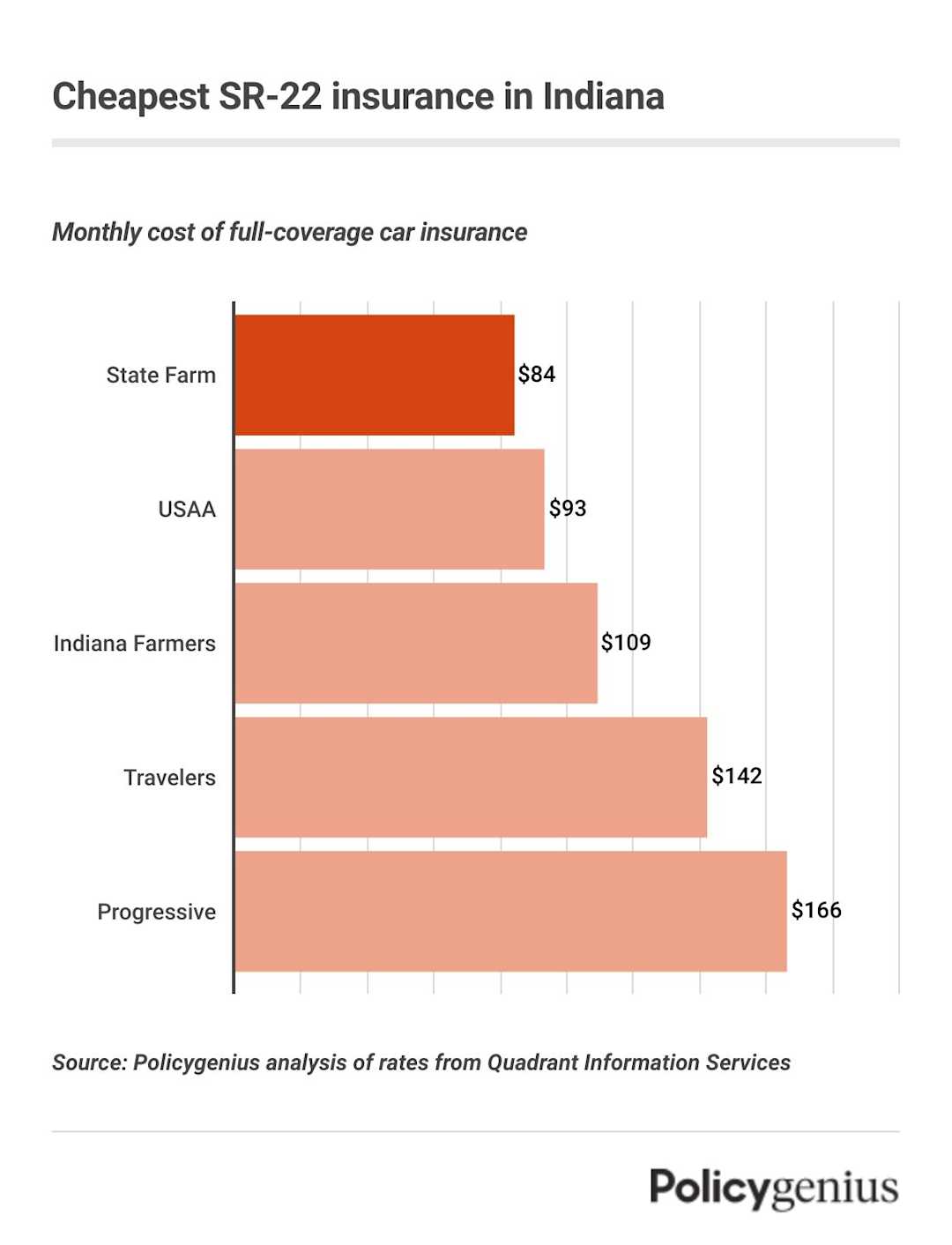
- Third and Subsequent Offenses: Suspension for one year, a $1,000 reinstatement fee, and a mandatory three-year SR-22 insurance certificate filing requirement with the Indiana BMV.
Primary Factors Influencing Indiana Car Insurance Premiums
Car insurance rates in Indiana are not uniform; insurers analyze numerous risk metrics to assign risk categories to policyholders.
1. Driving Record and Claims History
A driver's recent history on the road is the primary determinant of premium costs. Major traffic violations—such as speeding violations, reckless driving, or Operating While Intoxicated (OWI)—lead to significant rate increases. An at-fault accident in Indiana can increase your annual rates by 30% to 50% for three to five years, while an OWI conviction can double or triple your annual premium and necessitate an SR-22 filing.
2. Credit-Based Insurance Scores
Under the Indiana Insurance Code, insurance companies are legally permitted to use credit-based insurance scores when pricing auto policies. Actuarial data shows a strong correlation between credit history and insurance claim frequency. Drivers with excellent credit scores frequently pay up to 40% less for auto insurance in Indiana than drivers with poor credit scores, holding all other variables constant.
3. Geographic Location and ZIP Code
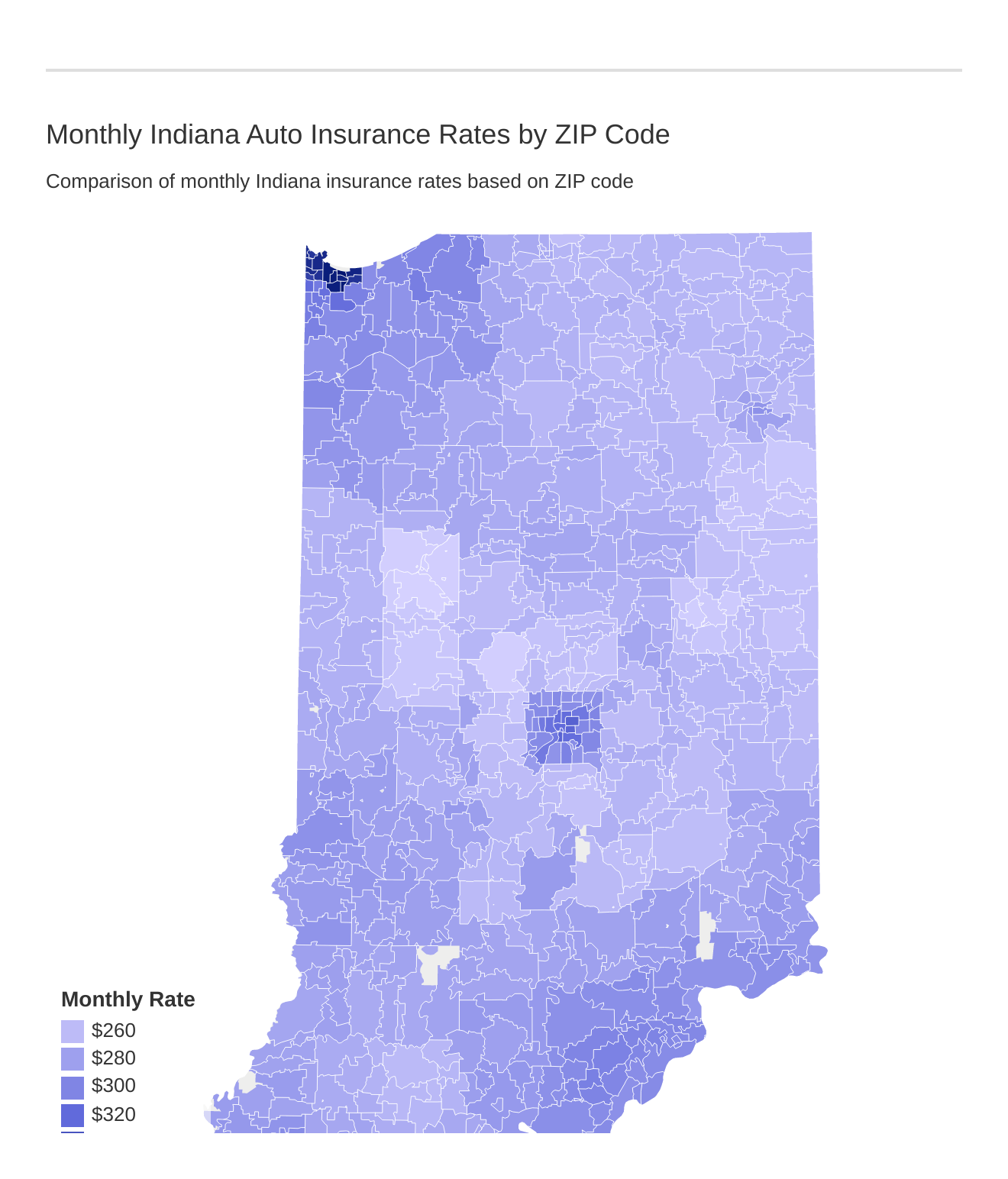
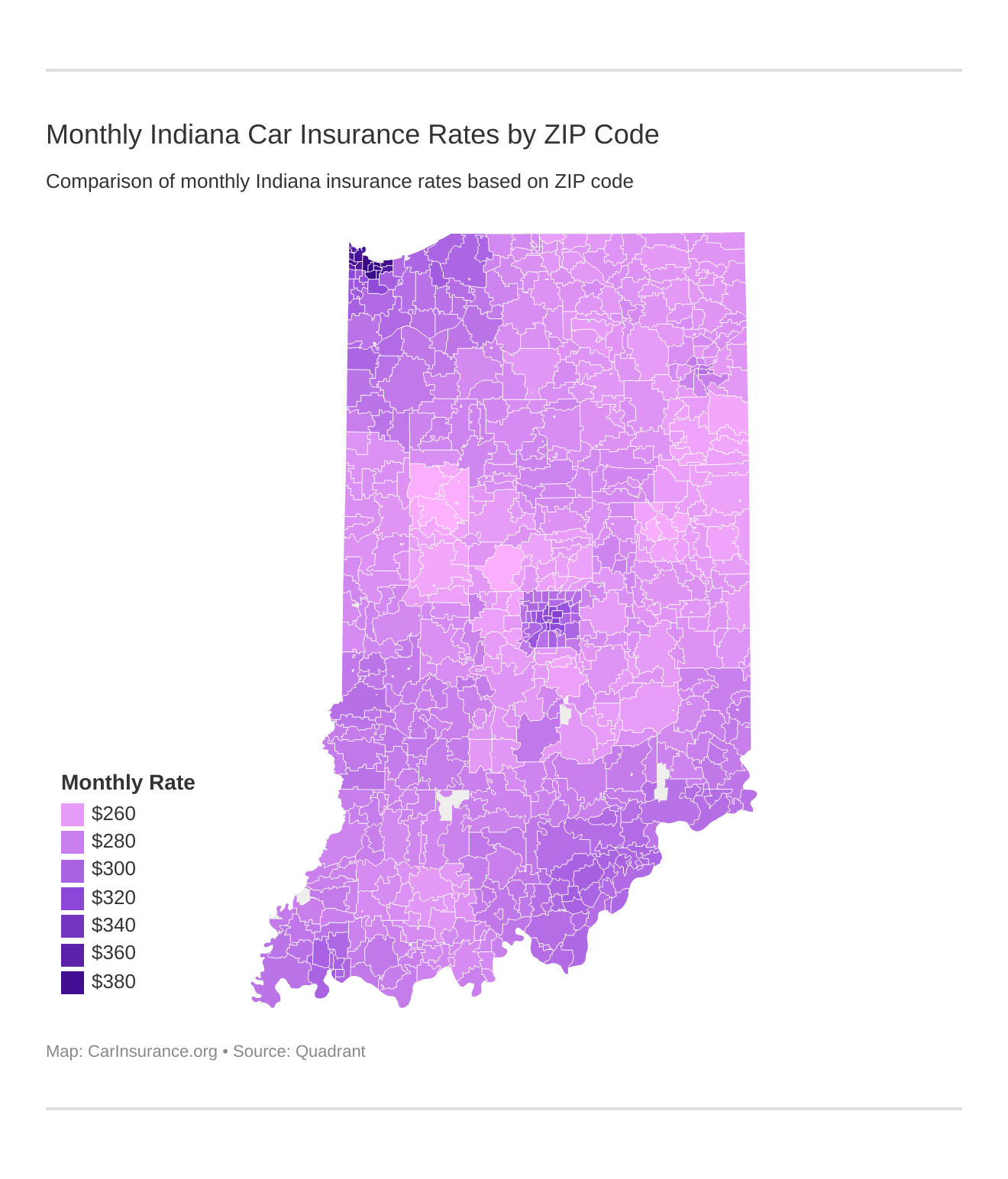
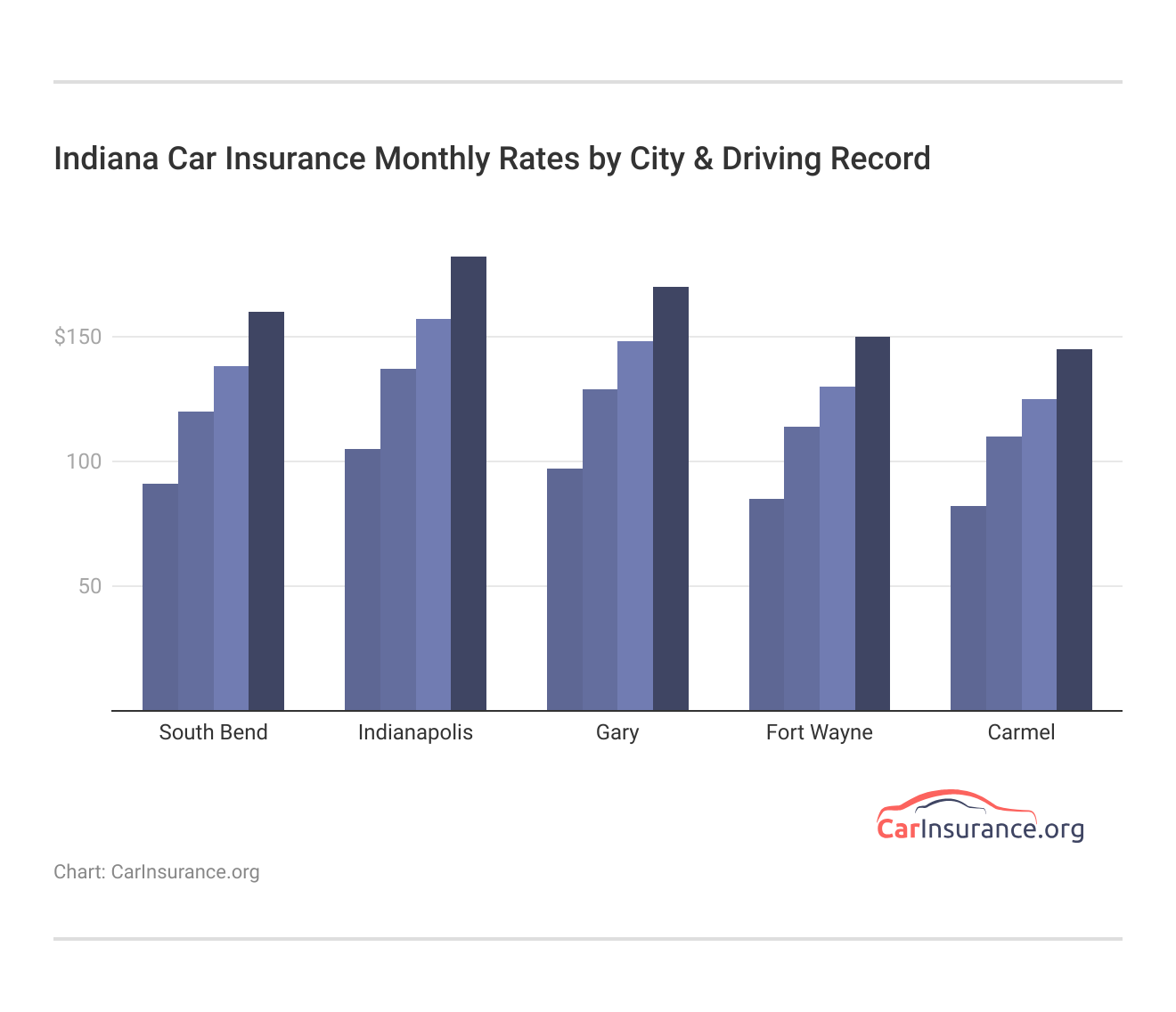
Where your car is parked overnight impacts your rate. Densely populated urban centers experience higher traffic volumes, elevated theft rates, and higher litigation frequencies than rural communities.
- Higher Average Rates: Cities like Indianapolis, Gary, Hammond, and East Chicago consistently exhibit higher premium averages due to congestion and loss statistics.
- Lower Average Rates: Rural counties such as Dubois, Adams, and Wells typically enjoy lower auto insurance premiums due to lower accident frequencies.
4. Age and Driving Experience
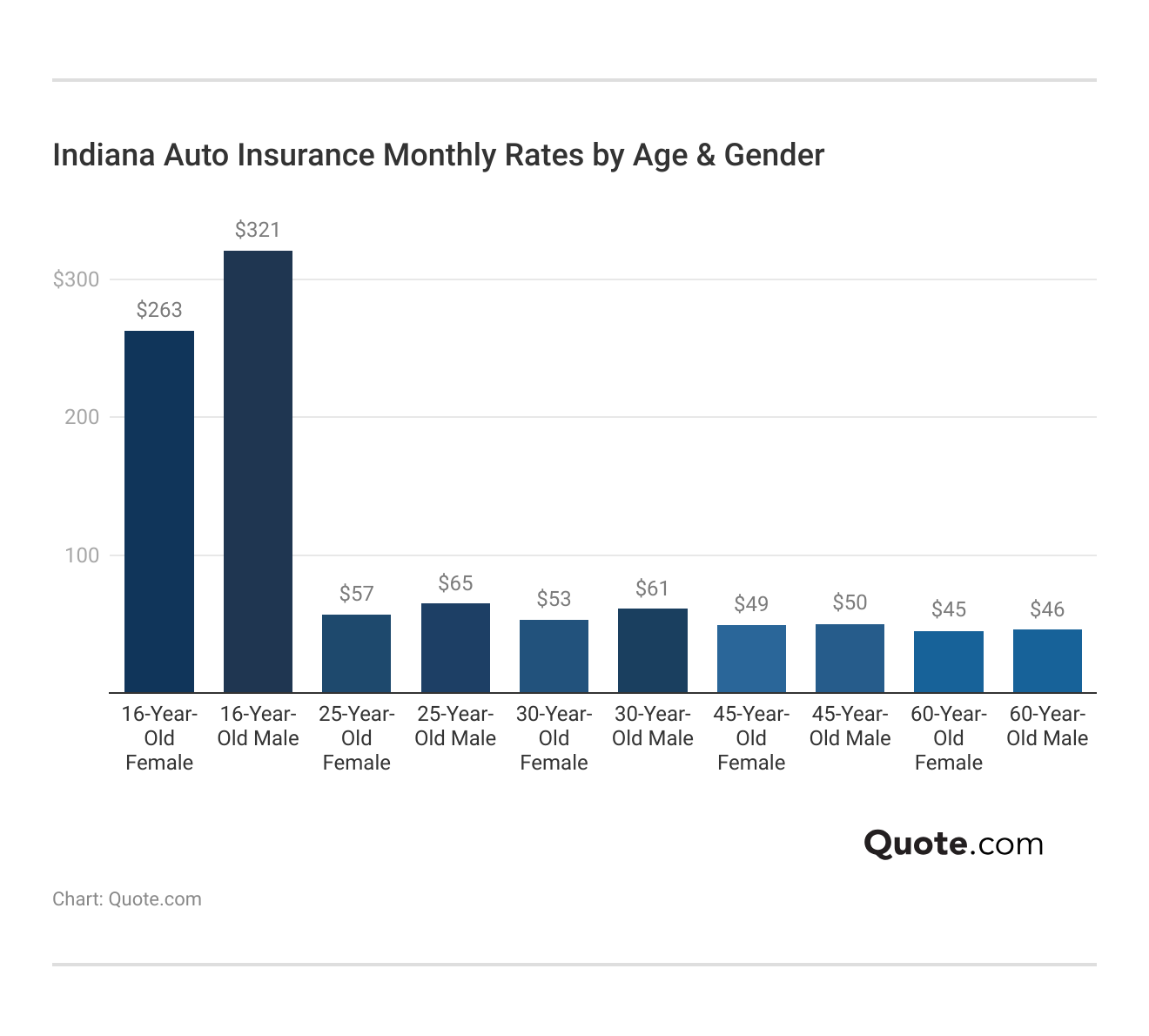
Teenage and novice drivers present the highest statistical risk to insurance underwriters due to their relative lack of driving experience. A 16-year-old driver added to a parent's policy in Indiana can raise the total annual premium significantly, whereas rates generally stabilize once a driver reaches age 25, remaining low until roughly age 70.
Indiana Auto Insurance Coverage Options Compared
Selecting the right balance between premium affordability and financial protection requires comparing different coverage tiers. The table below outlines standard insurance configurations available across Indiana.
| Coverage Level | Average Annual Premium | Included Protections | Financial Risk Exposure | Best Suited For |
|---|---|---|---|---|
| State Minimum Liability | $520 | 25/50/25 Liability only. | High: Policyholder pays out-of-pocket for all vehicle damage and liability costs exceeding $25k/$50k. | Older vehicles with low resale value; budget-constrained drivers. |
| Standard Liability + UM/UIM | $780 | 50/100/50 Liability + Uninsured/Underinsured Motorist coverage. | Moderate: Covers third-party liability and uninsured impacts; no coverage for your own vehicle damage in an at-fault crash. | Vehicle owners who have paid off their loans but want higher liability security. |
| Full Coverage (Low Deductible) | $1,850 | 100/300/100 Liability, UM/UIM, Comprehensive, Collision ($250–$500 deductible). | Low: Comprehensive vehicle protection with minimal out-of-pocket expenses per incident. | New vehicles, leased cars, financed auto loans, and risk-averse drivers. |
| Full Coverage (High Deductible) | $1,450 | 100/300/100 Liability, UM/UIM, Comprehensive, Collision ($1,000 deductible). | Balanced: Full policy scope with self-insured out-of-pocket exposure for initial damage repairs. | Drivers seeking comprehensive protection who maintain a dedicated emergency savings fund. |
Actionable Strategies to Reduce Car Insurance Rates in Indiana
Drivers looking to minimize their premium costs can implement several practical strategies without sacrificing critical financial protections.
Multi-Policy Bundling
Combining auto insurance with homeowners, renters, or condominium insurance through the same carrier remains one of the simplest methods to lower premiums. Most major insurers operating in Indiana provide cross-policy discounts ranging from 10% to 25% across all linked policies.
Telematics and Usage-Based Programs
Many auto insurance companies offer telematics programs that track driving behaviors—such as total mileage, braking intensity, cornering force, speed limits, and time of day—via smartphone applications or OBD-II devices. Enrolling in a telematics program often grants an immediate initial discount, with safe drivers earning recurring rate reductions of up to 30%.
Strategic Deductible Adjustments
Increasing your comprehensive and collision deductibles from $250 to $1,000 can reduce your annual full coverage premium by 15% to 25%. However, this decision requires keeping sufficient cash reserves available to cover the higher deductible if you need to file a claim.
Maintenance of Credit Standing
Because Indiana allows credit-based scoring for policy pricing, taking active steps to improve your credit profile—such as paying down revolving debt balances and correcting credit report errors—can directly lower your car insurance rates over time.
Annual Policy Reviews and Comparison Shopping
Insurance rate structures change continuously due to corporate filings and regional economic shifts. Re-quoting your policy annually or following major life updates (such as relocating, purchasing a home, getting married, or completing a defensive driving course) helps ensure your policy remains competitively priced. The official consumer guidance resources provided by the Indiana Department of Insurance can assist policyholders in reviewing carrier rating structures and regulatory standing.
Frequently Asked Questions
What is the minimum car insurance required by law in Indiana?
Indiana law mandates 25/50/25 liability coverage: $25,000 for bodily injury or death per person, $50,000 for total bodily injury per accident, and $25,000 for property damage. Policyholders must also be offered Uninsured Motorist protection equal to these liability limits unless explicitly rejected in writing.
Is Indiana an at-fault state for traffic accidents?
Yes. Indiana operates under a traditional "at-fault" tort system governed by a modified comparative fault standard (51% bar rule under Indiana Code Title 34, Article 51). The party determined to be responsible for causing an accident is financially liable for resulting property damage and personal injuries. You may recover damages from another driver only if your responsibility for the incident is less than 51%.
How long does an SR-22 requirement stay active in Indiana?
In Indiana, an SR-22 financial responsibility filing requirement typically remains mandatory for 3 consecutive years following a driver's license suspension. Any lapse or cancellation of the underlying insurance policy during this period prompts the insurance company to notify the Indiana BMV immediately, which triggers an automatic re-suspension of driving privileges.
Can auto insurers in Indiana use age and gender to set insurance rates?
Yes. Insurance companies in Indiana are legally permitted to consider driver age, gender, marital status, geographic location, and driving record when establishing underwriting criteria and policy pricing.
What happens if I am caught driving without insurance in Indiana?
Driving without valid financial responsibility results in an immediate suspension of your driver's license, reinstatement fees ranging from $250 to $1,000 depending on prior offenses, and potential requirement of an SR-22 insurance filing for up to three years.
Recommended Next Steps
To optimize your auto insurance coverage and secure the best rates in Indiana, follow this step-by-step action plan:
- Audit Your Current Coverage: Review your policy's declarations page to confirm your existing liability limits, deductibles, and optional endorsements. Check that your liability limits cover your total personal assets adequately beyond state minimums.
- Gather Rating Profile Data: Compile your vehicle identification numbers (VINs), driving history details, annual mileage estimates, and current driver's license numbers for all household members.
- Request Quotes from Multiple Insurance Carriers: Obtain detailed price quotes from at least three different insurers—including a mix of major national carriers and regional mutual companies—ensuring that you evaluate identical coverage levels and deductibles.
- Inquire About All Available Discounts: Ask representative agents about policy bundling discounts, safe driver incentives, paperless billing reductions, telematics options, and defensive driving completion credits.
- Verify Regulatory Licensing: Before purchasing or transferring a policy, confirm that your chosen carrier is licensed and in good administrative standing with the state by visiting the regulatory portals maintained by the Indiana Department of Insurance.
Image Gallery