How to Apply for Food Stamps in 2026: Complete Eligibility and Application Guide
Applying for food stamps, officially known as the Supplemental Nutrition Assistance Program (SNAP), requires completing an application through your state or local human services agency, verifying your identity, income, and household ex...
Applying for food stamps, officially known as the Supplemental Nutrition Assistance Program (SNAP), requires completing an application through your state or local human services agency, verifying your identity, income, and household expenses, and participating in an interview. This guide covers current 2026 eligibility standards, document requirements, and step-by-step submission procedures to help you secure nutritional assistance efficiently.
Contents
Understanding SNAP Eligibility and 2026 Federal Guidelines
The Supplemental Nutrition Assistance Program is administered federally by the United States Department of Agriculture (USDA) Food and Nutrition Service (FNS) and operated locally by state agencies. To qualify for benefits, households must meet specific federal and state-level criteria regarding gross income, net income, asset limits, and work requirements.
Federal regulations establish baseline financial parameters, though individual states may apply broader broad-based categorical eligibility (BBCE) rules to modify asset limits or gross income thresholds. Reviewing these parameters before filing prevents application delays.
Core Eligibility Criteria
- Gross Monthly Income: Generally, a household's gross monthly income must be at or below 130 percent of the federal poverty line (FPL). For households containing an elderly member (age 60 or older) or a person with a qualifying disability, this gross income test does not apply.
- Net Monthly Income: After allowable deductions are subtracted from gross income (such as earned income deductions, standard deductions, dependent care, and medical expense deductions for elderly or disabled members), the net income must be at or below 100 percent of the FPL.
- Asset and Resource Limits: Non-vehicular resource limits, such as cash, bank accounts, and secondary properties, are evaluated by each state. Under many state BBCE policies, traditional asset tests are waived for households meeting gross income standards, though households without elderly or disabled members generally face a standard resource cap if not covered by BBCE waivers.
- Work Requirements: Able-Bodied Adults Without Dependents (ABAWDs) must meet general work requirements and fulfill specific work, training, or volunteer hour mandates to maintain eligibility beyond three months within a 36-month period, unless an official exemption applies.
Required Documentation for Your SNAP Application
Gathering accurate documentation before starting your application prevents processing delays. State caseworkers verify identity, residency, income, and household expenses to calculate your benefit allotment accurately. Incomplete paperwork is the primary cause of prolonged application timelines or outright denials.
Document Checklist Table
| Document Category | Accepted Forms of Proof | Purpose of Verification |
|---|---|---|
| Proof of Identity | Driver's license, state ID, U.S. passport, birth certificate, or government-issued identification | Confirms the legal identity of the primary applicant |
| Proof of Residency | Lease agreement, mortgage statement, utility bill, or landlord statement | Establishes that the applicant resides within the state and county of application |
| Income Verification | Recent pay stubs (past 30–60 days), tax returns, W-2 forms, or employer statements | Calculates gross and net monthly household income |
| Expense Records | Rent/mortgage receipts, utility bills, child care expense receipts, medical bills (for elderly/disabled) | Determines allowable deductions to lower net income calculations |
| Asset Documentation | Recent bank statements (checking/savings), vehicle titles, investment accounts | Verifies countable liquid resources and capital assets |
Step-by-Step Guide to Filing Your SNAP Application
Submitting an application follows a standardized workflow managed by your state agency. While interface designs vary between state portals, the underlying legal steps remain uniform across jurisdictions.
- Locate Your State Agency: Access the official USDA SNAP State Directory to find the specific website, office locator, or phone number for your local social services department.
- Submit the Application: Choose your preferred filing method:
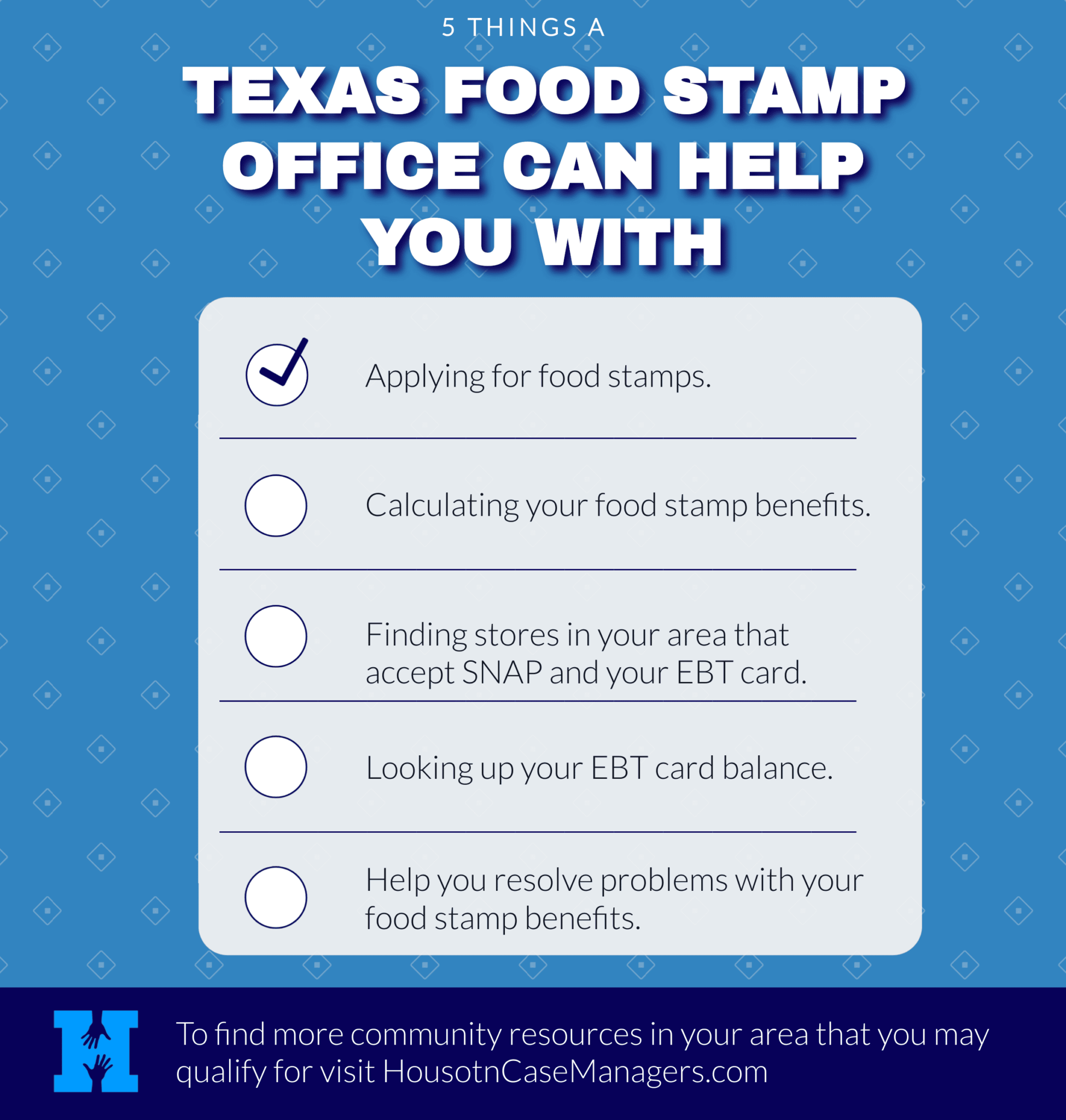
- Online: Complete the digital application via your state's health and human services portal (such as BenefitsCal in California, ACCESS HRA in New York, or Your Texas Benefits).
- In-Person: Visit your local county department of social services or public assistance office to fill out a paper form.
- By Mail or Fax: Download the PDF application from your state website, complete it by hand, and mail or fax it to your designated regional office.
- Complete the Interview: After submitting your application, a caseworker will schedule an interview, typically conducted over the phone. During this conversation, the worker will review your application details, confirm household circumstances, and clarify any discrepancies.
- Submit Verification Documents: Provide copies of requested items—such as pay stubs and utility bills—through the state's online document upload portal, via secure email, by mail, or in person.
- Receive Your EBT Card: If approved, you will receive an Electronic Benefit Transfer (EBT) card in the mail along with instructions on setting your Personal Identification Number (PIN). Funds are deposited monthly according to a state-managed issuance schedule based on your case number, social security number, or last name.
Expedited Processing Services
If you face an immediate financial crisis and have little to no food or money, you may qualify for expedited processing. Federal regulations mandate that state agencies process expedited applications and issue benefits within seven calendar days if your household meets specific emergency criteria.
Qualifications for Expedited Service
- Destitute Households: Your household's combined gross monthly income and liquid resources are less than your monthly rent or mortgage plus utility costs.
- Migrant or Seasonal Farmworkers: Your household contains migrant or seasonal farmworkers with combined liquid resources of $100 or less, and your income has stopped or is severely restricted.
- Extremely Low Income: Your household's monthly gross income is less than $150, and your liquid resources do not exceed $100.
Common Reasons for Application Denial and How to Avoid Them
Understanding common pitfalls helps ensure your application moves smoothly from submission to approval. Administrative errors or missed deadlines account for the majority of rejected filings.
- Failure to Complete the Interview: Missing a scheduled telephone interview without rescheduling is an automatic cause for application closure. Always contact your caseworker immediately if you miss a call.
- Unreturned Verification Documents: Failing to provide proof of income or expenses within the state-mandated window (typically 10 to 30 days) results in denial. Set calendar reminders as soon as you receive your document request list.
- Exceeding Income Thresholds: Submitting gross income figures that calculate above the 130 percent FPL limit without accounting for allowable deductions leads to ineligibility. Ensure you report all household expenses that qualify for deductions.
- Inaccurate Household Composition Reporting: Failing to include individuals who purchase and prepare meals together, or incorrectly listing dependents, creates verification conflicts. Every person living under your roof who shares food resources must be listed on the application.
Frequently Asked Questions About Applying for Food Stamps
How long does it take to process a regular SNAP application?
States have a federal mandate to process standard applications and determine eligibility within 30 days of receiving the initial filing. Providing all required verification documents during or immediately after your interview prevents unnecessary administrative delays.
Do I need to be a U.S. citizen to apply for food stamps?
Citizenship is not required for every household member, though applicants generally must be U.S. citizens or meet specific eligible non-citizen classifications (such as lawful permanent residents, refugees, or asylees). Undocumented immigrants are not eligible, but mixed-status families may apply on behalf of eligible children or household members.
Can college students qualify for SNAP benefits?
Generally, students enrolled at least half-time in an institution of higher education are ineligible unless they meet specific exemption criteria. Common exemptions include working at least 20 hours per week, participating in federal work-study programs, caring for young children, or participating in specific employment and training programs.
What can I purchase using SNAP EBT benefits?
SNAP benefits can be used to buy breads, cereals, fruits, vegetables, meat, fish, poultry, dairy products, and seeds or plants to grow food. You cannot use SNAP funds to purchase alcoholic beverages, tobacco products, hot prepared foods intended for immediate consumption, vitamins, medicines, or non-food items such as pet food, household supplies, or cosmetics.
Will applying for food stamps impact my immigration status under public charge rules?
Receiving SNAP benefits for yourself does not automatically make you a public charge under current federal immigration guidelines. However, immigration laws are complex; you can consult legal aid organizations or immigration specialists to understand how public assistance interacts with specific visa or adjustment-of-status applications.
Image Gallery