The Evolution of Apple Computers: From Garage Kits to Apple Silicon
The evolution of Apple computers represents a fifty-year journey from the Apple I hobbyist circuit board to the sophisticated, AI-integrated M-series machines of 2026. This progression is defined by three major architectural shifts—Pow...
The evolution of Apple computers represents a fifty-year journey from the Apple I hobbyist circuit board to the sophisticated, AI-integrated M-series machines of 2026. This progression is defined by three major architectural shifts—PowerPC, Intel, and Apple Silicon—each fundamentally redefining the relationship between hardware performance, industrial design, and user experience.
Contents
The Genesis of Personal Computing (1976–1983)
Apple’s evolution began not with a completed computer, but with a motherboard. In 1976, Steve Wozniak and Steve Jobs introduced the Apple I, a hand-built kit that required users to provide their own keyboard, monitor, and housing. While rudimentary, it established the company's focus on simplifying complex electronics for individual use.
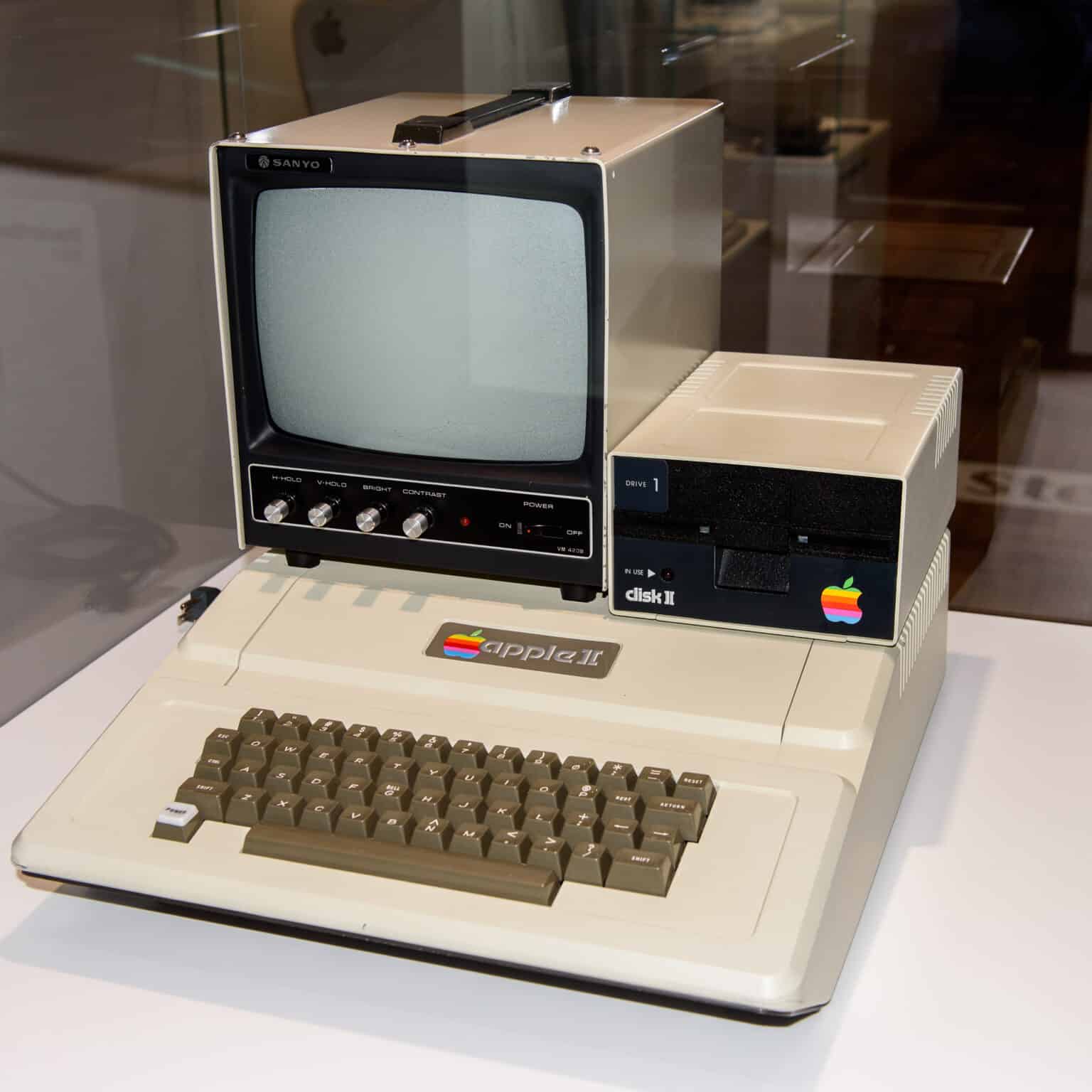
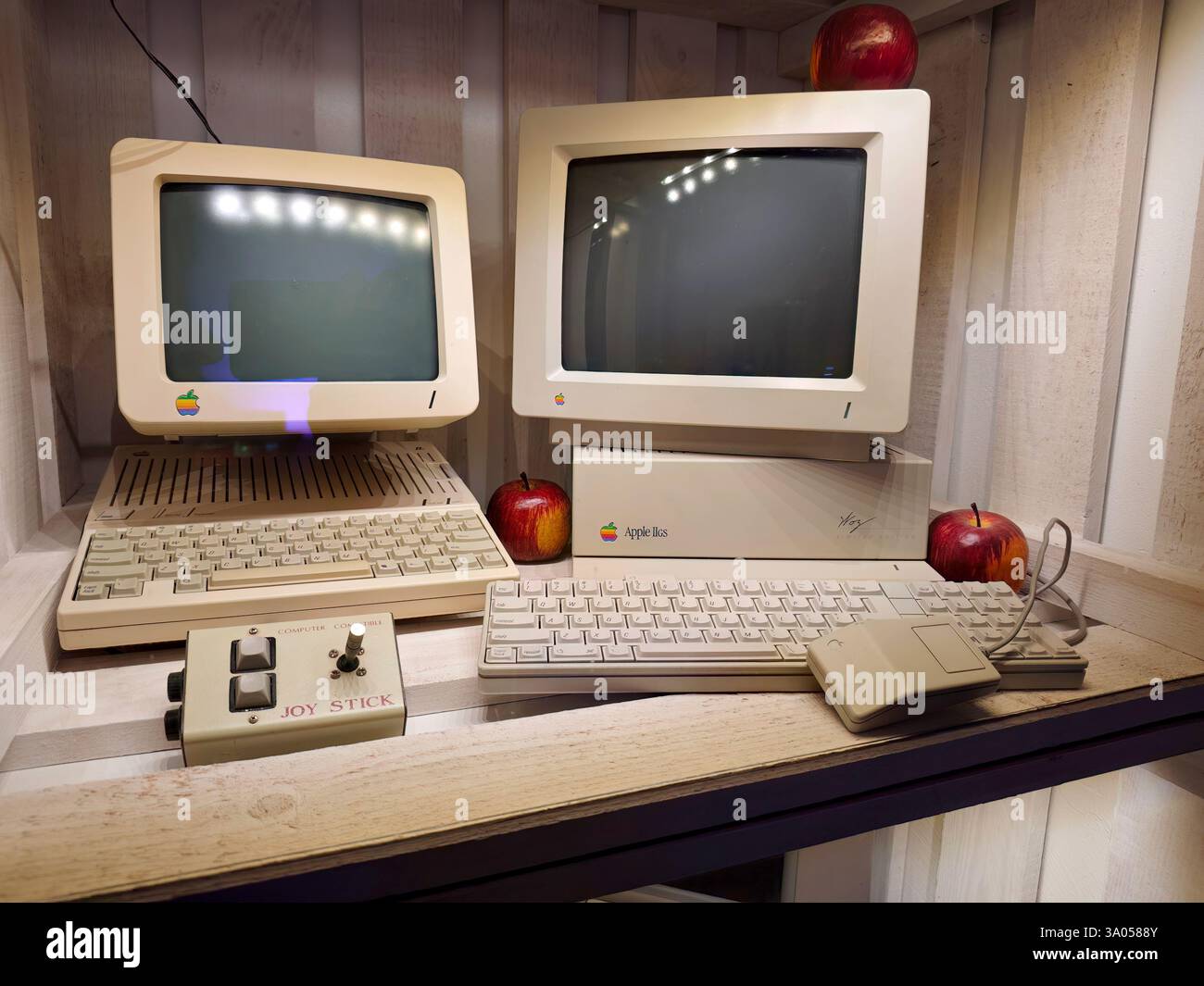
The true breakthrough occurred in 1977 with the Apple II. Unlike its predecessor, the Apple II was a "ready-to-use" consumer product. It featured a plastic case, color graphics, and expansion slots that allowed users to customize their machines. Its success was bolstered by the release of VisiCalc, the first electronic spreadsheet, which transformed the Apple II from a hobbyist toy into a legitimate business tool. This period established the concept of the "personal computer" as an essential appliance for the home and office.
By the early 1980s, Apple attempted to follow up with the Apple III and the Lisa. The Lisa was particularly significant as it introduced the Graphical User Interface (GUI) and a mouse to the public. However, its high price tag (nearly $10,000 in 1983) made it a commercial failure, setting the stage for a more affordable iteration of the GUI concept.
The Macintosh Revolution and the GUI (1984–1996)
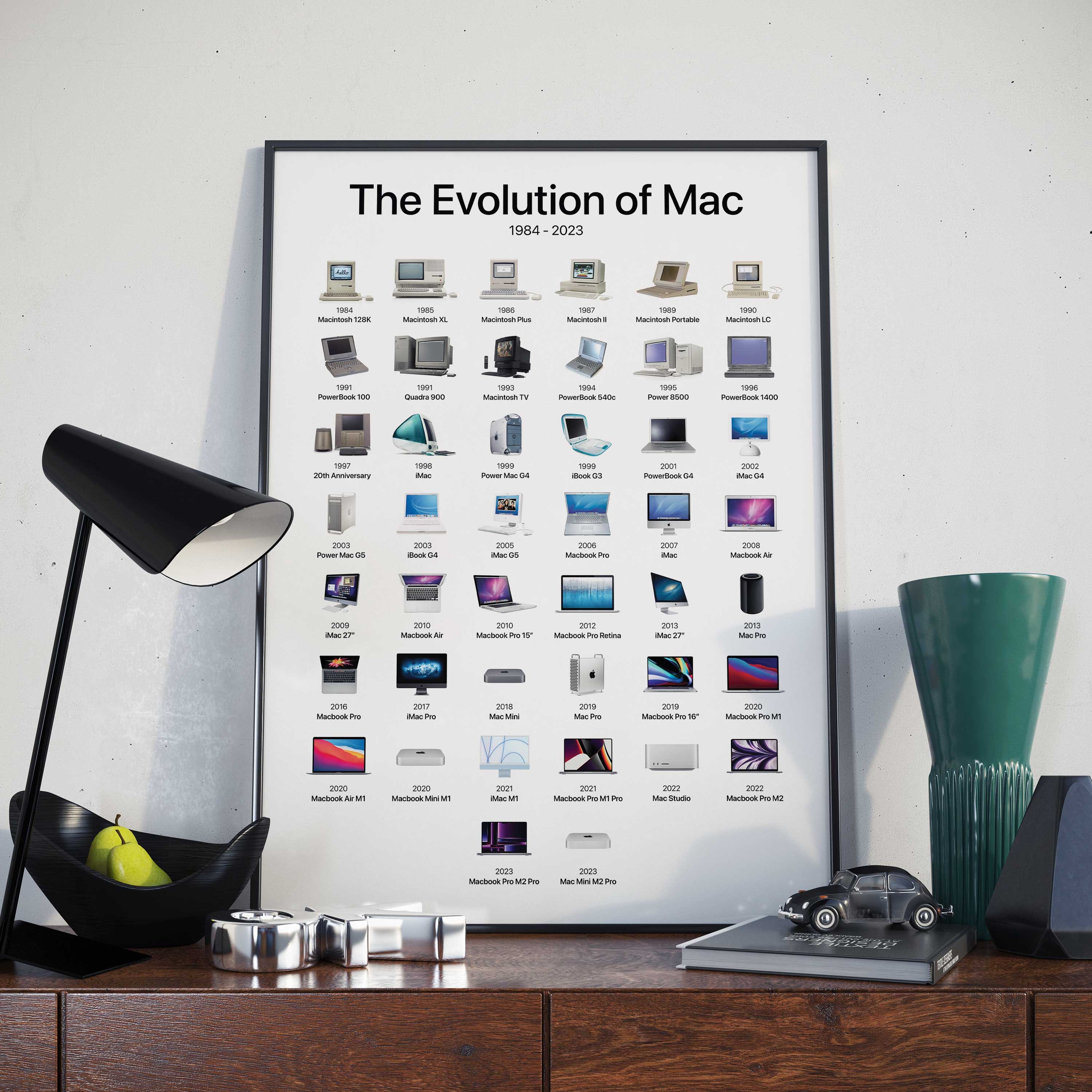
On January 24, 1984, Apple released the Macintosh 128K. Promoted by the famous "1984" Super Bowl commercial, the Macintosh was the first successful mass-market computer to feature a mouse-driven interface and a desktop metaphor (folders, trash cans, and icons). This shift moved computing away from text-based command lines, making technology accessible to creative professionals and non-technical users.
Throughout the late 1980s and early 1990s, the Macintosh lineup expanded into the Macintosh II (the first with color support) and the PowerBook series. The PowerBook 100, 140, and 170, released in 1991, are credited with defining the modern laptop layout by placing the keyboard toward the screen to allow for palm rests and a centered trackball.
However, this era also saw Apple struggle with an aging operating system and a fragmented product line. The transition to PowerPC architecture in 1994, a collaboration between Apple, IBM, and Motorola (the AIM alliance), provided a performance boost but could not solve the underlying software stability issues. By 1996, Apple was facing financial ruin, leading to the pivotal acquisition of NeXT and the return of Steve Jobs.
The Renaissance: iMac and the Hub Strategy (1997–2005)
The return of Steve Jobs signaled a radical simplification of Apple’s product grid. In 1998, the iMac G3 was released, featuring a translucent "Bondi Blue" casing designed by Jony Ive. It was a bold departure from the beige boxes of the era, famously omitting the floppy disk drive in favor of the emerging USB standard.
This period was characterized by the "Digital Hub" strategy. Apple positioned the Mac as the center of a user’s digital life, connecting cameras, music players, and handheld devices. Key milestones included:
- Mac OS X (2001): Based on NeXT’s Unix-derived software, this provided the stability and multitasking capabilities the platform desperately needed.
- The Power Mac G5 (2003): The first 64-bit personal computer, housed in a distinctive "cheese grater" aluminum enclosure that emphasized thermal management and industrial aesthetics.
- The iBook and MacBook: These consumer portables popularized integrated Wi-Fi (AirPort) and helped Apple dominate the education market.
The Intel Transition and the Thin-and-Light Era (2006–2019)
By 2005, the PowerPC roadmap had stalled, particularly regarding performance-per-watt for laptops. In 2006, Apple began the transition to Intel processors. This allowed Macs to run Windows via Boot Camp and brought Mac hardware performance in line with the rest of the industry.
The Intel era saw the birth of the MacBook Air in 2008. When Steve Jobs pulled the original Air from a manila envelope, it signaled a new focus on ultra-portability. Over the next decade, Apple refined the "Unibody" construction process, using CNC-milled aluminum to create laptops that were both lighter and more durable.
However, the late Intel era (2016–2019) was marked by controversy. Apple’s pursuit of thinness led to the "Butterfly" keyboard mechanism, which suffered from reliability issues, and a reliance on USB-C ports that frustrated professional users. Thermal throttling in the high-end MacBook Pros suggested that Intel’s chips were reaching the limits of what Apple’s thin chassis could handle.
The Apple Silicon Era (2020–2026)
In November 2020, Apple began its most ambitious transition yet: moving away from Intel to its own custom ARM-based System-on-a-Chip (SoC), known as Apple Silicon. The M1 chip debuted in the MacBook Air, 13-inch MacBook Pro, and Mac mini, delivering industry-leading performance-per-watt.
By 2026, Apple Silicon has matured through the M2, M3, and M4 generations, into the current M5 series (as contextualized for this year). This architecture utilizes Unified Memory Architecture (UMA), where the CPU, GPU, and Neural Engine share a single pool of high-bandwidth, low-latency memory. This design has fundamentally changed how Macs handle heavy workloads like 8K video editing and local Large Language Model (LLM) execution.
As of 2026, the Mac lineup is more specialized than ever:
- MacBook Air: Fanless, silent, and optimized for 18-22 hour battery life.
- MacBook Pro: Featuring Liquid Retina XDR displays and high-performance "Max" and "Ultra" chips for studio-level production.
- Mac Studio and Mac Pro: High-density workstations designed for massive computational tasks and modular expansion.
Technical Comparison of Apple Computing Eras
The following table highlights the technical progression across the primary eras of Apple hardware evolution.
| Era | Architecture | Notable Models | Primary OS | Storage Media | Key Innovation |
|---|---|---|---|---|---|
| 8-Bit Era (1977-1983) | MOS 6502 | Apple II, Lisa | Apple DOS | Floppy Disk / Tape | Color graphics & GUI |
| Early Mac (1984-1993) | Motorola 68k | Mac 128K, SE/30 | System 1 - 7 | 3.5" Floppy / SCSI | Mouse & Desktop Metaphor |
| PowerPC (1994-2005) | RISC (AIM) | PowerBook G4, iMac G3 | Mac OS 8 - OS X | IDE / FireWire | Transition to Unix (OS X) |
| Intel Era (2006-2019) | x86 (CISC) | MacBook Air, Mac Pro | Mac OS X - macOS | SATA / NVMe SSD | Unibody Design & Windows support |
| Apple Silicon (2020-2026) | ARM (SoC) | MacBook Pro M4/M5, Mac Studio | macOS Sequoia+ | Integrated Flash | Unified Memory & AI Neural Engine |
The Integration of Hardware and Software
A defining characteristic of Apple's evolution is the vertical integration of hardware and software. Unlike competitors who often rely on third-party silicon and operating systems, Apple designs the chips, the logic boards, and the macOS software simultaneously.
In 2026, this integration manifests as Apple Intelligence. The Neural Engine on the M-series chips allows for system-wide AI features—such as real-time language translation, advanced image generation, and predictive coding—to run locally on the device rather than in the cloud. This ensures privacy and reduces latency, a major selling point for modern consumers. Furthermore, the transition to Apple Silicon has allowed macOS to run iPad and iPhone apps natively, blurring the lines between mobile and desktop ecosystems while maintaining the Mac's identity as a "power" platform.
Common Questions About Apple Computer History
Why did Apple switch from Intel to Apple Silicon?
Apple switched to its own silicon primarily because Intel’s development roadmap could no longer meet Apple’s requirements for power efficiency. By designing their own chips based on ARM architecture, Apple gained the ability to optimize performance for specific macOS tasks and significantly extend battery life, while also reducing the thermal output that limited the design of previous MacBook Pros.
Is the original Apple I still functional today?
Yes, a small number of original Apple I computers remain functional, though they are rare and often held in museums or private collections. Because the Apple I used standard electronic components of its time, they can often be repaired by specialists. However, they are treated as historical artifacts rather than practical computing devices, often fetching millions at auction.
How has the design of the Mac Pro changed over time?
The Mac Pro has seen the most dramatic design shifts in Apple's lineup. It evolved from the "Cheese Grater" aluminum tower (2006-2012) to the "Trash Can" cylindrical design (2013), which was criticized for its lack of internal expandability. Apple eventually returned to the tower format in 2019, emphasizing modularity and thermal efficiency, a philosophy that continues in the Apple Silicon Mac Pro today.
Can old Mac software run on the newest M-series computers?
Yes, but through a translation layer. When Apple moved to Intel, it used "Rosetta," and for the move to Apple Silicon, it introduced Rosetta 2. This software automatically translates applications built for Intel processors so they can run on M-series chips. While there is a slight performance overhead, the raw speed of Apple Silicon usually compensates for it.
What was the significance of the "Bondi Blue" iMac?
The 1998 iMac G3 was significant because it saved Apple from bankruptcy and signaled a shift toward "computers for the rest of us." It was the first major computer to abandon legacy ports like the serial port and floppy drive in favor of USB, and its translucent, colorful design turned the computer into a piece of home decor rather than just a grey office machine.
Future Outlook and Recommendations
As we look at the state of Apple computers in 2026, the evolution has moved beyond mere speed increases. The current focus is on specialized silicon for machine learning and the seamless continuity between the Mac and the Vision Pro spatial computing platform.
For users looking to enter the Apple ecosystem, the MacBook Air remains the most balanced recommendation for general productivity, offering a historical peak in portability and battery life. For creative professionals, the Mac Studio represents the culmination of decades of desktop engineering, providing immense power in a compact footprint that was impossible during the Intel and PowerPC eras. When choosing a machine, prioritize Unified Memory (RAM) over raw storage, as the architecture's reliance on shared memory makes it the most critical factor for the longevity of your device in an AI-driven software environment.
Image Gallery