Complete Breakdown of the Cost to Paint a Semi Truck in 2026
Painting a semi-truck typically ranges from $3,500 to over $20,000 in 2026, depending heavily on the scope of work, paint quality, and level of surface preparation required. A basic single-stage respray for a fleet vehicle sits on the...
Painting a semi-truck typically ranges from $3,500 to over $20,000 in 2026, depending heavily on the scope of work, paint quality, and level of surface preparation required. A basic single-stage respray for a fleet vehicle sits on the lower end, while a custom, multi-stage metallic paint job with extensive body repair reaches the absolute maximum.
Contents
Understanding the financial and operational investment required to paint a commercial semi-truck involves far more than simply picking out a color. Commercial fleet managers, owner-operators, and independent truckers must navigate complex variables including paint chemistry, labor hours, facility overhead, and downtime costs. Whether you are refreshing a faded fleet vehicle to protect its resale value or executing a total frame-off restoration on a classic long-hood convention, knowing what drives these costs ensures better budgeting and long-term asset protection.
Core Factors That Determine Commercial Truck Painting Prices
The final invoice for a semi-truck paint job is rarely a flat rate. Professional body shops and commercial heavy-duty collision centers calculate estimates based on a strict matrix of materials, surface conditions, and labor intensity. Because semi-trucks feature massive surface areas—often exceeding 600 square feet of exterior sheet metal, fiberglass, and aluminum—material consumption and man-hours scale rapidly compared to passenger vehicles.
Surface Preparation and Tear-Down Labor
Labor accounts for up to 70% of the total cost of painting a semi-truck. Before a single drop of primer touches the cab or sleeper, technicians must perform exhaustive prep work.
- Component Removal: Removing stacks, mirrors, bumpers, fenders, light assemblies, fairings, and door handles takes anywhere from 10 to 30 labor hours.
- Stripping and Sanding: Peeling failing clear coats, feathering out stone chips, and blocking out body filler require rigorous mechanical intervention. If the truck requires chemical stripping or media blasting to bare metal or fiberglass, expect thousands of dollars added to the labor tally.
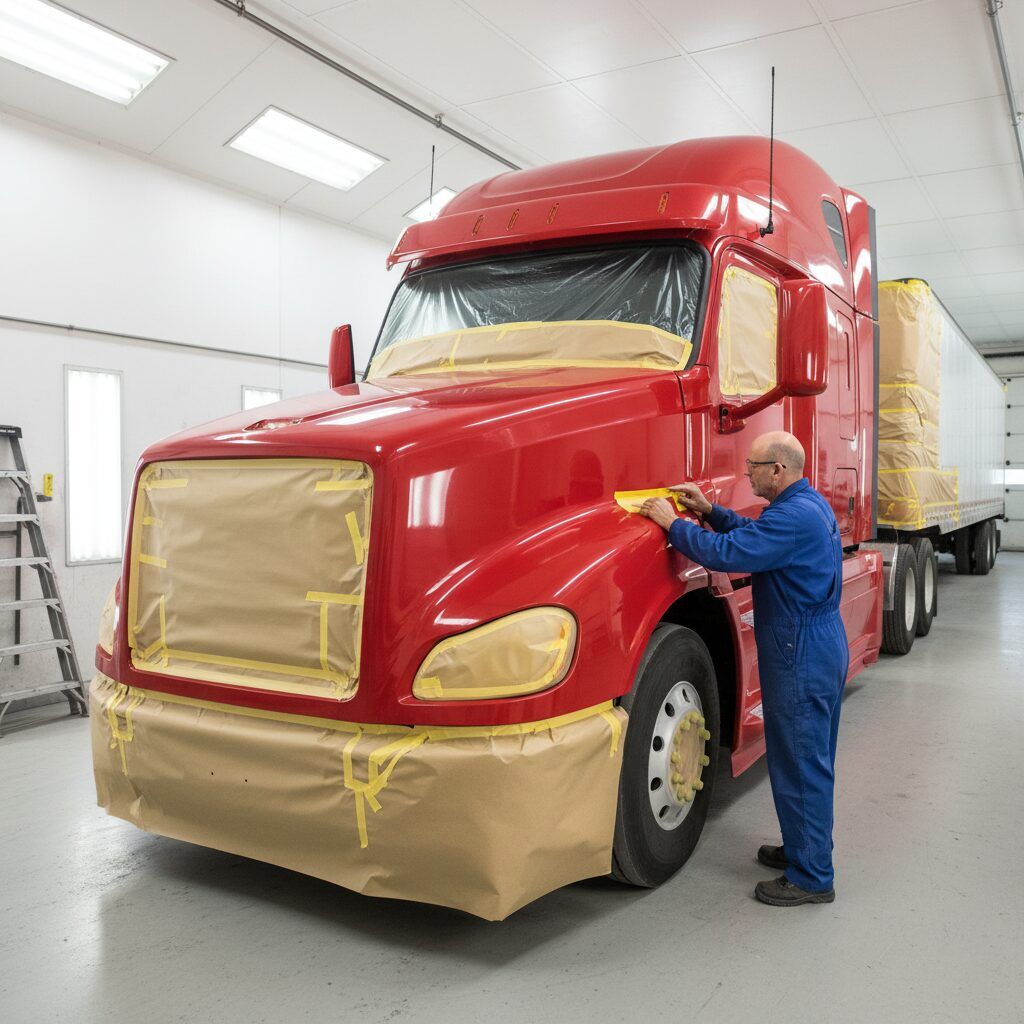
- Masking and Taping: Meticulously sealing glass, weatherstripping, chassis components, and air lines prevents overspray from ruining critical mechanical interfaces.
Paint Quality, Chemistry, and Finishes
The chemical composition of the coating dictates both the initial price tag and the lifespan of the finish. Commercial paint manufacturers offer distinct tiers of products engineered for the rigors of over-the-road operations.
- Single-Stage Enamel / Acrylic Urethane: A budget-friendly option that combines color and gloss in one application. It is popular for utility fleets where absolute mirror-like gloss is secondary to durability and speed.
- Basecoat/Clearcoat (Two-Stage): The industry standard for modern trucks. The pigmented basecoat provides the color, while the polyurethane clearcoat delivers UV protection, chemical resistance, and deep gloss.
- Multi-Stage / Custom Metallics and Pearls: Premium applications featuring specialized tint layers, pearl flakes, or custom candy coats. These require expert spraying techniques and drive material costs significantly higher.
Comprehensive Cost Tiers for Semi-Truck Painting
To help set realistic expectations, commercial paint shops generally categorize their services into distinct tiers. The following breakdown illustrates what truck owners can expect at each investment level.
| Paint Tier | Estimated Cost Range | Scope of Work & Materials Used | Typical Turnaround Time | Best Suited For |
|---|---|---|---|---|
| Basic Fleet Respray | $3,500 – $6,500 | Single-stage paint, minimal sanding, basic masking, no jambs or under-hood areas, minor touch-ups. | 3 to 5 Days | Fleet trucks, older utility haulers, budget-conscious refurbishments. |
| Standard Professional Job | $7,000 – $12,000 | Two-stage basecoat/clearcoat, extensive sanding, minor fiberglass/dent repair, jambs painted upon request. | 1 to 2 Weeks | Owner-operators, well-maintained working trucks, fleet trucks needing high resale appeal. |
| Premium Custom Restoration | $13,000 – $22,000+ | Complete tear-down to bare metal, premium polyurethane clearcoats, custom graphics, color-sanded finish, jambs, and frame touch-ups. | 3 to 5 Weeks | Show trucks, vintage conventionals, company flagship vehicles, full restorations. |
Hidden Expenses: Downtime and Secondary Repairs
When calculating the true cost of painting a semi-truck, vehicle owners must factor in the financial impact of truck downtime. Every day a commercial truck sits in a paint booth is a day it generates zero freight revenue.
Calculating Lost Revenue During Repainting
If an owner-operator or fleet averages $2,500 in gross revenue per week, a two-week shop stay for a premium paint job represents $5,000 in lost productivity. Savvy operators schedule paint maintenance during seasonal freight slowdowns, scheduled major overhauls, or planned home-time windows to mitigate this operational penalty.
Structural and Body Damage Remediation
Paint cannot hide structural flaws; in fact, high-gloss clearcoat often magnifies underlying dents, rust, and fiberglass cracks. Additional shop fees frequently include:
- Fiberglass Repair: Fixing cracked aerodynamic fairings, hood corners, and sleeper skirts using specialized structural resins.
- Rust Remediation: Sandblasting frame rails, treating cab corners, and cutting out cancerous rust on older steel-cab models.
- Windshield and Seal Replacement: Removing old, cracked windshields to paint the pillars properly, which often necessitates installing brand-new rubber gaskets upon reassembly.
Pros and Cons of Professional Commercial Painting
Investing in a professional semi-truck paint job carries distinct strategic advantages and financial considerations that every fleet owner must weigh.
Advantages of Professional Painting
- Resale Value Preservation: A clean, vibrant truck commands thousands of dollars more on the used truck market than a faded, chalky unit with peeling clearcoat.
- Corrosion Protection: Modern polyurethane coatings seal vulnerable aluminum, steel, and fiberglass against road salt, acid rain, and harsh de-icing chemicals.
- Brand Image: Your truck is a rolling billboard. A professional finish communicates reliability, professionalism, and operational excellence to customers and brokers.
Disadvantages and Challenges
- High Upfront Capital: Allocating $10,000+ in cash flow for cosmetic upkeep requires careful financial planning.
- Operational Disruption: Extended downtime strains delivery schedules and customer commitments if replacement power units are unavailable.
- Risk of Poor Quality Workmanship: Choosing an inexperienced shop can result in orange peel, runs, premature clearcoat delamination, and costly rework.
Step-by-Step Guide to Getting Your Semi Truck Painted
Navigating the commercial truck painting process requires a structured approach to ensure you receive high-quality results within your budget and timeframe.
Preparation and Research Phase
Inspect the Truck Thoroughly: Document every dent, crack, rust spot, and missing trim piece before visiting any shop. Clear expectations prevent surprise change-orders later.
Gather Multiple Quotes: Contact specialized heavy-duty truck paint shops rather than standard automotive collision centers. Heavy-duty shops possess oversized paint booths capable of accommodating full-length sleepers and high-roof configurations.
Define the Scope: Decide whether you need a quick color-change fleet respray or a complete frame-off restoration with door jambs and interior trim painted.
Execution and Delivery Phase
Strip Personal Belongings: Remove all personal items, electronics, logs, and mattresses from the cab and sleeper to prevent shop damage or loss.
Verify Warranty Coverage: Ensure the shop provides a written warranty against peeling, fading, bubbling, and clearcoat failure (typically ranging from 1 to 5 years).
Perform Post-Paint Inspection: Inspect the finish under natural sunlight. Check for smooth clearcoat leveling, clean masking lines, and fully functioning reinstalled accessories before signing off and making final payment.
Frequently Asked Questions About Semi-Truck Painting
How long does a professional semi-truck paint job last?
A high-quality two-stage basecoat/clearcoat paint job on a semi-truck typically lasts between 7 to 12 years when properly maintained. Regular washing, waxing, and avoiding abrasive brush-style automated truck washes significantly extend the lifespan of the clearcoat.
Can I paint my semi-truck myself to save money?
While DIY painting is technically possible for smaller equipment, painting a full-size semi-truck requires industrial-scale equipment. Without a heated, downdraft commercial paint booth, proper respiratory safety gear, and professional HVLP spray guns, achieving a factory-quality finish is exceptionally difficult due to dust contamination and overspray.
Does changing the color of my semi-truck cost more?
Yes, color changes generally cost 15% to 30% more than a respray of the original factory color. A true color change requires painting door jambs, under the hood, inside storage compartments, and hidden areas to ensure the old color is completely concealed.
How should I maintain a newly painted semi-truck?
Allow the paint to fully cure for 30 days before applying any waxes or sealants. Wash the truck frequently using pH-neutral truck wash soap and soft-bristle brushes to prevent road grime and diesel soot from etching into the fresh clearcoat.
Are insurance claims available if my truck needs repainting after an accident?
Yes, if the paint damage is the result of a covered collision or comprehensive insurance claim, your insurance provider will cover the cost of refinishing the affected panels and blended areas as part of the structural repair estimate.
Securing Your Investment in Commercial Truck Aesthetics
Investing in a professional semi-truck paint job is a major operational decision that directly impacts your brand equity, asset value, and driver pride. By understanding the true cost drivers—ranging from meticulous surface prep to high-grade polyurethane chemistry—you can effectively budget for your next fleet refresh or custom restoration. Take the time to vet commercial painting specialists, demand clear written estimates, and protect your freshly painted rig with a rigorous maintenance routine designed to maximize longevity on the highway.
Image Gallery