Getting Workers Compensation Insurance in CT: A Business Owner’s Guide
In Connecticut, getting workers' compensation insurance involves determining your coverage requirements under state law, compiling payroll and employee classification data, and purchasing a policy through a commercial insurance carrier...
In Connecticut, getting workers' compensation insurance involves determining your coverage requirements under state law, compiling payroll and employee classification data, and purchasing a policy through a commercial insurance carrier or the state's assigned risk pool. Connecticut law requires nearly all businesses with one or more employees to maintain active coverage.
Contents
Disclaimer: This guide is provided for educational purposes only and does not constitute formal legal, financial, or insurance advice. Consult a licensed insurance broker or qualified attorney for specific statutory compliance inquiries.
Legal Requirements for Connecticut Workers' Compensation Coverage
Under the Connecticut Workers' Compensation Act (C.G.S. Title 31, Chapter 568), employers operating within the state must secure workers' compensation insurance to cover work-related injuries, illnesses, and occupational fatalities. Connecticut enforces a strict strict-liability standard: employers are legally responsible for workplace injuries regardless of fault, and in exchange, covered employees generally lose the right to sue their employer in civil court for personal injury negligence (known as the exclusive remedy doctrine).
Who Must Be Covered?
Connecticut law dictates that coverage must be provided to all regular, part-time, seasonal, and temporary employees from their very first day of employment. The statutory definition of an employee includes:
- Full-time and part-time workers across all industries.
- Minors, non-citizens, and undocumented workers legally or illegally employed.
- Family members employed by a business entity.
- Corporate officers and LLC members, unless they actively execute a formal exclusion form.
Statutory Exemptions and Opt-Out Rules
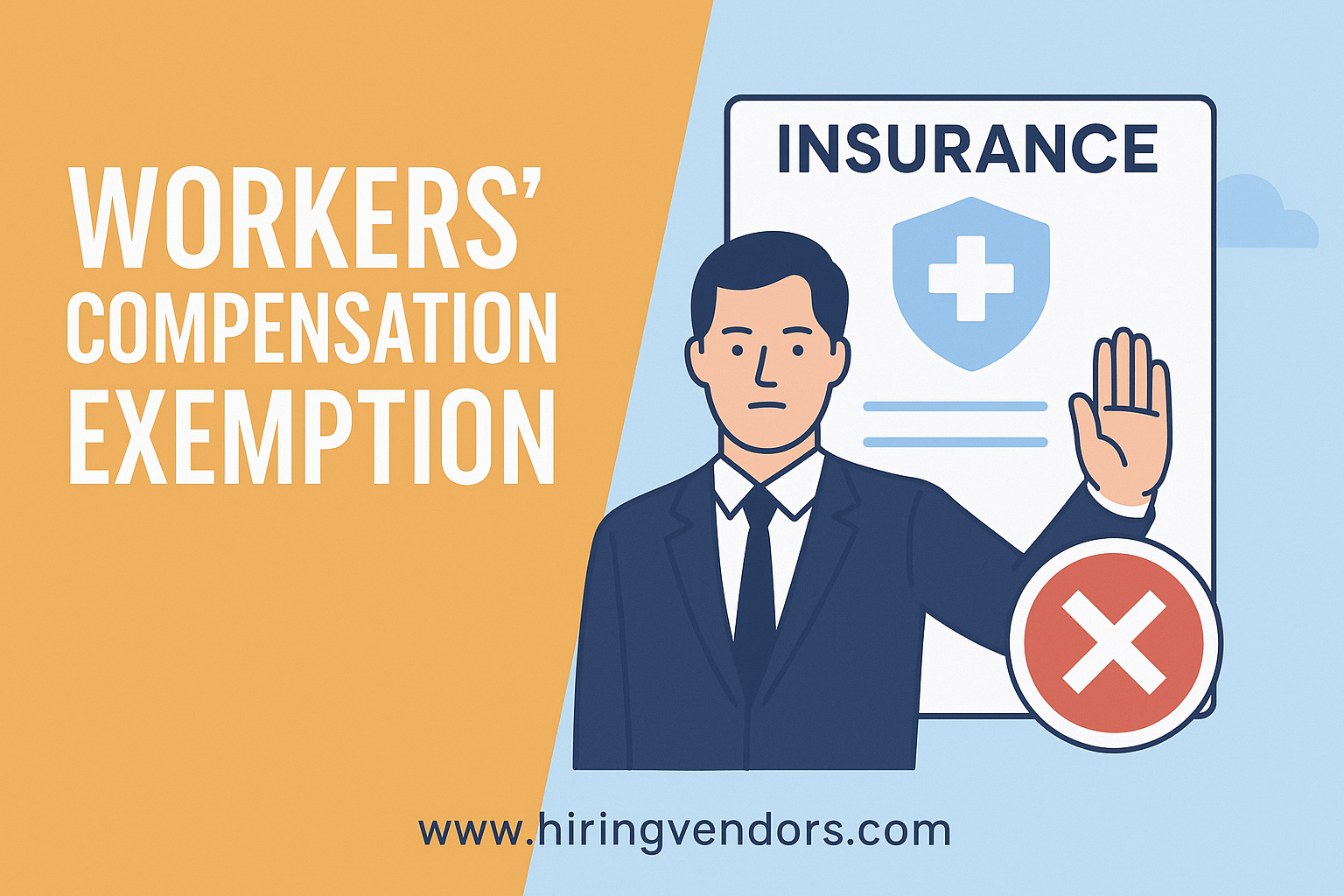
While coverage is mandatory for most workers, specific entity structures permit certain individuals to opt out or elect coverage manually:
- Sole Proprietors and Partners: By default, sole proprietors and members of a partnership are excluded from mandatory coverage under Connecticut law. However, they may voluntarily elect to purchase coverage for themselves by notifying their insurer in writing.
- LLC Members and Managers: Members of a Limited Liability Company are treated similarly to partners and are excluded by default, but can choose to be included under a policy.
- Corporate Officers: Unlike sole proprietors, corporate officers are included in workers' compensation coverage by default. If an officer wishes to be excluded, they must file Form 6B (Filing of Election of Employee Exemption) with the State of Connecticut Workers' Compensation Commission.
- Independent Contractors: True independent contractors are not covered employees under Connecticut law. However, misclassifying employees as independent contractors to avoid insurance premiums carries severe civil and criminal penalties enforced by the Connecticut Department of Labor and the Workers' Compensation Commission.
Step-by-Step Guide to Getting Workers' Comp in CT
Obtaining a compliant workers' compensation policy in Connecticut requires careful preparation to ensure correct coverage limits and accurate premium calculations. Follow these five operational steps to secure coverage.
- Step 1: Audit Workforce & Identify Classification Codes
- Step 2: Calculate Projected Annual Payroll
- Step 3: Select Coverage Market (Voluntary, Assigned Risk, Self-Insured)
- Step 4: Submit Underwriting Docs & Secure Policy Certificate
- Step 5: Post State Compliance Notices (Form 75)
Step 1: Audit Workforce & Identify NCCI Classification Codes
The National Council on Compensation Insurance (NCCI) establishes standardized four-digit classification codes based on job duties and associated workplace hazards. Before seeking quotes, catalog your workforce by primary role:
- Clerical Office Employees (Code 8810): Low-risk administrative duties performed in an office environment.
- Outside Salespersons (Code 8742): Employees traveling for business, meetings, or client management.
- Construction & Skilled Trades (e.g., Carpentry Code 5403, Electrical Code 5190): Higher-risk field operations requiring distinct classification rates.
Misclassifying workers can lead to costly retro-audits and insurance carrier penalties. Ensure each employee's operational exposure matches their assigned NCCI code.
Step 2: Calculate Projected Annual Payroll
Workers' compensation insurance premiums are calculated per $100 of gross payroll. When estimating annual payroll, include gross wages, salaries, bonuses, commissions, paid time off, and overtime earnings (rated at straight-time base rates). Exclude tips, severance pay, and non-taxable fringe benefits.
Step 3: Select Your Coverage Market
Connecticut employers can procure coverage through three distinct routes:
- Voluntary Commercial Market: Licensed private insurance carriers write policies based on standard risk assessments. This market offers competitive pricing, flexible pay-as-you-go structures, and dividend plans for businesses with low claim histories.
- Assigned Risk Plan (NCCI Pool): High-risk businesses or startups unable to secure voluntary market coverage can access the Connecticut Workers' Compensation Assigned Risk Pool, administered by NCCI. Rates in the assigned risk plan are generally higher.
- Self-Insurance: Large employers or qualified group pools with substantial net worth can apply to the Workers' Compensation Commission for self-insurance authorization, demonstrating sufficient reserves to cover potential claims directly.
Step 4: Submit Application and Obtain Certificate of Insurance
Provide your insurance broker or chosen carrier with your Federal Employer Identification Number (FEIN), business entity documents, detailed job descriptions, safety protocols, and payroll estimates. Once approved and bound, request a Certificate of Insurance (COI). You will need this document to demonstrate compliance to state inspectors, clients, and general contractors.
Step 5: Post Required State Compliance Notices
Upon policy issuance, Connecticut employers must display Form 75 (Notice to Employees) in a conspicuous location frequented by employees (such as a breakroom or employee portal). This posting lists your insurance carrier’s name, policy number, and the designated medical facility for emergency treatments.
Comparing Connecticut Coverage Acquisition Routes
Selecting the proper acquisition channel directly impacts your business's fixed operating costs and administrative overhead. The table below outlines key differences between the primary market options in Connecticut.
| Acquisition Channel | Ideal Employer Profile | Pricing Mechanics | Approval & Binding Time | Key Strategic Considerations |
|---|---|---|---|---|
| Voluntary Market | Standard to low-risk businesses; good claim history | Competitive base rates + carrier discounts | Fast (1–3 business days) | Access to pay-as-you-go billing, safety dividends, and bundled commercial policies. |
| Assigned Risk Pool (NCCI) | High-risk industries, startups, or businesses with frequent past claims | Standard state surcharge rates (non-discounted) | Moderate (3–7 business days) | Serves as the market of last resort; higher baseline premiums and limited policy customizations. |
| Individual Self-Insurance | Large enterprises with extensive liquidity and dedicated risk management teams | Direct claim payout + administrative overhead | Slow (30–90 days for statutory review) | Requires approval from the CT Workers' Compensation Commission and security deposits/bonds. |
| Group Self-Insurance Pool | Homogeneous trade groups (e.g., contractors, healthcare facilities) | Pooled losses + shared administrative expenses | Moderate (14–30 business days) | Members share joint liability for unpaid claims within the pool; strict safety requirements apply. |
How Workers' Compensation Premiums Are Calculated in CT
Understanding how Connecticut carriers structure premium costs allows business owners to manage payroll risk proactively. Insurance companies apply a standardized pricing formula to calculate annual policy premiums:
$$\text{Annual Premium} = \left( \frac{\text{Total Annual Payroll}}{$100} \right) \times \text{NCCI Classification Rate} \times \text{Experience Modification Rate (EMR)} + \text{State Fees}$$
Primary Cost Drivers
- NCCI Classification Base Rate: High-hazard industries pay substantially more per $100 of payroll than office-based businesses. For instance, clerical roles may incur rates under $0.30 per $100 of payroll, whereas structural steel erection rates can exceed $10.00 per $100.
- Experience Modification Rate (EMR): The EMR (or Experience Mod) compares your company’s safety and claims record against industry averages. An EMR of 1.0 represents average risk. A history of frequent workplace injuries increases your EMR above 1.0, generating a premium surcharge, while a clean safety record reduces the modifier below 1.0, lowering your overall premium.
- State Assessments: Connecticut levies mandatory statutory assessments to fund the operation of the Workers' Compensation Commission and the Second Injury Fund. These surcharges are added as a percentage of your net premium.
- Audits and Adjustments: Workers' compensation policies are written on estimated annual payroll. At the close of policy terms, carriers perform a final audit comparing estimated payroll against actual payroll records (IRS Form 941, state unemployment reports). Discrepancies yield either an additional premium bill or a credit refund.
Penalties for Non-Compliance in Connecticut
Failing to maintain continuous workers' compensation insurance in Connecticut results in stringent statutory penalties under C.G.S. § 31-288. The state actively monitors compliance by cross-referencing state tax filings, building permit applications, and NCCI policy databases.
- UNINSURED EMPLOYER DETECTED
- [STOP-WORK ORDER] Immediate cessation of all business operations in CT.
- [CIVIL FINANCIAL FINES] Up to $50 per employee/day plus back assessments.
- [CRIMINAL SANCTIONS] Class D Felony charges for willful refusal to insure.
Civil and Administrative Sanctions
- Stop-Work Orders: The Connecticut Department of Labor or the Workers' Compensation Commission can issue an immediate Stop-Work Order, halting all business activities across all worksites until proof of insurance is presented and fines are cleared.
- Per-Employee Fines: The state may assess civil penalties of up to $50 per employee per day for every day the business remains uninsured.
- Loss of Exclusive Remedy Protection: If an uninsured employer experiences a workplace injury, the injured worker may either claim benefits through the Connecticut State Second Injury Fund or sue the employer directly in civil court. In civil actions, the employer is stripped of common-law defenses (such as assumption of risk or contributory negligence).
Criminal Liability
Under C.G.S. § 31-288(c), an employer who knowingly and willfully fails to secure required workers' compensation insurance commits a Class D felony, carrying potential prison sentences of up to five years and significant criminal fines.
Frequently Asked Questions
Are sole proprietors required to buy workers' comp in CT?
No, sole proprietors without employees are exempt from mandatory coverage under Connecticut law. However, sole proprietors may choose to purchase a policy to protect their own income against work-related injuries. Additionally, general contractors in Connecticut often require sole-proprietor subcontractors to hold active policies before allowing them on a job site.
How do I file an exemption form (Form 6B) in Connecticut?
To exclude corporate officers, members of an LLC, or partners from coverage, you must complete Form 6B (Filing of Election of Employee Exemption). This document requires officer identification, ownership percentage details, and official signatures. Submit the signed form directly to the Connecticut Workers' Compensation Commission Chairman’s Office and provide a copy to your insurance carrier before the policy inception date.
What happens if an insurance carrier cancels my policy?
If a carrier cancels your policy due to non-payment or underwriting changes, they are legally required to file a notice of cancellation with the NCCI and the Connecticut Workers' Compensation Commission. To prevent a gap in coverage—which triggers state enforcement actions—you must secure a new policy through another commercial carrier or apply for coverage in the Connecticut Assigned Risk Pool immediately.
Can I use pay-as-you-go workers' comp insurance in Connecticut?
Yes, many commercial insurers offer pay-as-you-go workers' compensation options integrated directly with payroll software providers. Instead of paying large upfront annual estimates, pay-as-you-go calculates exact premiums based on actual real-time payroll data per pay period, minimizing year-end audit adjustments and helping small businesses manage cash flow.
Does workers' comp cover out-of-state employees working temporarily in CT?
Yes. If an out-of-state employer sends employees to work temporarily on a project in Connecticut, those workers are subject to Connecticut workers' compensation jurisdiction while performing duties in the state. Employers should ensure their policy includes an Other States Insurance endorsement (Item 3.C on the policy declarations page) listing Connecticut.
Next Steps for Securing Your Policy
- Gather Business Documentation: Compile your FEIN, business structural documents, gross payroll records for the past 12 months, and current employee duty descriptions.
- Conduct an Audit of Job Duties: Match every employee to the correct NCCI classification code to ensure accurate rate calculations and avoid audit penalties.
- Request Quotes from Licensed Brokers: Contact commercial brokers licensed in Connecticut to compare quotes across multiple carriers in the voluntary market.
- Confirm Exclusion Documents: If corporate officers or LLC members opt out of coverage, file Form 6B with the Workers' Compensation Commission before binding your policy.
- Post Mandatory Notices: Once your policy is active, print and display Form 75 in your workplace to remain compliant with state regulations.
Image Gallery