Why Property Rental Investment is Rarely Worth It in 2026
While real estate has long been touted as a premier vehicle for wealth creation, property rental investment is rarely worth it in 2026 due to compressed yields, high interest rates, and the rising costs of management and maintenance. F...
While real estate has long been touted as a premier vehicle for wealth creation, property rental investment is rarely worth it in 2026 due to compressed yields, high interest rates, and the rising costs of management and maintenance. For most individual investors, the intensive labor and significant capital risk often fail to outperform simpler, more liquid financial instruments like index funds.
Contents
The Erosion of the Passive Income Myth
The allure of rental property investment has historically been built on the promise of "passive income." However, by 2026, the reality of being a landlord has become increasingly active and burdensome. True passive income requires an asset to generate cash flow with minimal oversight; direct property ownership is the antithesis of this concept.
Investors must contend with the "Three Ts": Tenants, Toilets, and Trash. Managing a property involves rigorous tenant screening, emergency repairs, and the constant threat of vacancy. Even if an investor hires a property management firm, the cost—typically ranging from 8% to 12% of gross monthly rent—often consumes the entirety of the net profit margin. In a 2026 market where residential cap rates in many urban centers have compressed to between 3% and 5%, losing a significant portion of that to management fees makes the venture mathematically unappealing for those seeking hands-off growth.
Furthermore, the emotional and psychological toll of property management is rarely factored into the "worth" of the investment. Dealing with late payments, property damage, or the legal complexities of eviction requires a level of involvement that mirrors a part-time job rather than a diversified investment portfolio.
The Math of Diminishing Yields and High Interest Rates
As of 2026, the financial landscape for real estate has shifted significantly compared to the "easy money" era of the previous decade. With mortgage rates stabilized at higher levels than the historical lows of the early 2020s, the "spread"—the difference between the rental yield and the cost of debt—has narrowed or turned negative for many new acquisitions.
When an investor buys a rental property, they are not just fighting against the mortgage; they are fighting against the risk-free rate of return. If a high-yield savings account or a 10-year Treasury note offers 4% to 5% with zero effort and total liquidity, a rental property yielding a net 3% after expenses is a poor allocation of capital.
The "BRRRR" method (Buy, Rehab, Rent, Refinance, Repeat) that dominated real estate strategy for years has largely lost its efficacy in 2026. High construction costs and more stringent lending requirements mean that "forcing equity" through renovations is more expensive and carries higher risk. Investors often find themselves "over-leveraged," where a single month of vacancy or one major capital expenditure, such as a roof replacement or HVAC failure, can wipe out several years of cash flow.
Hidden Operational Costs and the 1% Rule Fallacy
Many novice investors rely on the "1% Rule," which suggests that a property should rent for at least 1% of its purchase price per month. In 2026, finding properties that meet this criteria in safe, appreciating markets is nearly impossible. Most properties now rent for 0.4% to 0.6% of their value, forcing investors to rely almost entirely on price appreciation rather than cash flow.
Operational costs are frequently underestimated. Beyond the mortgage, taxes, and insurance, owners must account for:
- Capital Expenditures (CapEx): Major long-term repairs that occur every 10–20 years.
- Routine Maintenance: The ongoing costs of keeping a property habitable.
- Vacancy Factor: The cost of the property sitting empty between tenants, including utility costs and marketing.
- Legal and Administrative Fees: Costs for lease drafting, accounting, and potential legal disputes.
When these costs are modeled accurately over a 10-year horizon, the "nominal" profit often evaporates. In many jurisdictions, property taxes have also surged to catch up with the rapid home price appreciation of the early 2020s, further squeezing the net operating income (NOI) for landlords.
The Liquidity Trap and High Transaction Costs
One of the most significant reasons property rental investment is rarely worth it compared to other assets is the lack of liquidity. In the stock market, an investor can liquidate a position in seconds with negligible fees. In real estate, selling a property is a months-long process that incurs massive transaction costs.
Between seller’s commissions (often 5-6%), closing costs, title insurance, and potential "fix-up" costs to make the property market-ready, an investor can expect to lose 8% to 10% of the property's value just to exit the investment. This means that a property must appreciate by at least 10% just for the investor to break even on the sale. If the market stagnates or dips, the investor is "locked in," unable to move their capital to better-performing sectors without taking a significant loss.
This illiquidity creates a "liquidity trap." During economic downturns, when an investor might need cash most, the housing market often slows down, making it even harder to sell. This lack of agility is a primary reason why modern portfolios are shifting toward more flexible assets.
Comparison of Investment Vehicles (2026 Market Estimates)
The following table compares the typical characteristics of direct rental ownership against alternative investment strategies in the current 2026 environment.
| Feature | Direct Rental Property | Real Estate Investment Trust (REIT) | Low-Cost Index Funds (S&P 500) |
|---|---|---|---|
| Typical Net Yield | 2% - 4% (Cash Flow) | 4% - 6% (Dividends) | 1.5% - 2% (Dividends) |
| Annual Appreciation | Variable (2% - 5%) | Asset-dependent | Historically 7% - 10% |
| Effort Required | High (Active Management) | Low (Passive) | Low (Passive) |
| Liquidity | Very Low (Months to sell) | High (Daily trading) | Very High (Instant) |
| Transaction Costs | High (8% - 10%) | Minimal (Brokerage fees) | Minimal to Zero |
| Diversification | Low (Single Asset/Zip Code) | High (Multiple Properties) | High (500+ Companies) |
| Tax Benefits | Depreciation, Deductions | Qualified Dividends | Capital Gains Treatment |
Regulatory and Legal Headwinds
The legal landscape for landlords in 2026 is significantly more complex than it was a decade ago. Increasing tenant protections, while socially valuable, have increased the financial risk for individual landlords. In many states and municipalities, "just cause" eviction laws and rent control measures have limited the ability of owners to manage their properties profitably.
The risk of a "non-paying tenant" has also evolved. Legal proceedings can now drag on for months, during which the landlord must still pay the mortgage, taxes, and insurance without receiving any income. For a small investor with one or two units, a single non-paying tenant can lead to a total financial collapse. Larger institutional investors can absorb these losses across a portfolio of thousands of units, but for the individual, the lack of scale makes these regulatory risks disproportionately dangerous.
Taxation Complexity and the Opportunity Cost
While real estate offers tax advantages like depreciation and 1031 exchanges, these benefits are often offset by the complexity and cost of maintaining them. In 2026, the administrative burden of tracking every expense and complying with shifting tax codes requires professional accounting, which adds another layer of cost.
The most profound argument against rental property is the opportunity cost. If an investor puts $100,000 into a down payment on a rental property, they are not just risking that money; they are giving up the compounded growth that the same $100,000 would earn in a diversified portfolio of global equities or bonds. Over 20 years, the difference between a 4% net return in real estate (with all the headaches) and a 7% to 9% return in the stock market (with no effort) can amount to hundreds of thousands of dollars in lost wealth.
FAQ
Is rental property still a good hedge against inflation in 2026?
While real estate is traditionally an inflation hedge, the 2026 environment is unique. Rising labor and material costs for repairs often outpace rent increases, especially in areas with rent control. This means that while the "value" of the asset might rise with inflation, the actual profit margin often shrinks because expenses inflate faster than income.
What about the tax benefits of depreciation?
Depreciation is a powerful tool, as it allows you to write off the value of the structure over 27.5 years. However, it is a "deferral" rather than a total avoidance of tax. When you sell the property, you are subject to depreciation recapture taxes unless you utilize a 1031 exchange, which forces you to buy even more real estate, potentially trapping your capital in the sector indefinitely.
Are REITs a better alternative to direct ownership?
For most people, yes. Real Estate Investment Trusts (REITs) allow you to invest in large-scale commercial or residential portfolios without the need to manage tenants or fix toilets. They offer professional management, high liquidity, and better diversification, often with higher dividend yields than a single-family rental would provide in net cash flow.
When does property rental investment actually make sense?
It typically only makes sense if you can achieve "scale"—owning 20 or more units where you can hire a dedicated staff—or if you have a unique "edge," such as being a licensed contractor who can perform all repairs at cost. For the average "mom and pop" investor, the numbers rarely justify the risk and effort in the 2026 market.
How do rising property taxes affect 2026 investments?
Property taxes are a significant "leak" in rental profitability. As municipalities increase assessments to fund local services in an inflationary environment, these fixed costs can rise even if your rental income remains flat. Unlike a mortgage, which may be fixed, property taxes and insurance premiums are variable costs that consistently trend upward.
Practical Recommendation
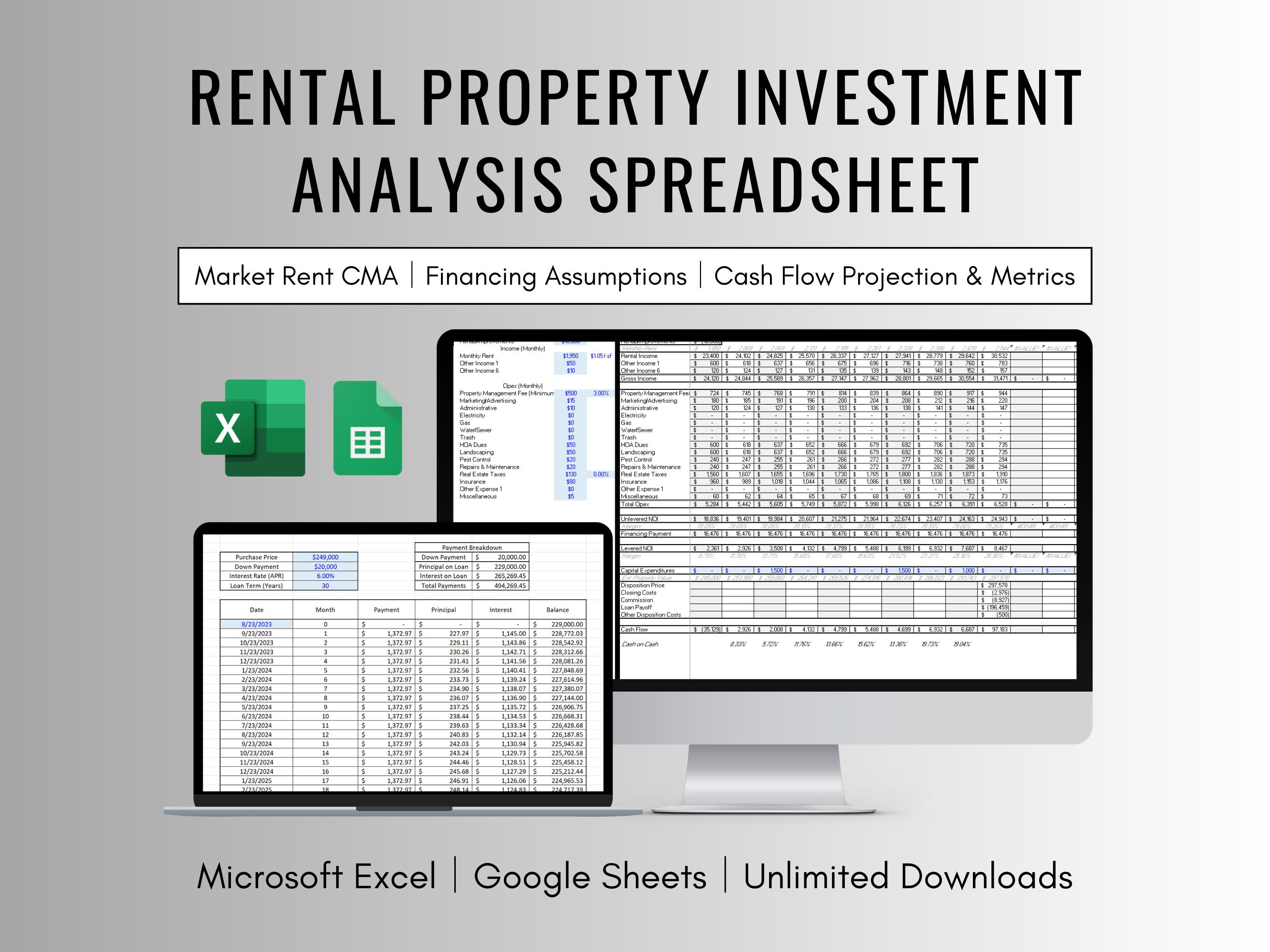
Before purchasing a rental property in 2026, perform a "brutal" cash flow analysis that includes a 10% vacancy rate, a 10% management fee, and a 1.5% annual maintenance reserve. If the resulting net return is not significantly higher than the yield of a diversified index fund, the investment is likely not worth the risk. For most individuals, the most efficient path to wealth remains a combination of low-cost broad-market ETFs and, if real estate exposure is desired, publicly traded REITs. These options provide the benefits of capital appreciation without the operational hazards and illiquidity of physical property ownership.
Image Gallery