Exploring the Wonders of the World in Jordan: A Complete Travel & Logistics Guide
Exploring the wonders of the world in Jordan requires strategic planning, from securing digital entry permits to organizing high-impact itineraries across ancient and natural landmarks. Home to Petra—a UNESCO World Heritage site and on...
Exploring the wonders of the world in Jordan requires strategic planning, from securing digital entry permits to organizing high-impact itineraries across ancient and natural landmarks. Home to Petra—a UNESCO World Heritage site and one of the New7Wonders of the World—alongside Wadi Rum and the Dead Sea, Jordan provides an exceptional travel experience through unified site passes, structured transportation routes, and distinct seasonal travel windows.
Contents
Key Wonders of Jordan: From Petra to the Dead Sea
Jordan hosts a high concentration of world-class archaeological and environmental landmarks within a relatively compact geographic area. Understanding the character, physical demands, and historical context of each destination helps travelers construct an efficient and rewarding itinerary.
Map of Jordan's Key Wonders
- AMMAN
- Jerash
- MOUNT NEBO
- DEAD SEA
- PETRA
- WADI RUM
- Aqaba
Petra: The Rose-Red City of the Nabataeans
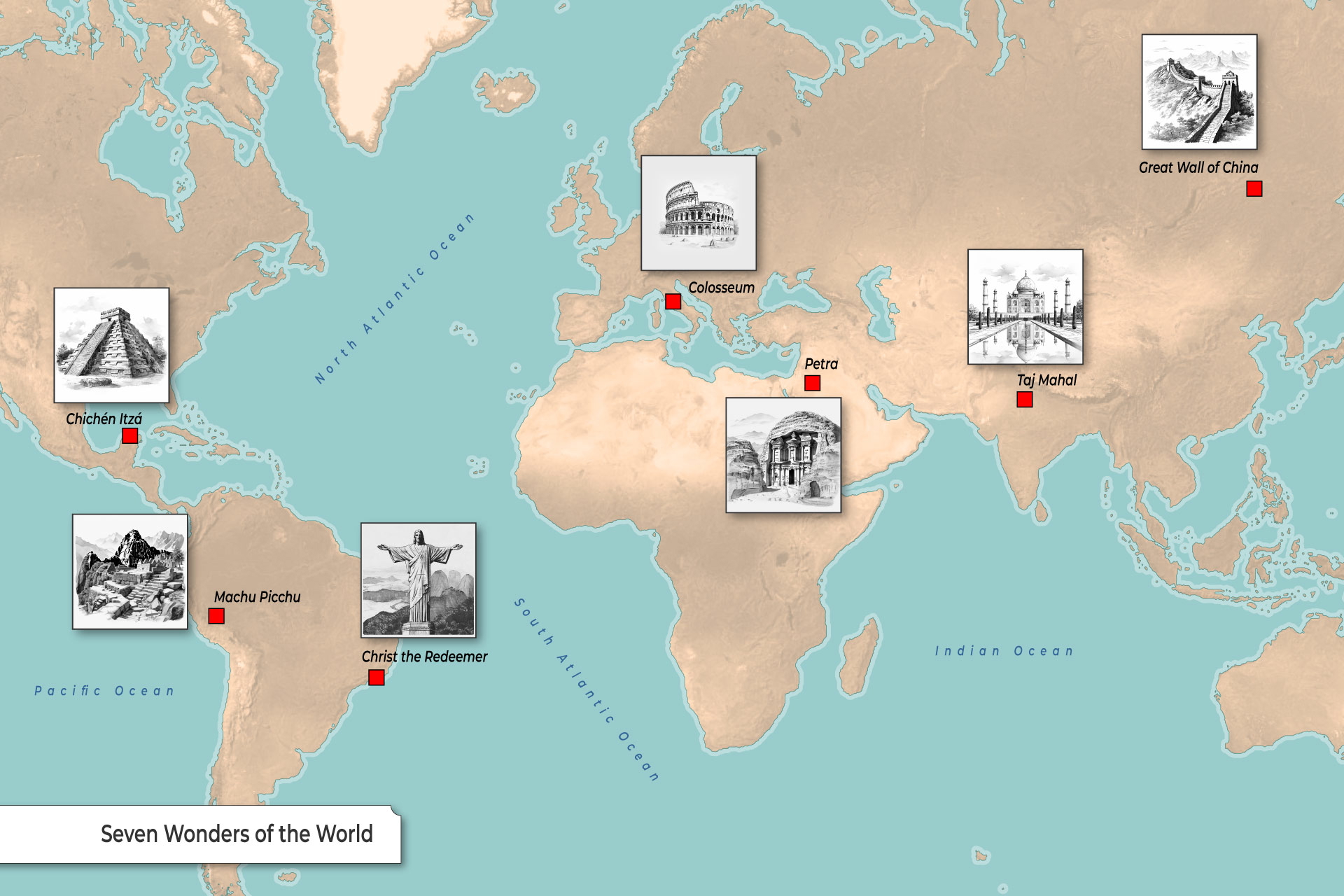
Designated a UNESCO World Heritage site in 1985 and named one of the New7Wonders of the World in 2007, Petra stands as Jordan's premier historic attraction. Hand-carved directly into vibrant pink sandstone cliffs by the Nabataean Arabs over two millennia ago, the city served as a major regional trading hub linking Arabia, Egypt, and the Mediterranean.
Visitors enter the archaeological park through the Siq, a narrow, towering gorge extending over one kilometer. The Siq terminates in front of Al-Khazneh (The Treasury), an ornate 40-meter-high facade engineered with Hellenistic architectural influences. Beyond the Treasury, the main trail leads through the Street of Facades, the Roman Theater, and the Royal Tombs.
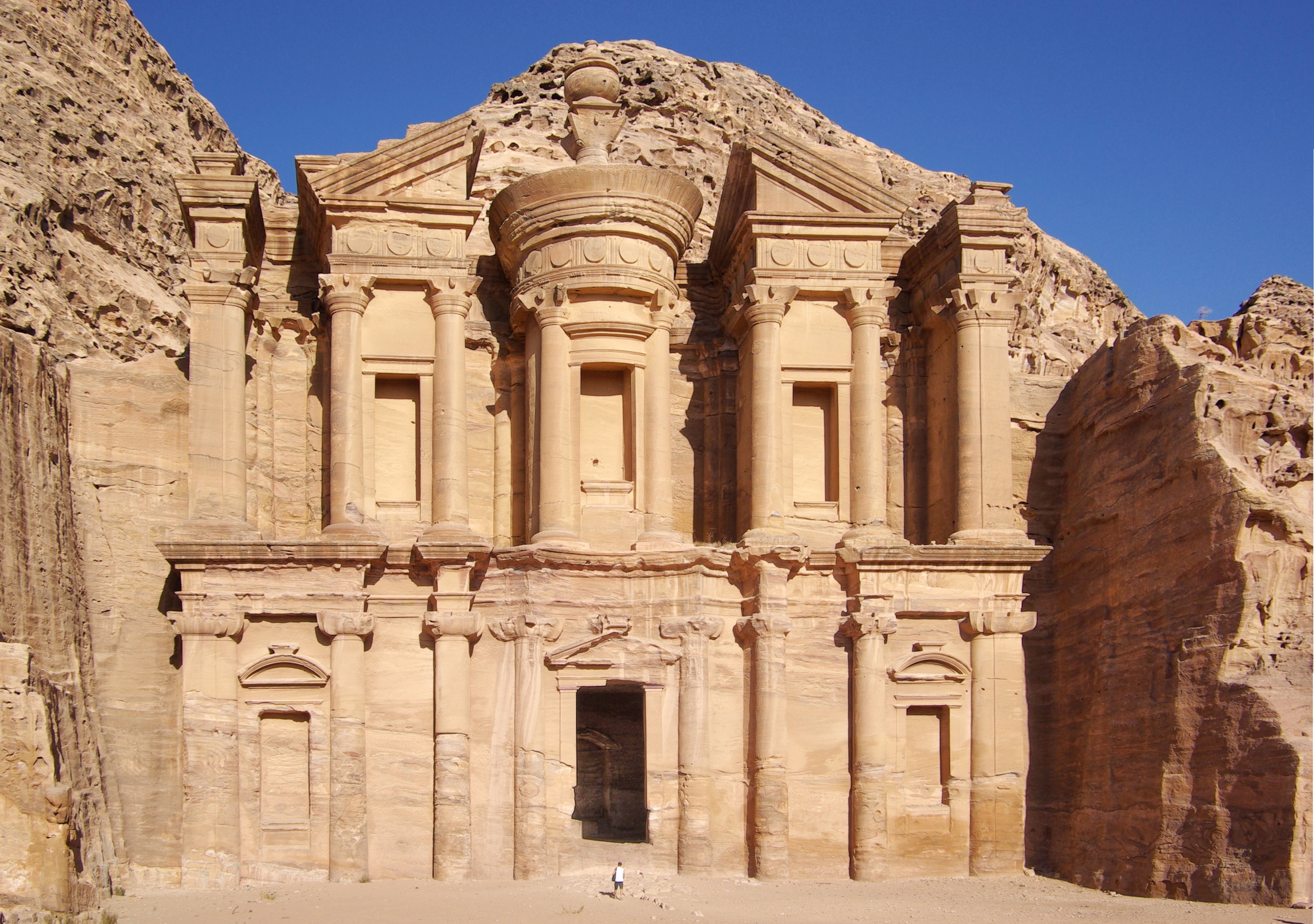
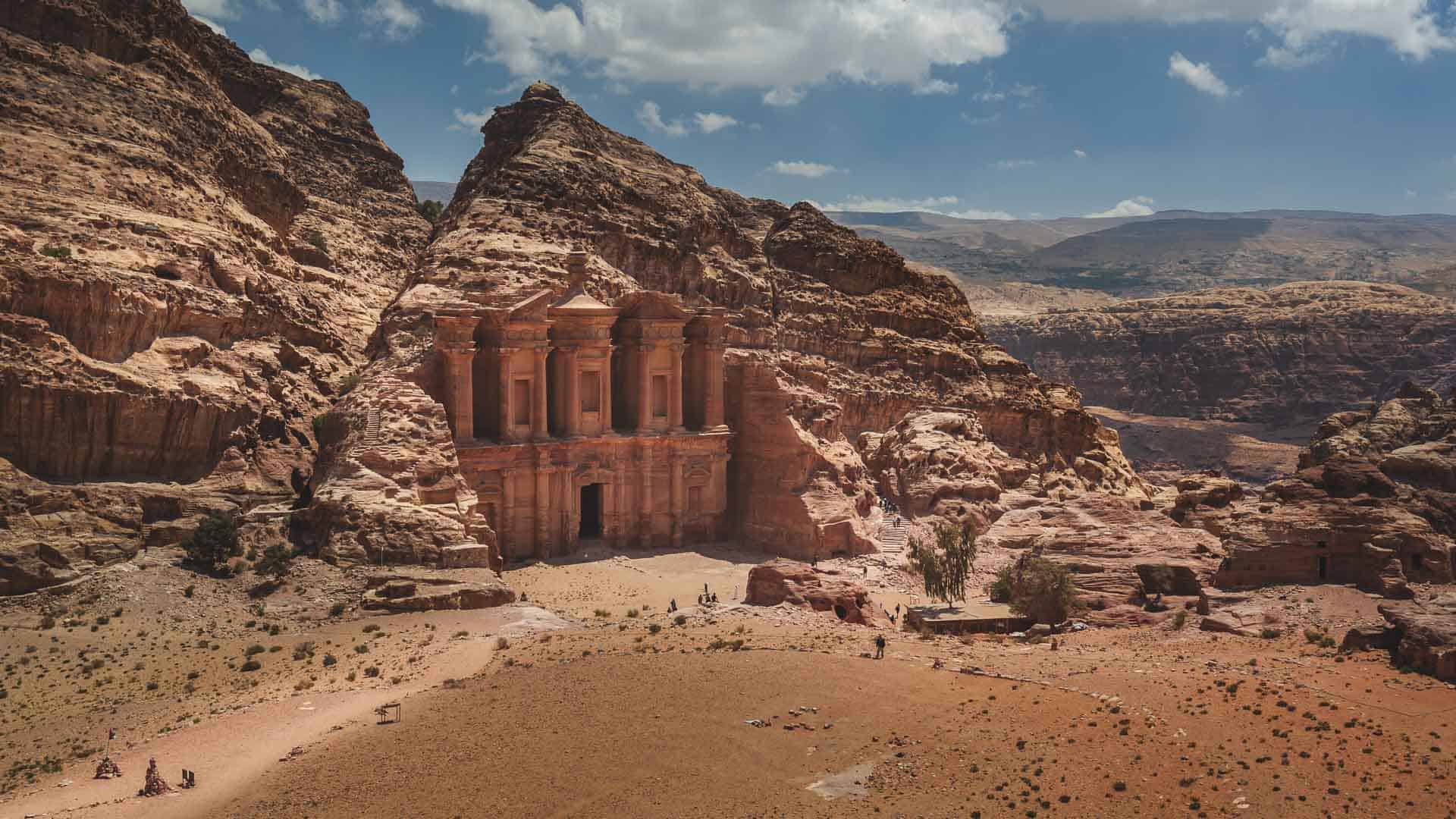
For those capable of climbing roughly 800 stone steps, Ad-Deir (The Monastery) offers a grander facade than the Treasury, set against dramatic cliffside vistas. Exploring Petra thoroughly requires substantial physical activity; visitors routinely walk between 10 to 15 kilometers over varying terrain in a single day.
- Visitor Center
- Siq (1.2 km sandstone gorge)
- Al-Khazneh (The Treasury)
- Street of Facades
- Royal Tombs
- Colonnaded Street
- Ad-Deir (The Monastery - 800+ steps climb)
Wadi Rum: The Desert Wilderness
South of Petra lies Wadi Rum, also known as the Valley of the Moon. Recognized as a UNESCO World Heritage mixed natural and cultural site, Wadi Rum features dramatically eroded sandstone structures, granite mountains, narrow canyons, and prehistoric petroglyphs.
The region has been inhabited by Bedouin tribes for centuries, and sustainable tourism in the area is largely managed by local Bedouin communities. Key sites within the protected area include the Jabal Umm Fruth Rock Bridge, Khazali Canyon (famous for ancient inscriptions), and Lawrence’s Spring. Exploring the desert is typically done via 4x4 open-bed jeep tours, camel treks, or guided hiking routes, followed by overnight stays in traditional or dome-style desert camps.
The Dead Sea: Earth's Lowest Elevation
Forming part of the border between Jordan and the West Bank, the Dead Sea sits at approximately 430 meters below sea level, making it the lowest land elevation on Earth. With a salinity level exceeding 34%—nearly ten times saltier than the ocean—the body of water creates natural buoyancy, preventing bathers from sinking.
The mineral-rich water and black mud along the shoreline have been utilized for therapeutic purposes since antiquity. Most visitors access the Dead Sea via resort hotels concentrated in the northern area (Sweimeh) or through day-use public beach facilities, which provide dedicated freshwater showers essential for rinsing off after floating.
Jerash and Mount Nebo: Roman and Biblical Heritage
Beyond Petra and the Dead Sea, Jordan contains significant ancient monuments from the Greco-Roman and early Christian eras:
- Jerash: Located north of Amman, Jerash represents one of the best-preserved Roman provincial towns in the world. Originally part of the Decapolis alliance, the site features the Oval Plaza, the Cardo Maximus (colonnaded street), two amphitheaters, and the monumental Arch of Hadrian.
- Mount Nebo: Rising nearly 1,000 meters above sea level, Mount Nebo holds historical and religious distinction as the ridge where Moses is said to have viewed the Promised Land. The site houses early Christian mosaics inside the Memorial Church of Moses and commands expansive views across the Jordan Valley toward Jerusalem on clear days.
Entry Requirements, Jordan Pass, and Travel Logistics
Traveling through Jordan is straightforward when visitors take advantage of national tourist initiatives designed to streamline customs and site admissions.
- Stay 3+ Consecutive Nights in Jordan?
- YES:
- Purchase Jordan Pass
- Waives standard visa
- Includes Petra entry
- 40+ site admissions
- Purchase Jordan Pass
- NO:
- Pay On-Arrival Visa Fee (40 JOD) + Individual Site Ticket Fees
- YES:
The Jordan Pass
The Ministry of Tourism and Antiquities offers the Jordan Pass, a unified package designed for international tourists. If purchased prior to arrival and accompanied by a stay of at least three consecutive nights (4 days), the pass completely waives the standard single-entry visa fee (40 JOD) and provides free entry to over 40 tourist sites across the country.
| Pass Tier | Price (JOD) | Petra Entry Access Included | Key Inclusions |
|---|---|---|---|
| Jordan Wanderer | 70 JOD (~$99 USD) | 1 Consecutive Day | Visa fee waiver, 40+ sites, digital brochure |
| Jordan Explorer | 75 JOD (~$106 USD) | 2 Consecutive Days | Visa fee waiver, 40+ sites, digital brochure |
| Jordan Expert | 80 JOD (~$113 USD) | 3 Consecutive Days | Visa fee waiver, 40+ sites, digital brochure |
Note: Travelers must purchase the pass online via the official portal prior to arriving at airport customs or land borders to qualify for the entry visa waiver.
Best Time to Visit
Jordan experiences a semi-arid Mediterranean climate, leading to severe heat during peak summer months and surprisingly cold conditions in winter.
Spring (March to May): Optimal climate. Temperatures range from 20°C to 28°C (68°F to 82°F) across the highlands, wildflowers bloom, and desert walking conditions are moderate.
Autumn (September to November): Secondary optimal window. Sea temperatures at the Dead Sea and Aqaba remain warm, while day temperatures inland settle into comfortable ranges.
Summer (June to August): Extremely hot in Wadi Rum, the Dead Sea, and Petra, frequently exceeding 40°C (104°F). Sightseeing must be confined to early mornings.
Winter (December to February): Cold, with frequent rain and occasional snowfall in high-altitude zones like Petra and Amman. Flash flood risks increase significantly in narrow desert canyons.
Spring (Mar-May): Ideal Weather (20-28°C) | Wildflowers
Summer (Jun-Aug): Extreme Heat (>40°C) | Early Morning Sightseeing Only
Autumn (Sep-Nov): Warm Waters & Mild Days | Great Touring Conditions
Winter (Dec-Feb): Cold, Rain & Snow Risk | Flash Flood Hazards in Canyons
Transit and Internal Transport
- Rental Vehicles: Renting a car is one of the most efficient options for independent travelers. Highways such as the Desert Highway (Highway 15) and the scenic King’s Highway (Highway 35) connect primary destinations. Road signs feature both Arabic and English text.
- Public and Private Buses: The JETT (Jordan Express Tourist Transport) system runs reliable, scheduled daily coaches connecting Amman, Petra, Aqaba, and the Dead Sea.
- Private Drivers: Hiring an licensed tourist driver for a multi-day itinerary offers flexibility without the requirement of navigating mountain passes or city traffic independently.
7-Day High-Impact Itinerary
This structured itinerary maximizes coverage of Jordan's top historic and natural sites while keeping travel distances practical.
- Day 1: Arrival in Amman & City Sightseeing
- Day 2: Jerash Ruins to Transfer to Dead Sea
- Day 3: Dead Sea to Mount Nebo to King's Highway to Petra (Wadi Musa)
- Day 4: Full Day Exploration of Petra
- Day 5: Secondary Petra Hike to Transfer to Wadi Rum Protected Area
- Day 6: Wadi Rum 4x4 Desert Excursion to Return to Amman
- Day 7: Amman Citadel to Souk Exploration to Airport Departure
Day 1: Arrival in Amman & City Sightseeing
Land at Queen Alia International Airport (AMM). Clear immigration using the Jordan Pass. Check into accommodation in Amman. Spend the afternoon exploring the Amman Citadel (Jabal al-Qal'a), which showcases remnants of the Temple of Hercules and the Umayyad Palace, followed by a visit to the nearby 2nd-century Roman Theater.
Day 2: Northern Wonders – Jerash to the Dead Sea
Drive 50 minutes north to Jerash. Spend 3 to 4 hours exploring the ancient city plaza, temples dedicated to Artemis and Zeus, and the paved colonnaded avenues. In the afternoon, drive south toward the Dead Sea (approx. 1.5 hours). Check into a resort or public beach facility, float in the mineral waters, and cover yourself in natural mud before sunset.
Day 3: Mount Nebo, Madaba, and the King's Highway to Petra
Depart the Dead Sea along the scenic ascent to Mount Nebo to visit the mosaic basilica. Drive 15 minutes further to Madaba to inspect the 6th-century mosaic map of the Holy Land inside St. George's Church. Continue south toward Wadi Musa (the gateway town for Petra) along the historical King's Highway, stopping to view the spectacular gorge at Wadi Mujib. Arrive in Wadi Musa by evening.
Day 4: Full-Day Immersion in Petra
Enter the Petra Archaeological Park at 6:00 AM when the gates open to outpace major tour buses. Walk through the Siq to Al-Khazneh. Proceed along the Main Trail past the Theater and Royal Tombs. Continue up the 800 stone steps to Ad-Deir (The Monastery) before noon. Return along the main trail in the late afternoon, taking time to explore side paths like the Church of Petra (featuring preserved Byzantine mosaics).
Day 5: Petra Off-the-Beaten-Path to Wadi Rum
Spend the morning taking an alternative trail in Petra, such as the steep climb to the High Place of Sacrifice, which offers panoramic views of the entire valley. Around noon, embark on a 2-hour drive south to the Wadi Rum Protected Area. Meet your local Bedouin guide at the visitor center, transfer to a 4x4 vehicle, and head into the desert to watch the sunset over the red dunes. Spend the night at a desert camp.
Day 6: Wadi Rum Desert Exploration & Return North
Take a morning 4x4 safari or guided camel trek across Wadi Rum to see the natural rock bridges, ancient petroglyphs, and sweeping sand valleys. Following lunch, begin the drive back north along the Desert Highway to Amman (approx. 4 hours). Enjoy a traditional dinner of Mansaf (Jordan's national dish of lamb cooked in fermented dried yogurt) in downtown Amman.
Day 7: Cultural Immersion and Departure
Spend your final morning shopping in the bustling souks of Old Amman (Downtown) for spices, ceramics, and olive wood crafts. Transfer to Queen Alia International Airport for your return flight.
Detailed Comparison of Major Sites
The following reference guide outlines key operational details for planning visits to Jordan's main sites.
| Attraction Site | Location | Primary Highlight | Minimum Time Required | Jordan Pass Included? | Physical Difficulty Level |
|---|---|---|---|---|---|
| Petra | Wadi Musa (South) | Nabataean rock-cut architecture (Treasury & Monastery) | 1 to 2 Full Days | Yes (1–3 days based on tier) | High (10–15 km walking, steep steps) |
| Wadi Rum | Aqaba Governorate (South) | UNESCO desert landscape, rock arches, Bedouin culture | 1 Full Day / Overnight | Yes (Entry fee waived; tours extra) | Low to Moderate (Terrain vehicle/walking) |
| Dead Sea | Jordan Rift Valley (West) | Lowest elevation on Earth, hyper-saline mineral floating | 0.5 Day to 1 Day | No (Resort/Beach entry fees apply) | Very Low |
| Jerash | Jerash Governorate (North) | Exceptionally preserved Greco-Roman city ruins | 3 to 4 Hours | Yes | Moderate (Flat stone paved terrain) |
| Mount Nebo | Madaba Governorate (Central) | Biblical overlook, historical Byzantine floor mosaics | 1 to 2 Hours | Yes | Low (Paved ramps and paths) |
| Ajloun Castle | Ajloun (North) | 12th-century Ayyubid military fortress built under Saladin | 1.5 to 2 Hours | Yes | Moderate (Stairs and inclined paths) |
Essential Practical Advice and Etiquette
Cultural Sensitivity and Dress Code
Jordan is a modern yet traditional Islamic society. Outside of international resorts at the Dead Sea or luxury hotels in Aqaba, visitors should dress modestly.
- Men and Women: Should cover shoulders and knees when visiting public markets, religious sites, or rural towns.
- Head Coverings: Women are not required to cover their hair in general public spaces, though carrying a scarf is practical for sun protection and required when entering active mosques.
Physical Health and Safety Precautions
- Hydration: The desert environment causes rapid dehydration. Carry at least 2 to 3 liters of water per person during daytime excursions in Petra and Wadi Rum.
- Flash Floods: During winter and late autumn, heavy rains in mountain catchments can cause sudden, dangerous flash floods through narrow canyons like the Siq in Petra or Wadi Mujib. Pay attention to safety advisories issued by site park rangers.
- Sun Protection: Wear broad-spectrum sunscreen, wide-brimmed hats, and polarized sunglasses to protect against high UV levels reflecting off sandstone surfaces.
SAFETY & HYDRATION CHECKLIST
- Water: Carry minimum 2-3 Liters per person in desert areas
- Sun Protection: Sunscreen, broad-brimmed hat, polarized sunglasses
- Footwear: Sturdy, worn-in hiking boots with good rubber grip
- Weather Alerts: Check flash flood warnings before entering any gorge/Siq
- Cash: Keep 20-30 JOD in small banknotes for rural vendors and tips
Financial Transactions and Currency
The local currency is the Jordanian Dinar (JOD), which is pegged to the US Dollar at a relatively fixed rate (~1 JOD = 1.41 USD).
- Credit Cards: Visa and Mastercard are widely accepted in hotels, established restaurants, and major tourist shops in Amman.
- Cash Requirement: Keep small-denomination cash bills (1, 5, and 10 JOD notes) on hand for rural cafes, Bedouin tea stalls, souvenir shops, and tipping. Tipping (baksheesh) is customary in restaurants (5–10%) and for local guides and private drivers.
Frequently Asked Questions
Is the Jordan Pass worth buying for a short trip?
Yes. If you plan to stay in Jordan for at least three consecutive nights and intend to visit Petra, the Jordan Pass saves money. The single-entry visa alone costs 40 JOD, and a standard one-day admission ticket to Petra costs 50 JOD. At a total cost of 70 JOD for the entry-level Jordan Wanderer pass, you save a minimum of 20 JOD while receiving entry to over 40 additional attractions nationwide.
How difficult is the hike to the Monastery (Ad-Deir) in Petra?
The hike to the Monastery involves climbing approximately 800 steps cut directly into the rock. It takes most visitors between 45 and 90 minutes each way from the Basin area, depending on fitness levels and heat conditions. The path is lined with small shade stalls, but it requires steady footing and reliable, supportive footwear. Avoid taking donkey rides up the steps due to animal welfare concerns and uneven, slippery terrain.
How do I travel safely between Petra and Wadi Rum?
The drive between Petra (Wadi Musa) and the Wadi Rum Visitor Center takes approximately 1.5 to 2 hours along the Kings Highway and Desert Highway. Options include hiring a private taxi (typically 35–50 JOD), renting a vehicle, or booking the daily JETT tourist bus service that connects the two destinations early in the morning.
Can you swim safely in the Dead Sea?
Floating in the Dead Sea is generally safe provided simple rules are followed. Do not shave for 24 hours prior to entering, as the concentrated salt causes sharp stinging on small cuts. Avoid splashing water, and do not submerge your face or swallow the water, which can cause extreme mucosal inflammation and require immediate medical intervention. Limit your swim to 15–20 minutes to avoid dehydration and skin irritation, and rinse off thoroughly at a fresh-water shower immediately after exiting.
Strategic Recommendations for Travelers
To make the most of a trip to Jordan, secure your Jordan Pass online several days before departure to streamline airport arrival procedures. Focus your schedule around high-priority landmarks like Petra and Wadi Rum, allowing at least one full day for each to accommodate early-morning starts when temperatures and crowd levels are lowest. Finally, pack sturdy, broken-in trail shoes, observe local customs by dressing respectfully outside resort areas, and carry sufficient physical currency for day-to-day transactions across regional sites.
Image Gallery