Comprehensive Guide to SBA 504 Loan Requirements in 2026
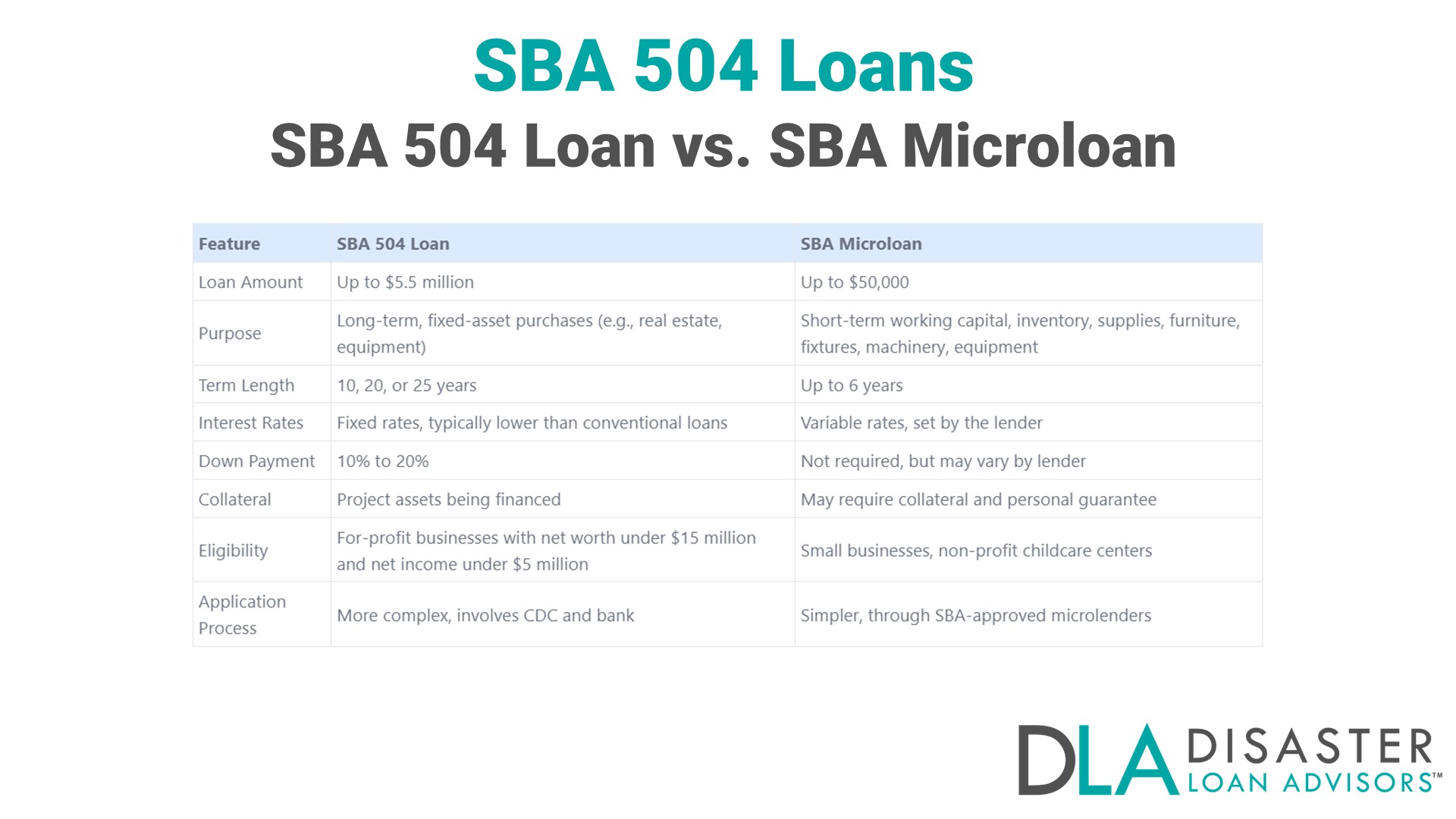
To qualify for an SBA 504 loan in 2026, your business must operate as a for-profit company with a tangible net worth under $15 million and an average net income below $5 million after taxes for the preceding two years. Additionally, th...
To qualify for an SBA 504 loan in 2026, your business must operate as a for-profit company with a tangible net worth under $15 million and an average net income below $5 million after taxes for the preceding two years. Additionally, the project must create or retain jobs or meet specific public policy goals while financing owner-occupied real estate or long-term equipment.
Contents
The SBA 504 loan program remains the gold standard for economic development financing, providing small businesses with long-term, fixed-rate funding for major fixed assets. Unlike the more common 7(a) loan program, which is often used for working capital or business acquisitions, the 504 program is specifically designed to promote community growth and job creation through capital investment. Because these loans involve a partnership between a private lender, a Certified Development Company (CDC), and the borrower, the eligibility requirements are multi-faceted, covering the business entity, the project type, and the individual owners.
The Unique Structure of SBA 504 Financing
Understanding the requirements starts with understanding the "50/40/10" structure. This tripartite arrangement is what allows for the low down payments and competitive rates that define the program.
Typically, a Third-Party Lender (usually a commercial bank or credit union) provides a conventional loan for 50% of the project cost. This lender holds the first lien position. A Certified Development Company (CDC), a non-profit corporation certified by the SBA to promote local economic development, provides 40% of the project cost through an SBA-guaranteed debenture. This CDC portion holds the second lien position. The Borrower contributes the remaining 10% as a down payment.
In 2026, this structure remains largely unchanged, though the "equity" requirement for the borrower can increase to 15% or 20% if the business is a startup (less than two years of operation) or if the project involves a "special-purpose" building, such as a hotel, gas station, or cold-storage facility. Understanding this structure is critical because the borrower must meet the underwriting requirements of both the private lender and the SBA/CDC simultaneously.
General Business Eligibility Requirements
Before evaluating a specific project, the SBA assesses the business entity itself. The 504 program is reserved for "small" businesses as defined by the SBA's size standards. While many SBA programs use North American Industry Classification System (NAICS) codes to determine size based on employee count or revenue, the 504 program primarily utilizes the Alternative Size Standard.
To be eligible under the Alternative Size Standard, the applicant business (including its affiliates) must meet two criteria:
- Tangible Net Worth: The business must have a tangible net worth of $15 million or less. Tangible net worth is calculated as total net worth minus intangible assets like goodwill, patents, and trademarks.
- Net Income: The average net income after federal income taxes (excluding any carry-over losses) for the two full fiscal years prior to the application must be $5 million or less.
Beyond size, the business must be a for-profit entity operating in the United States or its possessions. Non-profit organizations, lending institutions, speculative real estate firms, and businesses engaged in gambling or "adult" entertainment are generally excluded from 504 participation. The business must also demonstrate the ability to repay the loan from the cash flow generated by its operations, rather than relying on the liquidation of collateral.
Project and Asset Requirements
The SBA 504 loan is restricted to "fixed asset" financing. You cannot use these funds for working capital, inventory, or consolidating most types of unsecured debt. As of 2026, the authorized use of proceeds includes:
- Real Estate Acquisition: Purchasing existing land and buildings for business operations.
- Construction and Improvements: Building new facilities or renovating existing ones, including grading, street improvements, and landscaping.
- Long-Term Machinery and Equipment: Purchasing equipment with a useful life of at least 10 years, such as printing presses, medical imaging machines, or large-scale manufacturing lines.
- Debt Refinancing: In specific circumstances, the 504 program can be used to refinance existing commercial mortgage debt, provided the debt was originally used to acquire 504-eligible fixed assets and the business has been in operation for at least two years.
A critical requirement for real estate projects is the occupancy rule. To prevent the program from being used for speculative real estate investment, the SBA requires the borrowing business to occupy a significant portion of the property. For an existing building, the business must occupy at least 51% of the square footage. For new construction, the business must occupy 60% immediately, with plans to occupy up to 80% over the next 10 years, allowing for 20% to be permanently leased out to third parties.
The Public Policy and Job Creation Mandates
Because the SBA 504 program is funded through the sale of federally guaranteed debentures to private investors, it carries a mandate to provide a public benefit. Most projects satisfy this requirement through job creation or retention.
Generally, a project must create or retain one job for every $90,000 of the CDC/SBA portion of the loan. For small manufacturers, this requirement is more lenient, requiring one job for every $140,000. If a project does not meet the specific job creation numbers, it may still qualify if it meets one of several Community Development or Public Policy Goals. These include:
- Energy Reduction: Improving energy efficiency by at least 10% in existing buildings or using renewable energy sources (solar, wind, etc.) to generate at least 15% of the business's energy needs.
- Rural Development: Locating the project in a federally defined rural area.
- Minority, Veteran, or Woman-Owned Business: Supporting ownership within these demographics.
- Expansion of Exports: Increasing a business’s ability to compete in international markets.
Small manufacturers and projects that meet specific energy-related goals can often qualify for higher loan maximums—up to $5.5 million per project—and may be eligible for multiple 504 loans, whereas standard projects are often capped at a cumulative $5 million SBA exposure.
Personal Requirements for Owners
The SBA evaluates the individuals behind the business as closely as the business itself. Any individual owning 20% or more of the applicant business is required to provide a full personal guarantee. This means the SBA can look to personal assets if the business defaults on the loan.
Key personal requirements include:
- Character Evaluation: Owners must disclose any criminal history. While a criminal record is not an automatic disqualification, it requires a "Character Determination" (SBA Form 912) which can delay the process.
- Creditworthiness: While the SBA does not set a hard minimum credit score for 504 loans, the participating bank and the CDC will look for a history of responsible credit use. A score below 680 may require significant compensating factors.
- US Citizenship or Legal Status: Owners must be U.S. citizens or hold Lawful Permanent Resident (LPR) status. Non-citizens with certain work visas may qualify, but the requirements for proving "on-going" legal presence are stringent.
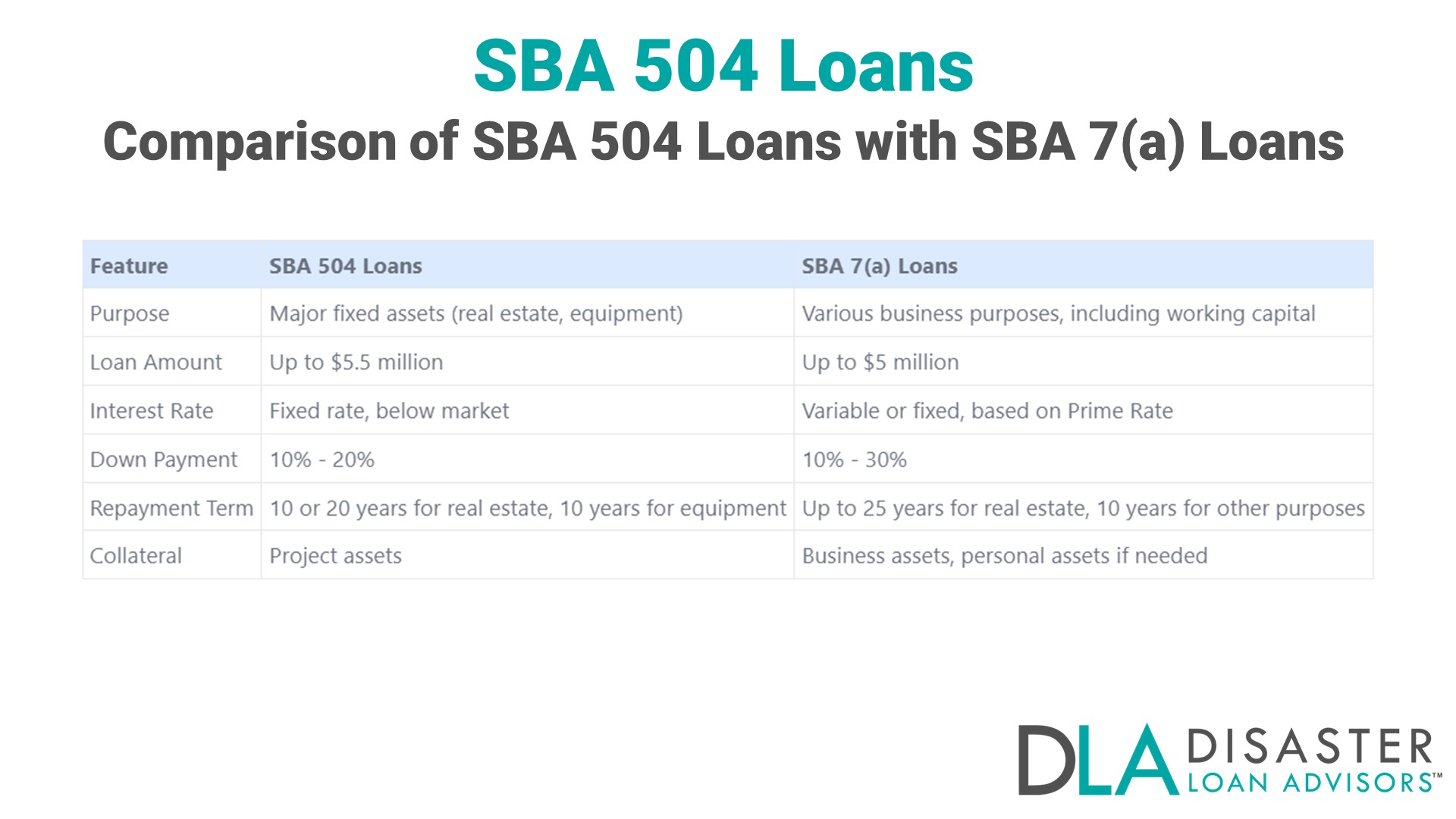
Comparison of SBA 504 and SBA 7(a) Requirements
| Feature | SBA 504 Loan | SBA 7(a) Loan |
|---|---|---|
| Primary Use | Fixed assets (Real Estate/Equipment) | Working capital, inventory, business buyouts |
| Loan Structure | 50/40/10 (Bank/CDC/Borrower) | Single lender with SBA guarantee |
| Down Payment | Typically 10% | Often 10% to 15% |
| Interest Rate | Fixed for the life of the loan | Often variable (Prime + Margin) |
| Max Loan Amount | Up to $5.5M (SBA portion) | Up to $5M (Total loan) |
| Occupancy | 51% (Existing) / 60% (New) | 51% (Existing) / 60% (New) |
| Fees | Approx 3% (usually rolled into loan) | 0% to 3.75% based on loan size |
Required Documentation for Application
The complexity of the 504 program is reflected in its documentation requirements. To meet 2026 standards, an applicant should have a comprehensive "loan package" ready. This typically includes:
- Financial Statements: Three years of federal income tax returns for the business and all affiliates, along with an interim financial statement dated within 90 days of the application.
- Personal Financial Statements: SBA Form 413 for all 20%+ owners, detailing personal assets, liabilities, and income.
- Project Information: A formal real estate purchase agreement or construction cost estimates. For equipment, detailed quotes or invoices are required.
- Organizational Documents: Articles of Incorporation, Bylaws, or Operating Agreements, along with a business license.
- Debt Schedule: A detailed list of all current business debts, including original amounts, current balances, and monthly payments.
Frequently Asked Questions
Can I use an SBA 504 loan to buy a business?
No, the SBA 504 loan is strictly for the purchase of fixed assets like real estate and machinery. If you are buying a business that includes real estate, you can use a 504 loan for the real estate portion, but the "goodwill" and "blue sky" value of the business must be financed through another vehicle, such as an SBA 7(a) loan or seller financing.
Is there a prepayment penalty on SBA 504 loans?
Yes. Because 504 loans are funded by 10, 20, or 25-year debentures, they carry a declining prepayment penalty for the first half of the loan term. For a 20-year loan, the penalty typically applies for the first 10 years. This makes the 504 loan less ideal for businesses that plan to flip the property or refinance again in the short term.
How long does the approval process take?
As of 2026, the typical timeline from application to funding is 60 to 90 days. The bank approval usually happens first, followed by the CDC's internal approval, and finally the SBA’s authorization. Because the 504 portion is funded through a monthly debenture sale, there is often a "funding gap" between when the project closes and when the SBA funds the CDC portion, which is usually covered by a bridge loan from the bank.
Can a startup qualify for an SBA 504 loan?
Yes, but the requirements are stricter. A startup (a business in operation for less than two years) is generally required to provide a 15% down payment instead of the standard 10%. Startups must also provide a detailed business plan with two years of financial projections and a clear "break-even" analysis.
What are the "Green" 504 requirements?
To qualify for the "Green" energy incentive, which allows for a $5.5 million loan limit regardless of job creation, a project must either reduce energy consumption by 10% compared to the previous facility or generate at least 15% of its own power through renewable sources. This requires an independent energy audit or architectural certification to verify the projected savings.
Strategic Recommendation
If your business is looking to stabilize its occupancy costs or invest in high-capacity equipment, the SBA 504 program is likely your most cost-effective option. Given the complexity of the job creation and public policy mandates, your first step should be to contact a Certified Development Company (CDC) in your specific region. They are the experts on SBA regulations and will act as your advocate throughout the process, coordinating with your bank and the SBA to ensure your project meets all eligibility criteria. Preparing your financial documentation and a clear project budget now will significantly accelerate your path to approval.
For more information, you can visit the Official SBA 504 Loan Site or consult the Code of Federal Regulations (CFR) Title 13, Part 120 for the legal framework governing these loans.
Image Gallery