Understanding New Jersey Welfare Auto Insurance Options
In New Jersey, the primary "welfare" auto insurance option is the Special Automobile Insurance Policy (SAIP), frequently referred to as the "Dollar-a-Day" plan. It provides a low-cost legal alternative for residents enrolled in Federal...
In New Jersey, the primary "welfare" auto insurance option is the Special Automobile Insurance Policy (SAIP), frequently referred to as the "Dollar-a-Day" plan. It provides a low-cost legal alternative for residents enrolled in Federal Medicaid with hospitalization, offering limited emergency medical coverage and a death benefit for approximately $365 per year.
Contents
New Jersey has some of the highest auto insurance premiums in the United States, which historically led to a significant number of uninsured drivers on the road. To combat this, the New Jersey State Legislature created specialized insurance tiers to ensure that even those with very limited financial resources can comply with the law and maintain a valid driver’s license. As of 2026, these options remain a critical safety net for the state’s most vulnerable populations.
The Special Automobile Insurance Policy (SAIP) Explained
The Special Automobile Insurance Policy (SAIP) is the most restrictive yet affordable insurance product available in New Jersey. It was specifically designed to assist low-income individuals who might otherwise drive without insurance. Because it is subsidized and targeted toward a specific demographic, it does not function like a traditional "Standard" or "Basic" policy.
The primary goal of SAIP is not to protect your vehicle or your assets, but to provide a mechanism for emergency medical treatment following an accident. By ensuring that the driver has at least some medical coverage, the state reduces the burden on "charity care" systems in hospitals. However, drivers must understand that this policy offers zero liability coverage. If you cause an accident that damages someone else's car or injures another person, SAIP will not pay for those damages, and you can be held personally liable in a court of law.
Eligibility Requirements for SAIP in 2026
Eligibility for the SAIP is strictly regulated by the New Jersey Department of Banking and Insurance (DOBI). You cannot simply choose this plan because you want to save money; you must meet specific criteria regarding your public assistance status.
- Medicaid Enrollment: You must be currently enrolled in Federal Medicaid with hospitalization. It is important to note that not all NJ FamilyCare or Medicaid programs qualify. The specific program must include inpatient hospital stay coverage.
- Vehicle and Driver Limitations: The policy only covers individuals. If multiple people in a household want SAIP, each must be enrolled in Medicaid and each must have their own policy. Furthermore, only one SAIP policy is allowed per person.
- Licensing and Registration: The applicant must have a valid New Jersey driver’s license and the vehicle must be registered in New Jersey.
- Verification: Insurance carriers verify Medicaid eligibility through the state’s database both at the time of application and at each renewal. If you lose your Medicaid eligibility mid-term, the policy remains in effect until the next renewal, at which point you must transition to a Basic or Standard policy.
Coverage Limitations and Benefits
Understanding what SAIP covers is vital to avoiding legal and financial catastrophes. Unlike standard policies that include Bodily Injury Liability and Property Damage Liability, SAIP is a "stripped-down" insurance product.
| Feature | Special Automobile Insurance Policy (SAIP) |
|---|---|
| Annual Premium | $365 (or $360 if paid in full upfront) |
| Emergency Medical Coverage | Up to $250,000 for catastrophic brain/spinal injuries |
| Standard Medical Coverage | Limited to emergency treatment immediately following an accident |
| Death Benefit | $10,000 |
| Liability for Others' Injuries | $0 (None) |
| Liability for Property Damage | $0 (None) |
| Collision/Comprehensive | Not available |
The Emergency Medical Component
The $250,000 medical benefit is reserved for catastrophic injuries, specifically those involving the brain or spinal cord. For other injuries, the policy only covers the treatment received in the emergency room immediately following the accident. Follow-up care, physical therapy, and long-term rehabilitation for non-catastrophic injuries are generally expected to be covered by the driver’s Medicaid benefits, which is why Medicaid enrollment is a prerequisite for the policy.
The Liability Gap
Because SAIP provides no liability coverage, it does not meet the "minimum" requirements that most other states demand. However, in New Jersey, the law recognizes SAIP as a valid form of insurance for registration purposes. Drivers should be aware that if they drive into a neighboring state like New York or Pennsylvania, they may not meet those states' minimum financial responsibility laws, potentially leading to significant legal trouble.
The Basic Policy: An Alternative for Low-Income Drivers
For those who do not qualify for Medicaid but still find Standard insurance premiums unaffordable, the New Jersey Basic Policy is the next step up. While often confused with "welfare insurance," the Basic Policy is available to anyone, regardless of income.
The Basic Policy was introduced under the Automobile Insurance Cost Reduction Act. It provides more protection than SAIP but significantly less than a Standard policy. It includes:
- Property Damage Liability: $5,000 per accident.
- Personal Injury Protection (PIP): $15,000 per person, per accident (with up to $250,000 for specific permanent injuries).
- Optional Bodily Injury Liability: Most carriers offer an option for $10,000, though it is not mandatory.
The Basic Policy is an appropriate choice for individuals with few assets (like a home or significant savings) that could be seized in a lawsuit. In 2026, the Basic Policy remains a popular choice for young drivers or those with older vehicles of low value.
How to Apply for SAIP in New Jersey
Applying for the "Dollar-a-Day" insurance is not done through traditional online quote engines. Because it is a specialized product, you must work through specific channels.
Step 1: Gather Documentation
You will need your current Medicaid identification card, your New Jersey driver’s license, and your vehicle registration. Ensure your Medicaid status is active; if it is pending renewal, the insurance carrier will likely reject the application.
Step 2: Locate an Agent
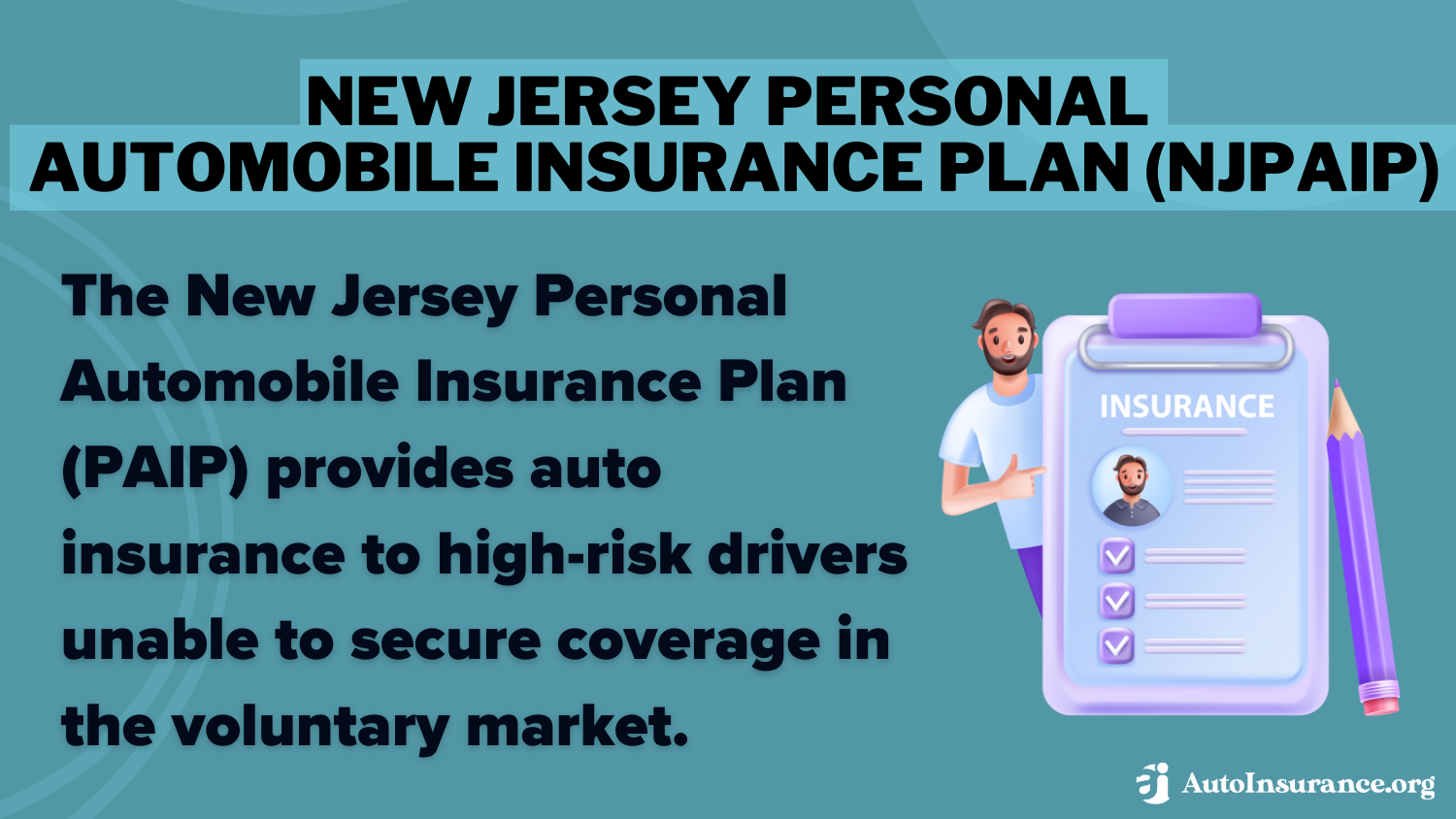
Most private insurance agents in New Jersey can write a SAIP policy, but they often do not advertise it because the commissions are negligible. If you have trouble finding a local agent willing to help, you can contact the New Jersey Personal Automobile Insurance Plan (PAIP). PAIP is the state’s "assigned risk" mechanism that ensures high-risk or low-income drivers can find coverage.
Step 3: Choose Payment Terms
In 2026, the standard rate is $365 per year if paid in two installments, or $360 if paid in full at the start of the term. There are no monthly payment plans for SAIP. This one-time or two-time payment structure is designed to keep administrative costs low.
Legal Considerations and the Right to Sue
A critical technical detail of both SAIP and the Basic Policy is the Limitation on Lawsuit (also known as the "Tort Threshold"). By choosing these low-cost options, you are generally bound by a limited right to sue.
Under the Limited Right to Sue, you cannot sue another driver for "pain and suffering" unless your injury falls into one of several specific categories, such as:
- Loss of a body part.
- Significant disfigurement or scarring.
- Displaced fractures.
- Loss of a fetus.
- Permanent injury (within a reasonable degree of medical probability).
- Death.
This is a trade-off: in exchange for extremely low premiums, the state limits the litigation costs within the insurance system.
Common Mistakes to Avoid
When navigating welfare-based auto insurance options, many residents fall into traps that can lead to a lapse in coverage or legal penalties.
- Failing to Renew Medicaid: If your Medicaid expires, your SAIP policy is no longer valid upon renewal. Many drivers forget to update their Medicaid status and find themselves uninsured when the insurance company runs a background check.
- Assuming Full Coverage: Parents often buy SAIP for their children, thinking it covers the car. If a teenager crashes a car covered by SAIP, the insurance company will not pay a single cent toward repairing the vehicle or the other driver's car.
- Adding Drivers without Medicaid: You cannot add a roommate or a spouse to a SAIP policy unless that person also has Medicaid and is specifically named.
Frequently Asked Questions
Can I get SAIP if I am on Social Security but not Medicaid?
No. Enrollment in Federal Medicaid with hospitalization is a hard requirement. Social Security benefits, Disability (SSDI), or standard Medicare without Medicaid do not qualify you for the $365 Special Automobile Insurance Policy. You would instead need to look at a Basic or Standard policy.
Does SAIP cover me if I am driving for Uber or Lyft?
Absolutely not. SAIP specifically excludes any commercial use of the vehicle. If you are involved in an accident while performing "delivery" or "rideshare" services, the claim will be denied, and your policy will likely be canceled for fraud or breach of contract.
What happens if I have an accident and it’s my fault?
Under SAIP, your insurance will not pay for the damage to the other person's vehicle or their medical bills. The other driver (or their insurance company) may sue you personally. If you have no assets, you may be "judgment proof," but a legal judgment can stay on your record for years and affect your future earnings.
Is the "Dollar-a-Day" insurance available in other states?
No. The SAIP program is unique to New Jersey. While other states have "Low Cost Auto Insurance" programs (such as California’s CLCA), the specific $365-per-year structure is a product of New Jersey state law and is only applicable to New Jersey residents.
Final Recommendation
If you are currently enrolled in Medicaid and find standard insurance premiums impossible to pay, the Special Automobile Insurance Policy (SAIP) is a vital tool to keep you legally on the road. However, it should be viewed as a temporary or "last resort" solution. Because of the total lack of liability protection, it leaves you financially exposed.
For those who can afford a slightly higher premium, the Basic Policy is a significantly safer option because it provides at least $5,000 in property damage liability. Always verify your current Medicaid status before applying, and contact the New Jersey Department of Banking and Insurance if you encounter any difficulty finding an agent to process your SAIP application.
Image Gallery