911 Calls in Onondaga County: Emergency Dispatch, Live Incident Logs, and Public Records
To report an immediate emergency threatening life or property anywhere in Onondaga County, call or text 911 immediately. For non-emergencies requiring police, fire, or emergency medical dispatch, dial (315) 425-2333. All emergency and...
To report an immediate emergency threatening life or property anywhere in Onondaga County, call or text 911 immediately. For non-emergencies requiring police, fire, or emergency medical dispatch, dial (315) 425-2333. All emergency and non-emergency calls throughout Syracuse and surrounding towns are processed centrally by the Onondaga County Department of Emergency Communications.
Contents
Crucial Dispatch Information
If you dial 911 accidentally, stay on the line. Dispatchers must verify your safety. Hanging up forces emergency operators to call you back or deploy field units to confirm whether an active threat or medical crisis is underway at your physical location.
How Emergency Communications Operate in Onondaga County
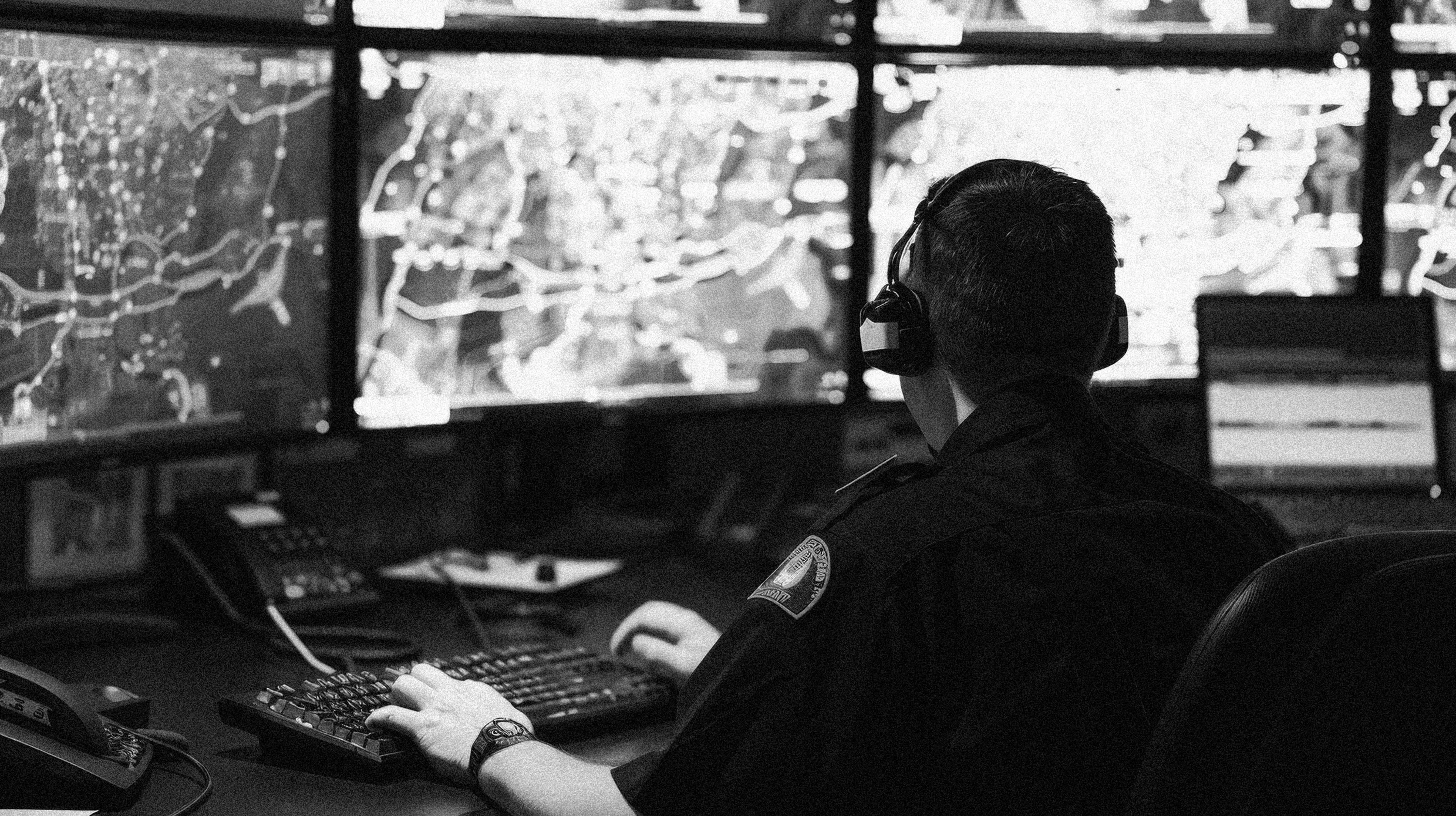
Emergency communications across Onondaga County operate through a consolidated Public Safety Answering Point (PSAP) administered by the Onondaga County Department of Emergency Communications. Situated in Syracuse, this centralized communications center serves as the nerve center for all 911 calls originating across the county's roughly 800 square miles, including the City of Syracuse, 19 surrounding towns, and 15 incorporated villages.
When an individual dials 911 from an Onondaga County landline or cellular tower, the call routes straight to emergency communications specialists certified through the New York State Division of Criminal Justice Services and the Association of Public-Safety Communications Officials (APCO). These dispatchers coordinate operations across dozens of separate responding agencies simultaneously:
- Law Enforcement Agencies: The Syracuse Police Department, the Onondaga County Sheriff’s Office (encompassing both patrol and civil divisions), the New York State Police (Troop D), and municipal departments such as Camillus, Cicero, DeWitt, Geddes, and Manlius.
- Fire Departments: The Syracuse Fire Department alongside more than 50 independent volunteer fire departments, joint fire districts, and municipal departments spanning rural and suburban regions from Clay and Cicero down to Pompey, Tully, and Skaneateles.
- Emergency Medical Services (EMS): Advanced Life Support (ALS) and Basic Life Support (BLS) operations coordinated alongside municipal ambulances, commercial providers like American Medical Response (AMR), and hospital networks including Upstate University Hospital, Crouse Health, and St. Joseph's Health.
Dispatchers use specialized Computer-Aided Dispatch (CAD) systems integrated with geographical information systems (GIS) mapping. CAD dynamically identifies which emergency resources are closest and best equipped based on priority coding, real-time vehicle location (AVL), and clinical triage protocols.
When to Call 911 vs. the Non-Emergency Number (315-425-2333)
One of the largest drains on local dispatch infrastructure involves non-urgent calls directed to 911 lines. Onondaga County manages this volume through a strict bifurcated system: priority 911 emergency trunks and the non-emergency dispatch line: (315) 425-2333.
Both systems terminate within the same dispatch center and are answered by trained emergency communications staff. However, dialing the dedicated 10-digit non-emergency number ensures that life-threatening crises take immediate operational precedence on the primary emergency switches.
True 911 Emergencies
A true emergency involves an active, ongoing, or imminent threat to life, health, or property. Call 911 for:
- Active crimes in progress (break-ins, physical assaults, armed robberies).
- Visible fires, smoke in a residential or commercial building, or active gas leaks.
- Severe medical distress, including chest pain, stroke symptoms, uncontrolled bleeding, overdose, or respiratory arrest.
- Motor vehicle collisions involving personal injury, vehicle entrapment, or lanes completely blocked on major corridors like I-81, I-690, or the NYS Thruway (I-90).
- Domestic disturbances where physical harm has occurred or remains an immediate risk.
Non-Emergency Dispatch Situations
Call (315) 425-2333 when an incident requires a sworn officer, firefighter, or public safety investigator, but no immediate physical threat exists:
- Crimes committed in the past where the perpetrator has left the scene (past vehicle break-ins, property damage, delayed theft reports).
- Noise complaints, public nuisances, or non-threatening disputes between neighbors.
- Non-injury motor vehicle accidents where vehicles can be safely driven to a shoulder or parking area.
- Animal control issues, barking dogs, or wildlife concerns that do not threaten human safety.
- Routine wellness checks on relatives or acquaintances when no acute medical crisis is known.
Onondaga County Public Safety Dispatch & Agency Contact Directory
The following directory outlines official contact pathways for public safety and administrative services throughout Onondaga County.
| Department / Agency | Operational Scope | Primary Purpose | Contact Details |
|---|---|---|---|
| Emergency Communications (911) | Countywide (All Municipalities) | Immediate, life-threatening emergency dispatch | Dial 911 / Text-to-911 |
| Non-Emergency Dispatch | Countywide | Police, Fire, or EMS dispatch for non-urgent incidents | (315) 425-2333 |
| Onondaga County E-911 Administration | Administrative & Operations | Administrative questions, agency operations, complaints | (315) 435-7911 |
| Syracuse Police Department (Headquarters) | City of Syracuse | Records division, administrative inquiries, community policing | (315) 442-5200 |
| Onondaga County Sheriff's Office | Countywide / Patrol District | Administrative lines, civil bureau, public records | (315) 435-2111 |
| Upstate Poison Center | Regional / Central NY | Suspected poisonings, chemical exposures, substance ingestion | 1-800-222-1222 |
| Central New York 211 | Human Services (Regional) | Housing, food assistance, non-police social services | Dial 211 or (844) 245-1922 |
| Suicide & Crisis Lifeline | National / Local Routing | Mental health emergencies, suicidal ideation, emotional crisis | Dial 988 |
Accessing Real-Time 911 Call Logs and Incident Blotters
Residents, journalists, and neighborhood groups frequently search for live 911 call logs, active emergency maps, or fire blotters for Onondaga County. The county balances public transparency against personal safety, medical privacy (HIPAA), and criminal investigation integrity.
Public Blotters vs. Encrypted Dispatches
Unlike jurisdictions that maintain public-facing, unredacted Computer Aided Dispatch web maps displaying active 911 calls in real-time, Onondaga County restricts raw tactical data streams. While certain volunteer fire departments publish automated incident response notifications on community portals or social feeds, law enforcement dispatching across Syracuse and Onondaga County relies on specialized trunked radio systems.
- Scanner Radio Traffic: The Onondaga County public safety radio system operates across Project 25 (P25) Phase II standards on an 800 MHz network. While broad dispatch channels for county fire and rural EMS often remain accessible via digital scanners, law enforcement tactical channels and specific operational talkgroups use digital encryption. This prevents tactical operations from being monitored by suspects during ongoing crimes.
- Syracuse Police Crime Blotters: The City of Syracuse maintains public open-data platforms and daily crime logs. These portals offer post-incident summaries, reported crimes, and arrest records rather than live, continuous 911 call streams.
- Local News & Fire Wire Feeds: Third-party regional incident accounts monitor unencrypted dispatch frequencies and publish notifications regarding major structure fires, severe highway closures, and high-visibility public safety incidents across Central New York.
How to Request 911 Call Recordings and Dispatch Transcripts
Recordings of 911 phone calls, dispatch radio audio, and CAD incident detail sheets are government records. In New York State, access to these files is strictly governed by the New York Freedom of Information Law (FOIL), found in Article 6 of the Public Officers Law, as well as New York State County Law § 308 (4).
Under County Law § 308 (4), recordings and transcripts of 911 calls are generally considered confidential and are not treated as general public records open for casual inspection. However, specific individuals hold legal standing to obtain these records, including:
- The individual who initiated the 911 call.
- The legal representative or attorney representing the caller.
- An individual named or directly involved in the incident (e.g., an individual injured in a motor vehicle collision).
- Parties pursuing legitimate civil or criminal litigation, provided appropriate legal mechanisms (such as a subpoena duces tecum or formal discovery order) are served.
Step-by-Step FOIL Application Process
Determine Eligibility
Draft Formal FOIL Request
Submit to County
Agency Review & Redaction
Record Production
Gather Necessary Case Details: Before submitting a records request, collect all identifying metrics: the exact date, time, and street location of the incident, the specific responding agency (e.g., Syracuse Police or Onondaga County Sheriff), and the incident or police report number if one was issued.
Submit the Request Through Official Portals: Formal FOIL requests for 911 audio, transcripts, or CAD incident sheets must be directed to the Onondaga County Law Department or the dedicated County FOIL Officer. Submissions can be processed through the official Onondaga County online FOIL portal or delivered in writing via certified mail to the John H. Mulroy Civic Center in Syracuse.
Statutory Review Period: By law, the county agency must acknowledge receipt of your request within five business days. The agency will either grant the request, issue a formal denial explaining legal grounds, or provide an estimated date of completion if significant redactions are required.
Redaction Protocols: Under New York FOIL and federal privacy mandates, county attorneys will redact medical disclosures, identifying personal phone numbers, names of minors, social security numbers, and sensitive investigative details prior to releasing audio recordings or CAD logs.
Modern 911 Capabilities in Onondaga County
Over recent years, the Onondaga County 911 Center has deployed advanced Next Generation 911 (NG911) technologies to improve location precision and incident routing.
Text-to-911
Onondaga County fully supports Text-to-911. This service provides life-saving access for individuals who are deaf, hard of hearing, or speech impaired, as well as callers trapped in dangerous environments where speaking out loud would compromise their physical safety (such as home invasions or domestic violence situations).
Text-to-911 Protocol
- Open your mobile phone's messaging interface.
- Enter 911 in the recipient field without spaces, dashes, or punctuation.
- Enter your exact address or location and the specific emergency in the message body.
- Keep your text brief, direct, and free of slang, abbreviations, or emojis.
- Be prepared to answer follow-up questions sent by the dispatcher.
Note: While Text-to-911 functions reliably across all major cellular carriers in Onondaga County, voice calls remain the fastest way for dispatchers to assess a caller's status and relay instructions.
Location Tracking and Advanced Geolocation
Modern cellular calls routed to the Onondaga County 911 Center take advantage of device-based hybrid location data delivered through platforms like RapidSOS. Instead of relying solely on broad cell tower triangulation (Phase II cellular data, which can yield a radius of several hundred meters), modern smartphones securely share precise on-device GPS coordinates directly to the dispatcher's CAD screen the instant 911 is initiated.
Dispatchers can also query supplementary profiles via services like Smart911, allowing residents to opt-in and associate medical profiles, floor plans, gate codes, or emergency contacts with their registered home or mobile phone numbers.
Best Practices When Placing an Emergency Call in Syracuse and Onondaga County
During high-stress emergencies, callers frequently experience tunnel vision or panic. Adhering to structured protocols ensures that the dispatch team receives critical facts without delay:
- State Your Location First: Before explaining what occurred, establish where you are. If a call drops, dispatchers can only send help if an address, intersection, highway milepost, or landmark is confirmed.
- Answer the Dispatcher's Triage Questions: Dispatchers follow scripted, medically and tactically vetted protocols. While an operator asks you questions about a patient's breathing or an offender's weapon, another dispatcher is already transmitting details to responding units over the radio. Answering questions does not delay the response.
- Know Your Specific Town or Village: Outside the City of Syracuse, Onondaga County is composed of distinct villages and towns with overlapping names and mailing addresses (e.g., Liverpool mailing addresses that physically reside within the Town of Salina or Clay). Clarify both the physical township and nearest cross street to prevent dispatch confusion.
- Do Not Hang Up Until Instructed: The dispatcher will walk you through critical pre-arrival instructions, such as performing hands-only CPR, controlling catastrophic bleeding, or evacuating a hazardous structure.
Frequently Asked Questions
What happens if I accidentally call 911 in Onondaga County?
Stay on the line and immediately tell the dispatcher that the call was an accident and you do not have an emergency. If you disconnect, dispatchers are mandated to call your number back. If you fail to answer, law enforcement officers will likely be dispatched to your location to conduct an in-person safety check.
Can I listen to Syracuse and Onondaga County 911 calls live online?
You can listen to unencrypted county fire and rural EMS dispatch radio feeds via public internet scanner directories. However, direct 911 telephone conversations between callers and operators are private and never broadcast live to the public. Additionally, Syracuse Police and Onondaga County Sheriff tactical channels use digital encryption to safeguard active field operations.
How do I report power outages or downed wires in Onondaga County?
If a power line is actively arcing, sparking, or presenting an immediate fire or life-safety risk, dial 911. For routine power outages or non-sparking service line disruptions, contact National Grid directly at 1-800-867-5222 rather than tying up emergency dispatch circuits.
How do I request a copy of a police report after an incident in Onondaga County?
Police incident reports are maintained directly by the investigating police department, not the 911 call center. For incidents handled by the Syracuse Police, submit a records request to the SPD Records Division at 511 S. State St. For incidents handled by county deputies, submit your request through the Onondaga County Sheriff's Office Records Bureau.
Can I report an emergency in Onondaga County using a language other than English?
Yes. The Onondaga County Department of Emergency Communications uses dynamic, 24/7 telephonic translation services. If you speak a language other than English, tell the dispatcher your language immediately (e.g., "Spanish," "Vietnamese," "Arabic"), and a certified interpreter will be connected to the call within seconds.
Managing Emergency Communications Effectively
Access to emergency public safety resources across Onondaga County relies on using the right communication channels for each situation. Save the Onondaga County non-emergency dispatch line—(315) 425-2333—into your mobile phone contacts for non-urgent incidents, reserving 911 strictly for active threats to life, health, and property. If your family, business, or neighborhood organization requires copies of public dispatch records, remember that all requests must proceed formally through the Onondaga County Law Department under New York State Freedom of Information Law and statutory confidentiality provisions.
Image Gallery