Dr. Bicknell’s Role in Modern Enterprise Architecture: Bridging Strategy and Execution
Dr. Phil Bicknell has played a pivotal role in modern enterprise architecture (EA) by shifting the discipline from a purely technical IT function to a strategy-led business capability. His influence focuses on "capability-based plannin...
Dr. Phil Bicknell has played a pivotal role in modern enterprise architecture (EA) by shifting the discipline from a purely technical IT function to a strategy-led business capability. His influence focuses on "capability-based planning" and the "Golden Thread," ensuring that every technological investment directly supports a measurable business outcome and long-term organizational agility.
Contents
In the landscape of 2026, enterprise architecture is no longer about static diagrams or ivory-tower governance. Instead, it is a dynamic, living system that allows organizations to pivot rapidly in response to AI-driven market shifts and global economic volatility. Dr. Phil Bicknell, a recognized authority with extensive experience at global entities like Microsoft and through independent strategic consulting, has been instrumental in defining how modern architects navigate this complexity. His work emphasizes that architecture is not an end in itself but a means to deliver specific, high-value business outcomes.
The Evolution of Enterprise Architecture under Bicknell’s Influence
Historically, enterprise architecture was dominated by rigid frameworks like the early iterations of TOGAF (The Open Group Architecture Framework) or the Zachman Framework. While these provided necessary structure, they often led to "analysis paralysis," where the speed of architectural documentation could not keep pace with the speed of business change.
Dr. Bicknell’s contributions helped catalyze the transition toward Agile Enterprise Architecture. This approach recognizes that in a modern enterprise, the architecture must be fluid enough to accommodate emerging technologies—such as generative AI agents and autonomous supply chains—while remaining anchored to core business principles. By advocating for architecture as a "design for a purpose," Bicknell moved the conversation away from "What servers do we need?" to "What business capabilities must we possess to win in our market?"
The Core Pillars of the Bicknell Approach
To understand Dr. Bicknell’s role, one must examine the specific methodologies he championed. These pillars have become standard practice for Chief Architects and Digital Transformation officers across the Fortune 500.
1. Capability-Based Planning (CBP)
At the heart of Bicknell’s philosophy is the concept of the Business Capability. A capability is a stable building block of an organization—it represents what a business does rather than how it does it. While processes, people, and technology change, the core capabilities (e.g., "Customer Relationship Management" or "Inventory Fulfillment") remain relatively constant. Dr. Bicknell’s role was to formalize how these capabilities are mapped to technology stacks, ensuring that IT spending is prioritized based on the criticality of the capability it supports.
2. The "Golden Thread" of Strategy
Bicknell frequently emphasizes the "Golden Thread," a conceptual line that connects an organization’s highest-level strategic goals down to the individual lines of code or infrastructure components. In 2026, this is managed through Digital Twins of the Organization (DTO). By maintaining this thread, architects can demonstrate exactly how a cloud migration or an API integration contributes to a specific KPI, such as reducing customer churn or increasing operational throughput.
3. Strategy-Led Design vs. Technology-Led Design
Many organizations fall into the trap of adopting technology because it is "cutting edge." Dr. Bicknell’s role has been to serve as a corrective force, advocating for Strategy-Led Design. In this model, the architectural roadmap is dictated by the business strategy. If the strategy is to become a low-cost leader, the architecture focuses on automation and efficiency; if the strategy is premium customer intimacy, the architecture prioritizes data integration and personalized experience layers.
Integrating Bicknell’s Principles with Modern Frameworks
While Dr. Bicknell’s insights are often viewed as a philosophical shift, they are practically integrated into the major frameworks used by architects today. His work complements and extends the following:
- TOGAF 10 Series: Bicknell’s focus on business outcomes aligns with the "Business Architecture" phase of the Architecture Development Method (ADM). He provides the practical "how-to" for making these abstract phases actionable.
- Scaled Agile Framework (SAFe): In SAFe environments, Dr. Bicknell’s role is seen in the concept of the "Architectural Runway." He advocates for building just enough architecture to support the next few increments of value delivery, preventing the technical debt that occurs when architecture is ignored.
- Wardley Mapping: Many of the strategic alignment techniques used by Bicknell-influenced architects utilize Wardley Mapping to understand the evolution of components from "Genesis" to "Commodity," allowing for better "buy vs. build" decisions.
Practical Implementation: Architecture in 2026
In 2026, the role of the enterprise architect has expanded into AI Governance and Orchestration. Following the groundwork laid by Dr. Bicknell, modern architects are using automated discovery tools to map their environments in real-time.
| Architectural Element | Traditional Approach (Pre-Bicknell Influence) | Modern Approach (2026 Standards) |
|---|---|---|
| Primary Goal | IT Standardization and Cost Reduction | Business Agility and Value Realization |
| Documentation | Static PDF Diagrams and Visio Maps | Real-time Digital Twins and Knowledge Graphs |
| Decision Making | Top-down, Rigid Governance Committees | Federated, Data-driven, and Strategy-aligned |
| Technology Focus | On-premise Monoliths and Siloed Apps | Cloud-native, Composable, and AI-enabled |
| Success Metric | System Uptime and Project Completion | Impact on Business KPIs and Capability Maturity |
Strategic Alignment and Value Stream Mapping
A significant part of Dr. Bicknell’s legacy is the focus on Value Streams. In a modern enterprise, value doesn't sit in a single department; it flows across the organization. For example, a "Lead-to-Cash" value stream involves marketing, sales, finance, and logistics.
Dr. Bicknell’s role in modern EA is to ensure that the architecture supports the flow of value. This involves:
- Identifying Bottlenecks: Using architectural analysis to find where data silos or legacy systems are slowing down a value stream.
- Composable Architecture: Encouraging the use of modular, interchangeable components (Packaged Business Capabilities or PBCs) that allow parts of a value stream to be upgraded without breaking the whole system.
- Data Sovereignty and Mesh: Ensuring that data is treated as a strategic asset that flows seamlessly between nodes of the value stream rather than being locked in a proprietary database.
Common Pitfalls in Modern Enterprise Architecture
Even with Dr. Bicknell’s clear frameworks, many organizations struggle with implementation. Understanding these pitfalls is essential for any senior architect.
- Over-Engineering the Capability Map: Many teams spend months defining every minute capability. The Bicknell-aligned approach suggests focusing on the "Critical 20%"—the capabilities that provide the most significant competitive advantage.
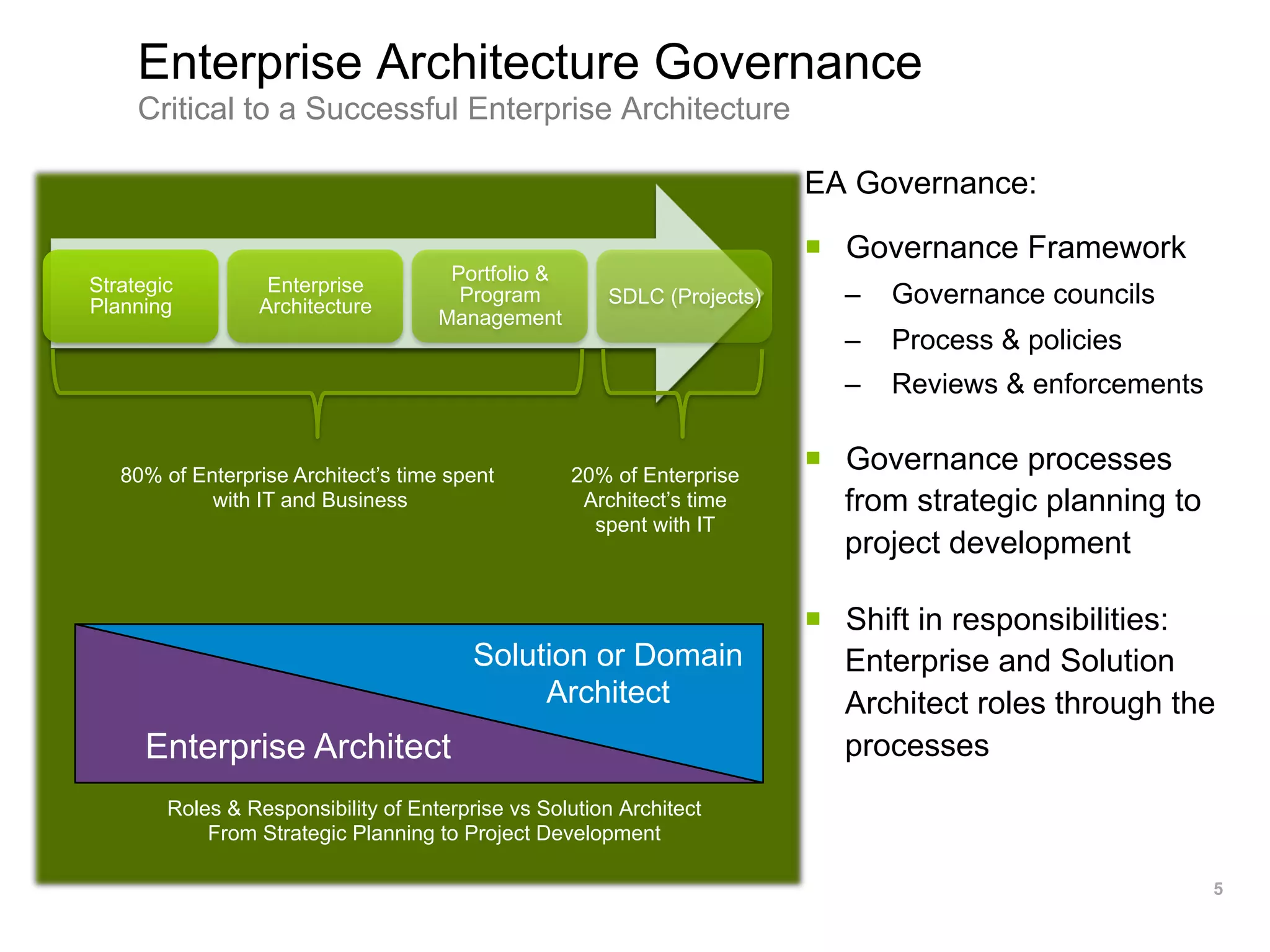
- Ignoring Culture: Architecture is 20% technology and 80% sociology. Dr. Bicknell has often highlighted that an architect’s most important tool is not a modeling language like ArchiMate, but the ability to communicate and influence stakeholders at the C-suite level.
- Losing the "Golden Thread": When technical teams move too fast, they often lose sight of why they are building a feature. Constant realignment with the business strategy is required to prevent "feature creep" and wasted resources.
The Future of the Chief Architect
As we look toward the later half of the decade, the "Bicknell-style" architect is becoming a Strategic Orchestrator. With the rise of autonomous systems, the architect no longer designs every detail. Instead, they set the constraints, the ethical boundaries, and the strategic objectives within which AI systems operate.
Dr. Phil Bicknell’s role in this transition cannot be overstated. He provided the industry with a vocabulary to talk about "Business-IT Alignment" in a way that is measurable and defensible. By shifting the focus from "what we have" to "what we need to be," he has ensured that enterprise architecture remains the most critical discipline for surviving and thriving in a volatile market.
Frequently Asked Questions
How does Dr. Bicknell’s approach differ from traditional TOGAF? While TOGAF provides a comprehensive process (the ADM), Dr. Bicknell’s approach focuses more heavily on the outcome and the strategic intent. He often simplifies the complex steps of traditional frameworks into a more agile, capability-focused model that emphasizes the "Golden Thread" between high-level strategy and technical execution.
What is "Capability-Based Planning" in this context? Capability-Based Planning (CBP) is the practice of planning an organization's future based on the capabilities it needs to achieve its goals. Instead of planning around specific projects or software, architects look at what the business needs to be able to do (e.g., "Real-time Fraud Detection") and then determine the people, processes, and technology required to deliver that capability.
Why is the "Golden Thread" important for ROI? The Golden Thread is the direct link between a technical investment and a business result. Without it, it is difficult to prove the Return on Investment (ROI) of IT projects. By following Dr. Bicknell’s principles, architects can show that "Investing $2M in this API Gateway supports our 'Omni-channel Excellence' capability, which is required to hit our 15% revenue growth target."
Is Dr. Phil Bicknell's model applicable to small businesses? Yes, though the scale is different. The core principle—that technology must serve a specific strategic purpose—is universal. Small businesses benefit from the "Strategy-Led Design" aspect by avoiding expensive "shiny object" technologies that do not contribute to their core value proposition.
How does modern EA handle AI integration using these principles? In 2026, AI is treated as a "Capability Enhancer." Architects use the Bicknell model to identify which business capabilities will gain the most competitive advantage from AI (e.g., Predictive Analytics for Supply Chain). They then design the architectural "scaffolding"—such as data pipelines and ethical guardrails—to support those specific AI use cases.
Practical Recommendation
For organizations looking to adopt Dr. Bicknell’s methodology in 2026, the first step is to conduct a Capability Heat Map. Identify your organization's top 10 core capabilities and assess their current maturity against your 3-year strategy. If a capability is strategic but low in maturity, that is where your architectural focus and budget must go. Avoid the temptation to modernize legacy systems that do not support a high-priority capability.
Image Gallery