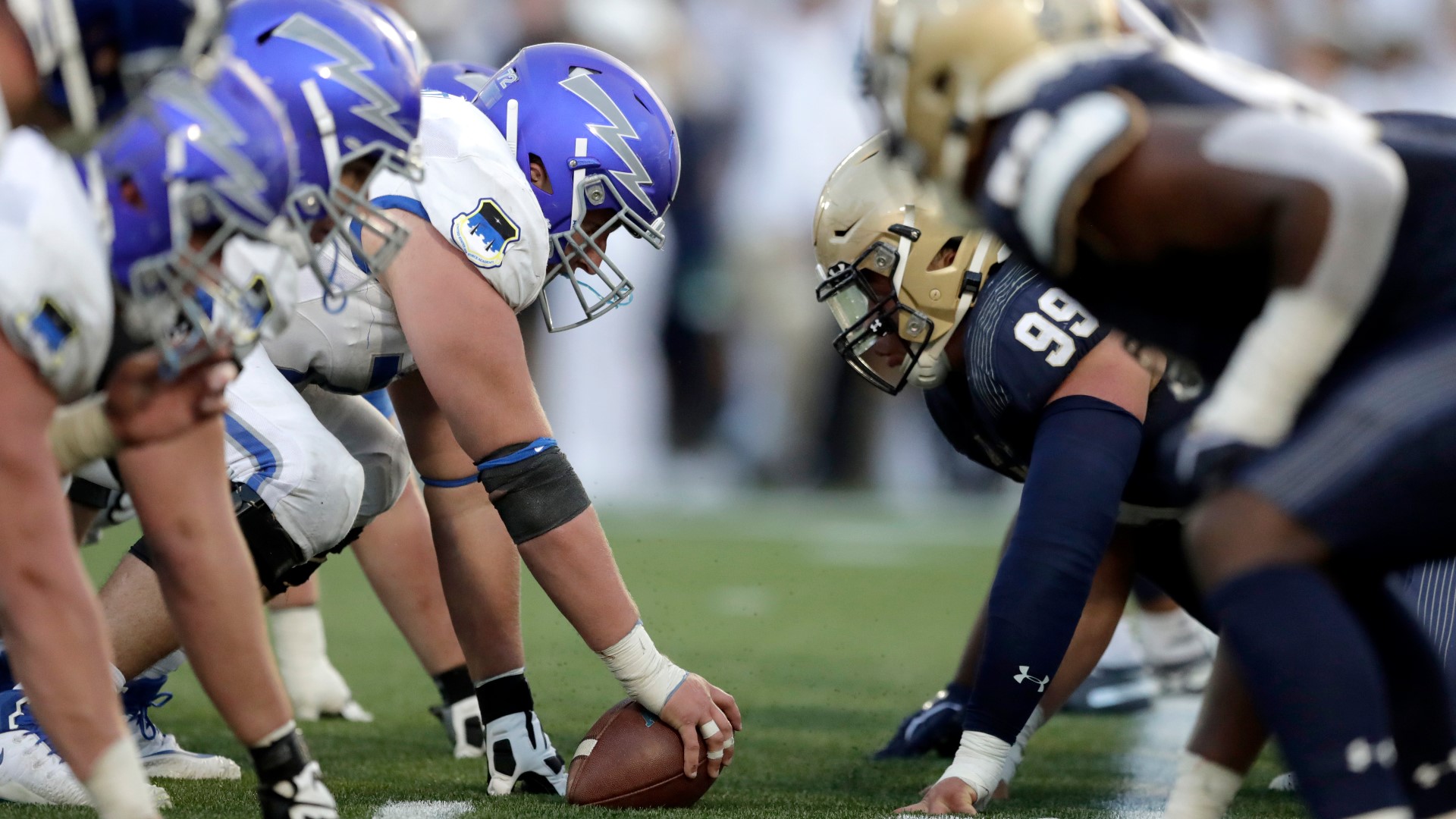
Army Football vs Air Force: The Ultimate Service Academy Rivalry
The Army-Air Force football matchup is an annual NCAA Division I Football Bowl Subdivision game that highlights disciplined, run-heavy tactical play, deep-rooted military heritage, and intense competition for the Commander-in-Chief's T...
The Army-Air Force football matchup is an annual NCAA Division I Football Bowl Subdivision game that highlights disciplined, run-heavy tactical play, deep-rooted military heritage, and intense competition for the Commander-in-Chief's Trophy. This historic service academy showdown captures national attention through its unique offensive schemes, high-stakes implications, and legendary sportsmanship.
Contents
Historical Context and Origins of the Rivalry
The fierce competitive landscape between the United States Military Academy at West Point and the United States Air Force Academy in Colorado Springs represents more than a standard athletic contest. While the Army-Navy game stands as the traditional conclusion to the regular season, the matchup between the Black Knights and the Falcons carries immense strategic weight within the broader scope of college football and military sports.
The Air Force Academy, established later than its sister institutions in 1954, first met Army on the gridiron in 1959. From these early meetings, a distinct identity emerged. Unlike modern powerhouse programs that rely heavily on multi-receiver spread offenses and high-tempo passing attacks, both Army and Air Force have historically grounded their identities in option-based offensive schemes. This tactical choice stems from institutional necessity: service academy players typically possess lower average weight distributions compared to major Power Four conference linemen due to strict military physical standards. Consequently, these programs leverage precise execution, deceptive blocking angles, and triple-option mechanics to neutralize size disadvantages against larger opponents.
Over the decades, the series has experienced fluctuating eras of dominance. Air Force enjoyed extended periods of success during the late 20th century under legendary coaches like Fisher DeBerry, utilizing quick-strike option variations that baffled conventional defenses. Meanwhile, Army has mounted significant resurgences in the modern era, particularly under head coach Jeff Monken, reasserting the dominance of the triple option on national television stages.
The Commander-in-Chief’s Trophy Dynamic
At the heart of every Army-Air Force game lies the battle for the Commander-in-Chief’s Trophy. Established in 1972, this coveted award is presented annually to the service academy that achieves the best record in head-to-head competition against the other two institutions: Army, Navy, and Air Force. If the teams tie in their round-robin series, the previous winner retains the trophy until a definitive victor emerges.
| Academy | Mascot | First Meeting with Air Force | Primary Offensive Scheme | Notable Rivalry Trophies |
|---|---|---|---|---|
| Army | Black Knights | 1959 | Triple Option / Flexbone | Commander-in-Chief's Trophy, Administrator's Trophy |
| Air Force | Falcons | N/A (Series Participant) | Inside/Outside Veering Option | Commander-in-Chief's Trophy, Beehive Boot |
| Navy | Midshipmen | N/A (Third Institution) | Triple Option | Commander-in-Chief's Trophy, N-Star Series |
The trophy itself is a multi-sided pewter sculpture resting on a wooden base, featuring engravings of the mascots and seals of the three participating academies. Winning the trophy requires navigating a grueling triangular rivalry where conventional scouting reports offer limited utility because all three teams practice similar offensive and defensive philosophies. Players spend years facing these specialized blocking schemes during spring practices and fall camps, making the eventual matchups physical chess matches defined by disciplined gap control and turnover margins.
Tactical Matchups: X's and O's of Service Academy Football
When analyzing Army football vs Air Force on the field, spectators witness a brand of football largely extinct in contemporary collegiate athletics. The proliferation of the spread offense across the NCAA has left few teams willing to commit entirely to run-heavy, clock-controlling offensive structures.
The Triple Option Engine
Both programs historically favor option-based systems, though nuances separate their execution:
- Army's Flexbone Attack: Army utilizes a flexbone formation featuring two slot backs positioned behind the offensive line, alongside a quarterback and a fullback. The play begins with the quarterback reading a primary defensive unblocked defender—often the defensive end—to decide whether to hand off to the fullback, keep the ball himself, or pitch to the trailing slot back.
- Air Force's Veering Scheme: Air Force frequently implements variations of the veer and pistol-option concepts. The Falcons often incorporate multi-receiver alignments that stretch the secondary vertically while maintaining a punishing interior running game through the B-gap.
Defensive Countermeasures
Defending these offenses requires absolute assignment discipline. Traditional defenses rely on aggressive pass rushes and gap-shooting linebackers, which can prove fatal against an option attack. If a defensive end crashes inside without reading his assignment, the quarterback pulls the ball and finds daylight on the perimeter. Consequently, defensive coordinators facing Army or Air Force must install specialized option-read rules, prioritizing containment over penetration, ensuring every runner is accounted for from snap to whistle.
Recruiting Realities and Roster Construction
Building a competitive roster for a service academy involves challenges entirely distinct from civilian universities. High school athletes recruited by Army or Air Force face rigorous academic prerequisites, medical evaluations, and a mandatory post-graduation service commitment as commissioned officers in the United States Armed Forces.
| Requirement Category | Army (West Point) | Air Force (USAF Academy) |
|---|---|---|
| Academic Standard | High school transcripts, standardized test scores (or waiver paths), rigorous STEM curriculum. | Rigorous high school GPA, advanced coursework, congressional nomination required. |
| Physical Standard | Candidate Fitness Assessment (CFA), stringent medical exams. | Candidate Fitness Assessment (CFA), flight physical qualifications for prospective pilots. |
| Service Commitment | Minimum 5 years of active-duty military service upon graduation. | Minimum 5 years of active-duty military service (longer for pilot training tracks). |
Despite these demanding constraints, both academies consistently field competitive teams capable of upsetting nationally ranked programs. Coaches target exceptionally intelligent, high-character student-athletes who excel at processing complex playbooks rapidly under physical fatigue. The resulting rosters feature cohesive units where individual accolades take a back seat to collective execution and team synchronization.
Cultural Significance and National Broadcasts
The cultural footprint of the Army-Air Force game extends far beyond regional sports markets. As part of the broader service academy sports landscape, these matchups embody the values of duty, honor, and country. Pregame ceremonies frequently feature military flyovers, parachute demonstration teams like the U.S. Army Golden Knights or the Air Force Wings of Blue, and profound displays of inter-service camaraderie.
When the scheduling aligns these teams for mid-season or late-season standalone windows—often broadcast nationally on major networks like CBS or ESPN—they capture the undivided attention of college football fans. These broadcasts offer a welcome contrast to modern high-scoring, penalty-heavy modern games, showcasing rapid-fire play clocks, minimal commercial interruptions, and sportsmanship that defines the military tradition.
Frequently Asked Questions
Who has the historical edge in the Army vs Air Force football series?
The head-to-head series between Army and Air Force has historically been closely contested, with momentum shifting across multiple decades. Air Force secured significant advantages during the late 20th century, while Army has claimed several crucial victories in recent years through hard-fought defensive battles and efficient option execution.
Do Army and Air Force always play each other during the regular season?
Yes. The game is an annual fixture within the Commander-in-Chief’s Trophy series, which also includes Navy. These three schools play each other every season in a round-robin format to determine inter-service football supremacy.
What is the Commander-in-Chief's Trophy?
Established in 1972, the Commander-in-Chief’s Trophy is awarded annually to the winner of the football series matching the teams from the U.S. Military Academy, the U.S. Naval Academy, and the U.S. Air Force Academy. It is considered one of the most prestigious minor trophies in all of American sports.
Why do Army and Air Force run similar offenses?
Both academies recruit student-athletes who generally match the physical and tactical profiles required for disciplined option football. Because service academy linemen often face significant weight disadvantages against massive Power Four conference opponents, running the triple option allows them to use leverage, blocking angles, and misdirection to level the playing field.
What are the military service commitments for players at Army and Air Force?
Student-athletes who attend West Point or the Air Force Academy sign up for a mandatory active-duty service commitment upon graduation, typically lasting a minimum of five years, followed by service in the reserve components. This sets them apart from traditional college football players entering the NFL draft immediately.
Conclusion and Next Actions
For fans looking to fully appreciate the Army-Air Force rivalry, exploring historical game archives, reviewing institutional recruiting standards, and tracking the annual Commander-in-Chief’s Trophy standings provide essential context. Whether you are analyzing upcoming tactical matchups, examining option-blocking schemes, or tuning into national broadcasts, understanding the rigorous demands placed on these student-athletes deepens your respect for one of college football's most enduring traditions.
Image Gallery