Who Are the Biggest Workers' Compensation Insurance Sellers?
The largest sellers of workers' compensation insurance in the United States include The Travelers Companies, Inc., The Hartford, AmTrust Financial, Chubb Limited, and Berkshire Hathaway Insurance Group. According to market data from th...
The largest sellers of workers' compensation insurance in the United States include The Travelers Companies, Inc., The Hartford, AmTrust Financial, Chubb Limited, and Berkshire Hathaway Insurance Group. According to market data from the National Association of Insurance Commissioners (NAIC), Travelers and The Hartford consistently lead the national market in direct written premium volume, closely followed by specialized commercial insurers and state-backed funds.
Contents
Market Overview: The Top Workers' Compensation Insurance Sellers
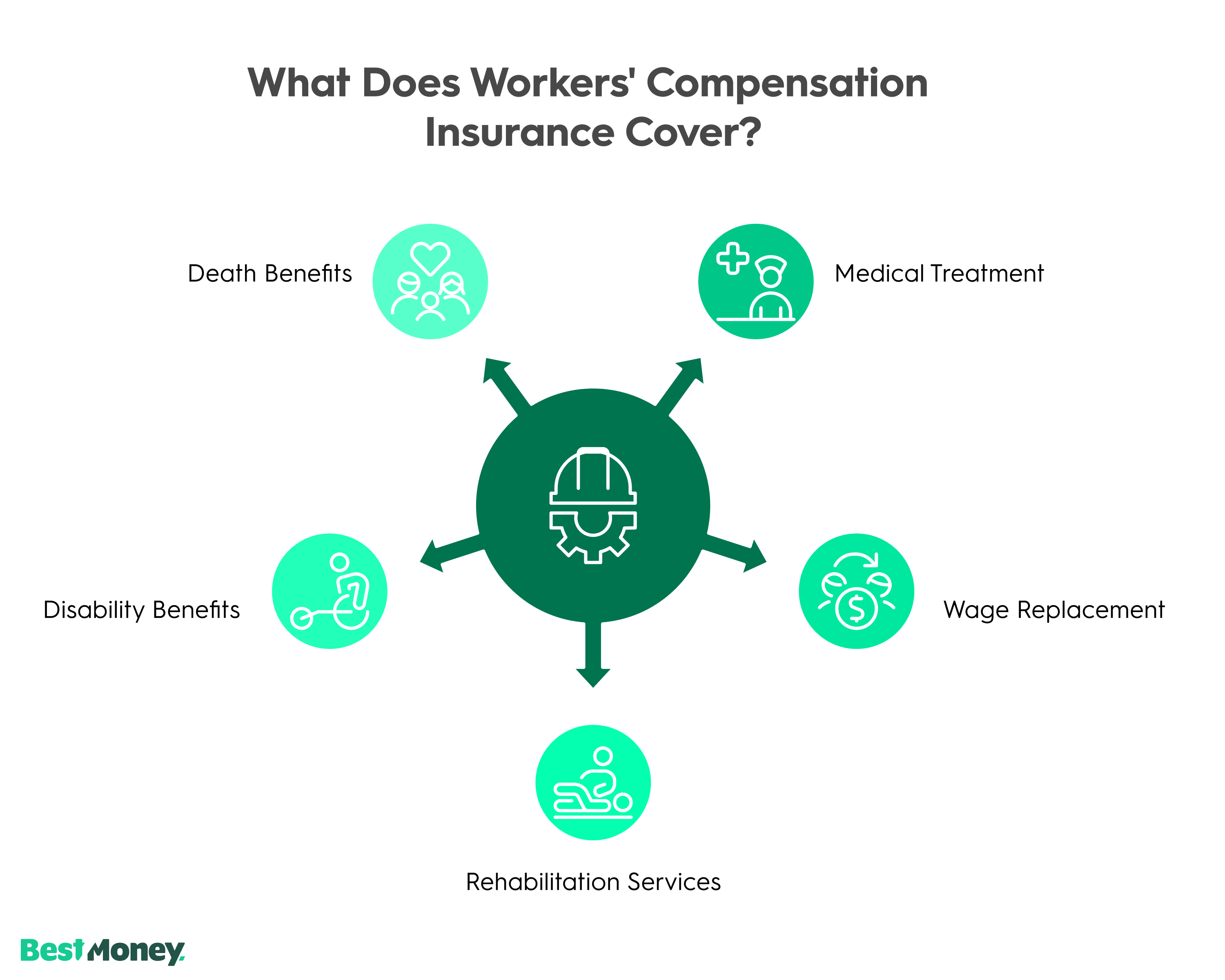
Workers' compensation is a compulsory line of commercial insurance in almost every U.S. state. Employers purchase coverage to provide wage replacement and medical benefits to employees injured on the job, in exchange for mandatory relinquishment of the employee's right to sue their employer for negligence.
Because workers' compensation coverage is mandated by state laws, the market is one of the largest lines of commercial property and casualty (P&C) insurance in North America. The market is populated by massive national multi-line insurance corporations, specialized regional writers, competitive state funds, and monopolistic state entities.
The table below outlines the top workers' compensation insurance providers in the United States based on nationwide market share and direct premiums written, referencing standard aggregated data from the National Association of Insurance Commissioners (NAIC).
| Parent Company / Insurance Group | Approx. National Market Share | Financial Strength Rating (A.M. Best) | Primary Target Market Segment |
|---|---|---|---|
| Travelers Group | 7.5% – 8.5% | A++ (Superior) | Small, Mid-Market & Large Enterprise |
| The Hartford Financial Services Group | 6.0% – 7.0% | A+ (Superior) | Small to Mid-Sized Businesses (SMBs) |
| AmTrust Financial Services | 5.0% – 6.0% | A- (Excellent) | Small Business, Low-to-Medium Hazard |
| Chubb Limited | 4.0% – 5.0% | A++ (Superior) | Mid-Market & Large Corporate |
| Berkshire Hathaway Insurance Group | 4.0% – 5.0% | A++ (Superior) | Small Business (GUARD) & Complex Risks |
| Liberty Mutual Insurance Group | 3.5% – 4.5% | A (Excellent) | Mid-Market & Enterprise |
| Zurich Insurance Group | 3.0% – 4.0% | A+ (Superior) | International & Large Commercial |
| Texas Mutual Insurance Company | 2.5% – 3.5% | A (Excellent) | Texas Businesses (Single-State Leader) |
| Old Republic General Insurance Group | 2.0% – 3.0% | A+ (Superior) | Specialized & Construction Industries |
Note: Market share estimates reflect aggregated commercial underwriting data across private U.S. markets. Individual rankings fluctuate slightly year over year based on premium adjustments and audit filings.
Analysis of the Leading Workers' Compensation Insurance Providers
Understanding who dominates the market requires examining how each carrier differentiates its underwriting, risk appetite, technology integration, and claims administration.
1. Travelers Group
The Travelers Companies, Inc. holds the largest single market share in the U.S. workers' compensation sector. Travelers underwrites policies across virtually every commercial sector, ranging from main-street retail businesses to multinational industrial conglomerates.
- Key Strengths: Travelers operates a sophisticated in-house medical management system and a massive network of occupational healthcare providers. Their industrial hygiene and risk-control consulting teams assist policyholders in mitigating workplace hazards before claims occur.
- Best Suited For: Mid-market and large enterprise businesses seeking custom loss-sensitive programs, self-insured retention options, and dedicated risk engineering.
2. The Hartford Financial Services Group
The Hartford is one of the oldest and most recognized brand names in small-business commercial insurance. The company holds a significant portion of the small-to-midsize business (SMB) market, driven in part by direct marketing, robust independent agent networks, and strategic distribution partnerships (such as its long-standing alliance with payroll processors like ADP).
- Key Strengths: The Hartford pioneered automated payroll-integrated billing ("Pay-As-You-Go"), allowing small business owners to pay workers' compensation premiums based on actual real-time payroll rather than estimated annual projections. This significantly minimizes year-end audit adjustments.
- Best Suited For: Small businesses, professional service firms, and growing enterprises looking for seamless payroll integration and streamlined digital policy management.
3. AmTrust Financial Services
AmTrust Financial specializes predominantly in small-business coverage, catering to low-to-medium hazard class codes such as restaurants, retail shops, professional offices, and light skilled trades.
- Key Strengths: AmTrust focuses heavily on low-complexity, high-volume small business accounts. They offer flexible payment schedules and work closely with wholesale brokers and independent agencies across the country.
- Best Suited For: Independent small business owners, micro-enterprises, and main-street commercial risks requiring competitive base rates.
4. Chubb Limited
Chubb is a global leader in property and casualty insurance, known for its disciplined underwriting and premium service offerings. In the workers' compensation arena, Chubb focuses primarily on mid-sized corporations, high-net-worth business owners, and large multinational entities.
- Key Strengths: Chubb excels at handling complex, multi-jurisdictional claims and executive protection risks. Their medical case management programs prioritize early intervention and specialized care to help injured workers return to duty efficiently.
- Best Suited For: Mid-sized and large enterprises, international organizations with U.S. operations, and companies with specialized operational environments.
5. Berkshire Hathaway Insurance Group
Operating through subsidiaries such as Berkshire Hathaway GUARD Insurance Companies, National Indemnity Company (NICO), and Berkshire Hathaway Homestate Companies, Warren Buffett’s conglomerate represents a major force in commercial coverage.
- Key Strengths: Exceptional financial backing and balance sheet stability (rated A++ by A.M. Best). Berkshire Hathaway GUARD focuses heavily on commercial lines for small-to-medium businesses, while other subsidiaries underwrite high-hazard industrial accounts and large retention programs.
- Best Suited For: Businesses seeking rock-solid carrier solvency, high-risk industrial operations, or flexible multi-line policy bundling.
6. Liberty Mutual Insurance Group
Liberty Mutual is a major global insurer offering commercial liability, property, and workers' compensation coverage. While historically dominant in large corporate accounts, Liberty Mutual provides scalable coverage structures for businesses of all sizes.
- Key Strengths: Deep expertise in complex claim management, safety research, and occupational ergonomics. Liberty Mutual's internal safety research facilities produce data-driven recommendations to help policyholders redesign hazardous workflows.
- Best Suited For: Mid-market manufacturers, construction contractors, logistics firms, and organizations requiring specialized safety engineering.
Private Insurance vs. State Funds vs. Self-Insurance
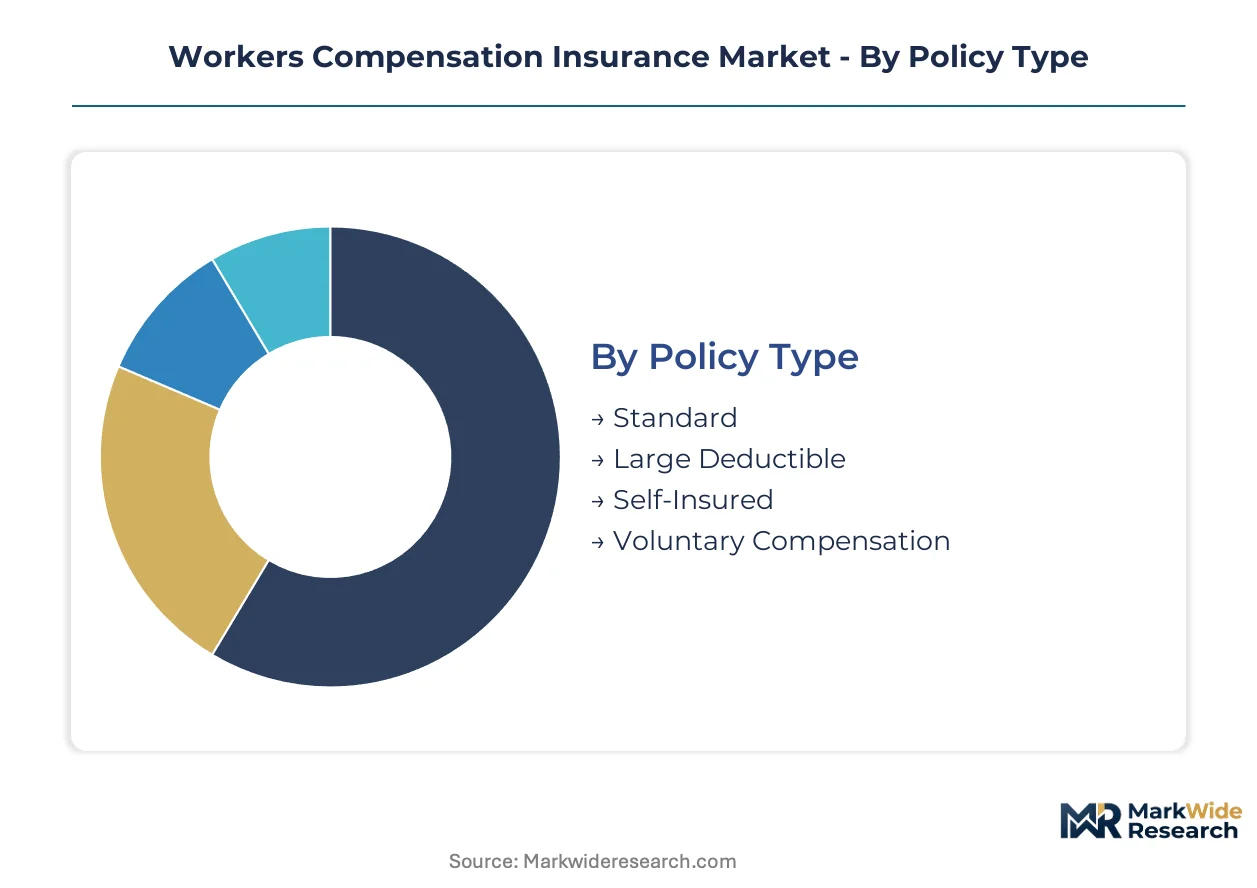
While national carriers write a large majority of policies, the structure of the workers' compensation market varies significantly depending on state regulation. Employers obtain coverage through three primary mechanisms:
- Workers' Compensation System
- Private Market Carriers
- National Insurers
- Regional Underwriters
- State Insurance Funds
- Monopolistic (Mandatory)
- Competitive (Market Choice)
- Self-Insurance
- Large Enterprise
- Group Trusts
- Private Market Carriers
1. Private Insurance Carriers
In most states (the "competitive" markets), private insurance companies compete for employer business based on price, service, risk control, and claims handling. Employers can work with brokers or agents to shop among carriers like Travelers, The Hartford, or local regional writers.
2. Monopolistic State Funds
Four U.S. states strictly prohibit private insurers from writing primary workers' compensation policies:
- Ohio (Ohio Bureau of Workers' Compensation)
- Washington (Washington State Department of Labor & Industries)
- North Dakota (North Dakota Workforce Safety & Insurance)
- Wyoming (Wyoming Department of Workforce Services)
Employers with operations or employees physically based in these four states must purchase coverage directly from the state-run insurance fund. Employers operating across state lines must purchase a separate multi-state policy or endorsement through private carriers to cover their operations in non-monopolistic states.
3. Competitive State Funds
Many states operate competitive state funds (such as State Compensation Insurance Fund in California, NYSIF in New York, and Texas Mutual in Texas). These entities compete directly with private insurance companies. They often act as a guaranteed source of coverage for high-risk employers or new businesses that private carriers decline to underwrite.
4. Self-Insurance and Group Self-Insurance Trusts
Large corporations with substantial capital reserves may apply for state authorization to self-insure their workers' compensation liabilities. Rather than paying insurance premiums, self-insured employers pay medical and indemnity claims directly out of operating income, usually hiring a Third-Party Administrator (TPA) to manage claims and purchasing excess stop-loss insurance to protect against catastrophic events.
How Employers Evaluate and Choose a Workers' Comp Seller
Selecting the right workers' compensation insurance carrier involves evaluating more than just the upfront premium quote. Because workers' compensation claims can extend over months or years, the financial reliability and operational quality of the carrier are critical.
Financial Strength Ratings
Policyholders should verify a carrier's credit and financial stability through independent rating agencies such as A.M. Best. Ratings of A- (Excellent) or higher indicate that the insurer possesses the capital reserves necessary to fulfill long-term claim obligations, even during economic downturns or major loss events.
Medical Provider Networks and Cost Containment
A carrier's preferred provider organization (PPO) network directly affects how quickly an injured employee receives quality care. Leading carriers maintain specialized occupational health networks, offer 24/7 nurse triage hotlines, and utilize pharmacy benefit managers (PBMs) to prevent over-prescription of narcotics and control medical inflation.
Experience Modification Rate (EMR) Management
An employer's Experience Modification Factor (also known as an E-Mod or EMR) adjusts their base premium upward or downward based on their historical loss record compared to industry averages. Top insurers provide proactive claims handling, light-duty return-to-work program templates, and aggressive fraud investigation to prevent unnecessary claims payments from inflating an employer's EMR.
Technology and Billing Flexibility
Modern business owners increasingly favor carriers offering direct integration with accounting software and payroll processing systems. Features to evaluate include:
- Pay-As-You-Go Billing: Premiums are automatically calculated and deducted per payroll cycle, matching insurance expense directly to actual labor costs.
- Digital Claims Reporting: Mobile apps and web portals allowing supervisors to report workplace injuries immediately from job sites.
- Audit Automation: Online portals that streamline annual policy audits by allowing secure digital uploads of payroll records.
Key Factors That Determine Workers' Compensation Costs
Regardless of which carrier writes the policy, premiums are calculated using a standardized baseline formula governed by rating organizations like the National Council on Compensation Insurance (NCCI) or independent state rating bureaus (e.g., the Workers' Compensation Insurance Rating Bureau of California).
$$\text{Premium} = \left( \frac{\text{Total Payroll}}{100} \right) \times \text{Classification Rate} \times \text{Experience Modification Rate (EMR)}$$
1. Classification Codes (Class Codes)
Employees are categorized into four-digit numerical class codes based on their specific job duties and associated workplace hazards. Rates vary dramatically by risk level:
- Clerical Office Employees (Code 8810): Low risk; typically costs pennies per $100 of payroll.
- Roofing / High-Rise Construction (Code 5551): High risk; can cost tens of dollars per $100 of payroll.
2. Payroll Base
Workers' compensation premiums are calculated per $100 of gross payroll paid to eligible workers. Independent contractors without their own coverage, uninsured subcontractors, and active business partners may also be included in audit payroll unless valid certificates of insurance (COIs) or statutory exemption forms are filed.
3. Experience Rating
The EMR compares a business's actual claim history against expected losses for businesses of similar size and classification:
- EMR of 1.00: Average risk profile (no adjustment).
- EMR below 1.00 (e.g., 0.82): Credit adjustment (18% premium discount for superior safety record).
- EMR above 1.00 (e.g., 1.35): Debit adjustment (35% premium surcharge due to higher historical losses).
Frequently Asked Questions
What is the single largest workers' compensation insurance company in the U.S.?
The Travelers Companies, Inc. consistently holds the largest share of the overall U.S. workers' compensation market by direct written premium. However, in specific state markets like California or Texas, state-chartered or competitive state funds (such as State Compensation Insurance Fund or Texas Mutual) may outrank national private carriers in local market share.
Can a business purchase workers' compensation insurance directly, or must they use a broker?
It depends on the carrier. Some insurers (like The Hartford or Berkshire Hathaway GUARD) sell policies directly to business owners online or over the phone. However, many major carriers operate strictly through independent insurance agents and brokers who assess risks, compare quotes across multiple sellers, and manage policy maintenance.
What happens if an employer operates in a monopolistic state?
If an employer has workers physically operating in Ohio, Washington, North Dakota, or Wyoming, they cannot cover those workers through standard private insurance policies. They must open an account with the appropriate state agency and purchase coverage directly from that state's fund. Employers with multi-state operations must obtain a private policy with a "Stop-Gap" endorsement or multi-state coverage wording for non-monopolistic operations.
How do small business owners save money on workers' compensation premiums?
Small businesses can reduce insurance costs by:
- Maintaining an active safety program to prevent workplace accidents.
- Implementing an effective light-duty return-to-work policy to resolve claims quickly.
- Ensuring all employees are classified accurately under correct NCCI class codes.
- Utilizing Pay-As-You-Go payroll billing to prevent unexpected audit surcharges.
- Obtaining certificates of insurance (COIs) from all independent contractors prior to starting work.
Are executive officers and business owners required to be covered under workers' compensation?
Statutory rules vary by legal structure and state law. In many states, corporate officers, members of limited liability companies (LLCs), and sole proprietors are automatically excluded or given the option to formally elect an exemption from coverage. However, in certain high-risk industries (such as construction), state laws may mandate that all working owners carry coverage regardless of entity type.
Recommended Next Steps for Business Owners
To secure appropriate workers' compensation coverage for your business:
- Audit Your Employee Classifications: Review your current policy declaration pages to verify that job roles, operational duties, and payroll allocations match correct state-approved classification codes.
- Review Multi-State Exposure: If you employ remote workers or out-of-state field staff, verify whether your existing carrier is licensed to write coverage in those states or if monopolistic fund registrations are required.
- Compare Quotes from Top Sellers: Request proposals from at least two national leaders (such as Travelers or The Hartford) as well as regional commercial carriers to compare loss-control resources, medical network access, and payment flexibilities.
- Inspect Contractor Certificates: Establish a strict vendor verification process to collect valid Certificates of Insurance from all subcontractors before work begins, avoiding unplanned audit adjustments.
Disclaimer: Workers' compensation regulations, insurance filing rules, and statutory exemptions vary significantly by jurisdiction. Business owners should consult a licensed commercial insurance agent, broker, or employment law professional to ensure compliance with applicable state laws.
Image Gallery