Nissan Sentra CVT Issues Explained: Symptoms, Causes, and Solutions
Nissan Sentra CVT issues primarily involve overheating, belt slipping, and "juddering" caused by the premature wear of internal components in the JATCO-sourced transmissions. Owners typically experience delayed acceleration, whining no...
Nissan Sentra CVT issues primarily involve overheating, belt slipping, and "juddering" caused by the premature wear of internal components in the JATCO-sourced transmissions. Owners typically experience delayed acceleration, whining noises, or the vehicle entering "limp mode." Most problems are resolved through transmission replacement, fluid cooling upgrades, or specialized software updates.
Contents
The Nissan Sentra has long been a staple of the compact sedan market, prized for its fuel efficiency and affordability. However, for over a decade, a significant shadow has hung over its reputation: the reliability of its Continuously Variable Transmission (CVT). Unlike a traditional automatic transmission that uses gears, the CVT relies on a belt and pulley system to provide seamless transitions between gear ratios. While this design is theoretically superior for fuel economy, the real-world application in the Sentra—particularly models produced between 2013 and 2019—has been plagued by mechanical failures and performance inconsistencies.
As of 2026, many of these vehicles remain on the road, some under extended warranties and others long past their coverage limits. Understanding the mechanics of these failures, the symptoms to watch for, and the legal recourses available is essential for any current owner or prospective buyer.
The Mechanics of the Nissan Sentra CVT
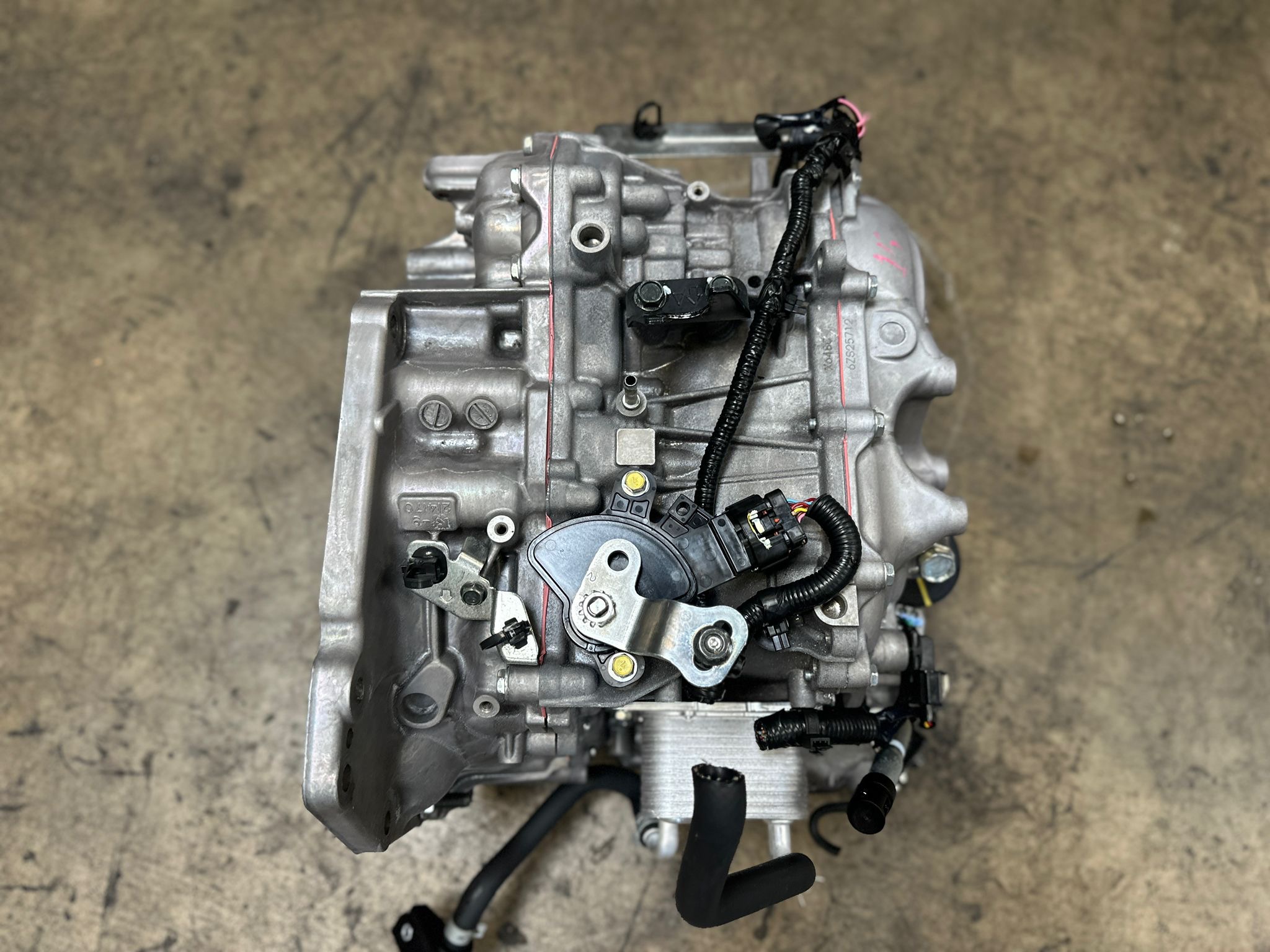
To understand why the Sentra’s transmission fails, one must first understand how it differs from a standard automatic. The Xtronic CVT, manufactured by Nissan’s subsidiary JATCO (Japanese Automatic Transmission Co.), does not have fixed gears. Instead, it uses a high-strength steel belt or chain running between two variable-diameter pulleys. By changing the width of these pulleys, the transmission can infinitely vary the gear ratio, keeping the engine in its most efficient power band.
The primary weakness in this design is friction and heat. Because the system relies on the friction between the steel belt and the pulleys to transfer power, any loss of hydraulic pressure or degradation of the transmission fluid leads to slipping. When the belt slips, it generates immense heat, which further degrades the fluid, creating a destructive feedback loop. In the Sentra, critics and engineers have pointed to undersized cooling systems and software logic that didn't adequately protect the hardware under high-stress conditions, such as stop-and-go traffic or steep inclines.
Identifying Common Symptoms of CVT Failure
Sentra owners often report a specific progression of symptoms. Recognizing these early can sometimes prevent a total roadside breakdown, though in many cases, once symptoms appear, internal damage has already occurred.
1. Transmission Judder or Shuddering
Often referred to as "the shake," this occurs most frequently during low-speed acceleration. The car may feel as though it is driving over rumble strips. This is usually caused by the steel belt slipping against the pulleys or a malfunctioning torque converter. In many instances, Nissan released Technical Service Bulletins (TSBs) suggesting that a software update could fix "judder," but if the mechanical surfaces of the pulleys are already scored, software cannot reverse the damage.
2. The "Limp Mode" Response
One of the most dangerous symptoms is the vehicle entering "limp mode" (also known as fail-safe mode). When the transmission control module (TCM) detects that the fluid temperature has exceeded a safe threshold, it artificially limits engine RPM and vehicle speed to prevent a fire or total catastrophic failure. This often happens on highways, leaving drivers unable to maintain speed with surrounding traffic.
3. Whining or Grinding Noises
A high-pitched whining noise that increases with engine RPM is a classic sign of a failing CVT. This is often attributed to a worn-out bearing or a failing fluid pump. If the noise transitions into a grinding sound, it typically indicates that metal shavings are circulating through the fluid, which will eventually clog the valve body and destroy the transmission.
4. Delayed Engagement and "Hunting"
When shifting from Park to Drive or Reverse, there may be a delay of several seconds before the transmission engages. Additionally, while driving, the engine may "rev" or surge without a corresponding increase in vehicle speed. This "motorboating" effect suggests the pulleys are not adjusting correctly or the belt is slipping significantly.
Chronology of Affected Nissan Sentra Models
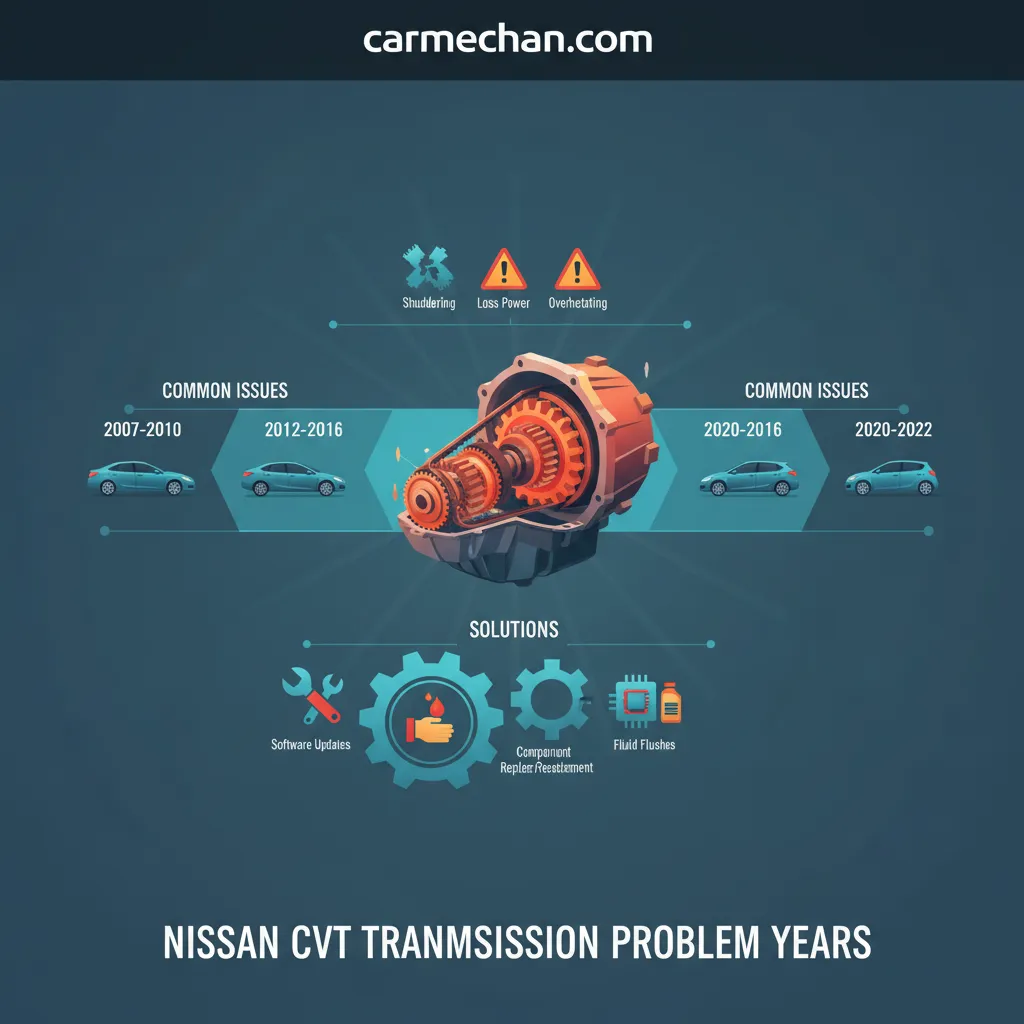
While CVT issues have been reported across multiple generations, the B17 generation (2013–2019) represents the peak of the controversy.
| Model Year Range | Transmission Type | Primary Known Issues | Estimated Risk Level |
|---|---|---|---|
| 2007 – 2012 | Early Xtronic CVT | Bearing failure, fluid overheating | Moderate |
| 2013 – 2017 | JATCO JF015E | Judder, belt slip, cooling failure | High |
| 2018 – 2019 | Refined Xtronic | Software bugs, solenoid failure | Moderate/High |
| 2020 – 2025 | New Generation CVT | Reduced failure rates, improved cooling | Low/Moderate |
| 2026 (Current) | Latest Iteration | Limited data; improved chain design | Low (predicted) |
The 2013–2017 models are the subject of the most intense scrutiny and were the primary focus of major class-action settlements. By 2020, with the introduction of the B18 generation, Nissan implemented significant hardware changes, including a wider gear ratio coverage and an improved oil pump, which appear to have mitigated the frequency of total failures, though the long-term reliability of these newer units is still being established as they age toward the end of the decade.
Root Causes: Why the Sentra CVT Fails
Technical analysis from independent transmission shops and automotive engineers points to three main culprits:
- Heat Dissipation: The original cooling system in many Sentras was insufficient for hot climates or heavy loads. Once the fluid reaches a certain temperature, its viscosity breaks down, leading to a loss of the hydraulic pressure required to keep the pulleys clamped onto the belt.
- Fluid Degradation: Nissan marketed the CVT fluid (NS-3) as "lifetime" fluid under normal driving conditions. However, "normal" conditions rarely exist in the real world. Without regular intervals for fluid exchange, microscopic metal particles from natural wear begin to act as an abrasive, wearing down the valve body.
- The Small-Pulley Design: The Sentra uses a smaller version of the JATCO CVT compared to the Maxima or Murano. This smaller unit has less surface area to distribute force, making it more prone to localized overheating and belt wear.
Legal Settlements and Warranty Extensions
Due to the volume of failures, Nissan has been forced to address these issues through the legal system. In the United States, several class-action lawsuits (such as Weckwerth v. Nissan North America) resulted in significant victories for consumers.
For many 2013–2018 Sentra owners, Nissan was required to extend the powertrain warranty on the transmission to 84 months or 84,000 miles, whichever comes first. In some cases, owners who paid for repairs out of pocket were eligible for partial or full reimbursement.
As of 2026, most 2013-2017 vehicles have aged out of these extended warranties. This makes the "secondary market" for these cars particularly risky. If you are purchasing a used Sentra from this era, it is vital to verify if the transmission has already been replaced with a newer, remanufactured unit, which often includes the updated "corrected" internal components.
Preventive Maintenance and Survival Strategies
If you own a Nissan Sentra and the transmission is currently functioning well, there are steps you can take to extend its lifespan. Standard dealership advice often conflicts with what specialized transmission experts recommend.
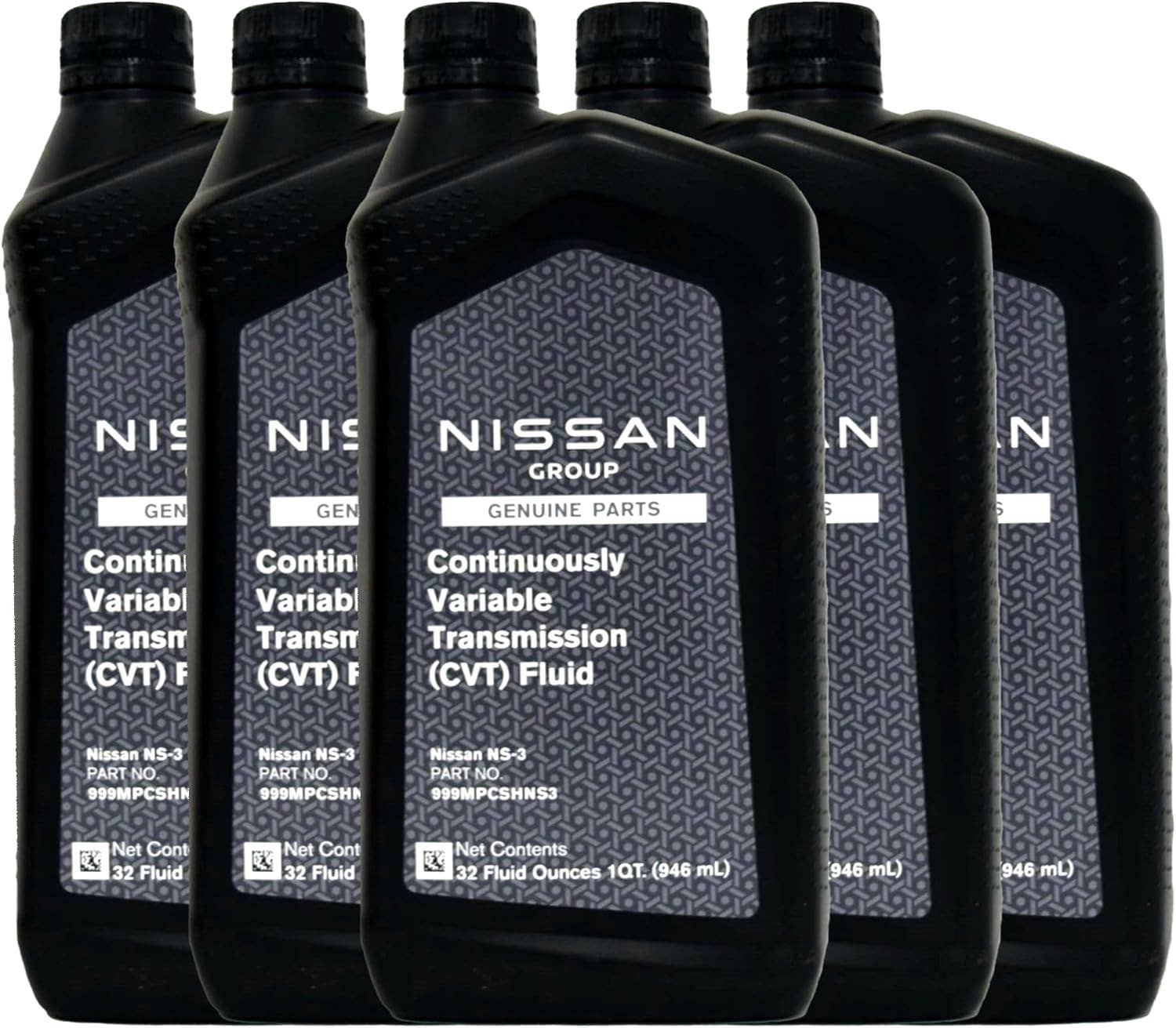
- The 30,000-Mile Rule: Ignore the "lifetime fluid" claim. Experts recommend a full CVT fluid exchange every 30,000 to 40,000 miles. Use only Genuine Nissan NS-3 CVT Fluid or a high-quality synthetic specifically rated for Nissan CVTs.
- External Oil Coolers: Some owners install an aftermarket auxiliary transmission cooler. This helps keep the fluid temperature below the threshold that triggers "limp mode," particularly in regions with high ambient temperatures.
- Software Updates: Ensure your vehicle has the latest TCM (Transmission Control Module) firmware. Nissan released several updates that change how the pulleys apply pressure during acceleration to reduce the "judder" effect.
- Driving Habits: Avoid "jackrabbit" starts. The highest stress on a CVT occurs when transitioning from a stop to motion. Smooth, linear acceleration reduces the likelihood of the belt slipping.
Cost of Repair vs. Replacement
When a Sentra CVT fails, the "fix" is almost always a total replacement. Because these units are highly integrated and require clean-room conditions for many internal repairs, most dealerships and independent shops do not rebuild them.
The cost for a remanufactured Nissan CVT installed usually ranges between $3,500 and $5,500 in 2026 dollars. While used transmissions from salvage yards are cheaper ($1,000 - $2,000), they are generally discouraged because the buyer has no way of knowing if the donor transmission is also on the verge of failure.
Frequently Asked Questions
Can I change the CVT fluid myself?
Yes, but it is more complex than a standard oil change. The Sentra CVT does not have a traditional dipstick in newer models; instead, it uses a leveling plug. The fluid level must be checked while the transmission is within a specific temperature range (monitored via an OBD-II scanner) to ensure accuracy. Overfilling or underfilling can both lead to immediate transmission damage.
How many miles does a Nissan Sentra CVT usually last?
Failure rates vary wildly. While some units fail as early as 40,000 miles, others have been known to last 150,000 miles with meticulous maintenance. On average, the "problematic" years (2013-2017) often see significant issues between 70,000 and 100,000 miles.
Is the 2020–2026 Sentra safe to buy?
The post-2020 models use an updated CVT design that has shown significantly fewer systemic failures. While no CVT is immune to wear, the current generation features better thermal management and a more robust steel chain. It is considered a much safer bet than the 2013–2019 generation.
Does a "Check Engine" light always come on when the CVT fails?
Not always. In the early stages of "judder" or slipping, the computer may not trigger a Malfunction Indicator Lamp (MIL). However, specialized diagnostic tools can often find "pending" codes, such as P17F0 (CVT Judder) or P17F1, which indicate the system has detected internal slippage.
Can I swap the CVT for a manual transmission?
While technically possible, it is economically impractical. A manual swap requires a different ECU, wiring harness, pedal assembly, and interior console. The cost would likely exceed the value of the vehicle.
Practical Recommendation
If you are currently experiencing symptoms of CVT failure in a Nissan Sentra, your first step should be to check your VIN against the Nissan CVT Settlement databases to see if you are eligible for any remaining warranty coverage or "goodwill" assistance. If the vehicle is out of warranty and requires a $5,000 replacement, evaluate the car's overall value. For many older Sentras, a transmission failure acts as a "total loss" event where the repair cost exceeds the car's market value. For those looking to buy a used compact car in 2026, it is highly recommended to prioritize models that have documented proof of CVT fluid changes every 30,000 miles or to look toward the 2020-and-newer models where the most egregious issues have been addressed.
Image Gallery