Crip Camp Summary: Plot, Key Figures, and Disability Rights Legacy
Crip Camp: A Disability Revolution is a critically acclaimed 2020 documentary that traces the rise of the American disability rights movement through the experiences of teenagers who attended Camp Jened, a Catskills summer camp, in the...
Crip Camp: A Disability Revolution is a critically acclaimed 2020 documentary that traces the rise of the American disability rights movement through the experiences of teenagers who attended Camp Jened, a Catskills summer camp, in the early 1970s. The film documents how these campers transformed into radical activists who spearheaded historic civil rights victories, including the 1977 504 Sit-In and the passage of the Americans with Disabilities Act (ADA) in 1990.
Contents
Overview and Context of Crip Camp
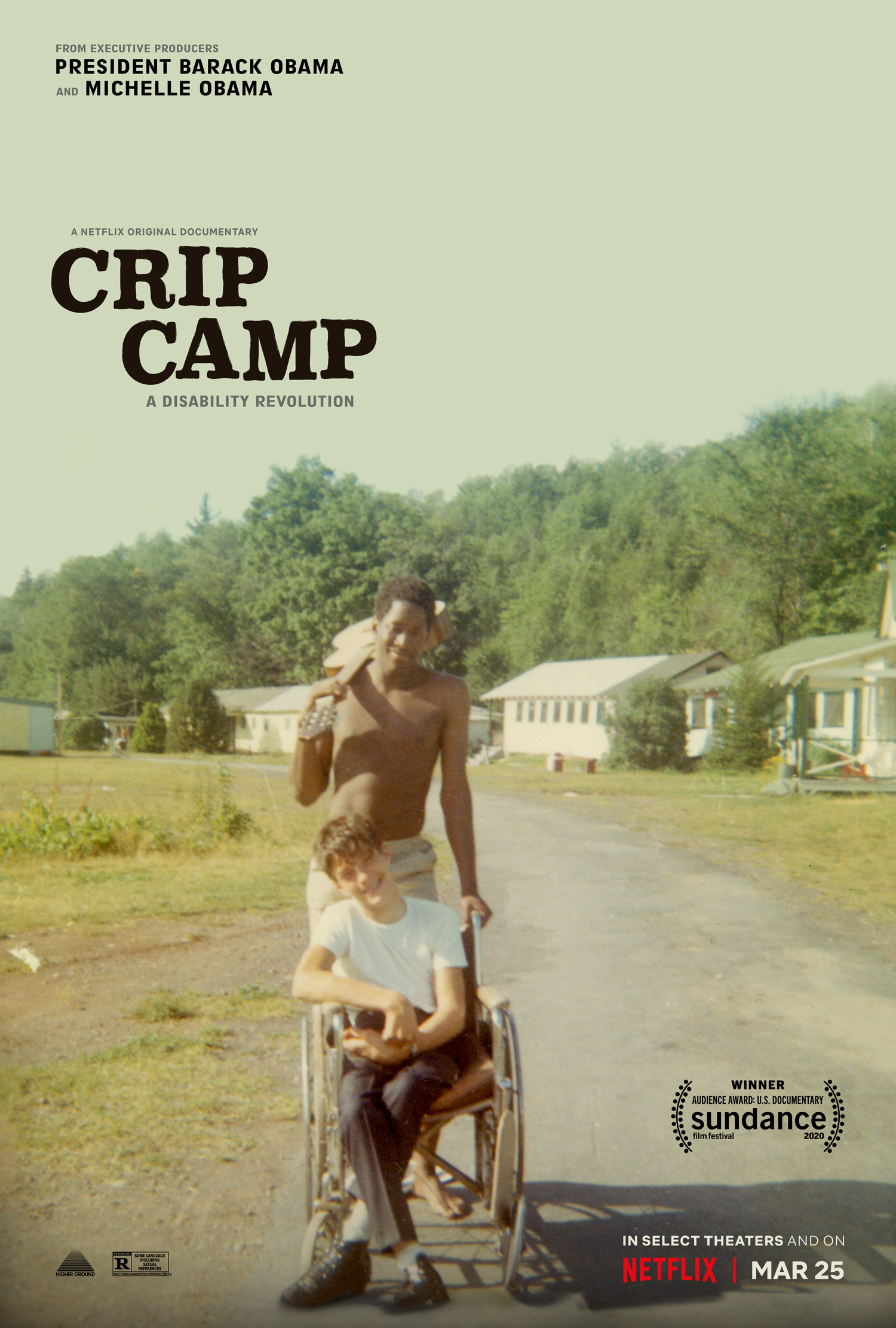
Directed by Nicole Newnham and James LeBrecht, and executive produced by Barack and Michelle Obama’s Higher Ground Productions, Crip Camp: A Disability Revolution offers an intimate look at a pivotal yet frequently overlooked chapter in American civil rights history. Released on Netflix in March 2020 after winning the Audience Award at the Sundance Film Festival, the documentary utilizes rare archival footage, personal photographs, and contemporary interviews to show how a summer camp created an incubator for political consciousness.
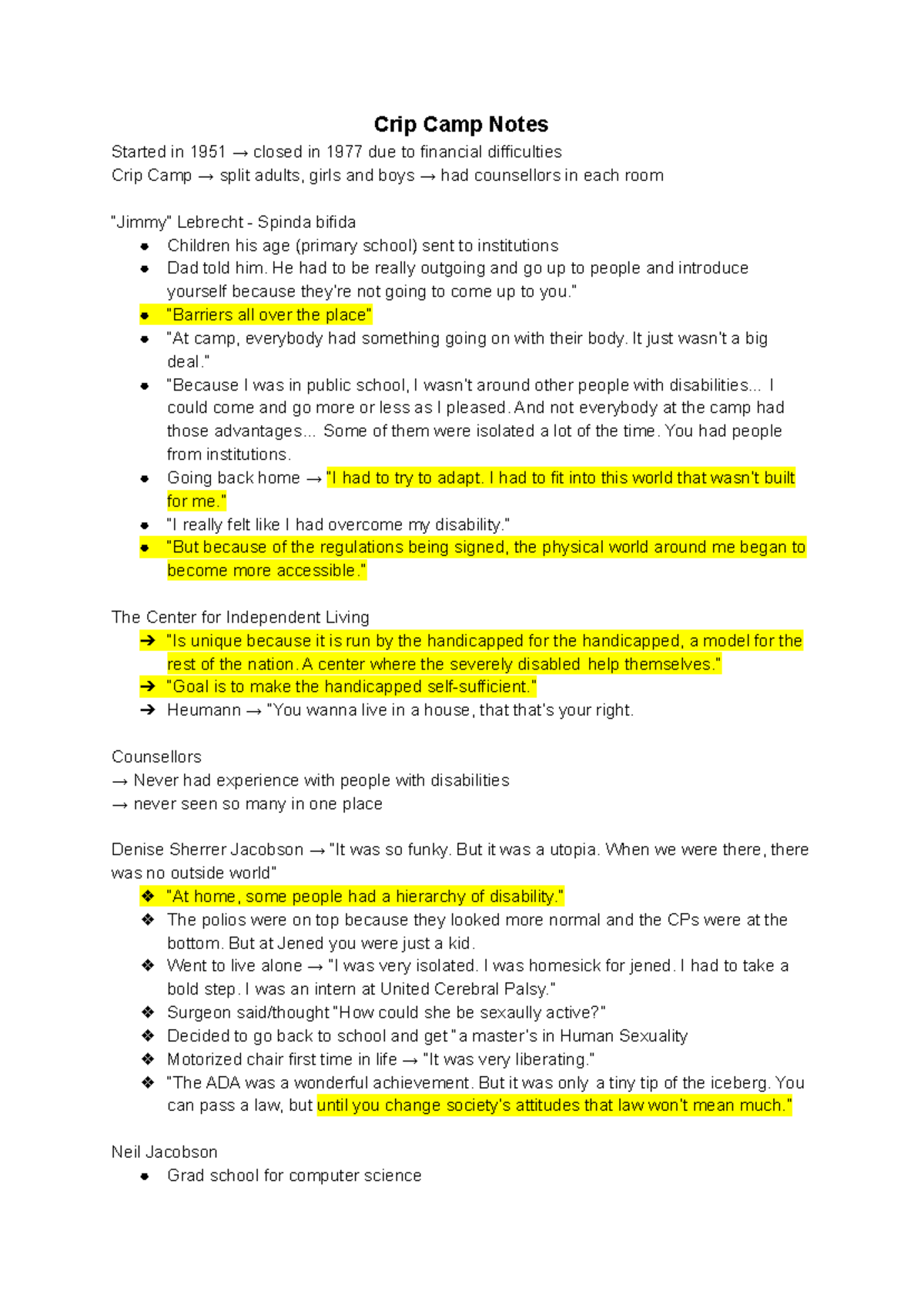
Camp Jened was founded in 1951 in Hunter, New York, near the Catskill Mountains. By the late 1960s and early 1970s, it operated as a free-spirited refuge run by camp counselors who were deeply influenced by the era's counterculture. Unlike the institutionalized or paternalistic environments most disabled youth experienced at the time, Camp Jened provided campers with unprecedented autonomy, socialization, and community. The environment allowed teenagers with spina bifida, cerebral palsy, polio, and other conditions to escape physical and social isolation, form romantic relationships, and recognize that their primary limitations stemmed from societal barriers rather than their own bodies.
- Camp Jened (1970s)
- Political Consciousness
- 1977 Section 504 Sit-In
- ADA of 1990
Narrative Breakdown: Plot and Timeline
The documentary follows a clear chronological structure divided into three primary narrative arcs: the summer camp experience, the battle for federal civil rights enforcement in the 1970s, and the ultimate legislative victory of the Americans with Disabilities Act in 1990.
Act I: Camp Jened and the Counterculture of Inclusion (Early 1970s)
The first third of the documentary centers on archival black-and-white video footage shot in the summer of 1971 by the People's Video Theater. Co-director James LeBrecht, who attended the camp as a teenager with spina bifida, provides personal context for what made Camp Jened unique.
In mainstream society during the mid-20th century, individuals with physical or intellectual disabilities were routinely institutionalized, hidden away by families due to social stigma, or subjected to severe architectural and institutional discrimination. Public transport lacked wheelchair lifts, sidewalk curb cuts were nonexistent, and public schools frequently turned away disabled students under the premise that they were "health hazards."
At Camp Jened, the traditional power dynamics between staff and campers dissolved. Counselors and campers played sports together, engaged in open discussions about sex, dating, and identity, and made group decisions regarding daily schedules. The documentary highlights how campers realized that their individual struggles—such as being denied access to public buildings or denied employment—were not isolated personal misfortunes, but systemic inequities shared by their peers.
Act II: The 1977 Section 504 Sit-In and Federal Advocacy
The narrative shifts from the Catskills to the streets of New York City and San Francisco as former campers reached young adulthood. Led by Judith "Judy" Heumann, a Camp Jened counselor who had previously sued the New York City Board of Education to become the city's first wheelchair-using teacher, the activists established an advocacy group called Disabled in Action (DIA).
The core conflict of the film's middle segment focuses on Section 504 of the Rehabilitation Act of 1973. Section 504 was a brief provision stating that no recipient of federal financial assistance could discriminate against an individual based solely on a disability. However, successive presidential administrations refused to issue the binding regulations required to enforce the law. By 1977, Joseph Califano, the Secretary of Health, Education, and Welfare (HEW) under President Jimmy Carter, delayed signing the finalized regulations, fearing high implementation costs.
On April 5, 1977, activists organized national demonstrations. In San Francisco, over 100 disabled individuals entered the federal HEW building and launched an indefinite occupation. Led by Judy Heumann, Corbett O'Toole, and Kitty Cone, the 504 Sit-In lasted 25 days, making it the longest nonviolent occupation of a federal building in U.S. history.
The documentary highlights the crucial role of coalition building during this period:
- The Black Panther Party provided hot, cooked meals daily to occupiers inside the building, recognizing disability access as a fundamental human rights issue.
- Labor Unions, specifically the International Association of Machinists, supplied mattresses, walkie-talkies, and logistical aid.
- The Butterfly Brigade, a local LGBTQ+ safety group, helped secretly transport communications and supplies into the building after federal officials shut off telephone lines and hot water.
Facing unbroken media attention, solidarity from diverse civil rights groups, and unwavering persistence from the occupiers inside, Secretary Califano capitulated and signed the Section 504 regulations unchanged on April 28, 1977.
Act III: The Passage of the Americans with Disabilities Act (1990)
The final movement of Crip Camp details the long path toward broader, nationwide legislation that extended non-discrimination protections beyond federally funded entities into the private sector, public accommodation, transportation, and telecommunications.
Despite the victories of Section 504, private businesses and local governments were still not legally required to provide accessible facilities or equal employment opportunities. Throughout the 1980s, activists built momentum toward a comprehensive civil rights bill: the Americans with Disabilities Act (ADA).
When Congress stalled on passing the bill in early 1990 due to corporate lobbying and cost concerns, activists staged the iconic Capitol Crawl on March 12, 1990. Over 60 activists abandoned their wheelchairs, crutches, and mobility aids to physically crawl up the 83 stone steps of the United States Capitol building. Eight-year-old Jennifer Keelan-Chaffins is shown hauling herself up the steps, demonstrating to the world the physical barriers disabled citizens faced daily.
This direct action broke the legislative gridlock. President George H.W. Bush signed the Americans with Disabilities Act into law on July 26, 1990.
Key Figures Highlighted in the Film
| Person | Role in Film | Historical Significance & Contribution |
|---|---|---|
| Judith "Judy" Heumann | Central figure / Interviewee | Co-founder of Disabled in Action; primary organizer of the 1977 Section 504 Sit-In; later served as Special Advisor for International Disability Rights under the Obama administration. |
| James LeBrecht | Co-Director / Former Camper | Sound designer, filmmaker, and archival camera operator whose personal experiences and original camp recordings anchor the film's narrative. |
| Denise Sherer Jacobson | Former Camper / Interviewee | Author and disability advocate; provided candid commentary on sexuality, marriage, and challenging medicalized stereotypes about cerebral palsy. |
| Neil Jacobson | Former Camper / Interviewee | Advocate and corporate executive who demonstrated how camp empowered disabled individuals to pursue professional careers and financial independence. |
| Corbett O'Toole | Activist / Interviewee | Key strategist during the 1977 San Francisco HEW sit-in; author and advocate for cross-disability and queer disability representation. |
Major Themes and Political Significance
- Social Model Disability
- Cross-Movement Solidarity
- Self-Determination & Identity
The Social Model vs. Medical Model of Disability
A central theme throughout Crip Camp is the practical shift from the medical model of disability to the social model of disability. The medical model views disability as a personal pathology or impairment that must be cured, fixed, or hidden. In contrast, the social model asserts that society disables people through inaccessible environments, prejudicial attitudes, and institutional barriers.
Camp Jened served as the physical site where campers internalized the social model. When a camper in a wheelchair could not access a building, the problem was not their paralysis, but the presence of steps instead of a ramp. This distinction re-framed their struggle from private medical grief into a public demand for equal civil rights.
Cross-Movement Solidarity and Intersectionality
The film illustrates how successful activism relies on coalition building across diverse social justice efforts. The success of the 1977 San Francisco sit-in depended directly on alliances with:
- The Black Panther Party: Recognized that Black disabled individuals faced compound discrimination (double jeopardy) and committed organizational resources to support the occupation.
- Labor Unions: Recognized disability access as a workplace safety and worker rights issue.
- The LGBTQ+ Community: Shared tactical insights drawn from the Gay Liberation Movement following the Stonewall Riots, providing crucial logistics during federal blockades.
Reclaiming Identity and Autonomy
The title of the film itself reflects the intentional reclamation of slurs used against disabled people. By adopting the term "crip," the activists rejected passive, paternalistic terms like "invalid" or "afflicted." The documentary emphasizes that true equality requires total autonomy—including rights to romantic relationships, sexual health, independent housing, employment, and political representation.
Key Eras of the Disability Rights Movement in Crip Camp
| Eras & Milestones | Time Period | Key Objectives | Critical Strategies & Actions | Primary Outcomes |
|---|---|---|---|---|
| Camp Jened Era | Late 1960s – Early 1970s | Provide inclusive community; foster peer connections and self-worth. | Unstructured social integration, open dialogue, countercultural camp management. | Catalyzed self-advocacy and built a core network of future civil rights leaders. |
| Section 504 Mobilization | 1973 – 1977 | Enforce non-discrimination in federally funded programs. | National rallies, 25-day occupation of San Francisco HEW building, cross-movement alliances. | Securing signed federal regulations for Section 504 of the Rehabilitation Act. |
| ADA Legislative Era | 1988 – 1990 | Extend broad civil rights protections to private sector, transportation, and public spaces. | Public education, lobbying, direct action, the "Capitol Crawl" demonstration. | Enactment of the landmark Americans with Disabilities Act (ADA) of 1990. |
Critical Reception and Cultural Impact
Crip Camp received overwhelming critical acclaim upon its release. On Rotten Tomatoes, the film holds a 100% approval rating based on critical reviews. It was nominated for Best Documentary Feature at the 93rd Academy Awards in 2021 and won the 2021 Peabody Award.
Beyond its artistic accolades, the documentary influenced accessible filmmaking standards:
- Accessibility in Media: The production prioritized accessible viewing formats, including descriptive audio tracks, high-contrast captions, and fully accessible virtual and physical screenings.
- Educational Integration: Universities, legal institutions, and government bodies routinely use Crip Camp in curricula covering constitutional law, sociology, public health, and civil rights history.
- Preservation of History: The film rescued rare video footage recorded by early media collectives, ensuring that the legacy of disability activists is preserved alongside major 20th-century movements.
Frequently Asked Questions
What is the main point of the documentary Crip Camp?
The documentary demonstrates how a summer camp for disabled youth in the early 1970s fostered a community that led directly to the national disability rights movement. It shows how personal relationships evolved into organized political activism, resulting in landmark legal protections like Section 504 and the ADA.
Who was Judy Heumann and why was she important?
Judith "Judy" Heumann (1947–2023) was a pioneering disability rights activist highlighted in Crip Camp. She won a landmark lawsuit to become New York's first wheelchair-using teacher, led Disabled in Action, organized the 25-day 504 Sit-In in 1977, and served as a senior advisor on disability rights for the U.S. government and the World Bank.
What was the 1977 504 Sit-In?
The 504 Sit-In was a 25-day protest in April 1977 where over 100 disabled activists occupied the Health, Education, and Welfare (HEW) federal building in San Francisco. They demanded that HEW Secretary Joseph Califano sign the implementation regulations for Section 504 of the Rehabilitation Act of 1973. It remains the longest nonviolent occupation of a federal building in U.S. history.
What was the "Capitol Crawl" featured in the film?
The Capitol Crawl occurred on March 12, 1990, when over 60 disabled activists dropped from their wheelchairs and mobility devices to crawl up the stone steps of the U.S. Capitol in Washington, D.C. The direct action dramatized the physical barriers faced by disabled individuals and pressured Congress to pass the pending Americans with Disabilities Act.
How did the Black Panthers support the activists in Crip Camp?
During the 1977 San Francisco 504 Sit-In, federal authorities attempted to starve out the protesters by cutting off food access. The Black Panther Party stepped in to prepare and deliver hot meals to the occupiers inside the building every day for the duration of the 25-day siege, recognizing disability access as a vital civil rights issue.
Practical Viewing and Educational Recommendations
For educators, legal scholars, advocates, and institutions seeking to engage with the material presented in Crip Camp, consider the following actionable steps:
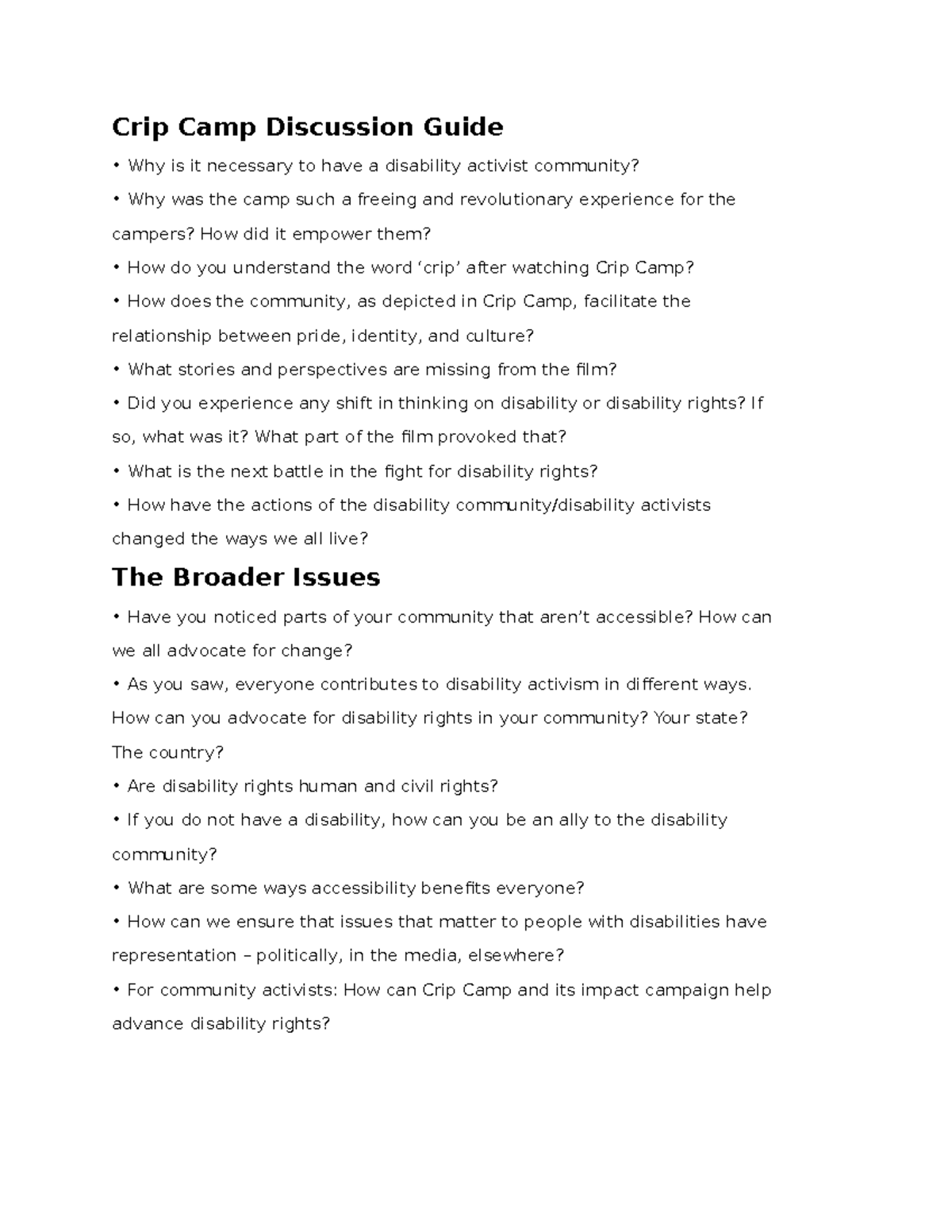
- Utilize Educational Curriculum Guides: Access official discussion guides provided by the Crip Camp official website and educational partners (such as the Crip Camp Curriculum published by the Disability Visibility Project) to facilitate classroom or workplace workshops.
- Audit Accessibility Compliance: Use the historical lessons of the film to review physical and digital accessibility compliance within your own organization, evaluating adherence to current ADA Title III guidelines for public accommodations and Web Content Accessibility Guidelines (WCAG) for online platforms.
- Explore Primary Historical Sources: Examine original documents from the Disability Rights Education and Defense Fund (DREDF) and the University of California, Berkeley’s Disability Rights and Independent Living Movement archive to contextualize the film’s visual media.
EDITORIAL CATEGORY METADATA:
Image Gallery