Cheapest Medical Schools in Texas: Tuition Costs, Admissions, and Financial Aid
Texas offers some of the most affordable medical education in the United States, with public in-state tuition averaging between $20,000 and $25,000 per year. Top-ranked institutions such as UT Southwestern, McGovern Medical School, and...
Texas offers some of the most affordable medical education in the United States, with public in-state tuition averaging between $20,000 and $25,000 per year. Top-ranked institutions such as UT Southwestern, McGovern Medical School, and UTMB Galveston deliver high-quality MD and DO programs at a fraction of national costs, governed largely by state statutory tuition caps and the TMDSAS application system.
Contents
Why Texas Offers the Most Affordable Medical Education in the U.S.
The cost of earning a Doctor of Medicine (MD) or Doctor of Osteopathic Medicine (DO) degree in the United States has escalated rapidly, with many private programs charging upwards of $65,000 annually in tuition alone. Texas stands out as a major exception to this national trend. Through legislative mandates, state-appropriated funding, and statutory tuition caps, public medical institutions across the state maintain tuition rates that are significantly below national averages.
Texas law mandates that state public university systems limit tuition for resident students. Furthermore, the state subsidizes a substantial portion of the operational budget for its public medical schools. This policy decision aims to address regional physician shortages by training medical professionals locally and keeping graduate student debt burdens manageable.
Another crucial factor keeping costs low for applicants is the centralized application system used by public medical programs in the state. The Texas Medical & Dental Schools Application Service (TMDSAS) handles undergraduate pre-medical applications for almost all public medical institutions in Texas. The system operates with lower application fees compared to the national American Medical College Application Service (AMCAS), providing cost savings from the very beginning of the admissions process.
Top Cheapest Medical Schools in Texas
When evaluating the most affordable medical schools in Texas, students must look beyond baseline tuition to consider mandatory university fees, cost of living in regional cities, and available institutional scholarships. Public institutions in Texas consistently rank among the best values for medical education in North America.
1. UT Southwestern Medical School (Dallas)
Located in the heart of the Dallas-Fort Worth metroplex, UT Southwestern Medical Center is recognized globally for clinical excellence and biomedical research. Despite its top-tier national rankings, its resident tuition remains among the lowest in the nation at approximately $21,500 to $23,000 per year.
UT Southwestern benefits from an extensive clinical network, including Parkland Memorial Hospital, Clements University Hospital, and Children's Health. Students receive robust clinical training across diverse patient populations without paying the premium tuition rates typically associated with elite private research institutions.
2. McGovern Medical School at UTHealth Houston
Situated within the Texas Medical Center—the world's largest medical complex—McGovern Medical School offers unparalleled clinical exposure. Resident tuition and required fees total around $22,000 annually.
Students at McGovern complete rotations at Memorial Hermann-Texas Medical Center and Harris Health System's Lyndon B. Johnson Hospital. The institution's location in Houston provides access to major clinical facilities, specialized research institutes, and a low cost of living relative to other major U.S. metropolitan areas.
3. University of Texas Medical Branch (UTMB) School of Medicine (Galveston)
Established in 1891, UTMB Galveston is the oldest medical school in Texas. It maintains annual resident tuition and fees of approximately $21,000 to $22,500.
UTMB is known for primary care training, global health initiatives, and specialized research facilities, including the Galveston National Laboratory. The coastal location offers a relatively affordable lifestyle for medical students, alongside clinical training sites spanning Galveston Island and mainland Southeast Texas.
4. UT Health San Antonio (Long School of Medicine)
The Joe R. and Teresa Lozano Long School of Medicine at UT Health San Antonio focuses heavily on primary care, Hispanic health initiatives, and South Texas regional healthcare delivery. Annual resident tuition and mandatory fees sit at roughly $21,500.
The Long School of Medicine operates in partnership with University Health System and the Audie L. Murphy VA Hospital. It provides students with broad diagnostic and surgical exposure while maintaining transparent, low-cost tuition structures.
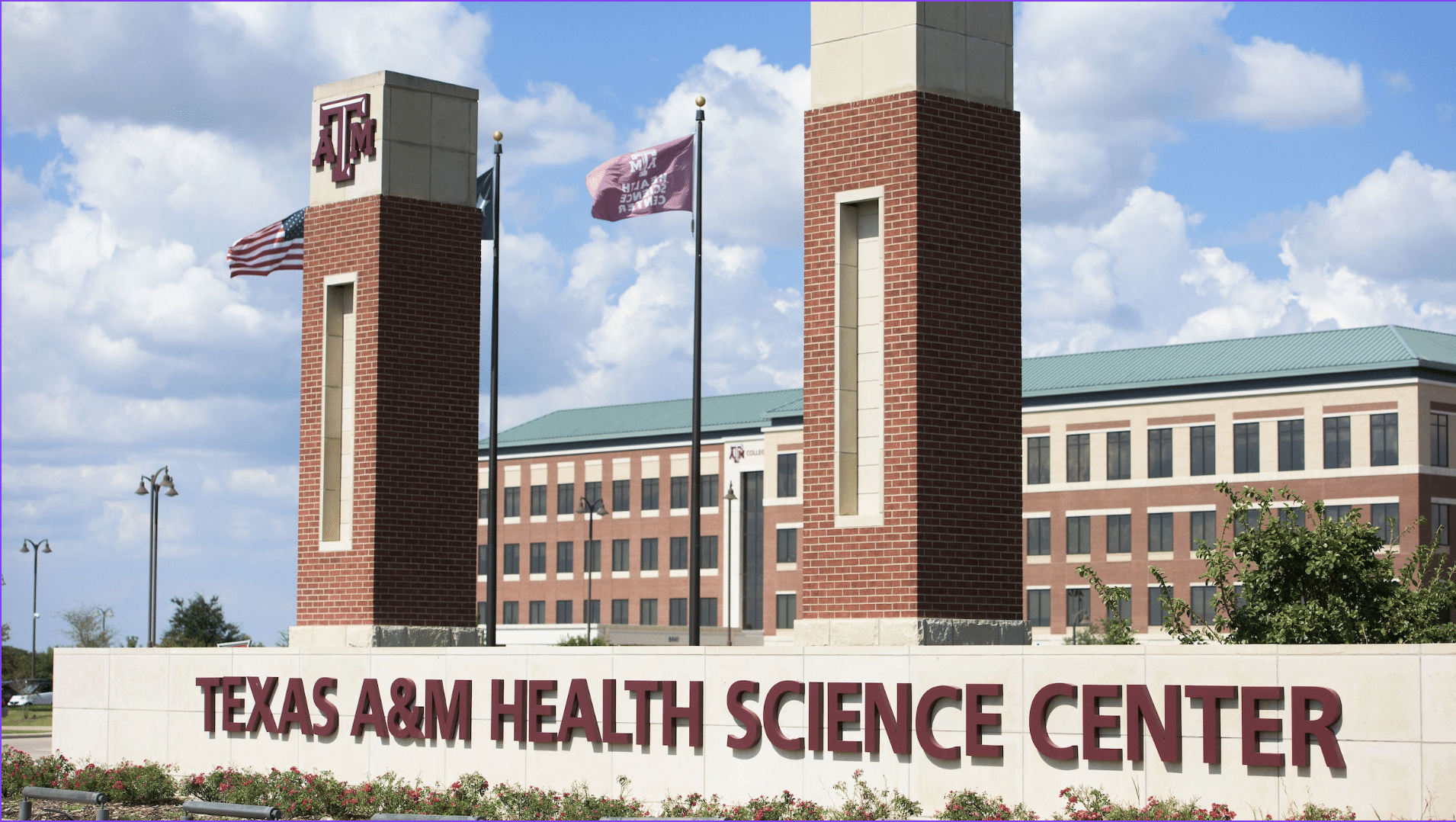
5. Texas A&M University School of Medicine
Texas A&M University School of Medicine serves communities across multiple campuses, including Bryan-College Station, Temple, Dallas, Houston, and Round Rock. Resident tuition and mandatory institutional fees average around $21,800 annually.
Texas A&M places a strong emphasis on rural medicine, military medicine, and primary care. Its distributed campus model allows students to complete clinical training in diverse environments, from major tertiary care centers to rural health clinics.
6. Texas Tech University Health Sciences Center (Lubbock and El Paso)
Texas Tech operates two distinct medical schools: the TTUHSC School of Medicine in Lubbock and the Paul L. Foster School of Medicine in El Paso. Annual resident tuition at both programs averages between $21,000 and $22,500.
The Paul L. Foster School of Medicine in El Paso features an integrated curriculum designed around clinical presentation and bilingual patient interaction along the U.S.–Mexico border. The Lubbock campus provides extensive primary care and surgical training focused on West Texas and the Panhandle region.
7. UNTHSC Texas College of Osteopathic Medicine (TCOM - Fort Worth)
For students seeking a Doctor of Osteopathic Medicine (DO) degree, TCOM in Fort Worth is consistently recognized as one of the best and most affordable osteopathic medical schools in the country. As a public institution, its resident tuition and fees average around $22,500 to $24,000 per year—significantly lower than private DO programs across the nation, which often exceed $55,000 annually.
TCOM prioritizes primary care, family medicine, and community-based practice, producing a high percentage of generalist physicians who remain in Texas to practice.
8. UT Rio Grande Valley (UTRGV) & UT Tyler School of Medicine
UTRGV School of Medicine (Edinburg) and the UT Tyler School of Medicine represent newer public medical initiatives specifically created to expand physician training in underserved regions. Resident tuition at UTRGV runs approximately $19,500 to $21,000 per year.
UT Tyler School of Medicine was established to address severe health disparities in East Texas. The school has historically offered tuition-coverage initiatives for qualifying inaugural classes through philanthropic support and regional hospital partnerships, making it one of the most cost-effective options for regional applicants.
Tuition and Cost Comparison of Texas Medical Schools
The following table outlines estimated annual tuition and mandatory fees for primary public medical schools in Texas. These figures reflect institutional costs for the 2025–2026 academic year. Living expenses, books, diagnostic equipment, and licensing exam fees are additional.
| Institution | Degree Type | Application System | Est. Annual Resident Tuition & Fees | Est. Annual Non-Resident Tuition & Fees |
|---|---|---|---|---|
| UT Southwestern Medical Center | MD | TMDSAS | $22,500 | $35,600 |
| McGovern Medical School (UTHealth) | MD | TMDSAS | $22,000 | $35,100 |
| UTMB School of Medicine (Galveston) | MD | TMDSAS | $21,800 | $34,900 |
| UT Health San Antonio (Long) | MD | TMDSAS | $21,500 | $34,600 |
| Texas A&M School of Medicine | MD | TMDSAS | $21,800 | $34,900 |
| TTUHSC School of Medicine (Lubbock) | MD | TMDSAS | $21,500 | $34,600 |
| TTUHSC Paul L. Foster (El Paso) | MD | TMDSAS | $21,500 | $34,600 |
| UTRGV School of Medicine | MD | TMDSAS | $20,000 | $33,100 |
| UT Tyler School of Medicine | MD | TMDSAS | $20,000 | $33,100 |
| UNTHSC TCOM (Fort Worth) | DO | TMDSAS | $23,000 | $38,500 |
| SHSU College of Osteopathic Medicine | DO | TMDSAS | $55,000 | $67,500 |
| Baylor College of Medicine (Private) | MD | TMDSAS | $25,500 | $38,600 |
Note: Sam Houston State University (SHSU-COM) is a state university, but its osteopathic medicine program receives a different state funding structure, resulting in higher resident tuition than other public Texas programs. Baylor College of Medicine is a private institution, but receives state subvention funds allowing it to offer tuition competitive with public institutions.
The 90% Texas Resident Requirement and Residency Rules
To benefit from the low tuition rates offered by public Texas medical schools, applicants must satisfy state residency requirements. Texas Education Code sets strict guidelines governing institutional admissions and residency classification.
The 90/10 Rule
By Texas state law, public medical schools in Texas must reserve at least 90% of their entering class capacity for Texas residents. Non-resident applicants compete for the remaining 10% of available seats. This rule keeps public medical education focused on building the state's healthcare workforce, but it makes admission highly competitive for out-of-state applicants.
Establishing Residency for Tuition Purposes
Establishing residency for tuition purposes requires meeting specific legal criteria set by the Texas Higher Education Coordinating Board (THECB). Generally, an applicant or their parent/legal guardian (if the applicant is a dependent) must meet one of the following conditions:
- High School Graduation Route: Graduated from a public or accredited private high school in Texas (or earned a GED in Texas) and lived continuously in Texas for the 36 consecutive months leading up to high school graduation, plus the 12 consecutive months immediately preceding the application deadline.
- Gainful Employment / Domicile Route: Established a domicile in Texas and maintained continuous physical presence in the state for at least 12 consecutive months prior to the application census date. Domicile must be supported by gainful employment, business ownership, real property ownership, or marriage to a Texas resident.
Disclaimer: Residency classification rules involve specific statutory criteria and financial documentation requirements. Applicants seeking clarification on complex residency status should consult the registrar's or admissions office of their target institution or review official guidelines directly through the Texas Higher Education Coordinating Board.
Financial Aid, Scholarships, and Loan Forgiveness Programs
Even with low base tuition, funding four years of medical education requires careful financial planning. Texas offers several unique funding streams and state-level loan repayment programs designed to further lower the cost of attendance.
- Texas Medical Funding Avenues
- State Programs (e.g., JAMP)
- Full Tuition
- Stipends
- Mentorship
- Institutional Out-of-State Waivers
- Match Resident Tuition Rates
- Loan Forgiveness & Service
- PHYSICIAN Repayment
- NHSC & Military
- State Programs (e.g., JAMP)
Joint Admission Medical Program (JAMP)
The Joint Admission Medical Program (JAMP) is a unique state-mandated pipeline program created by the Texas Legislature to support economically disadvantaged Texas undergraduate students. JAMP offers:
- Dedicated undergraduate mentoring and summer internship stipends.
- Guaranteed admission to one of the participating Texas medical schools upon meeting benchmark requirements (MCAT score, GPA, and professional evaluations).
- Direct financial support and scholarships throughout both undergraduate and medical school studies.
Out-of-State Competitive Waiver
Non-resident students who secure competitive, merit-based scholarships from a Texas public university (often as little as $1,000 annually, depending on institutional rules) may qualify for an out-of-state tuition waiver. This waiver allows non-resident students to pay the significantly reduced in-state tuition rate, dramatically reducing the overall cost for out-of-state matriculants.
Texas Physician Education Loan Repayment Program (PELRP)
To encourage physicians to practice in medically underserved areas, the state of Texas administers the Physician Education Loan Repayment Program. Licensed physicians practicing family medicine, internal medicine, pediatrics, obstetrics/gynecology, or psychiatry in designated Health Professional Shortage Areas (HPSAs) can receive up to $160,000 in student loan repayment support distributed over a four-year service commitment.
National Service Programs
Students at Texas medical schools can also utilize federal loan relief options:
- National Health Service Corps (NHSC) Scholarship: Provides full tuition, fees, and a monthly living stipend in exchange for primary care service in underserved communities post-residency.
- Health Professions Scholarship Program (HPSP): Administered by the U.S. Army, Navy, and Air Force, this program covers 100% of tuition, fees, and equipment, alongside a monthly living allowance, in exchange for active-duty service as a military physician.
Budgeting for Medical School: Beyond Base Tuition
While base tuition in Texas public medical schools is exceptionally low, students must construct a realistic budget accounting for mandatory living and educational expenses across all four years.
Estimated Four-Year Cost Breakdown (Texas Resident Public MD)
- Tuition & Mandatory Fees (~$88,000 total) [ 44% ]
- Housing & Food (~$72,000 total) [ 36% ]
- Health Insurance & Supplies (~$20,000) [ 10% ]
- USMLE/COMLEX Exams & Prep (~$10,000) [ 5% ]
- Travel & Residency Applications (~$10,000) [ 5% ]
Living Expenses by Region
Cost of living varies significantly across Texas:
- High-Density Urban Areas (Dallas, Houston, Austin): Rent and urban transit around schools like UT Southwestern, McGovern, or Dell Medical School cost more per month. Students should budget between $1,800 and $2,400 per month for housing, utilities, and groceries.
- Mid-Sized and Regional Cities (Lubbock, El Paso, Galveston, San Antonio, Harlingen): Institutions like TTUHSC, UT Health San Antonio, and UTRGV offer lower local living costs. Monthly housing and living budgets typically range from $1,200 to $1,700.
Board Examination Fees and Study Materials
Medical students face standard licensing fees throughout their training:
- USMLE Step 1 and Step 2 CK: Registration fees for the United States Medical Licensing Examination total over $1,300, plus expenses for prep courses, question banks (e.g., UWorld), and practice assessments.
- COMLEX-USA (for DO students): Level 1 and Level 2 CE exam fees for osteopathic students carry similar administrative costs.
Health Insurance and Professional Supplies
All medical schools require enrolled students to carry comprehensive health insurance. Institutional health plans typically range from $3,000 to $4,500 per year unless waived through coverage under a parent's or spouse's policy. Additional mandatory gear includes diagnostic equipment (stethoscope, reflex hammer, penlight), scrubs, and personal white coats.
Frequently Asked Questions
What is the absolute cheapest medical school in Texas?
UT Rio Grande Valley (UTRGV) School of Medicine and UT Tyler School of Medicine typically post the lowest baseline resident tuition and fee schedules, starting at approximately $19,500 to $20,000 per year. Most other public programs (such as UT Southwestern, UT Health San Antonio, and TTUHSC) follow closely at around $21,000 to $23,000 annually.
Can out-of-state students get in-state tuition rates at Texas medical schools?
Yes. Non-resident students who win competitive institutional merit scholarships may qualify for an out-of-state tuition waiver under Texas administrative code. This waiver allows non-residents to pay the standard in-state tuition rate. Availability and criteria vary by university.
Is Baylor College of Medicine cheap even though it is private?
Yes. Although Baylor College of Medicine is a private institution, it receives state subvention funding from Texas. As a result, Baylor sets its tuition rates to remain competitive with public Texas institutions, charging around $25,500 annually for resident tuition—making it one of the most affordable private medical schools in the country.
Why do Texas medical schools use TMDSAS instead of AMCAS?
TMDSAS is a state-specific centralized application processing system established to streamline medical, dental, and veterinary admissions across public Texas systems. It enforces state legislative mandates—such as the 90% resident enrollment rule—and charges applicants lower processing fees compared to the national AMCAS system.
How does Sam Houston State University (SHSU-COM) tuition compare to other Texas public schools?
SHSU-COM is a public osteopathic medical school, but it was established without the traditional state formula funding that lowers tuition for other public programs. As a result, resident tuition is around $55,000 annually. While higher than other Texas public schools, it remains competitive with private osteopathic medical programs nationally.
Next Steps for Applicants
- Verify Your Residency Status: Review the Texas Higher Education Coordinating Board guidelines to ensure your documentation supports state residency classification well before the TMDSAS filing window opens.
- Open a TMDSAS Account Early: The TMDSAS application cycle opens in early May for matriculation the following year. Complete primary applications early to accommodate transcripts, letters of evaluation, and secondary prompts.
- Target Programs Aligned with Your Goals: Balance tuition costs against geographic location, clinical rotation sites, and specialty preferences. Evaluate programs in mid-sized markets (like TTUHSC or UTRGV) if minimizing total cost of living is a top priority.
- Apply for Targeted Financial Aid: Research state pipeline initiatives like JAMP if you are an eligible undergraduate, or explore national service programs (NHSC, HPSP) to secure full tuition coverage and monthly stipends in exchange for service commitments.
Image Gallery