Auto Club Insurance Association Revenues: A 2026 Deep Dive
The Auto Club Insurance Association (ACIA) generates revenue primarily through written premiums across personal auto, homeowners, and life insurance lines, supplemented by significant investment income. In 2026, its financial performan...
The Auto Club Insurance Association (ACIA) generates revenue primarily through written premiums across personal auto, homeowners, and life insurance lines, supplemented by significant investment income. In 2026, its financial performance is characterized by stabilized loss ratios following years of inflationary pressure and a strategic shift toward telematics-driven pricing models within the Midwest market.
Contents
Understanding the Auto Club Insurance Association Revenue Model
The Auto Club Insurance Association (ACIA) operates as a reciprocal insurance exchange, a structure where policyholders (subscribers) technically insure one another, managed by an attorney-in-fact. While it is a key underwriting entity for The Auto Club Group (ACG), one of the largest AAA clubs in North America, its revenue streams are distinct from the membership dues collected by the club itself.
The primary engine of ACIA’s revenue is Net Premium Earned. This represents the portion of the policyholders' premiums that the association has "earned" by providing coverage for a specific period. Because ACIA operates heavily in the Michigan, Illinois, and Indiana markets, its revenue is highly sensitive to regional economic shifts and local regulatory changes.
Beyond premiums, ACIA relies on Net Investment Income. Given the massive reserves required to cover potential claims, the association maintains a sophisticated investment portfolio. In the current 2026 economic environment, yields on fixed-income securities and diversified asset allocations contribute a vital secondary layer to the total top-line revenue, often acting as a buffer during years when the combined ratio (claims plus expenses divided by premiums) exceeds 100%.
Primary Revenue Streams: Premiums and Policy Fees
In the insurance sector, revenue is not merely about the cash coming in; it is about the quality and sustainability of that cash flow. ACIA’s revenue is bifurcated into several critical categories:
Direct Written Premiums (DWP)
This is the total amount of money customers agree to pay for policies issued during the fiscal year. In 2026, ACIA has seen a steady increase in DWP, driven largely by rate adjustments necessitated by the rising cost of vehicle technology and property repair. The shift toward Electric Vehicles (EVs) has particularly impacted this stream, as higher repair costs for specialized components allow for—and require—higher premium baselines.
Net Earned Premiums
This is the actual revenue recognized on the income statement. For instance, if a policyholder pays an annual premium in July, ACIA only recognizes half of that as revenue for the current calendar year. This accounting practice ensures that the association has matching revenue for the risks it carries through the remainder of the policy term.
Policy Service Fees
While smaller than premiums, fees associated with installment plans, late payments, and policy reinstatements provide a consistent, high-margin revenue secondary stream. In an era of automated billing, these fees have become more predictable, contributing to the overall stability of the association’s cash position.
Historical Revenue Context and 2026 Performance
To understand ACIA's 2026 revenue, one must look back at the volatility of the early 2020s. Following the massive shifts in driving behavior and the subsequent spike in "social inflation"—where litigation costs and jury awards outpaced standard inflation—ACIA underwent a period of aggressive "re-underwriting."
By 2026, these efforts have matured. Revenue growth is now driven less by "emergency" rate hikes and more by organic growth in the homeowners' segment and the integration of Usage-Based Insurance (UBI). ACIA's "Advantage" programs, which use telematics to track driving habits, have allowed the association to capture a larger share of low-risk drivers, thereby improving the quality of the revenue being generated.
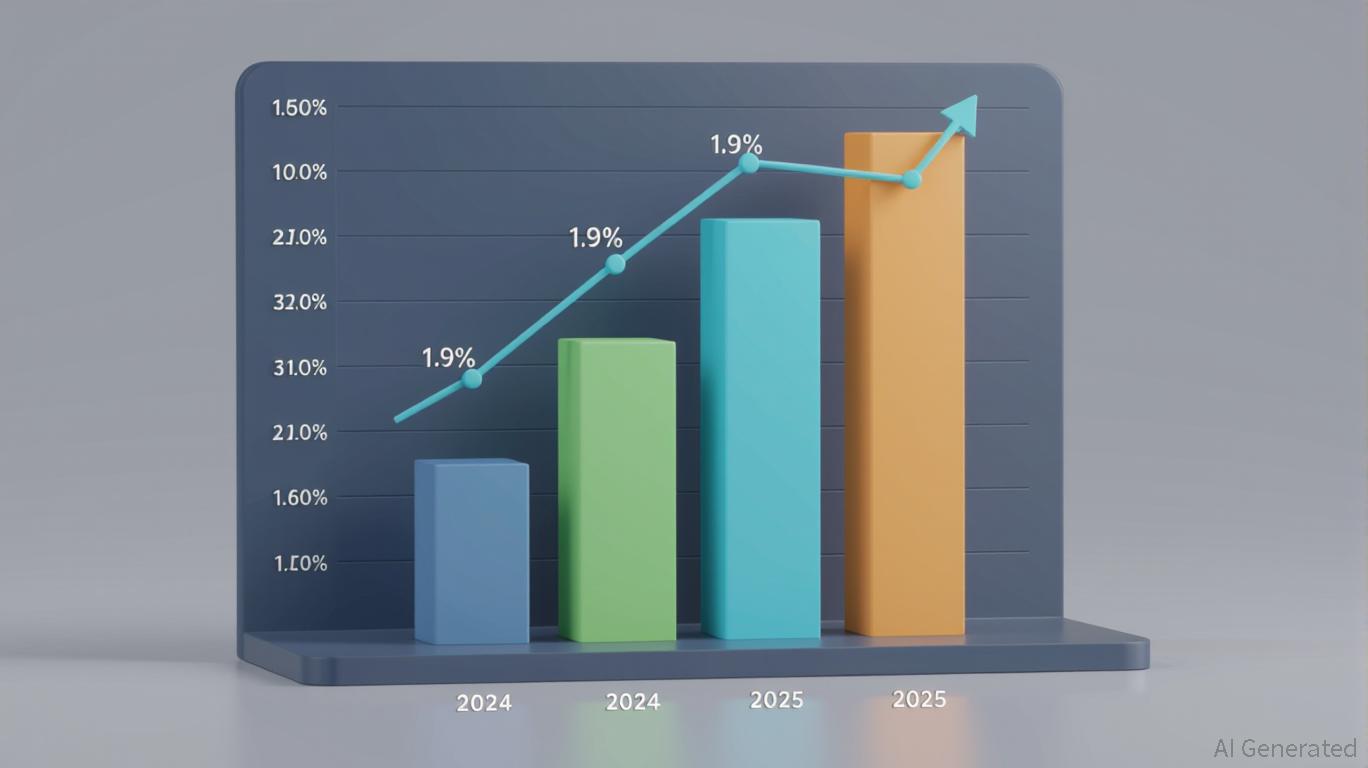
| Revenue Component | 2024 Actual (Est.) | 2025 Actual (Est.) | 2026 Projected | Growth Driver |
|---|---|---|---|---|
| Personal Auto Premiums | $2.1B | $2.3B | $2.45B | Telematics adoption & EV rates |
| Homeowners Premiums | $850M | $920M | $985M | Increased property valuations |
| Investment Income | $140M | $155M | $168M | Higher interest rate environment |
| Ancillary Fees | $45M | $48M | $52M | Digital service fee optimization |
| Total Revenue | $3.135B | $3.423B | $3.655B | Composite regional growth |
Market Positioning and Regional Influence
ACIA is not a national monolith; it is a regional powerhouse. Its revenue is concentrated in the Midwest, specifically Michigan. This concentration presents a unique financial profile. Michigan’s 2020 No-Fault auto insurance reforms continue to impact ACIA’s revenue and liability structures in 2026.
The reduction in mandatory Personal Injury Protection (PIP) levels initially led to a dip in per-policy revenue but has since stabilized as consumers opt for higher liability limits to protect their assets. This shift from "first-party" medical revenue to "third-party" liability revenue has changed the association's risk profile, making its revenue more reliant on legal and medical cost trends than on simple vehicle repair costs.
Furthermore, the association benefits from the AAA Brand Halo. While membership dues flow to the Auto Club Group, the insurance association benefits from a lower Customer Acquisition Cost (CAC) than independent insurers. The high retention rates of AAA members ensure that ACIA’s revenue is "sticky," with renewal rates often exceeding 85%, providing a predictable foundation for annual budgeting.
Factors Influencing Revenue Growth and Volatility
Several macroeconomic and internal factors dictate whether ACIA's revenue expands or contracts in the current 2026 fiscal year:
1. The Cost of Reinsurance
Insurance companies buy insurance themselves (reinsurance). The cost of this coverage is deducted from "Gross Written Premiums" to arrive at "Net Written Premiums." In 2026, global climate volatility has kept reinsurance rates high. ACIA’s ability to manage these costs directly dictates how much of its top-line premium revenue it actually keeps.
2. Technological Integration and Claims Automation
Revenue efficiency is also impacted by how much is "leaked" through claims. ACIA has invested heavily in AI-driven claims processing. By 2026, these systems have reduced the "loss adjustment expense" (LAE). While LAE is an expense, reducing it allows the association to be more competitive with pricing, which in turn drives higher policy volume and higher overall revenue.
3. Regulatory Climate in the Midwest
State insurance commissioners in Michigan and Illinois have been active in 2025 and 2026 regarding "insurance scoring" and the use of non-driving factors in rate-setting. Any regulatory mandate to lower rates in specific ZIP codes can cause immediate revenue fluctuations for ACIA, given its dense market penetration in urban centers like Detroit and Chicago.
The Role of Investment Income in Total Revenue
In 2026, we cannot ignore the "spread." Insurers like ACIA act as massive investment houses that happen to sell insurance. The "float"—the money held between the time premiums are collected and claims are paid—is invested.
With the 2026 interest rate environment remaining higher than the historical lows of the previous decade, ACIA's investment portfolio has become a more significant contributor to total revenue. The association primarily invests in investment-grade corporate bonds, municipal bonds (which offer tax advantages), and a smaller allocation of equities. This income is crucial because it allows ACIA to remain profitable even if the "underwriting profit" (premiums minus claims and expenses) is thin.
Strategic Outlook: Challenges and Opportunities for 2026-2027
As we look toward the end of 2026, ACIA faces a dual-track future. The primary challenge to its revenue remains severity inflation. While the frequency of accidents has stabilized due to Advanced Driver Assistance Systems (ADAS), the cost of each individual claim continues to rise. A bumper that cost $500 to replace ten years ago now costs $3,000 because of embedded sensors and cameras.
However, the opportunity lies in Data Monetization and Personalization. ACIA is increasingly using its vast repository of Midwest driving data to create "micro-segmented" risk pools. This allows them to charge higher premiums to high-risk individuals while undercutting competitors for "safe" drivers, effectively "creaming the market" and ensuring that the revenue coming in is from the most profitable cohorts.
Frequently Asked Questions
What is the difference between AAA membership revenue and ACIA revenue?
AAA membership revenue is collected by the regional club (e.g., The Auto Club Group) and covers roadside assistance and travel perks. ACIA revenue is specific to the insurance entity and is derived from insurance premiums and investments used to pay out claims for auto, home, and life policies.
How does Michigan's No-Fault law affect ACIA's revenue in 2026?
The law allows drivers to choose their level of medical coverage (PIP). ACIA's revenue fluctuates based on the tiers consumers choose. In 2026, many consumers are opting for higher liability limits to offset the risks of lower PIP coverage, which has kept premium revenue stable despite the 2020 reforms.
Is the Auto Club Insurance Association a public company?
No, ACIA is a reciprocal insurance exchange. It is owned by its policyholders (subscribers). Therefore, it does not have "stock price" volatility, but it must maintain high surplus levels to satisfy regulators and ensure it can meet future obligations to its members.
How does inflation impact ACIA's financial standing?
Inflation impacts ACIA in two ways: it increases the cost of claims (repairs and medical care), which can hurt profit margins, but it also leads to higher premiums as the "insured value" of homes and cars rises, which increases total revenue.
What percentage of ACIA revenue comes from auto insurance?
Historically and through 2026, auto insurance remains the dominant revenue driver for ACIA, typically accounting for 65% to 75% of its total direct written premiums, followed by homeowners' insurance.
Practical Recommendations for Policyholders and Analysts
For those monitoring the financial health of the Auto Club Insurance Association in 2026, the key metric to watch is the Combined Ratio. A ratio under 100% indicates the association is making money purely on its insurance operations.
- For Policyholders: Stability in ACIA’s revenue suggests that the association is well-capitalized to pay claims. To manage your own costs, consider opting into telematics programs (like AAA Drive) which can lower your individual premium and contribute to the association's more efficient revenue model.
- For Financial Analysts: Pay close attention to the association's "Surplus to Policyholders." This represents the "net worth" of the association. In 2026, a growing surplus despite high repair costs is a sign of superior underwriting discipline and a robust investment strategy.
Image Gallery