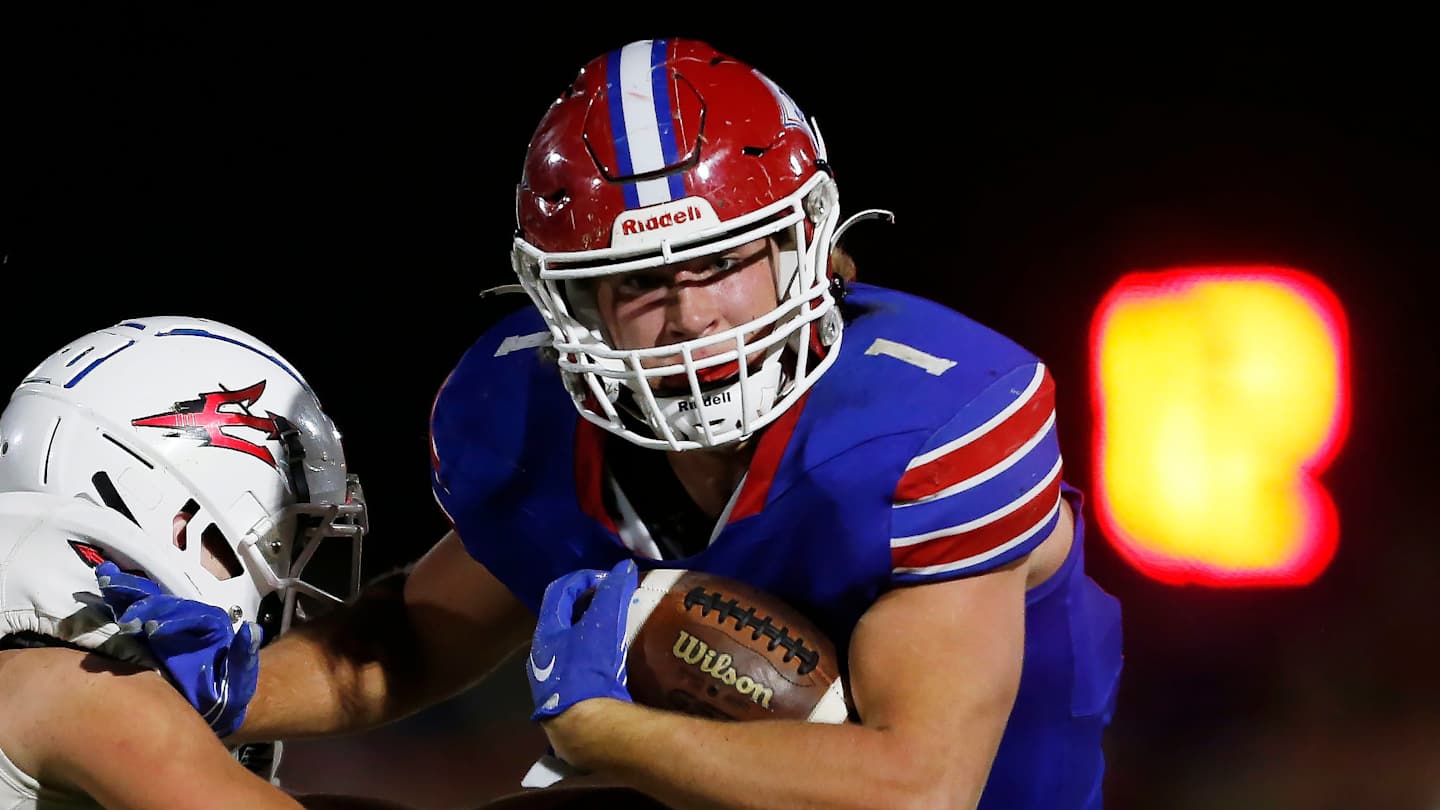
2026 NCAA Football Recruiting Rankings: Comprehensive Guide to the Top Classes and Prospects
The 2026 NCAA football recruiting rankings represent the collective scouting evaluations and commitment data for high school athletes set to join collegiate programs for the 2026 season. These rankings, curated by major services like 2...
The 2026 NCAA football recruiting rankings represent the collective scouting evaluations and commitment data for high school athletes set to join collegiate programs for the 2026 season. These rankings, curated by major services like 247Sports, On3, Rivals, and ESPN, serve as a primary barometer for a program’s future performance and long-term roster health. In the current 2026 cycle, recruiting rankings have become increasingly volatile due to the intersection of Name, Image, and Likeness (NIL) valuations and the immediate impact of the transfer portal.
Contents
The Architecture of 2026 Recruiting Services and Methodologies
Navigating the landscape of 2026 NCAA football recruiting requires an understanding of how different scouting services weigh athletic potential against on-field production. While each platform utilizes a proprietary algorithm, the industry has shifted toward "Industry Rankings" or "Composite Scores" to mitigate the bias of any single scouting department.
The Major Ranking Platforms in 2026
The scouting industry in 2026 is dominated by four major entities, each providing a distinct perspective on prospect evaluation:
- 247Sports: Known for its extensive network of regional scouts and the "247Sports Composite," which aggregates scores from all major services. Their 2026 evaluations place a high premium on "verified" data, such as track times, wing span, and camp performance.
- On3: The "On3 Industry Ranking" has gained significant traction in the 2026 cycle by incorporating NIL valuation estimates alongside traditional scouting. Their methodology focuses on a player's marketability and immediate readiness for the SEC and Big Ten environments.
- Rivals: A legacy service that emphasizes performance in their proprietary camp circuits. For the 2026 class, Rivals has focused heavily on positional technicality, particularly for offensive and defensive linemen.
- ESPN (U150/U300): While often slower to update during the early months of the cycle, ESPN’s rankings carry weight due to their integration with national broadcast narratives and the Under Armour Next All-America Game.
The Star Rating System and Probability of Success
The star rating remains the universal language of recruiting. For the 2026 class, the distribution of stars is strictly monitored to maintain the "Blue Chip Ratio"—the metric suggesting that a team must sign more four- and five-star recruits than two- and three-star recruits over a four-year period to win a National Championship.
Five-Star Prospects (The Elite 32) These athletes are considered "can't-miss" prospects with a high probability of being first-round NFL Draft picks. There are typically only 32 five-star recruits in the 2026 class, mirroring the number of picks in the NFL's first round.
Four-Star Prospects (The Foundation) These players are high-end contributors who are expected to become multi-year starters at Power 4 programs. In 2026, the four-star range covers roughly the top 350 players nationally.
Three-Star Prospects (The Developmental Core) These athletes possess the physical traits to play at the FBS level but often require 1–2 years of collegiate strength and conditioning before they are ready for significant snaps.
Current 2026 Team Recruiting Rankings Overview
As we progress through the 2026 calendar, the battle for the top spot in the team rankings is a familiar clash between the SEC and Big Ten powerhouses. The following table provides a snapshot of the current top programs based on the 2026 Industry Composite.
| Rank | University | Total Commits | 5-Star Commits | 4-Star Commits | Average Rating |
|---|---|---|---|---|---|
| 1 | Georgia | 18 | 4 | 12 | 94.55 |
| 2 | Ohio State | 16 | 3 | 11 | 93.80 |
| 3 | Texas | 15 | 3 | 10 | 93.15 |
| 4 | Oregon | 17 | 2 | 11 | 92.90 |
| 5 | Alabama | 14 | 2 | 9 | 92.45 |
| 6 | LSU | 15 | 2 | 8 | 91.80 |
| 7 | Notre Dame | 19 | 1 | 13 | 91.20 |
| 8 | Florida State | 13 | 1 | 9 | 90.75 |
| 9 | Oklahoma | 14 | 1 | 8 | 90.30 |
| 10 | Michigan | 12 | 1 | 7 | 89.95 |
Regional Recruiting Hotbeds for the 2026 Class
The geography of recruiting in 2026 remains anchored in several key states that produce a disproportionate amount of elite talent. Programs that fail to recruit these "Big Three" states—Texas, Florida, and Georgia—rarely find themselves in the top 10 of the final rankings.
The Georgia Surge
The state of Georgia has surpassed Florida in 2026 for the highest density of top-100 talent. The Atlanta metropolitan area alone features six of the top twenty defensive line prospects in the country. This regional dominance is a primary reason why the University of Georgia has consistently maintained a top-three ranking throughout the 2026 cycle.
The "Texas Triangle"
Recruiting in Texas for 2026 is centered on the Houston, Dallas-Fort Worth, and Austin corridors. The 2026 class in Texas is particularly deep at the offensive tackle and wide receiver positions. Texas and Texas A&M have engaged in significant "NIL wars" for these local athletes, though the expansion of the SEC has allowed programs like LSU and Oklahoma to make deeper inroads into the state.
The South Florida Pipeline
Florida continues to produce the fastest perimeter players. In the 2026 cycle, Miami, Orlando, and the Tampa Bay areas are heavily scouted for defensive backs and "all-purpose" athletes. However, in 2026, a trend has emerged where Florida prospects are increasingly choosing to head north to Big Ten programs like Ohio State and Oregon, seeking high-visibility national platforms.
The Impact of NIL and the Transfer Portal on 2026 Rankings
The 2026 recruiting landscape is fundamentally different from previous decades due to the professionalization of the "commitment" process.
NIL Valuations as a Recruitment Tool
In 2026, "Expected NIL Value" is a data point provided by services like On3. While the NCAA officially prohibits using NIL as a direct inducement, the reality of "NIL Collectives" means that a prospect's ranking is often tied to their perceived market value. High-ranking 2026 prospects often delay their commitments until they have clarity on the collective's support at their finalist schools.
The "One-Year Horizon" Strategy
Coaches in 2026 are increasingly balancing their high school recruiting rankings against the transfer portal. A team may rank #20 in high school recruiting but #5 in overall roster talent if they supplement a smaller 2026 prep class with proven college veterans. This has led to the "Blue Chip Ratio 2.0," which calculates the percentage of elite talent across both high school signees and incoming transfers.
How to Evaluate a 2026 Recruiting Class
When analyzing the 2026 NCAA football recruiting rankings, fans and analysts should look beyond the "Total Points" and focus on three critical metrics:
- Average Grade per Commit: A class with 10 commits who are all four-stars is often superior to a class with 25 commits where 15 are three-stars. Look for an average grade above 90.00 for elite programs.
- Positional Needs: A top-five class that fails to sign a high-end quarterback or offensive tackle is fundamentally flawed. In 2026, "Premium Position" hit rates are more indicative of success than total numbers.
- The "Close" Rate: Observe how many "Blue Chip" players a team flips from other programs during the Early Signing Period in December 2025 and the final push in February 2026. This reflects a coaching staff's ability to maintain relationships under pressure.
Frequently Asked Questions about 2026 Recruiting
When do the final 2026 recruiting rankings become official? The 2026 rankings are considered "final" following the National Signing Day in February 2026. However, the majority of the movement occurs during the Early Signing Period in mid-December 2025, when approximately 85% of scholarship athletes sign their National Letters of Intent (NLI).
How does "Reclassification" affect the 2026 rankings? Reclassification occurs when a player from the 2027 class moves up to 2026 or a 2026 player moves back to 2027. In the 2026 cycle, we have seen several high-profile quarterbacks reclassify to 2025 to begin their collegiate careers early, which can suddenly vacate a top spot in the 2026 rankings.
What is the difference between a "Hard Commitment" and a "Signed" prospect? A "Hard Commitment" is a non-binding verbal agreement from a 2026 prospect to attend a university. These prospects still count toward a team’s ranking. A prospect is only officially part of the program once they sign their NLI during the designated signing periods.
Does the 2026 ranking predict NFL success? Statistically, yes. Since the inception of modern recruiting services, five-star prospects are roughly 30 times more likely to be drafted in the first round of the NFL Draft than two-star or unranked prospects. The 2026 rankings remain the best early-indicator of professional potential.
How do rankings handle "JUCO" or "International" recruits in 2026? Junior College (JUCO) transfers and international prospects (increasingly from Europe and Australia in 2026) are rated using a separate scale but are integrated into the overall team points calculation. Their rankings focus more on immediate "plug-and-play" capability rather than long-term developmental ceiling.
Practical Advice for Following 2026 Recruiting Trends
To stay ahead of the curve in the 2026 cycle, monitor "Crystal Ball" predictions on 247Sports and "Recruiting Prediction Machine" (RPM) data on On3. These tools track where lead experts believe a prospect will land before the announcement is made public. Additionally, pay attention to "Visit Weekends"—if a high-ranking 2026 prospect takes an official visit to a school during a major home game, the probability of a commitment increases by nearly 65% within the following 14 days.
Understanding 2026 NCAA football recruiting rankings is about more than just looking at a list; it is about recognizing the strategic movement of talent across the country and the financial realities of the modern collegiate game. As the 2026 signing periods approach, expect the rankings to remain fluid as programs finalize their rosters in an era defined by parity and high-stakes roster management.
Image Gallery