How to Use Home Budget Categories to Control Your Finances
To use home budget categories effectively, you must group your spending into logical clusters—such as housing, food, and debt—to track where every dollar goes. Start by listing your fixed monthly obligations, then define your variable...
To use home budget categories effectively, you must group your spending into logical clusters—such as housing, food, and debt—to track where every dollar goes. Start by listing your fixed monthly obligations, then define your variable lifestyle costs. This structure allows you to identify wasteful spending, prioritize savings goals, and ensure your essential needs are met before discretionary funds are exhausted.
Contents
Effective budgeting in 2026 requires more than just a list of expenses; it demands a strategic architecture for your money. As the cost of living fluctuates and digital subscriptions become increasingly granular, your budget categories serve as the primary diagnostic tool for your financial health. By organizing your transactions into specific buckets, you transform a chaotic list of bank statements into a clear roadmap for wealth building.
The Purpose of Categorization in Modern Budgeting
Budget categories are not merely labels; they are boundaries. Without them, it is impossible to determine if you are overspending in one area at the expense of another. In the current economic climate of 2026, where "subscription creep" and high-convenience costs (like delivery services) can quietly erode a paycheck, categorization provides the visibility needed to make informed trade-offs.
When you categorize, you move from reactive spending—checking your balance before a purchase—to proactive allocation. This shift allows you to decide in advance how much a specific part of your life is "worth" to you. For example, if you realize you are spending 15% of your income on dining out, you can consciously decide to reallocate a portion of that to a travel fund or a high-yield savings account.
The Foundation: Fixed vs. Variable Categories
Before diving into specific labels, it is essential to understand the two functional types of categories. Most financial advisors recommend separating your budget into Fixed and Variable buckets to better understand your "burn rate" (the minimum amount of money you need to survive each month).
Fixed Expenses (The Non-Negotiables)
Fixed expenses are costs that remain relatively constant from month to month and are usually tied to a contract or a legal obligation. These are the easiest to budget for because the number rarely changes.
- Housing: Mortgage or rent payments, property taxes, and homeowners association (HOA) fees.
- Insurance: Health, auto, life, and disability insurance premiums.
- Utilities: Base costs for electricity, water, and gas (though these can fluctuate slightly, they are essential).
- Debt Minimums: The baseline payments for student loans, car notes, or credit card balances.
Variable Expenses (The Flex Categories)
Variable expenses are the "front line" of your budget. These are the categories where you have the most control and where most overspending occurs.
- Groceries: While essential, the amount spent is highly controllable through meal planning and brand choices.
- Entertainment: Movies, concerts, and hobbies.
- Discretionary Spending: The "fun money" that has no specific purpose other than personal enjoyment.
- Transportation Fuel: Gas or public transit fares that change based on usage.
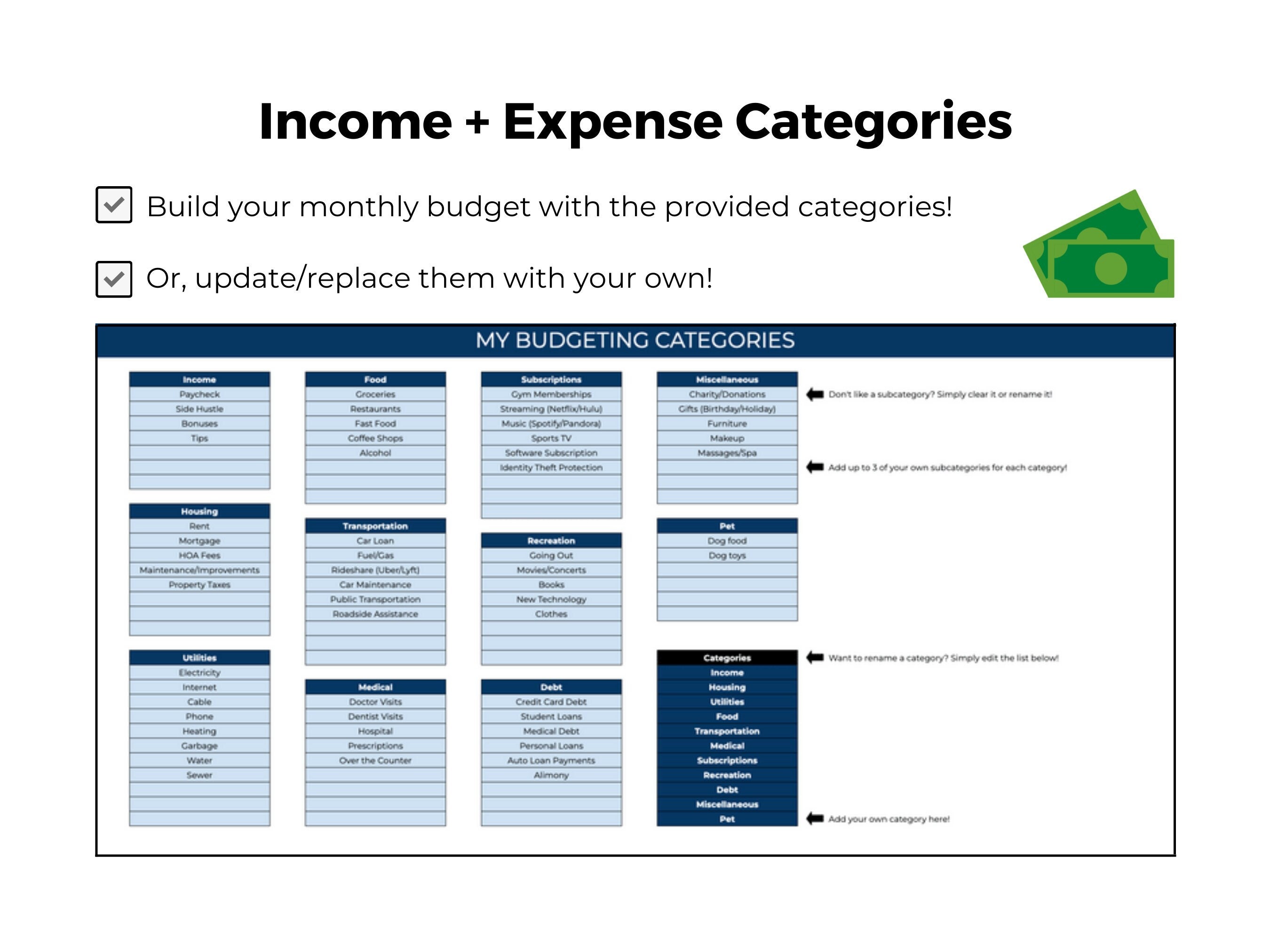
A Comprehensive List of Essential Home Budget Categories
To build a robust budget, you need a hierarchy that covers all aspects of modern life. Here is a breakdown of the primary categories used by successful households in 2026.
1. Housing and Shelter (25%–35% of Income)
This is typically the largest category. Beyond the monthly payment, it is crucial to include a Home Maintenance sub-category. Many homeowners fail to account for the "1% Rule"—the suggestion that you should set aside 1% of your home's value annually for repairs. In 2026, with rising labor and material costs, having a dedicated maintenance bucket prevents emergency repairs from ruining your monthly flow.
2. Food and Dining (10%–15% of Income)
Distinguishing between Groceries and Dining Out/Delivery is the single most effective way to gain control over a budget. Groceries are a necessity; dining out is a lifestyle choice. By separating these, you can see exactly how much you are paying for the convenience of prepared meals.
3. Transportation (10%–15% of Income)
This category should include:
- Car payments or lease costs.
- Fuel or EV charging expenses.
- Routine maintenance (oil changes, tires).
- Registration and licensing fees.
4. Healthcare (5%–10% of Income)
Even with insurance, out-of-pocket costs can be significant. This category should include co-pays, prescription medications, and contributions to a Health Savings Account (HSA) or Flexible Spending Account (FSA).
5. Technology and Subscriptions
In 2026, the average household manages dozens of digital subscriptions. This category has grown significantly over the last decade. It should include internet service, mobile phone plans, streaming services (Netflix, Disney+, etc.), and software-as-a-service (SaaS) subscriptions like cloud storage or productivity tools.
6. Personal Care and Wellness
This covers everything from haircuts and gym memberships to skincare and clothing. While these can feel like necessities, they are often the first place to look when you need to "tighten the belt."
Advanced Categorization: Sinking Funds and Buffers
Once you have mastered the basic categories, you can implement more advanced strategies to handle "lumpy" expenses—costs that don't happen every month but are predictable.
Sinking Funds
A sinking fund is a category where you save a small amount each month for a specific future expense. Common sinking funds include:
- Holiday Spending: Saving $50 a month starting in January so you have $600 for gifts in December.
- Annual Subscriptions: Saving 1/12th of your annual Amazon Prime or car registration fee each month.
- Vacation Fund: A dedicated bucket for travel to ensure you don't use credit cards to fund trips.
The "Miscellaneous" or "Buffer" Category
Every budget needs a "Buffer." No matter how well you plan, life will present unclassified expenses. A small "Miscellaneous" category (usually 2%–5% of your budget) prevents you from feeling like you've "failed" your budget when an unexpected $40 school fee or a birthday gift arises.
How to Choose a Budgeting Framework
The way you use your categories often depends on the budgeting philosophy you choose. Different frameworks prioritize categories in various ways.
| Budgeting Method | Focus | Ideal For |
|---|---|---|
| 50/30/20 Rule | Broad percentages: 50% Needs, 30% Wants, 20% Savings/Debt. | Beginners who want a simple, high-level overview without tracking every penny. |
| Zero-Based Budgeting | Every dollar is assigned to a category until $0 remains. | People who want total control and maximum efficiency for debt repayment. |
| Envelope System | Cash-based (or digital equivalent) limits for specific categories. | Those who struggle with overspending in variable categories like food and fun. |
| "Pay Yourself First" | Prioritizes the Savings category before any other spending. | Individuals with high income who want to ensure long-term wealth building. |
Implementation: How to Track Your Categories
To make these categories work, you must choose a tracking method that fits your personality. In 2026, technology offers several levels of automation.
- Automated Apps: Tools that sync directly with your bank accounts (like YNAB, Monarch Money, or Copilot) automatically sort transactions into your defined categories. This is the most efficient method but requires regular "cleaning" to ensure the AI categorized things correctly.
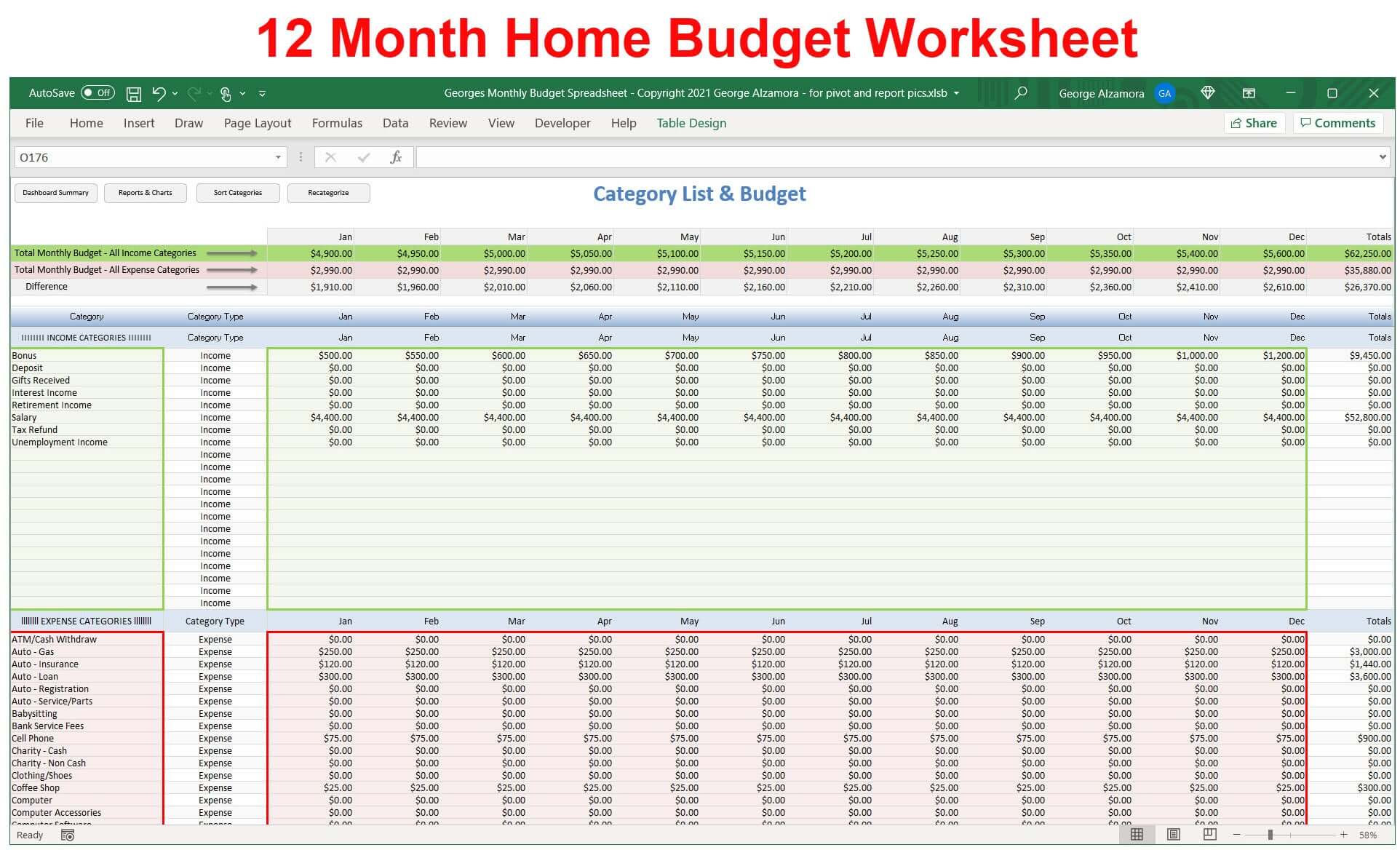
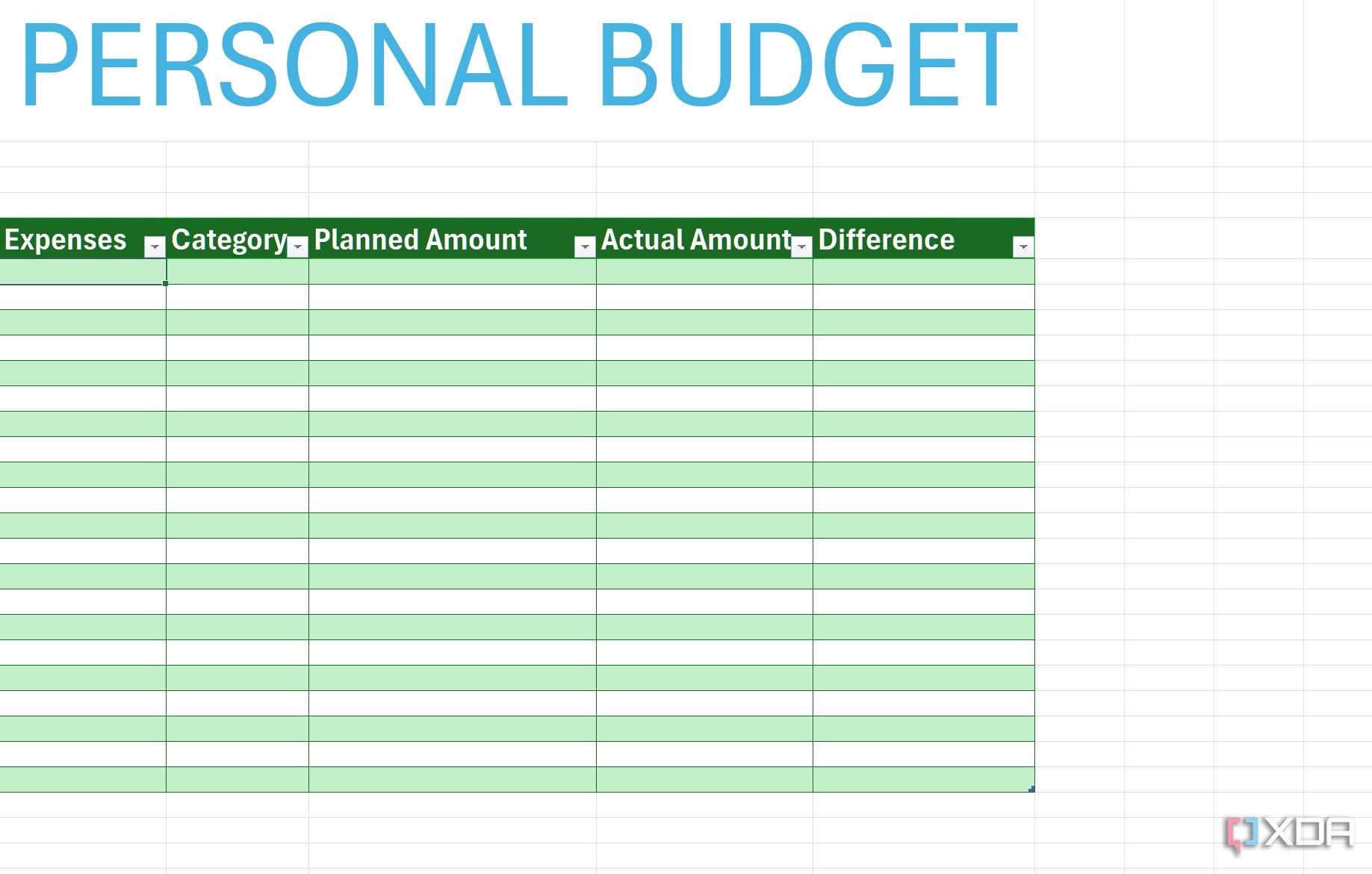
- The Spreadsheet Method: Using Google Sheets or Microsoft Excel offers the most customization. You manually enter or export transactions, which forces a higher level of awareness regarding your spending habits.
- Manual Ledger: The traditional pen-and-paper method. While time-consuming, the physical act of writing down expenses provides the highest level of psychological impact and spending friction.
Common Mistakes to Avoid
- Over-Categorizing: Having 50 different categories can lead to "analysis paralysis." Start with 10–12 broad buckets and only break them down further if you see a problem area.
- Setting Unrealistic Limits: If you currently spend $800 on groceries, don't set a budget category for $300 next month. You will likely fail and abandon the budget entirely. Lower the limit gradually.
- Ignoring Cash Transactions: If you use cash, you must still assign those dollars to a category. Small cash leaks can add up to hundreds of missing dollars by the end of the month.
Managing Your Categories Over Time
A budget is a living document, not a static set of rules. As your life changes—getting a promotion, moving to a new city, or starting a family—your categories must evolve. Review your category performance at the end of every month. If you consistently overspend in "Entertainment" but underspend in "Transportation," move the numbers around for the following month to reflect your reality.
Disclaimer: This information is for educational purposes only and does not constitute professional financial advice. For specific investment, tax, or legal concerns, please consult with a certified financial planner or qualified professional.
Frequently Asked Questions
How many budget categories should I have? Most financial experts suggest starting with 10 to 15 main categories. If you have too many, the process becomes tedious and difficult to maintain. If you have too few, you lose the granularity needed to identify where you are wasting money. You can always use sub-categories within a main bucket (e.g., "Food" as the main category with "Groceries" and "Dining" as sub-categories) to keep things organized.
Should I include my business expenses in my home budget categories? No. It is a fundamental rule of accounting to keep personal and business finances separate. Mixing these categories makes it nearly impossible to track the true profitability of a business and creates significant complications during tax season. Open a separate bank account and use a distinct set of categories for any side husle or business venture.
What should I do if I consistently overspend in one category? First, determine if your budget limit is realistic. If you are spending more than you allocated but the amount is necessary (like rising utility costs), you must "roll with the punches" and reduce the limit in a discretionary category like "Hobby" or "Dining Out" to cover the gap. If the overspending is due to impulse, consider using the "Envelope System" for that specific category to physically limit your spending.
How do I handle categories for expenses that happen once a year? These should be handled through "Sinking Funds." Calculate the total annual cost of the expense, divide it by 12, and include that monthly amount as a fixed line item in your budget. Transfer that money into a separate savings sub-account each month so that when the bill arrives, the funds are already waiting for you.
Is it better to use an app or a spreadsheet for categories? The "best" method is the one you will actually use consistently. Apps are better for convenience and real-time tracking, while spreadsheets are better for people who want to perform deep data analysis and customize their financial reporting. Many people find success using an app for daily tracking and a spreadsheet for a monthly "high-level" review.
Next Action Step
Review your bank statements from the last 90 days and group your transactions into the main categories mentioned above. This historical data will provide the most accurate starting point for setting realistic limits for next month's budget.
Image Gallery