What Is the Best Auto Insurance Liability Coverage Only?
The best auto insurance liability-only coverage for most drivers is a 100/300/100 limit policy—providing $100,000 in bodily injury liability per person, $300,000 in bodily injury liability per accident, and $100,000 in property damage...
The best auto insurance liability-only coverage for most drivers is a 100/300/100 limit policy—providing $100,000 in bodily injury liability per person, $300,000 in bodily injury liability per accident, and $100,000 in property damage liability. While state minimum requirements offer lower premiums, they expose drivers to severe personal financial liability after even moderate accidents.
Contents
Understanding Liability-Only Auto Insurance
Liability-only auto insurance is a streamlined policy structure that pays for third-party injuries and property damage when you are legally at fault in an auto accident. Unlike full coverage insurance, liability policies do not pay for damage to your own vehicle, nor do they cover theft, vandalism, weather damage, or personal medical bills resulting from a crash.
Auto liability coverage is split into two primary components:
- Bodily Injury Liability (BI): Pays for medical expenses, emergency care, loss of income, rehabilitation, and legal defense costs for driver(s) and passenger(s) injured in an accident you cause.
- Property Damage Liability (PD): Pays to repair or replace vehicles, structures, guardrails, utility poles, or other physical property damaged in an accident where you are at fault.
In the United States, nearly every state legally requires drivers to carry a baseline level of liability insurance. However, statutory minimum requirements are established as legal baselines for road access, not as financial safety nets for catastrophic events. Choosing a liability-only policy means assuming full financial responsibility for repairing or replacing your own vehicle out of pocket.
Why State Minimum Liability Limits Are Rarely Enough
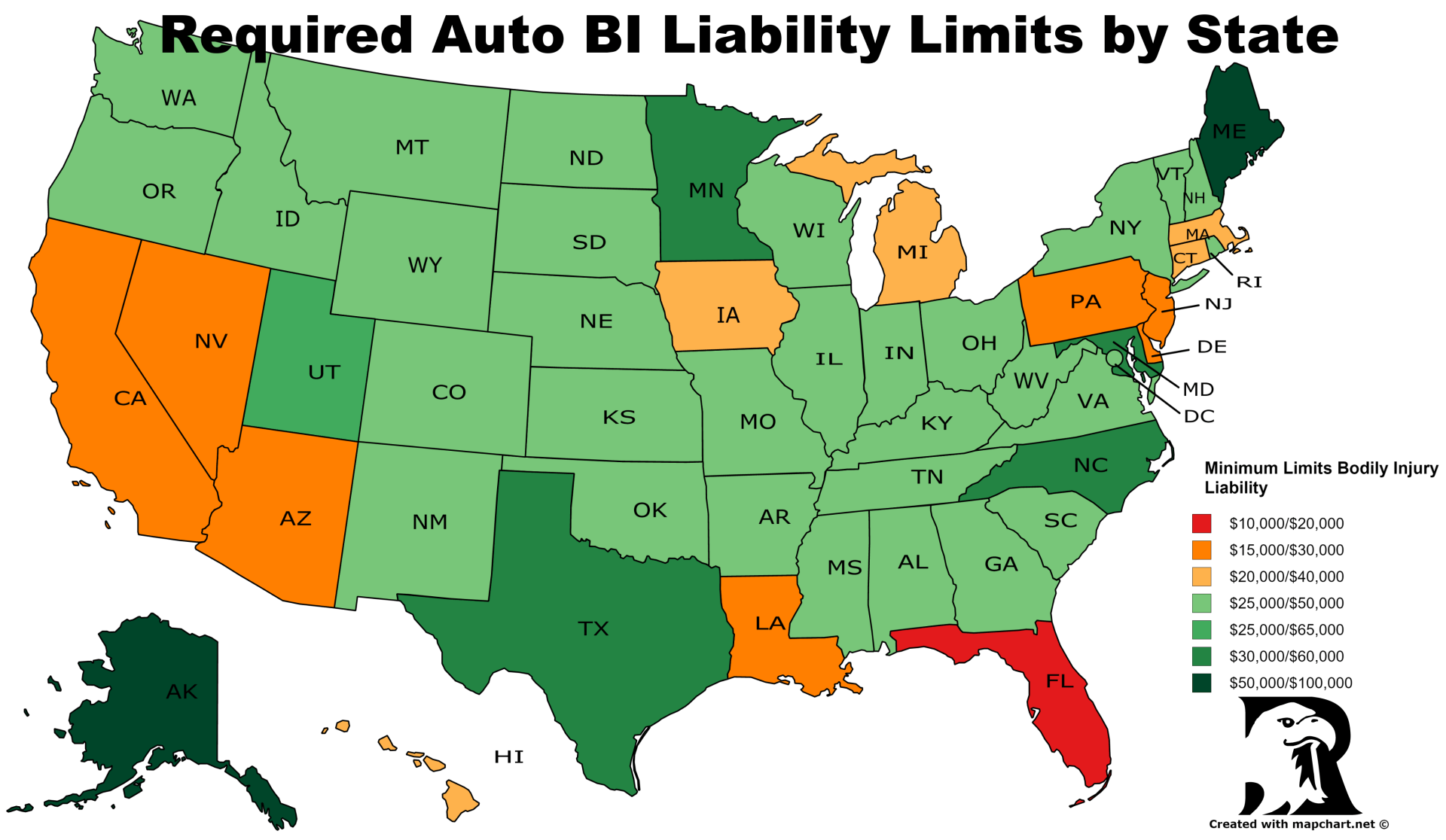
State-mandated minimum liability limits vary widely across jurisdictions. For example, some states require minimum limits as low as $15,000 for bodily injury per person, $30,000 for bodily injury per accident, and $5,000 to $10,000 for property damage (often written in shorthand as 15/30/10).
Relying on state minimum limits creates severe financial exposure due to two critical factors: rising medical care costs and modern vehicle repair technology.
Example Split Limit Structure: 100 / 300 / 100
- $100,000 Maximum Bodily Injury per Single Person
- $300,000 Maximum Bodily Injury Total per Accident
- $100,000 Maximum Property Damage Total per Accident
Modern Medical Costs
An emergency room visit, surgical intervention, and overnight hospital stay after a major vehicle collision frequently exceed $25,000 to $50,000 per injured person. If you carry a state minimum bodily injury limit of $25,000 and cause an accident resulting in $75,000 in medical bills for another driver, you remain personally liable for the remaining $50,000 balance.
Escalating Vehicle and Tech Replacement Expenses
Modern vehicles feature complex sensors, camera systems, advanced driver-assistance systems (ADAS), and lightweight composite materials. Even minor fender-benders often require sensor recalibration and modular panel replacements, pushing average repair bills significantly higher. If you collide with a late-model electric or luxury vehicle and carry only $10,000 or $25,000 in property damage coverage, a totaled car or multi-vehicle pileup will quickly exceed your insurer's payout limit.
When claim payouts exceed policy limits, injured parties and their insurance providers can pursue personal lawsuits against you. Court judgments can result in liquidating personal assets, placing liens on personal property, or long-term wage garnishments. Official consumer guidelines from the National Association of Insurance Commissioners (NAIC) emphasize that policy limits should be chosen based on personal asset exposure rather than minimum legal requirements.
The Optimal Level: Why 100/300/100 Is the Benchmark
Insurance advisors and risk management specialists consistently point to 100/300/100 coverage limits as the ideal liability configuration for most individual policyholders choosing to skip collision and comprehensive insurance.
Here is how a 100/300/100 liability structure protects you:
- $100,000 Bodily Injury per Person: Covers individual medical claims, ambulance transport, surgery, and lost wages up to six figures per injured individual.
- $300,000 Bodily Injury per Accident: Provides an aggregate cap that covers multiple injured passengers or individuals across all impacted vehicles in a single event.
- $100,000 Property Damage per Accident: Fully covers the replacement value of most modern passenger cars, small utility structures, or multi-car damage scenarios.
Comparing Liability Coverage Tiers
The table below outlines common liability coverage tiers, their payout caps, and their relative risk levels for policyholders choosing a liability-only structure:
| Liability Tier | Bodily Injury Limit (Per Person / Per Accident) | Property Damage Limit | Financial Protection Level | Asset Risk Exposure |
|---|---|---|---|---|
| State Minimums | $15,000 – $25,000 / $30,000 – $50,000 | $5,000 – $25,000 | Low | High (Personal assets vulnerable) |
| Moderate Coverage | $50,000 / $100,000 | $50,000 | Medium | Moderate |
| Recommended Standard | $100,000 / $300,000 | $100,000 | High | Low for standard wage earners |
| High Asset Protection | $250,000 / $500,000 | $100,000+ | Very High | Minimal (Ideal baseline before Umbrella) |
For home-owning drivers or individuals with substantial savings, upgrading from 100/300/100 to 250/500/100 provides an even stronger layer of protection. The incremental cost of raising liability limits from state minimums to 100/300/100 is often surprisingly modest—frequently costing only a few extra dollars per month—because insurance companies view drivers who carry higher limits as statistically lower-risk policyholders.
When Does a Liability-Only Policy Make Financial Sense?
Opting out of full coverage (which includes collision and comprehensive insurance) is not appropriate for every vehicle or owner. Because liability-only insurance pays zero dollars toward your own car's repair or replacement, it should only be selected under specific financial circumstances.
1. You Own the Vehicle Outright
If you lease a car or finance it through a lender, you cannot select a liability-only policy. Auto lenders and leasing companies mandate continuous collision and comprehensive insurance to protect their financial stake in the asset. Liability-only policies are restricted entirely to vehicles with clear titles owned free and clear.
2. The 10% Valuation Rule
A standard benchmark in personal finance is the "10% Rule" for collision and comprehensive insurance. If the annual cost of comprehensive and collision coverage exceeds 10% of your vehicle's actual cash value (ACV), carrying full coverage may no longer be cost-effective.
Example Calculation:
- Vehicle Market Value: $3,500
- Collision + Comprehensive Annual Premium: $600
- Deductible: $500
- Maximum Potential Payout: $3,500 - $500 = $3,000
In this scenario, paying $600 per year to insure a maximum net return of $3,000 yields diminishing returns. Transitioning to a high-limit liability policy allows you to bank the annual savings toward a replacement vehicle fund while keeping your personal assets safe from third-party claims.
3. You Maintain an Emergency Savings Fund
A liability-only strategy requires a dedicated liquid savings reserve. If an accident occurs where you are at fault, or if your vehicle is damaged by weather, vandalism, or an uninsured hit-and-run driver, you must be financially prepared to pay for repairs or buy another vehicle without reliance on insurance proceeds.
Crucial Optional Add-Ons for Liability-Only Policies
Selecting a "liability-only" auto policy does not mean you must purchase strictly bodily injury and property damage coverage. Drivers should consider several optional add-ons that fit alongside a core liability policy without paying for full collision/comprehensive coverage:
Uninsured and Underinsured Motorist Coverage (UM/UIM)
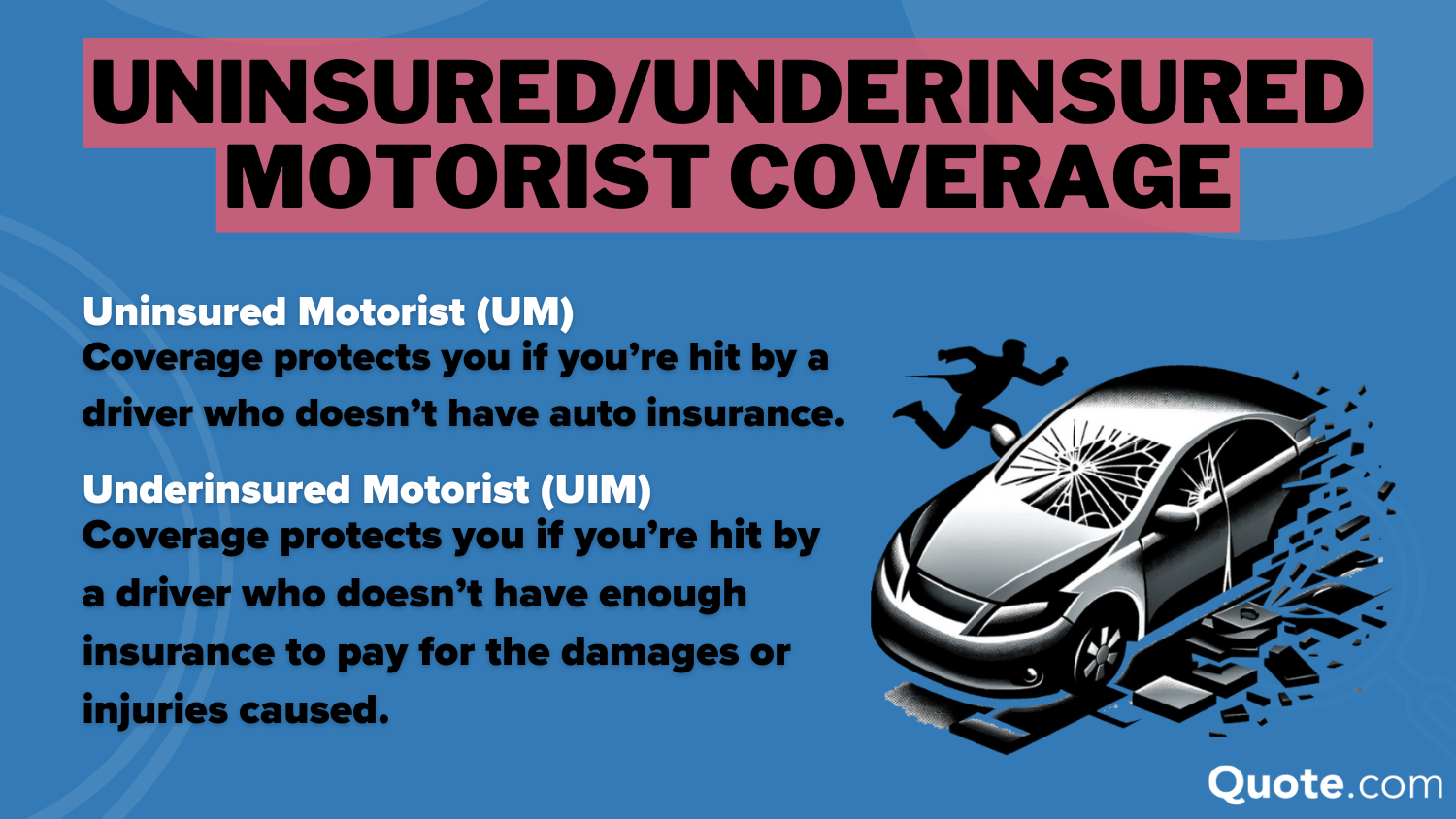
According to data maintained by the Insurance Information Institute (III), roughly 1 in 8 drivers nationwide operates a vehicle without auto insurance. Uninsured Motorist (UM) and Underinsured Motorist (UIM) coverages protect you if you are hit by a driver who carries no insurance or insufficient liability limits. In many states, UM/UIM can be added specifically for medical expenses and lost wages, and in select jurisdictions, for vehicle property damage (UMPD).
Personal Injury Protection (PIP) or Medical Payments (MedPay)
Bodily injury liability pays for injuries to other people. To cover your own emergency medical care, hospital visits, or funeral expenses regardless of fault, you can add Medical Payments (MedPay) or Personal Injury Protection (PIP) to your policy. PIP is required in "no-fault" insurance states and can assist with lost income and essential personal services during recovery.
Roadside Assistance and Towing Coverage
If your vehicle's low monetary value justifies dropping collision coverage, mechanical failure or flat tires remain a real concern. Adding low-cost roadside assistance to a liability policy ensures access to emergency towing, battery jump-starts, and lockout services without paying out-of-pocket commercial towing rates.
Strategies to Secure the Best Rates on High-Limit Liability Insurance
Getting the best auto insurance liability coverage only requires balancing optimal coverage limits with smart savings strategies.
Step-by-Step Optimization Process:
Evaluate Vehicle ACV & Ownership
Select 100/300/100 Base Limits
Add Essential Protection (UM)
Compare 3-5 Carrier Quotes
Shop and Compare Multiple Carriers: Insurers evaluate liability risk using proprietary underwriting algorithms. Rates for identical 100/300/100 policies can vary by hundreds of dollars annually between carriers. Obtain written quotes from at least three major insurance companies and regional carriers.
Maintain Continuous Coverage: Insurance companies reward continuous insurance history. Avoid gaps or lapses in your liability coverage, as driving uninsured—even for a few days—triggers high-risk rate classifications for up to three to five years.
Leverage Policy Discounts: Combine high liability limits with available savings incentives, including multi-policy (bundling auto with renters or homeowners insurance), safe driver courses, paperless billing, and automatic payment enrollment.
Review Credit and Driving Records: In states where credit-based insurance scores are legally permitted under insurance regulation guidelines managed by state insurance commissioners, maintaining a strong credit rating lowers premium costs significantly.
Frequently Asked Questions
Is state minimum liability insurance enough to protect me?
State minimum liability limits are rarely sufficient for adequate financial protection. Minimum limits like 25/50/25 leave policyholders exposed to personal lawsuits, wage garnishment, and asset seizure if medical bills or vehicle repairs exceed those low caps after a severe crash.
What does 100/300/100 liability insurance mean?
A 100/300/100 policy provides split liability limits up to $100,000 for bodily injury per individual, $300,000 for total bodily injury per accident across all injured parties, and $100,000 for total third-party property damage per accident.
Can I get liability-only insurance on a financed car?
No. Lenders and leasing companies require borrowers to carry full coverage insurance (including collision and comprehensive coverage with specified maximum deductibles) until the loan is fully paid off and the lien on the title is released.
Does liability-only insurance cover my vehicle if someone else hits me?
If another driver is at fault in an accident, their liability insurance is responsible for paying to repair or replace your vehicle. However, if the fault is contested, the other driver is uninsured, or it was a hit-and-run incident, your liability-only policy will not pay for damage to your car.
How much can I save by dropping collision and comprehensive coverage?
Dropping collision and comprehensive coverage can reduce auto insurance premiums by 30% to 50% or more, depending on your vehicle's make, age, driver location, and primary usage. Drivers should ensure these savings are offset by maintaining an emergency fund for vehicle replacement.
Practical Recommendation
If you own your vehicle outright and its market value makes full coverage financially impractical, do not default to state minimum liability limits. Configure your policy with 100/300/100 liability limits, pair it with Uninsured Motorist (UM) protection and Medical Payments/PIP, and compare quotes annually across top-rated carriers. This approach minimizes premium costs while shielding your savings, home, and future wages from devastating lawsuit liability.
Disclaimer: Auto insurance requirements, policy forms, and regulations vary by state and individual risk profiles. Consult a licensed insurance agent or financial planner to evaluate your personal financial situation and asset protection needs.
Image Gallery