Life Insurance Payout on Suicide: Policy Clauses, Exclusion Periods, and Claim Rules
Yes, life insurance policies generally pay out for a death by suicide, provided the policy has been active beyond the contract's specified suicide exclusion period—typically one to two years from the effective date. If death by suicide...
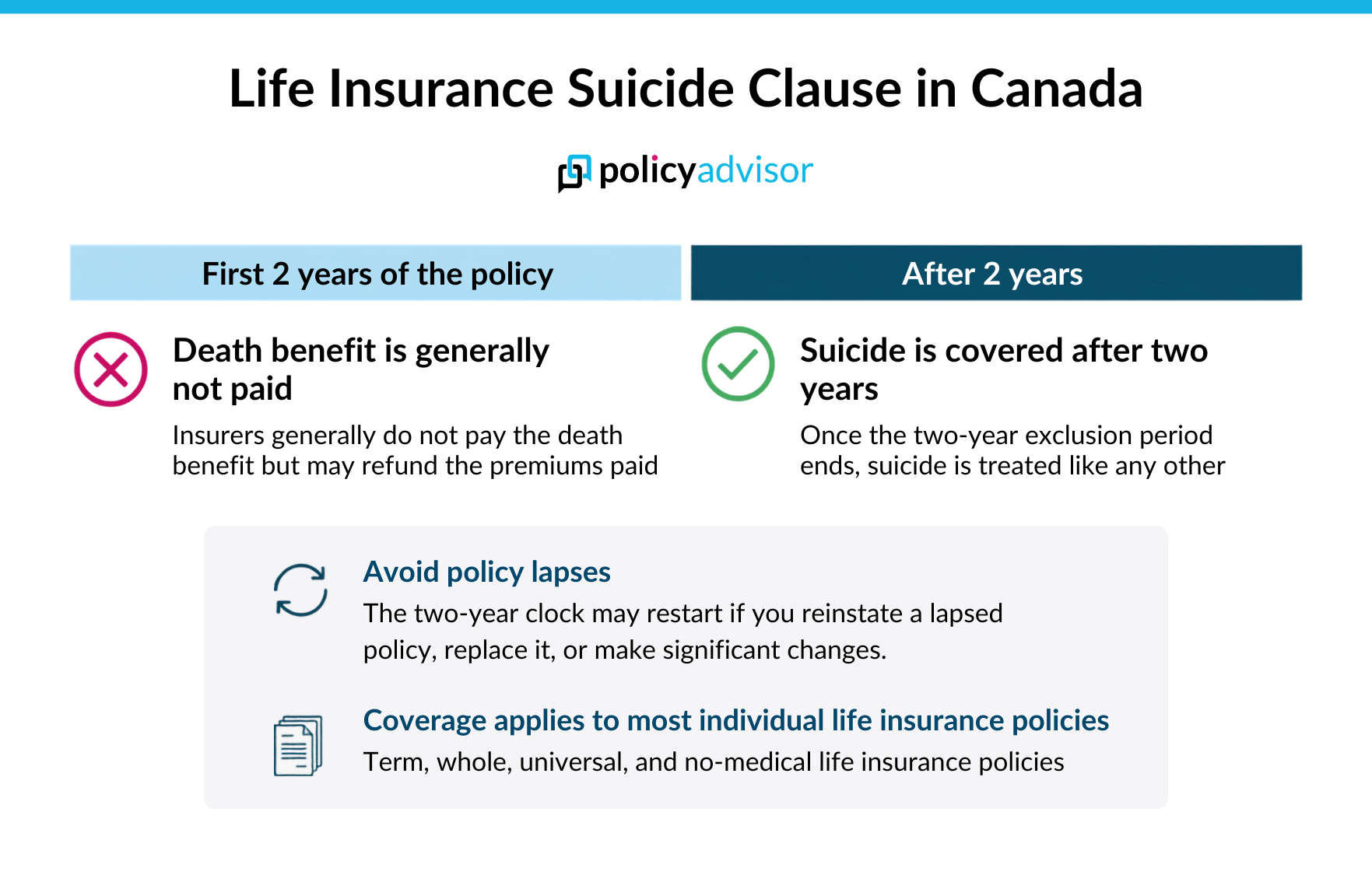
Yes, life insurance policies generally pay out for a death by suicide, provided the policy has been active beyond the contract's specified suicide exclusion period—typically one to two years from the effective date. If death by suicide occurs within this window, the insurer will deny the death benefit payout and refund the paid premiums to the beneficiary.
Contents
Understanding the Life Insurance Suicide Clause
The suicide clause is a standard provision included in virtually all individual life insurance contracts. Its primary financial purpose is to protect insurance companies against adverse selection—specifically, individuals purchasing large life insurance policies with the immediate intention of ending their lives.
Under standard policy terms, the suicide clause establishes a specific timeframe (the exclusion period) starting from the date the policy officially takes effect. If the policyholder dies by suicide during this timeframe, the insurance company is not legally obligated to pay the face value of the policy.
- Policy Effective Date (1 to 2 Year Exclusion Period)
- Death by suicide: Claim Denied; Premiums Refunded
- Full Coverage Applies
- Death by suicide: Full Death Benefit Paid
Exclusion Period Durations
In most U.S. states, the standard suicide exclusion period is two years, though some states and individual insurance carriers cap it at one year.
- Standard Rule: In the majority of jurisdictions, once the policy has been active for 24 consecutive months, the suicide clause expires permanently for that policy's initial coverage amount.
- State Variations: State laws regulate the maximum length of exclusion clauses. For example, under Missouri Revised Statutes § 376.620, suicide cannot be used as a defense against paying a life insurance claim after the policy has been in force for one year, unless the insurer can prove the policyholder contemplated suicide at the exact time they applied for coverage.
Premium Refund Mechanics
When a policyholder dies by suicide within the exclusion period, the denial of the death benefit does not mean the insurance company keeps all payments. Legally, the carrier must rescind the policy terms for that event and issue a full refund of all premiums paid since policy inception, minus any outstanding policy loans or administrative fees, directly to the named beneficiaries.
Suicide Clause vs. The Contestability Period
It is common to confuse the suicide clause with the incontestability clause, as both typically share a two-year window from the policy's start date. However, they serve distinct legal functions during claim evaluations.
| Feature | Suicide Clause | Incontestability Clause |
|---|---|---|
| Primary Focus | Specific cause of death (intentional self-harm). | Accuracy and honesty of information on the initial application. |
| Trigger Event | Death determined to be suicide within 1–2 years. | Discovery of material misrepresentation or omitted medical history. |
| Insurer Action | Denies full benefit; refunds premiums paid. | Rescinds policy, denies claim, or adjusts benefit based on true facts. |
| Post-2-Year Status | Full coverage applies regardless of cause of death. | Insurer generally cannot contest claim, except for fraudulent misstatements where allowed by state law. |
How Misrepresentation Impacts Mental Health Claims
The contestability clause allows the insurer to review the original life insurance application for material misrepresentations during the first two years of the policy.
If an applicant intentionally hides a pre-existing medical condition—such as severe clinical depression, prior suicide attempts, or psychiatric hospitalizations—and subsequently dies within the contestability window, the insurer may contest the claim based on material misrepresentation rather than relying solely on the suicide clause.
If the insurer demonstrates that it would have declined coverage or charged significantly higher premiums had the medical history been disclosed, it may rescind the policy altogether. Honesty during the underwriting process is critical to ensure that a future claim remains valid.
Policy Variations: Individual, Group, and AD&D Insurance
How a life insurance payout is handled following a suicide depends heavily on the type of policy held.
Life Insurance Policy Types:
- Individual Term / Permanent: 1–2 Year Exclusion Period
- Employer Basic Group: Often No Exclusion (Guaranteed Issue)
- Supplemental Group: 1–2 Year Exclusion Period
- AD&D Policies: PERMANENT EXCLUSION (No Payout)
1. Individual Term and Permanent Life Insurance
Individual term, whole life, and universal life insurance policies strictly enforce the standard one-to-two-year suicide exclusion period. Once that window passes, death by suicide is covered identically to deaths caused by illness, disease, or natural causes.
2. Employer-Provided Group Life Insurance
Employer-sponsored group life insurance policies often feature different rules than private individual policies:
- Basic Group Life: Many basic, employer-paid group life insurance plans do not contain a suicide exclusion clause. Because these plans are issued on a "guaranteed issue" basis to all eligible employees without medical underwriting, coverage often takes effect immediately, including coverage for death by suicide.
- Voluntary Supplemental Life: If an employee purchases additional coverage above the basic group limit, that supplemental portion usually carries a standard one- or two-year suicide exclusion clause.
3. Accidental Death and Dismemberment (AD&D) Insurance
AD&D insurance never pays out for death by suicide. AD&D policies are designed exclusively to cover accidental deaths (such as fatal motor vehicle collisions or accidental falls). Policy contracts explicitly exclude intentional self-inflicted injuries, suicide, and self-administered poisonings from coverage, regardless of how long the policy has been active.
Reinstatements, Conversions, and Coverage Upgrades
Certain administrative changes to an existing policy can reset or modify the suicide exclusion timeline.
Policy Reinstatements
If a life insurance policy lapses because the policyholder missed premium payments, restoring the coverage requires a formal reinstatement process. When a policy is reinstated:
- The suicide exclusion clause resets starting from the official date of reinstatement.
- If the insured dies by suicide within one to two years following the reinstatement date, the insurer can deny the death benefit under the reset clause, even if the original policy had been active for decades prior to the lapse.
Upgrading Coverage Amounts
If an insured person increases their benefit amount on an existing policy (for example, raising coverage from $500,000 to $1,000,000):
- The original $500,000 remains subject to the original policy timeline.
- The additional $500,000 increase triggers a new suicide exclusion period starting on the effective date of the upgrade.
- If death by suicide occurs during that new window, the insurer pays the original $500,000 benefit but refunds only the additional premiums paid for the upgraded portion.
Term-to-Permanent Policy Conversions
Converting an existing term policy into a permanent whole or universal life policy using a standard conversion rider generally does not reset the suicide clause clock. As long as the conversion involves the same carrier, carries no break in coverage, and does not increase the face amount, the original effective date remains intact.
How Insurers Investigate Suicide Claims
When a policyholder dies during the contestability or suicide exclusion window, the insurance carrier opens an administrative claim investigation before releasing funds.
- Death Reported
- Review Death Certificate
- Manner of Death Audit
- Natural / Accident: Full Death Benefit Paid
- Suicide / Pending: Detailed File Investigation
- Toxicology Reports
- Medical Examiner Files
- Police Documentation
- Benefit Decision
Key Documentation Required
Insurers examine several official documents to verify the cause and manner of death:
- Certified Death Certificate: Medical examiners categorize the manner of death as Natural, Accidental, Suicide, Homicide, or Undetermined.
- Autopsy and Toxicology Reports: These reports determine whether chemical substances, prescription medications, or alcohol played a role in the death.
- Police and First Responder Records: Incident reports and witness statements are reviewed to clarify the circumstances of the event.
Distinguishing Suicide from Accidental Death
In complex cases—such as single-vehicle crashes or fatal drug overdoses—determining intent can be difficult.
If a death certificate lists the cause as an overdose, the insurer will examine whether the overdose was an accidental poisoning or intentional self-harm. If the medical examiner lists the manner of death as "Undetermined," the insurer may delay the payout while conducting an independent review.
Under standard insurance law guidelines established by state insurance departments and modeled by the National Association of Insurance Commissioners (NAIC), the legal burden of proof falls on the insurance company to prove that a death was a suicide if it intends to deny a claim based on the suicide exclusion clause.
Policy Type and Suicide Coverage Summary
The following table summarizes how suicide clauses apply across common insurance contract structures:
| Policy Type | Exclusion Clause Applies? | Standard Waiting Window | Action If Claim Occurs During Exclusion | Payout After Exclusion Period |
|---|---|---|---|---|
| Individual Term Life | Yes | 1 to 2 Years | Claim Denied; Premiums Refunded | Full Death Benefit |
| Individual Permanent (Whole/Universal) | Yes | 1 to 2 Years | Claim Denied; Premiums Refunded | Full Death Benefit |
| Basic Group Life (Employer-Paid) | Rarely | 0 to 1 Year | Full Payout (If No Exclusion) | Full Death Benefit |
| Voluntary Supplemental Group | Yes | 1 to 2 Years | Claim Denied; Premiums Refunded | Full Death Benefit |
| Accidental Death & Dismemberment (AD&D) | Always Excluded | Permanent | Claim Denied; No Refund | Never Covered |
| Reinstated Life Policy | Yes (Clock Resets) | 1 to 2 Years from Reinstatement | Claim Denied; Reinstatement Premiums Refunded | Full Death Benefit |
Guidance for Beneficiaries Filing a Claim
If you are a named beneficiary navigating a life insurance claim following a traumatic loss, taking systematic steps can help avoid processing delays.
1. Gather Required Information
Collect the original policy document (or policy number), the insured's full legal name, Social Security number, and multiple certified copies of the official death certificate.
2. Verify Policy Dates
Check the policy's effective date against the date of death:
- If the policy was active for more than two years, the claim should follow standard processing routines.
- If the policy was active for less than two years, prepare for a longer review period while the insurer requests medical examiner and police files.
3. File the Claim Form Promptly
Submit the carrier's standard Statement of Claim form along with the certified death certificate. Clearly identify all named primary beneficiaries to avoid distribution errors.
4. What to Do in Case of a Disputed Denial
If an insurer denies a claim by asserting suicide within the exclusion period—but evidence suggests an accidental death—beneficiaries have the right to challenge the denial:
- Request the complete written claim file and formal denial letter from the insurer.
- Obtain additional evidence from local law enforcement or independent toxicologists if the official manner of death is disputed.
- File an administrative inquiry with your state's Department of Insurance or consult an experienced legal advisory practitioner specializing in insurance litigation.
Support Notice
If you or someone you know is going through a difficult time or experiencing thoughts of self-harm, confidential support is available 24 hours a day, 7 days a week:
- United States: Call or text 988 to reach the 988 Suicide & Crisis Lifeline, or chat online at 988lifeline.org.
- Canada: Call or text 988 to reach the Suicide Crisis Helpline.
- United Kingdom: Call 111 to reach the NHS mental health services, or call the Samaritans at 116 123.
- International: Find immediate crisis support services in your country at findahelpline.com.
Frequently Asked Questions
Does life insurance pay out for suicide after two years?
Yes. In almost all standard individual term and permanent life insurance contracts, full death benefits are paid if the death by suicide occurs after the one- or two-year suicide exclusion period has expired, provided the policy is active and premiums are up to date.
What happens if an insured person dies by suicide within the exclusion period?
If the death occurs while the suicide clause is still active, the insurance company will deny payment of the policy's face value. However, the insurer is required by law to refund all premiums paid into the policy to the designated beneficiaries.
Will an accidental drug overdose be classified as suicide?
Not automatically. Medical examiners evaluate physical evidence, toxicology results, medical history, and personal communications to determine intent. If the overdose is ruled accidental, the life insurance policy pays out normally. If it is ruled intentional, it is treated under the policy's suicide clause rules.
Does converting a term policy to a permanent policy reset the suicide clause?
No. Converting a term life insurance policy to a permanent policy with the same insurance carrier generally does not reset the suicide clause, provided there is no gap in coverage and the total death benefit amount remains the same.
Can an insurer deny a claim past two years if mental health details were left off the application?
Once the contestability period expires (typically two years), insurers generally cannot contest a policy for misstatements on the application. However, if an insurer can prove deliberate, fraudulent concealment in states where fraud exceptions apply, legal challenges can occasionally arise. Disclosing all medical history during underwriting remains the safest protection for beneficiaries.
Summary and Practical Next Actions
Navigating life insurance coverage after a death by suicide involves clear regulatory rules. Key steps to manage or verify coverage include:
- Audit Existing Policies: Review the policy effective date, reinstatement records, and riders to confirm whether the suicide exclusion window has passed.
- Maintain Continuous Premium Payments: Avoid lapses in coverage that could require policy reinstatement and reset the two-year suicide clause clock.
- Ensure Application Accuracy: Disclose all medical conditions, including mental health diagnoses, during initial policy applications to safeguard against future contestability challenges.
- Seek Independent Advice: If faced with a delayed or contested claim during a loss, consult a licensed insurance advisor or legal specialist to review the insurer's burden of proof and policy terms.
Image Gallery