How the Stefon Diggs "Nova" Contract Structure Shifted the NFL Landscape
The Stefon Diggs "Nova" shift refers to the revolutionary contract restructuring in 2024 where the Houston Texans shortened Diggs’ multi-year deal into a high-value, one-year "Supernova" pact. By deleting three years of future team con...
The Stefon Diggs "Nova" shift refers to the revolutionary contract restructuring in 2024 where the Houston Texans shortened Diggs’ multi-year deal into a high-value, one-year "Supernova" pact. By deleting three years of future team control, this move shifted the NFL by prioritizing immediate player leverage and "win-now" team windows over traditional long-term security.
Contents
The trade that sent Stefon Diggs from the Buffalo Bills to the Houston Texans in April 2024 was more than a personnel move; it was a structural earthquake. Often referred to by analysts as the "Nova" shift—a nod to the "Supernova" nature of a star player burning at maximum intensity for a single, high-stakes season—this event redefined how elite veterans and front offices negotiate the balance between loyalty and mobility. By the time we look back from 2026, the ripple effects of this decision have fundamentally altered the wide receiver market and the way "contender" teams approach the salary cap.
The Mechanics of the "Nova" Shift: A Departure from Tradition
To understand how Stefon Diggs shifted the NFL, one must first look at the specific financial engineering employed by Texans General Manager Nick Caserio. Typically, when a team trades for a star player with four years left on a $104 million extension, they do so to secure that player’s services for the long haul. Instead, the Texans took the unconventional step of stripping the final three years (2025–2027) off Diggs’ contract.
This maneuver converted Diggs’ remaining 2024 salary into a one-year, $22.52 million guaranteed "prove-it" deal. In doing so, the Texans effectively turned a long-term asset into a high-impact rental, while Diggs gained the ability to enter free agency a full three years earlier than originally scheduled. This "Nova" structure—a burst of elite production followed by immediate market freedom—set a new precedent for player empowerment.
The Breakdown of the Diggs Contract Adjustment
Prior to this shift, wide receivers were often "trapped" by the massive extensions they signed in their mid-20s. The Diggs "Nova" model proved that a player could force a trade and then successfully negotiate for the deletion of non-guaranteed years, essentially betting on themselves to reset the market again at age 31 or 32.
| Feature | Traditional Veteran Extension | The Diggs "Nova" Structure |
|---|---|---|
| Duration | 4–5 Years | 1 Year (Accelerated) |
| Team Control | High (Franchise tags/years) | Low (Immediate Free Agency) |
| Player Leverage | Locked into back-loaded years | Maximum (Immediate market re-entry) |
| Cap Impact | Spread over several seasons | Highly concentrated "Win-Now" hit |
| Risk Profile | Team holds injury risk | Player holds performance risk |
How the Shift Influenced Team-Building Strategies
The "Nova" shift signaled a departure from the "sustained success" model that defined the 2010s. By 2026, it is clear that the Texans' willingness to trade a second-round pick for a single year of Diggs' prime emboldened other front offices to stop hoarding mid-round draft capital.
The "Win-Now" Window Compression
The NFL has transitioned into an era of compressed championship windows. Teams with quarterbacks on rookie contracts (like C.J. Stroud in 2024) began using the "Nova" model to surround their young passers with elite talent without long-term "cap jail" consequences. If the veteran performed, the team reached the Super Bowl; if the veteran declined or the chemistry soured, the team was not tethered to a declining asset for three more years.
This shift pressured other AFC contenders to respond. We saw teams like the Chiefs and Ravens begin to adopt "rental" mentalities for veteran stars, prioritizing the immediate season’s cap space over the five-year outlook. The "Nova" shift effectively ended the era of the "untradeable" wide receiver contract.
Impact on the Wide Receiver Market and Player Power
Stefon Diggs has always been a lightning rod for discussions on player autonomy. From his departure in Minnesota to his exit from Buffalo, he consistently pushed the boundaries of how much influence a non-quarterback could exert over his destination. However, the "Nova" shift was his most significant contribution to the league's labor dynamics.
The End of the "Hostage" Contract
Before 2024, if a player was unhappy but had three years left on their deal, they were largely at the mercy of the team. Diggs proved that if a player is talented enough, they can not only force a trade but also force a complete rewrite of the contract terms to favor their impending free agency.
This gave rise to the "Mercenary Era" of 2025 and 2026. Top-tier wide receivers began viewing their contracts as fluid documents. The idea that a signature "locked" a player in for half a decade became an antiquated notion. Diggs showed that a "Supernova" year—playing for a high guarantee in a high-profile offense—was often more lucrative than playing out the low-guarantee years of an aging extension.
Economic Consequences for the Salary Cap
The financial implications of the "Nova" shift were felt across the league’s accounting departments. When the Texans deleted Diggs' future years, they essentially accepted a massive one-year cap hit in exchange for future flexibility. This forced the NFL to reconsider how "dead money" and "void years" are handled in the collective bargaining context.
- Concentrated Guarantees: Agents began demanding "Diggs Clauses" that would trigger contract voids if a player was traded, ensuring the player couldn't be sent to a rebuilding team against their will without a financial "out."
- Trade Value Recalibration: The value of a veteran wide receiver in the trade market shifted. Teams no longer just weighed the player's talent; they had to weigh the "Nova" risk—the possibility that the player would demand a shortened deal upon arrival.
- Inflation of One-Year Deals: By 2026, the average annual value (AAV) for elite "rental" receivers soared, as teams became willing to pay a premium for short-term excellence without the "tail" of a long-term commitment.
The Role of Personal Brand and Performance
A critical component of the "Nova" shift was Diggs' ability to remain a top-tier producer despite the drama surrounding his moves. For the "Nova" model to work, the player must be a "Supernova"—a star so bright that the team is willing to ignore the lack of long-term control.
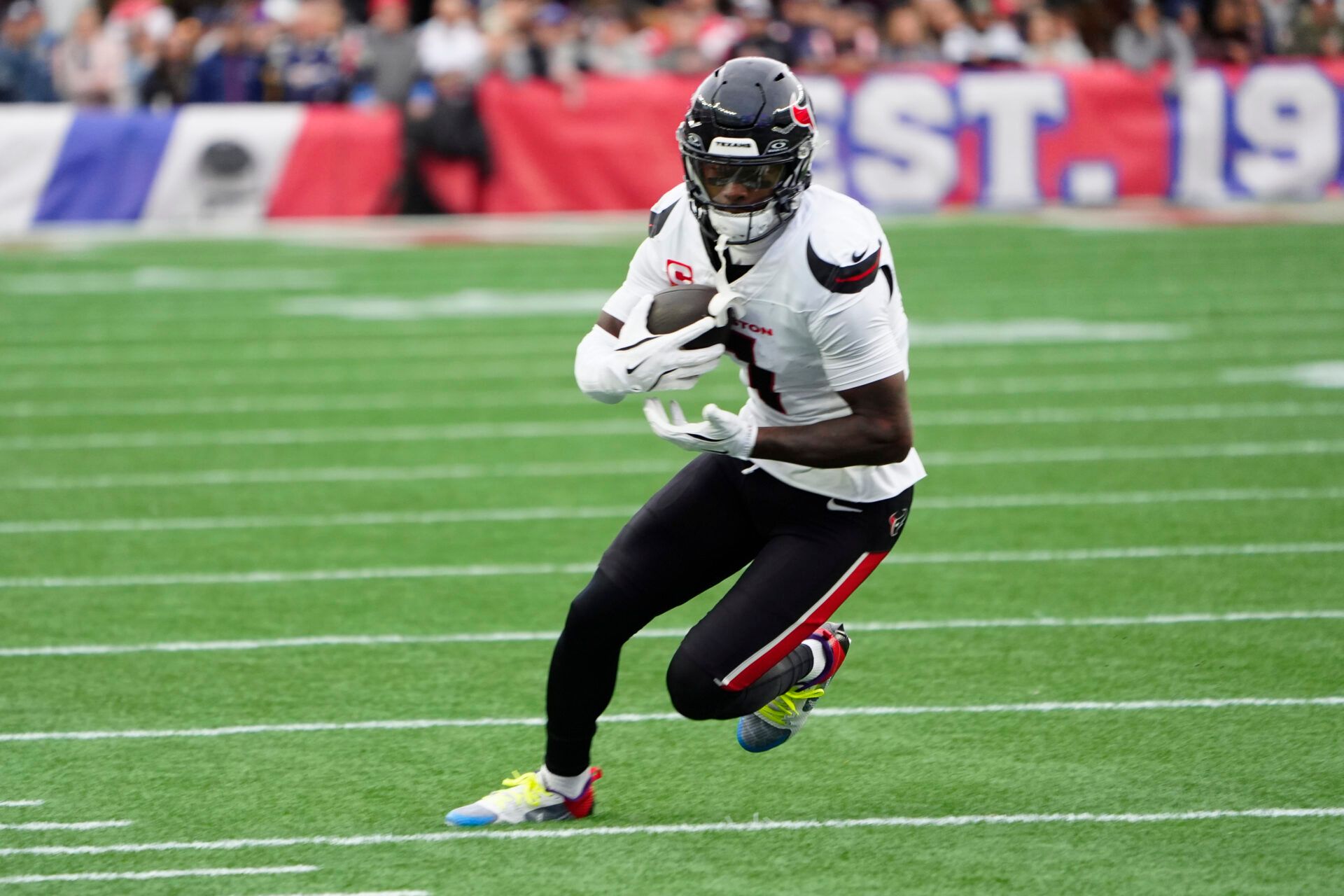
Diggs' 2024 season in Houston, where he served as a veteran mentor and a reliable chain-mover for C.J. Stroud, validated the Texans' gamble. It proved that a veteran doesn't need a five-year commitment to be a "culture fit." This realization allowed teams to be more aggressive in the trade market, knowing that a one-year "marriage of convenience" could be just as beneficial as a long-term partnership.
Frequently Asked Questions
What exactly does the "Nova" shift refer to in NFL terms?
The "Nova" shift refers to the transition toward elite veteran players signing or restructuring into high-value, one-year "Supernova" contracts that maximize immediate earnings and market freedom. It was popularized by the Stefon Diggs trade to the Houston Texans, where three years were removed from his contract to make him a free agent after a single season.
How did the Texans benefit if they lost three years of team control?
The Texans benefited by acquiring a premier talent for their young quarterback's development without any long-term financial risk. By shortening the deal, they avoided potential "dead cap" hits in 2025 and 2026 if Diggs' performance had declined, while simultaneously incentivizing Diggs to play at his highest level to earn his next contract.
Did the Stefon Diggs trade change how draft picks are valued?
Yes. The trade showed that a second-round pick is a fair price for a one-year "rental" of a Hall of Fame-caliber talent. This led to a more liquid trade market in 2025 and 2026, where contenders became more willing to part with Day 2 draft capital for immediate veteran upgrades.
How did this shift affect other wide receivers like Brandon Aiyuk or Ja'Marr Chase?
The Diggs "Nova" shift provided these players with a new blueprint. Instead of just fighting for the highest total contract value, players began focusing on "years to free agency" and "guaranteed cash flow," using the threat of a shortened "Nova" deal to force teams into more favorable guaranteed structures.
Is the "Nova" contract model sustainable for most NFL teams?
It is most sustainable for teams with quarterbacks on rookie contracts. Because these teams have a temporary surplus of cap space, they can afford the concentrated "Nova" hits. For teams with high-priced veteran quarterbacks, this model is much harder to execute without significant cap casualties elsewhere.
Practical Recommendation for Analysts and Fans
When evaluating future NFL trades involving veteran stars, look beyond the draft picks exchanged. Analyze the contractual duration and guaranteed structure post-trade. The "Nova" shift taught us that a player’s true value in the modern NFL is often found in their proximity to free agency rather than the length of their remaining contract. For teams in a championship window, the "Supernova" approach—sacrificing long-term control for immediate, elite production—is now a verified path to contention.
Image Gallery