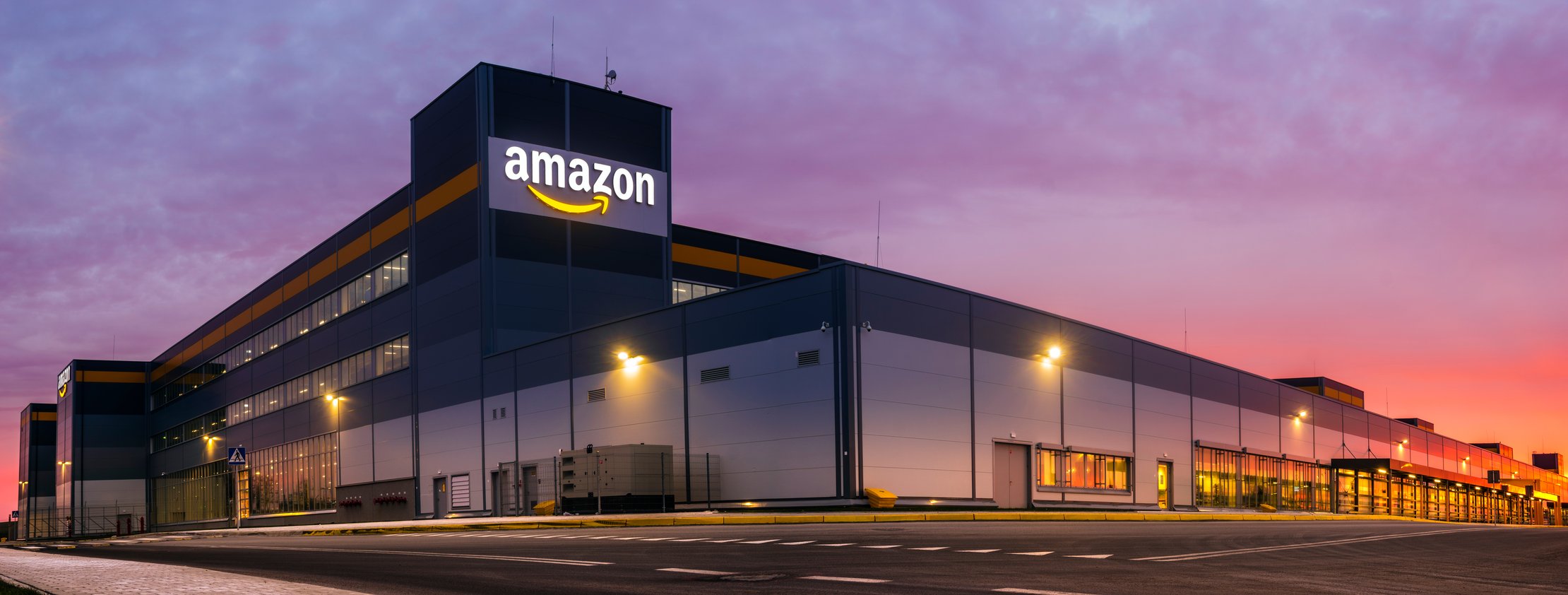
What Amazon Fulfillment Centers in the United States Look Like Today
Modern Amazon fulfillment centers in the United States are multi-story, highly automated operational facilities spanning up to four million square feet. Inside, thousands of autonomous mobile robots transport inventory pods along fence...
Modern Amazon fulfillment centers in the United States are multi-story, highly automated operational facilities spanning up to four million square feet. Inside, thousands of autonomous mobile robots transport inventory pods along fenced robotics floors directly to ergonomic associate stations, while advanced AI computer vision systems, robotic arms, and overhead conveyors streamline sorting, packaging, and shipping.
Contents
Structural Architecture and Vertical Scale
The physical layout of Amazon fulfillment centers in the United States has evolved dramatically from traditional, single-story warehouse shells into dense, multi-story industrial centers. Modern "Gen 11" and "Gen 12" Amazon Robotics (AR) sortable fulfillment centers typically feature four to five operational floors built over a footprint of 600,000 to 800,000 square feet, yielding an effective indoor space of 3.5 to 4 million square feet.
| Floor Level | Operational Features |
|---|---|
| Ground Floor | Inbound Receiving | SLAM Lines | Outbound Docks |
| Mezzanine Level 1 | High-Density AR Storage Pod Field & Pick Nodes |
| Mezzanine Level 2 | High-Density AR Storage Pod Field & Pick Nodes |
| Mezzanine Level 3 | Multi-Category Stow Stations & Buffer Inventory |
Building Footprint and Floor Zoning
Facilities are engineered around strict functional zoning to maximize throughput and minimize material travel distances:
- Ground Level Operations: The lower floor is reserved for heavy logistical movement. It houses inbound truck bays, decant areas, automated packaging lines, high-speed sorting systems, and outbound shipping docks. Heavy machinery, semi-trailer access, and fluid unloading operate exclusively on this level.
- Upper Mezzanine Floors: Elevated floors feature high-tolerance concrete slabs treated with anti-static, high-wear coatings. These upper levels hold the Robotics Field—massive, fenced-off spaces filled with organized vertical shelving units (known as inventory pods).
Flooring and Environmental Engineering
The flooring in modern robotics facilities must meet precise industrial tolerances. Mobile drive units require a micro-flat floor surface; slight unevenness can throw off the optical sensors drive units use for high-speed transit. High-bay LED lighting arrays are dynamically controlled to dim in areas populated only by robots and brighten near human workstations. Climate-control HVAC systems regulate ambient temperatures across all vertical tiers, maintaining associate comfort and protecting sensitive computing hardware.
Inside the Autonomous Floor: Drive Units, AMRs, and Pod Systems
The central feature of modern fulfillment centers is the Amazon Robotics (AR) floor. Rather than human workers walking down long aisles to retrieve items, automated systems bring the products directly to the worker.
- Fenced AR Pod Field
- Pods and Drive Units
- Automated Movement
- Ergonomic Human Pick/Stow Station
Drive Units and Pod Movement
On the robotics floor, hundreds to thousands of floor-roaming robots move beneath multi-sided fabric and wire inventory pod towers.
- Hercules Drive Units: These low-profile, square drive units slide directly beneath an inventory pod, engage a hydraulic lift mechanism to elevate the 1,500-pound pod a few inches off the ground, and carry it across the floor grid to a destination station.
- Grid Navigation: The floor is lined with a grid of 2D barcodes spaced every few feet. Cameras mounted on the bottom of each drive unit scan these codes continuously to verify position, direction, and speed, communicating with a central site management system over dedicated industrial Wi-Fi networks.
Next-Gen Autonomous Mobile Robots (AMRs)
Older facilities rely on physical fencing to separate drive units from human staff. In newer operations, fully autonomous mobile robots (AMRs) like Proteus operate in open-floor environments.
- Safety Sensing: Proteus uses LiDAR sensors, 3D computer vision, and collision-avoidance algorithms to safely navigate around human associates without protective barriers.
- Tote and Container Handling Systems: Systems like Sequoia organize inventory into containerized tote systems. Sequoia automatically elevates and presents totes to workers at waist height, significantly reducing the need for reaching or bending during inventory retrieval.
The Human Experience: Ergonomic Workstations and Safety Tech
While robotics handle horizontal movement, human associates remain essential for complex tactile tasks like picking individual items, checking product quality, and packing unique item shapes.
The Workstation Setup
Associates stand at ergonomic work cells positioned around the outer perimeter of the robotics field. These stations are equipped with physical and digital aids to improve speed and reduce fatigue:
- Turntable Pod Gates: When a drive unit delivers an inventory pod to a pick station, it presents the specific side containing the target item. A rotating physical barrier opens only when the pod is locked safely in position.
- Pick-to-Light and Computer Vision: Overhead projectors cast a bright light directly onto the correct shelf pocket within the pod. A nearby monitor displays a photo of the item, the required quantity, and barcode verification data.
- Overhead Scanners: Overhead camera arrays scan barcodes automatically as the associate transfers an item from the pod into a yellow tote, eliminating hand-held barcode scanners and keeping the worker's hands free.
Personal Protective Equipment and Wearable Tech
Safety inside modern facilities relies heavily on wearable technology. Technicians entering an active robotics floor wear a Robotics Safety Vest (Tech Vest).
| Robotics Safety Vest Features |
|---|
| Radio Frequency Transmitters |
| Real-Time Position Telemetry |
| Fail-Safe Auto-Braking Signal |
| Tactile Haptic Warnings |
The vest contains radio frequency transmitters and sensors that broadcast the wearer's real-time position to the central robotics software. As a technician walks onto the floor to resolve a misplaced item or perform maintenance, nearby drive units automatically slow down, change course, or come to a complete stop, creating a moving safety buffer around the worker.
Inbound to Outbound: The Floor Journey of a Product
Tracing an item through a modern fulfillment center demonstrates how human labor, robotics, and sorting systems work together step-by-step.
- Inbound Dock
- Decant Station
- Robotic Stow
- AR Pod Field
- Pick Station
- Packing Station
- SLAM Line
- Outbound Dock
Step 1: Inbound Receiving and Decanting
- Delivery trucks dock at the inbound bays, where workers unload pallets of merchandise.
- At Decant Stations, associates unpack bulk master cartons, scan item barcodes, and transfer individual products into standardized plastic totes.
- Totes travel via overhead conveyor lines to upper floor stowage areas.
Step 2: Robotic Stowage
- An associate at a stow station scans an item from an incoming tote.
- The inventory management software directs a drive unit to bring an available pod with an open bin space.
- The associate places the item into the designated bin slot, and computer vision sensors verify the item placement automatically.
Step 3: Customer Order Picking
- When a customer places an order on Amazon, the software routes the order to the facility holding the item.
- A drive unit carries the matching pod to a pick associate or a robotic pick arm (such as Sparrow).
- The item is removed from the pod, placed into an outbound yellow tote, and sent down multi-level spiral conveyors to the main floor.
Step 4: Automated Packing and SLAM Lines
- High-speed belt conveyors deliver the tote to a packing station.
- Packing software instructs the associate which box or padded mailer size to use, or routes the item into an automated custom packaging machine that creates a custom-fit paper pouch.
- Packed boxes travel down a SLAM (Scan, Label, Apply, Manifest) conveyor line:
- Scan: Checks the package barcode.
- Label: Prints and applies the shipping label in under a second.
- Apply: Applies tracking information.
- Manifest: Weighs the package in motion to verify the internal contents match the calculated order weight, flagging discrepancies for manual inspection.
Step 5: High-Speed Sorting and Outbound Shipping
- Labeled packages move onto cross-belt sorter systems overhead.
- Optical readers scan the shipping label and trigger automated mechanical shoes or air jets to slide the box down a specific chute assigned to a postal code or sorting hub.
- Outbound associates load packages into semi-trailers bound for sortation centers or local delivery stations.
Structural Comparison of Amazon Facility Types
Not all Amazon logistics locations serve the same operational role. The physical layout, hardware mix, and staffing vary depending on where the facility sits in the delivery network.
| Facility Type | Average Size (Sq Ft) | Core Automation & Technology | Primary Operational Function | Typical Floor Count |
|---|---|---|---|---|
| AR Sortable Fulfillment Center | 1,000,000 – 4,000,000 | Hercules/Proteus AMRs, SLAM lines, automated pick arms, spiral conveyors | Storing, picking, and packing small-to-medium customer items | 4 – 5 Stories |
| Non-Sortable Fulfillment Center | 800,000 – 1,200,000 | Heavy-duty wire-guided order pickers, specialized forklifts, high-bay racking | Storing and handling large, bulky, or heavy items (e.g., furniture, outdoor equipment) | 1 Story (High Bay) |
| Sortation Center | 300,000 – 600,000 | High-speed linear sorters, Robin sorting arms, automated drag-line carts | Sorting sealed packages by zip code for direct carrier transfer | 1 Story |
| Delivery Station | 100,000 – 300,000 | Mobile staging racks, hand-held scanners, digital route staging lanes | Preparing individual packages for last-mile delivery vans | 1 Story |
| Sub-Same-Day (SSD) Facility | 150,000 – 300,000 | Hybrid mini-AR fields, direct-to-flex dispatch stations | Combining fulfillment and delivery functions for ultra-fast localized delivery | 1 Story |
Technology Breakthroughs Defining Modern Facility Floors
Robotic Arms (Sparrow, Robin, and Cardinal)
Modern fulfillment centers use advanced robotic arms alongside traditional drive units:
- Sparrow: An articulated robotic arm using micro-cameras and multi-channel suction cups. It can identify, select, and handle millions of individual products of varying shapes, sizes, and packaging materials directly from inventory pods.
- Robin and Cardinal: Heavy-duty robotic arms operating near conveyor turns and shipping gates. They pick up packaged boxes or heavy totes from mixed piles, read their labels using computer vision, and stack them onto pallet racks or transport carts.
- Conveyor Line / Mixed Packages
- Robin/Cardinal Arm (Computer Vision & Suction Gripper)
- Organized Pallet / Cart
AI-Driven Inventory Routing and Computer Vision
Modern facility operations rely heavily on machine learning to streamline inventory placement. Artificial intelligence algorithms analyze local purchasing trends to ensure items with high seasonal demand are stowed on lower floors or near high-speed pick channels.
Computer vision platforms continuously audit inventory status. Overhead camera arrays scan pods as they move past, identifying misplaced items, spilled contents, or damaged packaging without requiring manual floor counts.
Sustainable Automated Packaging
To reduce cardboard consumption and eliminate plastic void-fill air pillows, modern packing bays feature automated box-sizing systems. These machines measure an item's exact dimensions on the conveyor belt, cut a custom cardboard carton or paper pouch around the item, and seal it automatically. This design minimizes package volume, optimizes cargo space inside outbound trailers, and cuts shipping packaging waste.
Frequently Asked Questions
How big is the average Amazon robotics fulfillment center in the US today?
Modern Amazon Robotics (AR) sortable fulfillment centers typically range from 3 to 4 million total operational square feet spread across four or five floors. Their ground-level footprint usually covers between 600,000 and 800,000 square feet.
Do human associates and autonomous robots work in the same space?
In standard AR pod fields, heavy drive units operate inside fenced zones separated from human workers. Associates interact with pods at perimeter work cells. However, in facilities using newer autonomous mobile robots (AMRs) like Proteus, robots use advanced LiDAR and visual sensing to navigate safely alongside humans in open operational areas.
What is the difference between an Amazon fulfillment center and a delivery station?
Fulfillment centers store millions of products, pick customer items from inventory, and pack them into individual shipping boxes. Delivery stations are smaller, downstream facilities where pre-packaged items arrive from fulfillment and sortation centers to be organized into final delivery routes for delivery vans.
How do robots know where items are stored inside an inventory pod?
When an associate stows an item, they scan the item's barcode and the specific bin compartment barcode. The central inventory system links that exact product to that pod and bin location. Computer vision cameras also verify that the item was placed into the correct bin slot.
Are Amazon fulfillment centers fully automated?
No. Modern fulfillment centers run on a hybrid model that pairs automation with human labor. Mobile robots and automated conveyors handle heavy horizontal transport, sorting, and packaging tasks, while human associates handle intricate picking, quality assurance, inbound decanting, and facility maintenance.
Practical Takeaways for Logistics and Supply Chain Leaders
The design of modern Amazon fulfillment centers reflects key trends shaping industrial logistics across the United States:
- Maximize Vertical Footprint: Building upward with multi-tier mezzanines allows logistics operations to expand capacity near urban population centers without requiring excessively large land plots.
- Prioritize Goods-to-Person Automation: Bringing items directly to stationary workers eliminates non-productive walking time, improves ergonomics, and increases throughput per square foot.
- Deploy Flexible Robotics: Combining fenced drive-unit fields with vision-guided autonomous mobile robots allows facilities to scale operational flows quickly without completely redesigning fixed infrastructure.
- Integrate Real-Time Inspection: Using overhead computer vision during stowing, picking, and packing reduces mispicks, cuts down on hand-held scanning steps, and keeps inventory records accurate.
EDITORIAL CATEGORY METADATA:
Image Gallery