Dickey Betts Discography Overview: Solo Works, Great Southern, and The Allman Brothers Legacy
The discography of Dickey Betts encompasses over five decades of groundbreaking Southern rock, blues, country, and jazz-fusion recordings. As a founding guitarist, singer, and songwriter for The Allman Brothers Band, alongside his exte...
The discography of Dickey Betts encompasses over five decades of groundbreaking Southern rock, blues, country, and jazz-fusion recordings. As a founding guitarist, singer, and songwriter for The Allman Brothers Band, alongside his extensive solo career leading Great Southern and The Dickey Betts Band, Betts crafted an influential body of work defined by melodic twin-guitar harmonies, major-pentatonic improvisations, and timeless American songwriting.
Contents
The Musical Identity and Style of Dickey Betts
To fully understand the discography of Forrest Richard "Dickey" Betts (1943–2024), one must examine the distinct stylistic voice he brought to American roots music. While Duane Allman was renowned for his fiery, blues-saturated slide guitar playing, Betts injected a refined sense of lyricism, country swing, bluegrass picking, and modal jazz phrasing into the rock lexicon.
Betts pioneered the application of major pentatonic and hexatonic scales within heavy rock arrangements, creating an uplifting, soaring guitar sound that became a foundational element of Southern rock. Hits like "Ramblin' Man", "Blue Sky", and the instrumental masterpiece "Jessica" established his dual signature: accessible, narrative-driven songwriting paired with complex, multi-section instrumental compositions.
Across his studio and live catalog, Betts's work naturally divides into three major operational eras:
- The Allman Brothers Band Masterworks: Key albums where Betts served as co-lead guitarist, primary songwriter, and leader during pivotal transitions.
- Solo and Great Southern Projects: Independent releases exploring Western swing, country-rock, and hard-driving jam sessions outside the main band structure.
- Late-Career Independent and Live Archives: Small-label studio albums and archival live releases documenting his touring bands in the 1990s and 2000s.
The Solo Era Begins: Highway Call (1974)
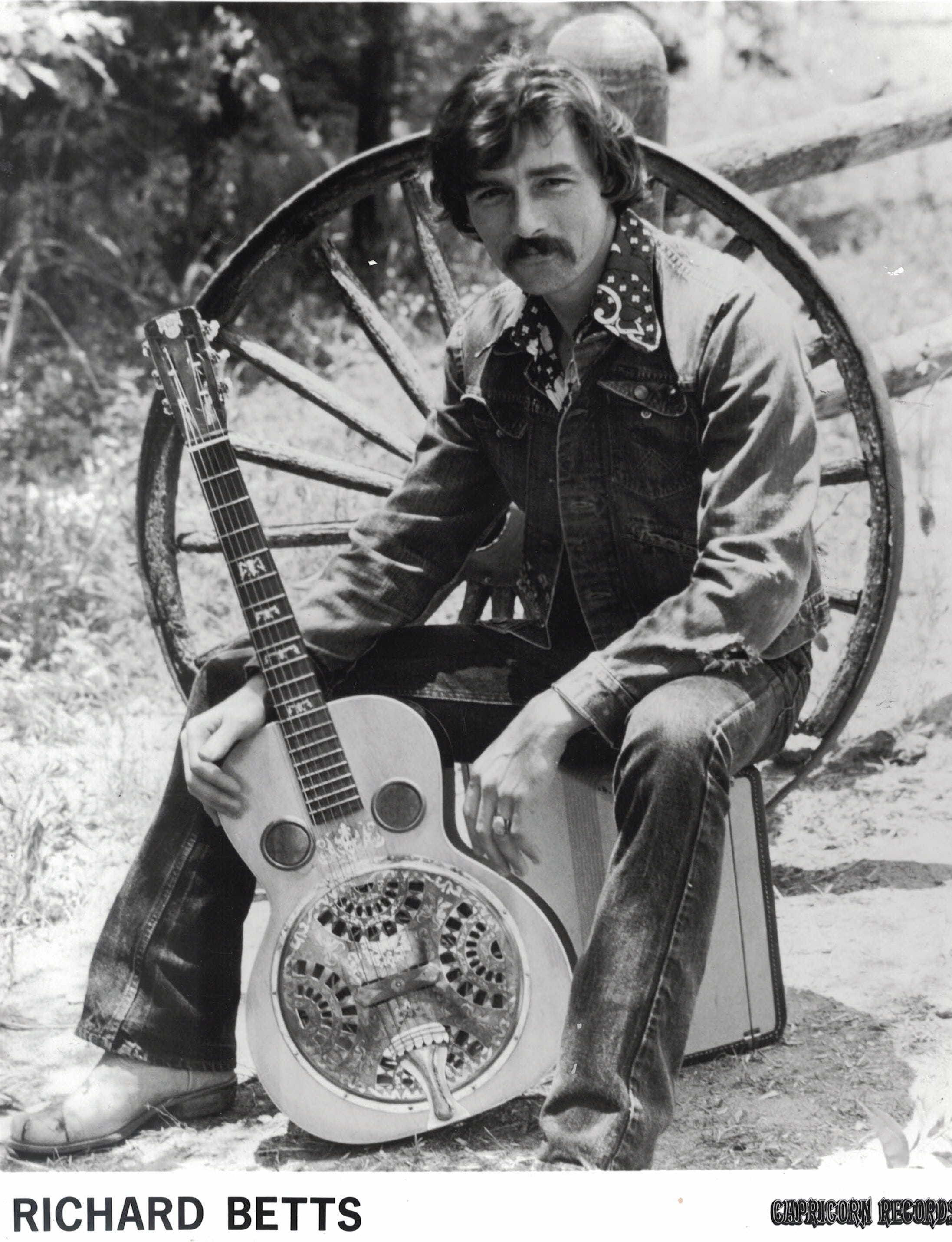
Following the critical and commercial triumph of The Allman Brothers Band's 1973 album Brothers and Sisters, Betts stepped out with his debut solo release, Highway Call (1974), issued under the name Richard Betts by Capricorn Records.
- Highway Call (1974)
- Side A: Country-rock and acoustic storytelling
- "Long Time Gone"
- "Rain"
- "Highway Call"
- Side B: Instrumental acoustic/bluegrass jams
- "Kissimmee Kid"
- "Hand Picked" (feat. Vassar Clements)
- Side A: Country-rock and acoustic storytelling
Co-produced by Betts and Johnny Sandlin, Highway Call departed from the heavy blues-rock of the Allmans, leaning heavily into country rock, bluegrass, and Western swing. Betts recruited legendary fiddle player Vassar Clements, keyboardist Chuck Leavell, steel guitarist John Hughey, and rhythm guitarist Jeff Cook to craft a relaxed, sunny sonic landscape.
Key Tracks and Impact
- "Long Time Gone": A reflective, acoustic-driven track showcasing Betts's warm vocal delivery and melodic acoustic lead work.
- "Highway Call": The title track blends country storytelling with smooth, twin-guitar harmony leads.
- "Hand Picked": A side-long, 14-minute instrumental suite where Betts and Vassar Clements trade virtuosic bluegrass and jazz-influenced solos, demonstrating Betts's deep appreciation for fiddle tune structures.
Highway Call remains a landmark album in the country-rock subgenre, showcasing Betts's independence as an arranger capable of writing complex instrumental folk music.
The Great Southern Era (1977–1978)
When The Allman Brothers Band dissolved temporarily in 1976, Betts formed Dickey Betts & Great Southern, signing with Arista Records. This group featured a two-guitar, two-drummer lineup modeled after the Allman Brothers' twin-engine rhythm section, incorporating guitarist Dan Toler, bassist Ken Tibbetts, keyboardist Tom Broome, and drummers Doni Sharbono and Danny Bründage.
| Dickey Betts & Great Southern (1977) |
|---|
| Lineup: Dickey Betts (Guitar/Vocals), Dan Toler (Guitar), Tom Broome (Keys), Ken Tibbetts (Bass), Doni Sharbono & Danny Bründage (Drums/Percussion) |
Dickey Betts & Great Southern (1977)
The self-titled debut album returned Betts to a heavier, blues-infused rock style while retaining his signature melodic sensibility. The album's dual-guitar interplay between Betts and Dan Toler established a high standard for late-1970s guitar records.
- "Bougainvillea": Co-written with actor Don Johnson, this Latin-tinged track features lush rhythm work and dynamic soloing.
- "Out to Lunch": A jazz-rock instrumental demonstrating the band's improvisational discipline.
- "California Blues": A driving rocker that highlighting Betts's aggressive slide and lead guitar work.
Atlanta's Burning Down (1978)
Great Southern's second release, Atlanta's Burning Down, expanded on the cinematic themes of Southern history and road life. The title track is an ambitious, narrative ballad detailing the destruction of Atlanta during the American Civil War, complete with orchestral arrangements and dramatic tempo shifts.
- "Atlanta's Burning Down": A storytelling epic with dramatic lead guitar work and historical imagery.
- "Good Time Feeling": A bright, radio-friendly Southern rock track that highlights Betts's infectious major-scale melodies.
The 1980s Resurgence: The Dickey Betts Band and Pattern Continuous (1988)
After another period of activity with a reformed Allman Brothers Band (1979–1982) and an unreleased project with Betts, Jimmy Hall, Chuck Leavell, and Butch Trucks (BHLT), Betts assembled The Dickey Betts Band in the mid-1980s.
This lineup proved pivotal not only for Betts's solo catalog but also for the future of Southern rock, as it introduced slide guitarist Warren Haynes, keyboardist/harmonica player Johnny Neel, and drummer Matt Abts to a wider audience.
| Pattern Continuous (1988 - Epic) |
|---|
| Key Personnel: Dickey Betts (Guitar/Vocals), Warren Haynes (Guitar), Johnny Neel (Keys/Harmonica), Matt Abts (Drums) |
| Key Songs: "Rock Bottom", "Duane's Tune", "Undercover Lover" |
Released by Epic Records, Pattern Continuous (1988) blended crisp 1980s production standards with classic dual-guitar blues-rock.
Key Tracks and Legacy
- "Duane's Tune": A fast-paced instrumental tribute to Duane Allman, featuring intricate unison guitar runs between Betts and Haynes.
- "Rock Bottom": Co-written with Johnny Neel, this hard-driving blues rocker became a centerpiece of Betts's late-80s concerts.
- "Undercover Lover": A melodic rock track showcasing the soulful vocal arrangements of Haynes and Betts.
The chemistry established on Pattern Continuous served as the catalyst for the 1989 reunion of The Allman Brothers Band. Both Warren Haynes and Johnny Neel were recruited into the Allmans alongside Betts, revitalizing the legendary group for their celebrated 1990s comeback on Epic Records.
2000s Independent Releases and Archive Albums
Following his permanent departure from The Allman Brothers Band in 2000, Betts reactivated Great Southern, touring heavily and releasing material through independent labels.
Let's Get Together (2001)
Released on Free Spirit / Tone-Cool Records, Let's Get Together saw Betts exploring a broad palette of swing, jazz, acoustic blues, and Southern rock. Featuring guitarists Mark May and Dan Toler (on select tours/tracks), bassist Pedro Arevalo, and keyboardist Michael Kach, the album offered an unpretentious, live-in-the-studio feel.
- "Rave On": An uptempo jam blending swing rhythms with duel guitar leads.
- "Tombstone Eyes": A poignant acoustic ballad dealing with mortality and reflection.
- "Single Man": A bluesy, signature Betts groove highlighting his relaxed vocal phrasing.
The Collectors #1 (2002)
An acoustic EP featuring re-recorded acoustic arrangements of classic tracks alongside new instrumentals, including an acoustic rendition of "Beyond the Sunset" and "Georgia on My Mind".
Essential Allman Brothers Band Albums Shaped by Betts
A complete discography overview requires highlighting the studio and live albums by The Allman Brothers Band where Betts served as the primary songwriter, lead vocalist, or musical director.
| Key ABB Albums Featuring Betts Compositions | Key Tracks |
|---|---|
| Idlewild South (1970) | "In Memory of Elizabeth Reed" |
| Eat a Peach (1972) | "Blue Sky", "Les Brers in A Minor" |
| Brothers and Sisters (1973) | "Ramblin' Man", "Jessica", "Southbound" |
| Enlightened Rogues (1979) | "Crazy Love", "Pegasus" |
| Seven Turns (1990) | "Seven Turns", "Good Clean Fun" |
| Shades of Two Worlds (1991) | "Nobody Knows", "Kind of Bird" |
| Where It All Begins (1994) | "No One to Run With", "Back Where It All Begins" |
1. Brothers and Sisters (1973)
Following the deaths of Duane Allman and bassist Berry Oakley, Betts stepped forward as the primary leader of the group. He wrote and sang the band's biggest hit single, "Ramblin' Man" (US No. 2), and composed "Jessica", a Grammy Award-winning instrumental built around a soaring major-scale melody inspired by Django Reinhardt.
2. Seven Turns (1990)
After a long hiatus, Betts brought the band back to critical acclaim with Seven Turns. He wrote the hit title track, as well as "Good Clean Fun", demonstrating his ability to write anthemic, radio-friendly Southern rock with complex guitar interplay.
3. Shades of Two Worlds (1991) & Where It All Begins (1994)
On these 1990s classics, Betts contributed essential long-form compositions such as "Nobody Knows" (an 11-minute minor blues epic) and "No One to Run With", a tribal, rhythm-heavy rock anthem that remained a staple of classic rock radio.
Comprehensive Catalog Overview
The table below outlines the core discography of Dickey Betts across his solo projects, Great Southern, The Dickey Betts Band, and primary Allman Brothers Band eras.
| Year | Album Title | Recording Entity | Primary Style / Genre | Key Compositions / Highlights |
|---|---|---|---|---|
| 1970 | Idlewild South | The Allman Brothers Band | Blues Rock / Jazz Fusion | "In Memory of Elizabeth Reed" |
| 1972 | Eat a Peach | The Allman Brothers Band | Southern Rock / Blues | "Blue Sky", "Les Brers in A Minor" |
| 1973 | Brothers and Sisters | The Allman Brothers Band | Southern Rock / Country Rock | "Ramblin' Man", "Jessica", "Southbound" |
| 1974 | Highway Call | Richard Betts | Country Rock / Bluegrass | "Long Time Gone", "Hand Picked" |
| 1977 | Dickey Betts & Great Southern | Dickey Betts & Great Southern | Southern Rock / Fusion | "Bougainvillea", "Out to Lunch" |
| 1978 | Atlanta's Burning Down | Dickey Betts & Great Southern | Country Rock / Southern Rock | "Atlanta's Burning Down", "Good Time Feeling" |
| 1979 | Enlightened Rogues | The Allman Brothers Band | Southern Rock | "Crazy Love", "Pegasus" |
| 1988 | Pattern Continuous | The Dickey Betts Band | Southern Rock / Blues | "Duane's Tune", "Rock Bottom" |
| 1990 | Seven Turns | The Allman Brothers Band | Southern Rock / Blues | "Seven Turns", "Good Clean Fun" |
| 1991 | Shades of Two Worlds | The Allman Brothers Band | Southern Rock / Jazz Rock | "Nobody Knows", "Kind of Bird" |
| 1994 | Where It All Begins | The Allman Brothers Band | Southern Rock / Jam | "No One to Run With", "Back Where It All Begins" |
| 2001 | Let's Get Together | Dickey Betts & Great Southern | Roots Rock / Jam / Jazz | "Rave On", "Tombstone Eyes" |
| 2002 | The Collectors #1 | Dickey Betts & Great Southern | Acoustic Roots / Swing | "Beyond the Sunset", "Georgia on My Mind" |
| 2019 | Live at the Ridgefield Playhouse | Dickey Betts Band | Live Southern Rock | "Blue Sky", "Ramblin' Man", "In Memory of Elizabeth Reed" |
Live Recordings, Bootlegs, and Rare Side Projects
In addition to studio albums, Betts's discography is enriched by numerous official live recordings that showcase his mastery of guitar improvisation:
- ** official Archival Concerts**: Dickey Betts & Great Southern – Live at the Rock and Roll Hall of Fame (recorded in 2002) captures Betts performing classics in an intimate concert setting.
- Live at the Lone Star Cafe (1988): Captures the raw energy of The Dickey Betts Band shortly before the Allman Brothers reunion, featuring early performances of songs from Pattern Continuous.
- Betts, Hall, Leavell and Trucks (BHLT): Although no formal studio LP was issued, bootlegs and live radio broadcasts from 1982 document this short-lived group formed by Betts, Jimmy Hall (Wet Willie), Chuck Leavell, and Butch Trucks.
- The Allman Brothers Band Archival Live Series: Major live albums featuring prominent Betts solos include At Fillmore East (1971), Wipe the Windows, Check the Oil, Dollar Gas (1976), An Evening with the Allman Brothers Band: First Set (1992), and Second Set (1995).
Frequently Asked Questions
What was Dickey Betts's first solo album?
Dickey Betts released his debut solo album, Highway Call, in 1974 under the name Richard Betts. Issued by Capricorn Records, the album featured a country-rock and bluegrass sound, backed by fiddle player Vassar Clements and keyboardist Chuck Leavell.
Which Allman Brothers Band songs were written by Dickey Betts?
Betts wrote many of the group's most iconic songs, including "Ramblin' Man", "Jessica", "Blue Sky", "In Memory of Elizabeth Reed", "Southbound", "Crazy Love", "Seven Turns", "Nobody Knows", and "No One to Run With".
What band did Dickey Betts form after leaving the Allman Brothers in 2000?
After departing The Allman Brothers Band in 2000, Betts reactivated Dickey Betts & Great Southern (and later performed under The Dickey Betts Band), releasing the studio album Let's Get Together in 2001 and touring extensively throughout the 2000s and 2010s.
What is the connection between Dickey Betts Band and Warren Haynes?
In 1988, Betts formed The Dickey Betts Band and recruited a young Warren Haynes on co-lead guitar for the album Pattern Continuous. The guitar dynamic between Betts and Haynes was so successful that both joined the re-formed Allman Brothers Band in 1989, initiating a celebrated era for the group.
Where should a beginner start with Dickey Betts's discography?
A listener should begin with The Allman Brothers Band's Brothers and Sisters (1973) to hear his signature songwriting and lead work, followed by his debut solo album Highway Call (1974) and the 1977 debut Dickey Betts & Great Southern.
Recommended Listening Path
To appreciate the full depth of Dickey Betts's discography, listeners should explore his catalog chronologically to understand how his guitar technique and songwriting evolved:
- The Classic Era: Start with The Allman Brothers Band's Eat a Peach (1972) and Brothers and Sisters (1973) to experience "Blue Sky", "Ramblin' Man", and "Jessica".
- The Country-Rock Landmark: Listen to Highway Call (1974) to explore his acoustic picking and fiddle-assisted arrangements on "Hand Picked".
- The Dual-Guitar Heights: Stream Dickey Betts & Great Southern (1977) for pristine late-70s twin-guitar interplay on "Bougainvillea".
- The Reunion Catalyst: Explore Pattern Continuous (1988) by The Dickey Betts Band to hear the initial collaboration between Betts and Warren Haynes on "Duane's Tune".
- The Final Chapter: Listen to Let's Get Together (2001) for a relaxed, mature perspective on Southern swing and acoustic blues.
Image Gallery