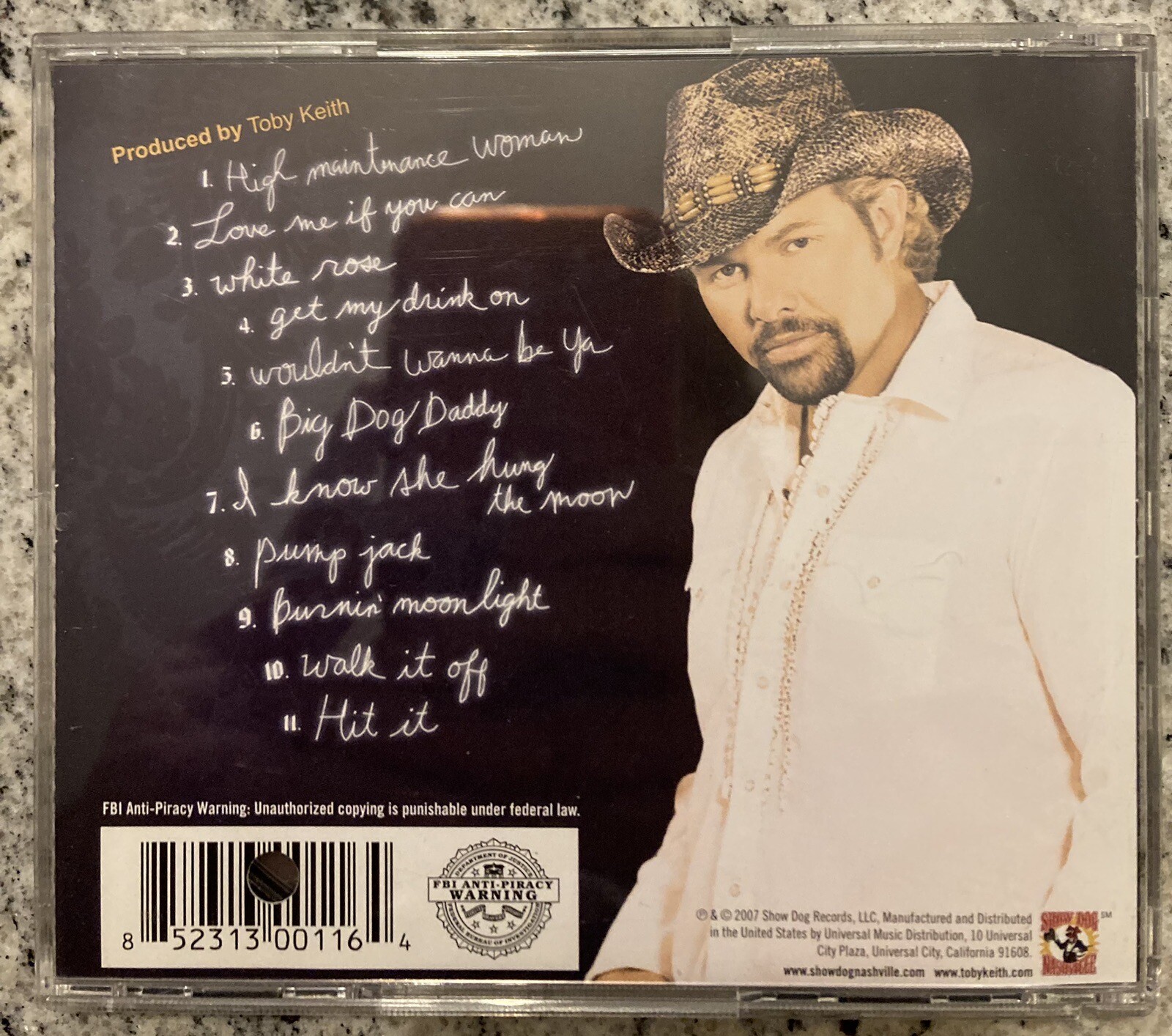
A Comprehensive Review of Toby Keith’s Big Dog Daddy: Legacy and Impact
Toby Keith’s Big Dog Daddy, released in 2007, remains a pivotal milestone in modern country music, representing the artist's full transition into creative autonomy. As his first solo-produced effort under his own Show Dog Nashville lab...
Toby Keith’s Big Dog Daddy, released in 2007, remains a pivotal milestone in modern country music, representing the artist's full transition into creative autonomy. As his first solo-produced effort under his own Show Dog Nashville label, the album blends honky-tonk grit with polished radio appeal, cementing Keith’s "Big Dog" persona as a cornerstone of the 21st-century country landscape.
Contents
The Significance of Big Dog Daddy in the Toby Keith Canon
In the broader context of country music history, few albums capture a specific persona as effectively as Big Dog Daddy. By 2007, Toby Keith was already a superstar, but this record marked a definitive shift in his career trajectory. For the first time, Keith took the reins as the sole producer, moving away from the collaborative production models he utilized at DreamWorks. This shift allowed for a raw, unfiltered sound that resonated with his core audience—those who appreciated his blend of blue-collar storytelling, unapologetic patriotism, and barroom humor.
As of 2026, looking back at this body of work reveals an artist who was acutely aware of his brand. The "Big Dog Daddy" wasn't just a title; it was a mission statement. It signaled a move toward a more "outlaw" independence within the Nashville system. The album doesn't shy away from the tropes that made Keith famous, but it executes them with a level of confidence and technical precision that only a veteran songwriter and performer could achieve.
Production and Technical Composition
The technical aspects of Big Dog Daddy are often overlooked in favor of its lyrical content, yet the production quality is what allowed the album to age so gracefully. Keith’s decision to self-produce meant that the instrumentation was tailored specifically to his baritone range. The record features a robust mix of traditional country elements—twangy telecasters, prominent steel guitar, and rhythmic fiddle—layered over a rock-influenced percussion section.
The Sonic Signature
The album was recorded with a focus on "live" feel. Unlike the overly compressed pop-country records of the mid-2000s, Big Dog Daddy retains a sense of space. You can hear the pick on the strings in tracks like "Pump Jack," and the drum kits sound organic rather than programmed. This organic quality is a hallmark of Keith’s work on Show Dog Nashville, where he sought to preserve the "Red Dirt" influences of his Oklahoma roots while maintaining the high-fidelity standards required for mainstream FM radio.
Songwriting Collaborations
While Keith is the primary creative force, the album benefits from his synergy with frequent collaborators like Bobby Pinson and Scotty Emerick. These partnerships resulted in a balanced tracklist that pivots between rowdy anthems and introspective ballads. The songwriting reflects a man comfortable in his skin, alternating between the bravado of a superstar and the grounded reality of a working-class hero.
Track-by-Track Analysis: Singles and Standouts
To understand the enduring appeal of Big Dog Daddy, one must examine the individual tracks that defined its chart performance and cultural footprint.
"High Maintenance Woman"
The lead single, "High Maintenance Woman," is a masterclass in Toby Keith’s signature humor. The song tells the story of a blue-collar fix-it man eyeing a woman far outside his social and financial circle. Musically, it relies on a catchy, mid-tempo groove that made it an instant staple on country radio. The track sets the tone for the album: it’s fun, slightly irreverent, and deeply relatable to the "everyman" demographic.
"Love Me If You Can"
Perhaps the most nuanced track on the album, "Love Me If You Can," serves as a defensive yet vulnerable manifesto. Released during a period of high political polarization, Keith used this song to address his critics. He acknowledges his flaws and his steadfast beliefs, essentially telling the listener that while he won't change, he is still human. The production here is more restrained, allowing the lyrics to take center stage, and it remains one of the most respected "serious" songs in his later catalog.
"Get My Drink On"
On the opposite end of the spectrum is "Get My Drink On." This is a quintessential honky-tonk anthem designed for live performances. With its driving rhythm and sing-along chorus, it taps into the escapism that is a fundamental pillar of the country genre. Technically, the song utilizes a classic 4/4 shuffle that encourages movement, making it a favorite in dance halls and bars across the country.
Deep Cuts: "White Rose" and "Pump Jack"
The strength of an album often lies in its non-singles. "White Rose" is a narrative-driven song about a dying town and a local bar, showcasing Keith's ability to paint vivid pictures of Americana. "Pump Jack" serves as a tribute to the oil fields of the Southern Plains, reinforcing his connection to the industries that power his home state of Oklahoma. These tracks provide the "Big Dog Daddy" persona with its necessary grit and authenticity.
Commercial Performance and Critical Reception
Upon its release, Big Dog Daddy was a commercial juggernaut. It debuted at number one on both the Billboard 200 and the Top Country Albums chart. This was a significant achievement, proving that Keith could maintain his commercial dominance even after taking full control of the production and business side of his music.
| Feature | Details |
|---|---|
| Release Date | June 12, 2007 |
| Label | Show Dog Nashville |
| Producer | Toby Keith |
| Billboard 200 Peak | #1 |
| Top Country Albums Peak | #1 |
| RIAA Certification | Gold (Platinum status achieved later) |
| Primary Genre | Honky-tonk / Outlaw Country |
| Key Singles | "High Maintenance Woman", "Love Me If You Can" |
Critical reception was generally positive, though it highlighted the divide between traditionalist critics and Keith’s massive fan base. Some reviewers noted that the album didn't reinvent the wheel, but rather perfected the "Toby Keith formula." However, retrospectively, the album is praised for its consistency and for being one of the most cohesive records of the mid-2000s country era.
The Cultural Impact of the "Big Dog" Persona
The release of Big Dog Daddy coincided with Toby Keith’s expansion into various business ventures, including his restaurant chain, "I Love This Bar & Grill." The album served as the soundtrack to this burgeoning empire. By labeling himself the "Big Dog Daddy," Keith wasn't just referring to his status in the music industry; he was establishing a lifestyle brand.
This persona resonated because it felt earned. In 2026, we see the "Big Dog Daddy" influence in how modern country stars manage their careers. The blueprint of owning the label, producing the music, and diversifying into hospitality was largely popularized by Keith during this specific era. He proved that an artist could be a "Big Dog" in the boardroom while remaining a "Daddy" to the traditional country sound.
Comparison with Surrounding Albums
To fully evaluate Big Dog Daddy, it is helpful to compare it to the albums that came immediately before and after:
- White Trash with Money (2006): While also successful, White Trash with Money felt more experimental as Keith adjusted to his new label. Big Dog Daddy feels more settled and confident.
- That Don't Make Me a Bad Guy (2008): This follow-up leaned more into the rock-heavy side of Keith’s sound. Big Dog Daddy is often preferred by purists because it maintains a stronger connection to honky-tonk traditions.
In the 2026 perspective, Big Dog Daddy is often cited as the peak of Keith’s "mid-career" output. It lacks the raw angst of his post-9/11 work but possesses a technical maturity that his early 90s hits hadn't yet reached.
Common Criticisms and Limitations
Despite its success, the album is not without its detractors. Some listeners found the bravado of the "Big Dog" persona to be occasionally overbearing. Tracks like "Hit It" or "Burnin' Moonlight" were sometimes viewed as "filler" that relied too heavily on established tropes. Additionally, the heavy use of humor in the lead singles occasionally overshadowed the more profound songwriting present in the deep cuts.
However, these limitations are minor when weighed against the album's overall impact. For every moment of levity, there is a moment of genuine craft that reminds the listener why Toby Keith was a titan of the genre for three decades.
Frequently Asked Questions
Is Big Dog Daddy considered Toby Keith’s best album?
While "best" is subjective, it is widely considered his most representative album of the 2000s. It showcases all facets of his talent: humor, heart, and high-octane performance. For fans of his "Show Dog" era, it is often ranked as a top-three career highlight.
Who produced Big Dog Daddy?
Toby Keith produced the album entirely by himself. This was a bold move at the time, as most major country stars worked with established Nashville producers like Byron Gallimore or Dann Huff. Keith’s success here paved the way for other artists to seek more production control.
What are the essential tracks for a new listener?
To get a full sense of the album, one should listen to "High Maintenance Woman" for the humor, "Love Me If You Can" for the message, and "White Rose" for the storytelling. These three tracks represent the core pillars of the record.
How did the album perform on the charts?
It was a massive success, debuting at #1 on the Billboard 200. It stayed at the top of the country charts for several weeks and produced multiple top-20 singles, reinforcing Keith’s status as a dominant force in the industry.
What does "Big Dog Daddy" actually mean?
It refers to someone who is the leader of the pack—a person who has achieved success and earned the right to run things their own way. In Keith’s case, it was a nod to his independence from the traditional Nashville label system.
Final Recommendation: A Must-Listen for Country Fans
If you are looking to understand the evolution of country music in the 21st century, Big Dog Daddy is essential listening. It represents the moment when the genre's biggest star took the wheel and drove his career exactly where he wanted it to go. Whether you are a fan of the rowdy barroom anthems or the quiet, descriptive stories of Middle America, this album offers a comprehensive look at an artist at the height of his powers. In 2026, it remains a testament to Toby Keith’s enduring legacy as an innovator, a businessman, and, above all, a songwriter.
Image Gallery