How Transport in Biology Works: A Comprehensive Guide to Cellular and Systemic Exchange
Transport in biology is the fundamental process by which organisms move water, nutrients, gases, and waste products across cell membranes and throughout their bodies. This movement occurs through passive transport, which relies on natu...
Transport in biology is the fundamental process by which organisms move water, nutrients, gases, and waste products across cell membranes and throughout their bodies. This movement occurs through passive transport, which relies on natural concentration gradients, or active transport, which requires cellular energy (ATP) to move substances against those gradients to maintain homeostasis.
Contents
In the complex landscape of biological systems, transport is not a single mechanism but a collection of specialized physical and chemical processes. Whether it is a single-celled amoeba absorbing oxygen or a 100-meter-tall redwood tree pulling water from its roots to its highest leaves, the principles of transport remain consistent. As of 2026, biological research continues to emphasize the precision of these pathways, particularly how molecular "gates" and "pumps" prevent cellular toxicity while ensuring nutrient saturation. To understand how transport works, we must examine the microscopic interactions at the cellular level and the macroscopic systems within complex organisms.
The Cellular Foundation: The Plasma Membrane
Every transport process begins at the plasma membrane, a phospholipid bilayer that acts as a semi-permeable gatekeeper. This membrane is "fluid," meaning its components can move laterally, and it is "mosaic," containing various proteins, cholesterol, and carbohydrates that facilitate movement.
The membrane’s hydrophobic core prevents many polar or charged substances from passing through freely. This creates a need for specific transport mechanisms. Understanding the distinction between moving "with" a gradient and "against" a gradient is the first step in mastering biological transport.
Passive Transport: Movement Without Energy
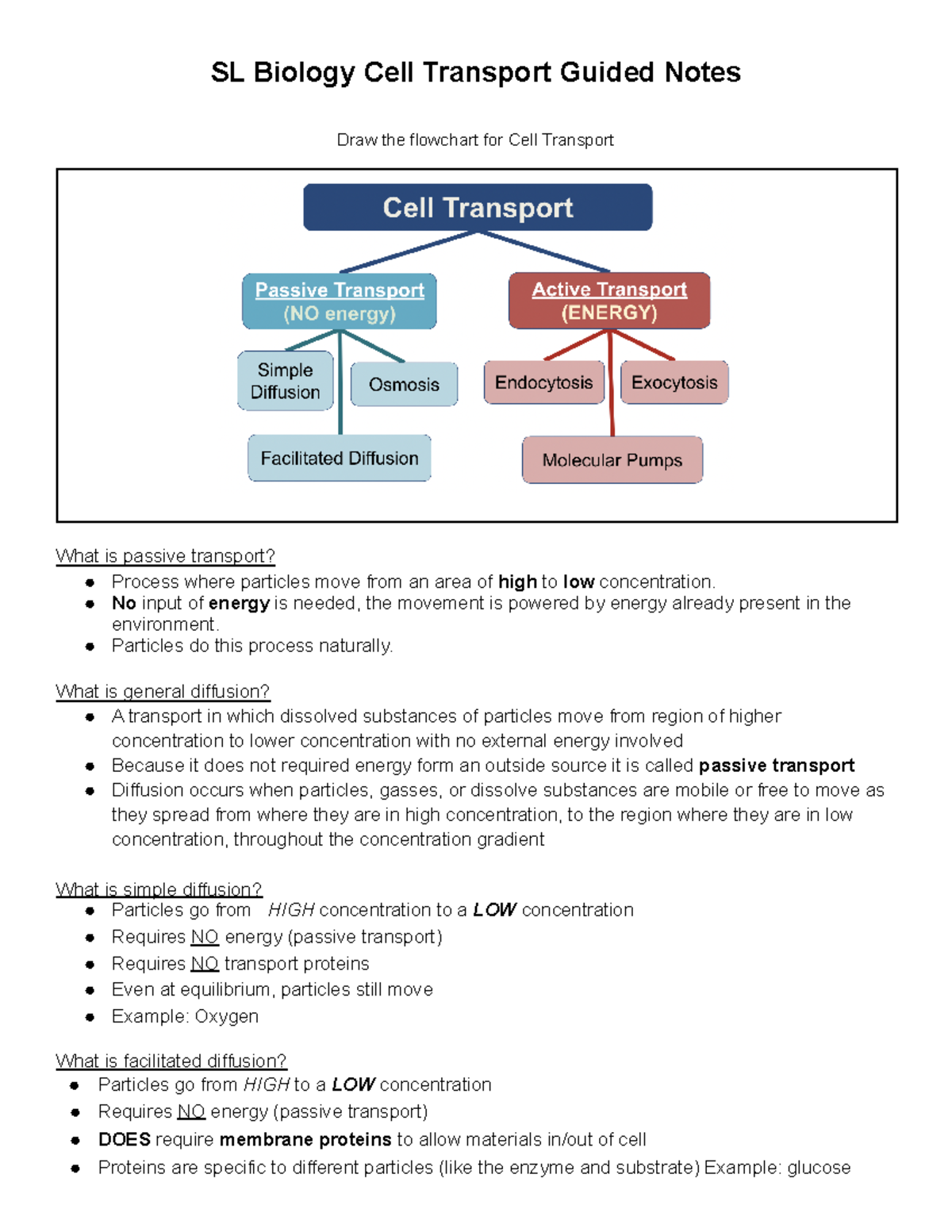
Passive transport is the movement of substances across a cell membrane without the expenditure of metabolic energy (ATP). This process is driven by the intrinsic kinetic energy of molecules and the law of entropy, moving substances from areas of high concentration to areas of low concentration.
Simple Diffusion
Simple diffusion occurs when small, non-polar molecules—such as oxygen ($O_2$) and carbon dioxide ($CO_2$)—pass directly through the lipid bilayer. Because these molecules are uncharged and hydrophobic, the fatty acid tails of the phospholipids do not repel them. This is the primary way respiratory gases are exchanged in the alveoli of human lungs and the stomata of plant leaves.
Facilitated Diffusion
Many vital molecules, such as glucose and ions (sodium, potassium), are too large or too polar to cross the lipid bilayer alone. They require transport proteins. There are two main types:
- Channel Proteins: These act like tunnels, allowing specific molecules to pass through. A specialized type called aquaporins allows water to move at a much faster rate than simple osmosis would permit.
- Carrier Proteins: These change their shape to bind to a target molecule and "flip" it across the membrane. This process is still passive because it follows the concentration gradient.
Osmosis: The Special Case of Water
Osmosis is specifically the diffusion of water across a selectively permeable membrane. It is governed by osmotic pressure. In 2026, clinical standards still categorize solutions based on their effect on cell volume:
- Isotonic: The concentration of solutes is equal inside and outside the cell; there is no net water movement.
- Hypotonic: The external solution has a lower solute concentration, causing water to rush into the cell (potentially causing it to burst or become "turgid").
- Hypertonic: The external solution has a higher solute concentration, drawing water out of the cell and causing it to shrivel.
Active Transport: Moving Against the Gradient
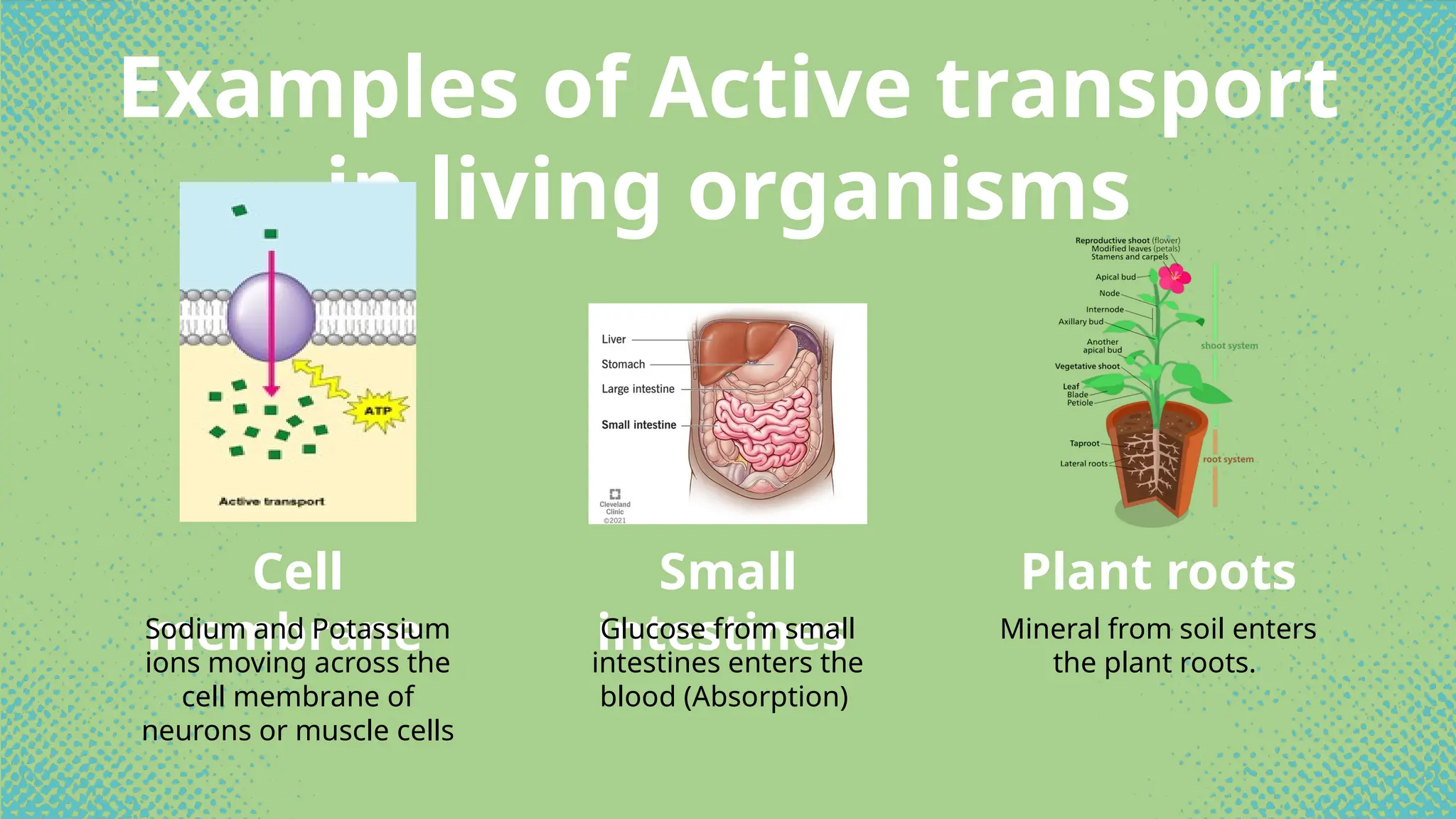
Active transport is required when a cell needs to accumulate high concentrations of a specific substance, such as when nerve cells maintain an electrical charge. This process requires adenosine triphosphate (ATP).
Primary Active Transport
In primary active transport, the energy is derived directly from the breakdown of ATP. The most famous example is the Sodium-Potassium Pump ($Na^+/K^+$-ATPase). This pump moves three sodium ions out of the cell and two potassium ions into the cell for every ATP molecule used. This creates an electrochemical gradient essential for muscle contraction and nerve impulse transmission.
Secondary Active Transport (Cotransport)
Secondary active transport does not use ATP directly. Instead, it uses the "uphill" gradient created by primary active transport to power the movement of another substance. For example, as sodium ions flow back into a cell (down their gradient), they can "piggyback" a glucose molecule with them against the glucose gradient. This is known as symport when molecules move in the same direction and antiport when they move in opposite directions.
Bulk Transport: Endocytosis and Exocytosis
When a cell needs to move very large particles or large quantities of a substance, it uses vesicles—small membrane-bound sacs.
- Endocytosis: The cell membrane folds inward to engulf a substance. This includes phagocytosis ("cell eating," common in immune cells) and pinocytosis ("cell drinking").
- Exocytosis: A vesicle fuses with the plasma membrane to expel its contents, such as when neurons release neurotransmitters or endocrine cells release hormones.
Transport Systems in Multicellular Organisms
As organisms grew larger in evolutionary history, simple diffusion became insufficient to reach every cell. Specialized systems evolved to handle long-distance transport.
Transport in Plants: Xylem and Phloem
Plants utilize two distinct vascular tissues to move materials between roots and shoots:
- Xylem: Transports water and dissolved minerals from the roots to the leaves. This is largely a passive process driven by transpiration. As water evaporates from the leaves, it creates a negative pressure (suction) that pulls a continuous column of water upward, aided by the cohesive and adhesive properties of water molecules.
- Phloem: Transports sugars (photosynthates) from the "source" (leaves) to the "sink" (roots or fruit). This is an active process known as translocation, governed by the pressure-flow hypothesis, where high sugar concentrations draw water into the phloem, creating pressure that pushes the sap toward areas of lower concentration.
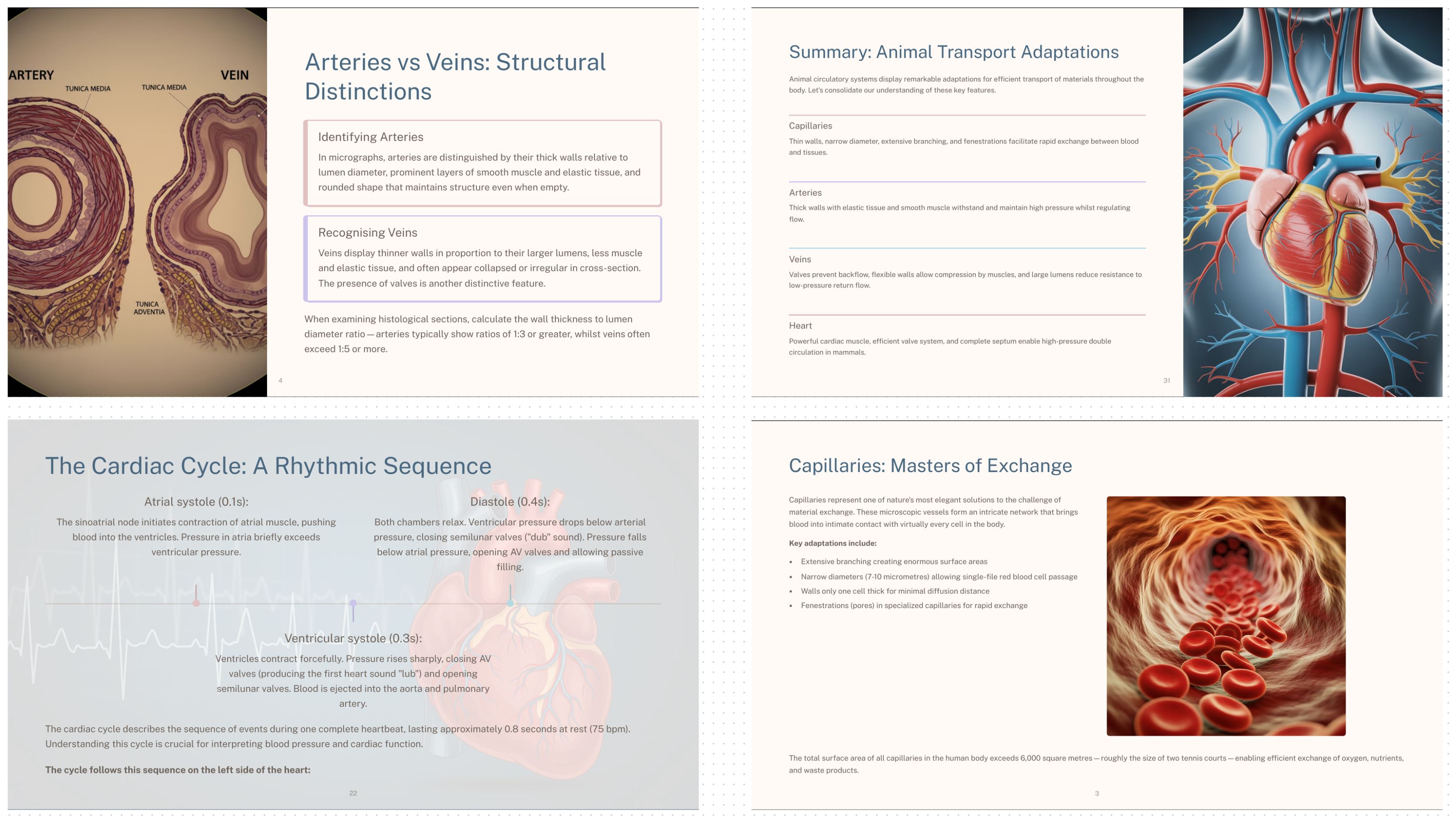
Transport in Animals: Circulatory Systems
In complex animals, the circulatory system acts as the "highway" for transport.
- Open Circulatory Systems: Found in many invertebrates like insects, where a fluid called hemolymph bathes organs directly.
- Closed Circulatory Systems: Found in vertebrates and some invertebrates, where blood is confined to vessels. This allows for higher blood pressure and more efficient delivery of oxygen to high-metabolism tissues.
Comparison of Major Transport Mechanisms
| Mechanism | Energy Required? | Direction of Movement | Protein Required? | Example Substances |
|---|---|---|---|---|
| Simple Diffusion | No (Passive) | High to Low concentration | No | $O_2$, $CO_2$, Lipids |
| Facilitated Diffusion | No (Passive) | High to Low concentration | Yes | Glucose, $H_2O$ (Aquaporins) |
| Osmosis | No (Passive) | Low Solute to High Solute | No/Yes | Water ($H_2O$) |
| Active Transport | Yes (ATP) | Low to High concentration | Yes | $Na^+$, $K^+$, $Ca^{2+}$ |
| Endocytosis | Yes (ATP) | Into the cell (Bulk) | Vesicle-mediated | Bacteria, Large Proteins |
| Exocytosis | Yes (ATP) | Out of the cell (Bulk) | Vesicle-mediated | Hormones, Waste |
Frequently Asked Questions
Is osmosis a type of diffusion?
Yes, osmosis is a specific form of diffusion. While diffusion refers to the movement of any chemical species from high to low concentration, osmosis refers exclusively to the movement of a solvent (usually water) through a semi-permeable membrane. It is a passive process that seeks to equalize the concentration of solutes on both sides of the membrane.
Why do cells need active transport if diffusion is "free"?
Diffusion only works when moving substances down a concentration gradient. If a cell relied solely on diffusion, it could never accumulate more of a nutrient than what is available in the environment, nor could it completely expel toxins. Active transport allows cells to maintain specific internal environments that are vastly different from their surroundings, which is vital for survival.
What happens if biological transport fails?
Failure in transport mechanisms leads to rapid cellular and systemic dysfunction. In humans, defects in transport proteins are responsible for diseases like Cystic Fibrosis (faulty chloride ion transport) and certain types of diabetes (inefficient glucose transport). In plants, a failure in xylem transport leads to wilting and eventual death due to the inability to perform photosynthesis.
How does temperature affect transport in biology?
Temperature increases the kinetic energy of molecules, generally increasing the rate of diffusion and osmosis. However, excessively high temperatures can denature the transport proteins required for facilitated diffusion and active transport. According to research archived by the National Center for Biotechnology Information (NCBI), membrane fluidity is also temperature-dependent, affecting how easily substances can slip through the bilayer.
What is the difference between symport and antiport?
Both are types of cotransport (secondary active transport). In symport, the two substances move in the same direction across the membrane. In antiport, the substances move in opposite directions—one enters the cell while the other exits.
Practical Recommendation for Further Study
To master how transport in biology works, focus your study on the electrochemical gradient. Understanding that transport is driven not just by chemical concentration but also by electrical charge (voltage) is key to grasping how nervous systems and muscles function. If you are a student or professional in 2026, utilizing molecular visualization software can help you see the conformational changes in carrier proteins that words cannot fully describe.
Always check the latest updates from the Royal Society of Biology for new discoveries regarding synthetic membranes and "smart" drug delivery systems that mimic biological transport.
Image Gallery