Why the Smartest Country in the World Matters: Human Capital, Innovation, and Global Power
A nation recognized as the smartest in the world matters because collective cognitive ability—measured through education, scientific output, and technical problem-solving—directly dictates economic resilience, technological sovereignty...
A nation recognized as the smartest in the world matters because collective cognitive ability—measured through education, scientific output, and technical problem-solving—directly dictates economic resilience, technological sovereignty, and geopolitical leverage. Countries that systematically maximize human capital generate higher per capita wealth, lead critical industries like artificial intelligence, and establish global institutional standards.
Contents
Defining National Intelligence: Beyond Oversimplified Metrics
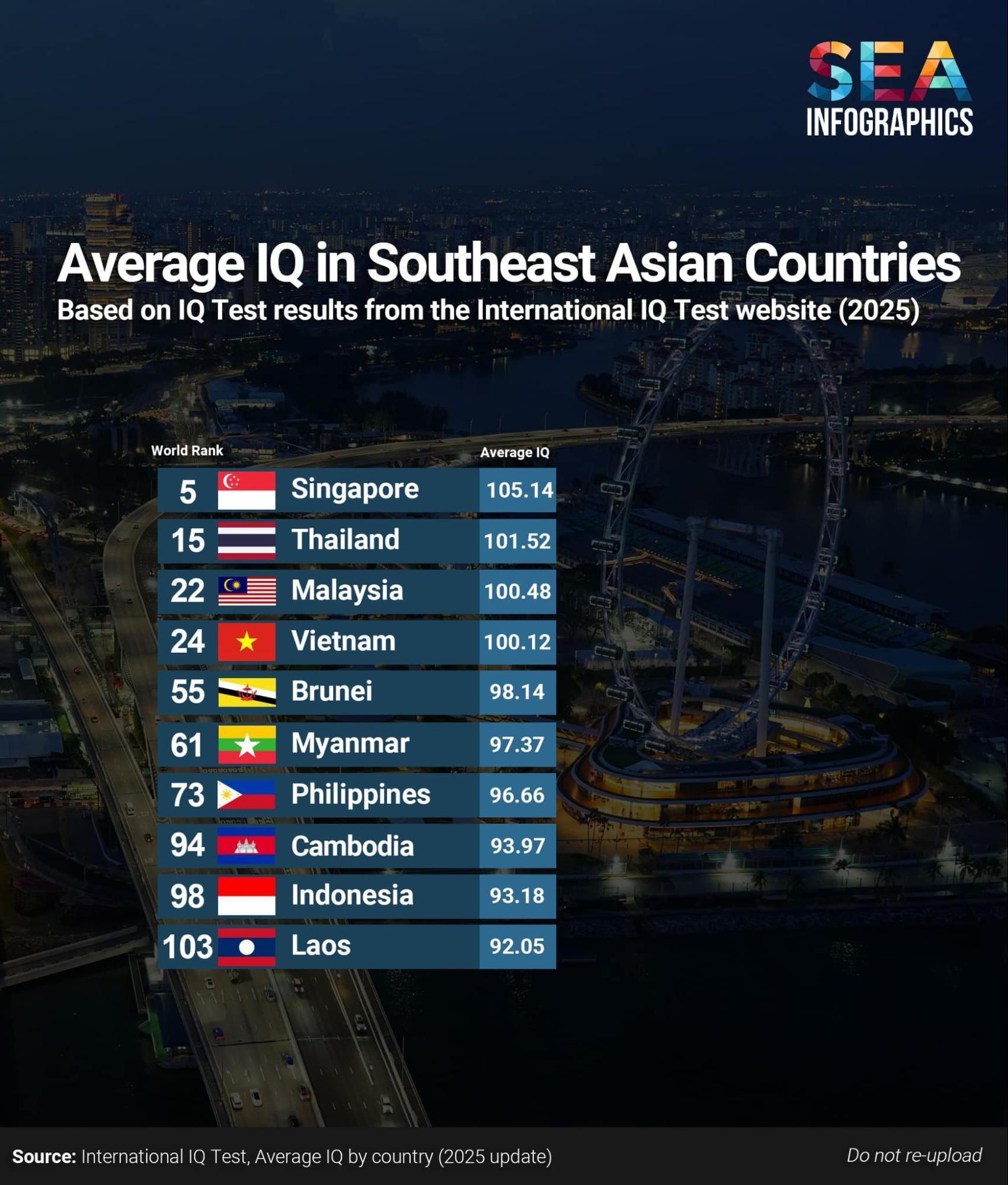
The colloquial concept of the "smartest country" often conjures simplistic notions of aggregate national IQ tests. In academic economics, sociology, and cognitive science, researchers reject single-number aggregate IQ metrics due to severe methodological flaws, cultural sampling biases, and outdated psychometric assumptions. Instead, institutional analysts measure a nation’s intellectual power through verifiable human capital, educational attainment, technological innovation, and workforce adaptability.
When economists evaluate which nation operates as the smartest, they look at composite capabilities. A truly high-performing country does not merely produce isolated geniuses; it establishes an infrastructure where the median citizen possesses robust literacy, numeracy, and problem-solving skills. Organizations such as the Organisation for Economic Co-operation and Development (OECD) and the World Bank evaluate national competence using empirical frameworks like the Programme for International Student Assessment (PISA) and the Human Capital Index.
Understanding why the most smartest country in the world matters requires moving past vanity rankings. The label reflects a society's systemic ability to absorb complex information, adapt to structural economic disruption, and convert basic research into deployable societal advancements.
Key Metrics Used to Assess National Cognitive and Educational Capital
To identify which countries lead globally in cognitive performance and technical execution, international bodies track multiple validated benchmarks rather than relying on a single indicator.
- Primary Education & Foundational Skills: PISA / TIMSS
- Advanced Research & Tertiary Output: STEM Degrees
- Economic & Technological Translation: Patents & GII Ranking
1. Standardized Academic Competence (PISA and TIMSS)
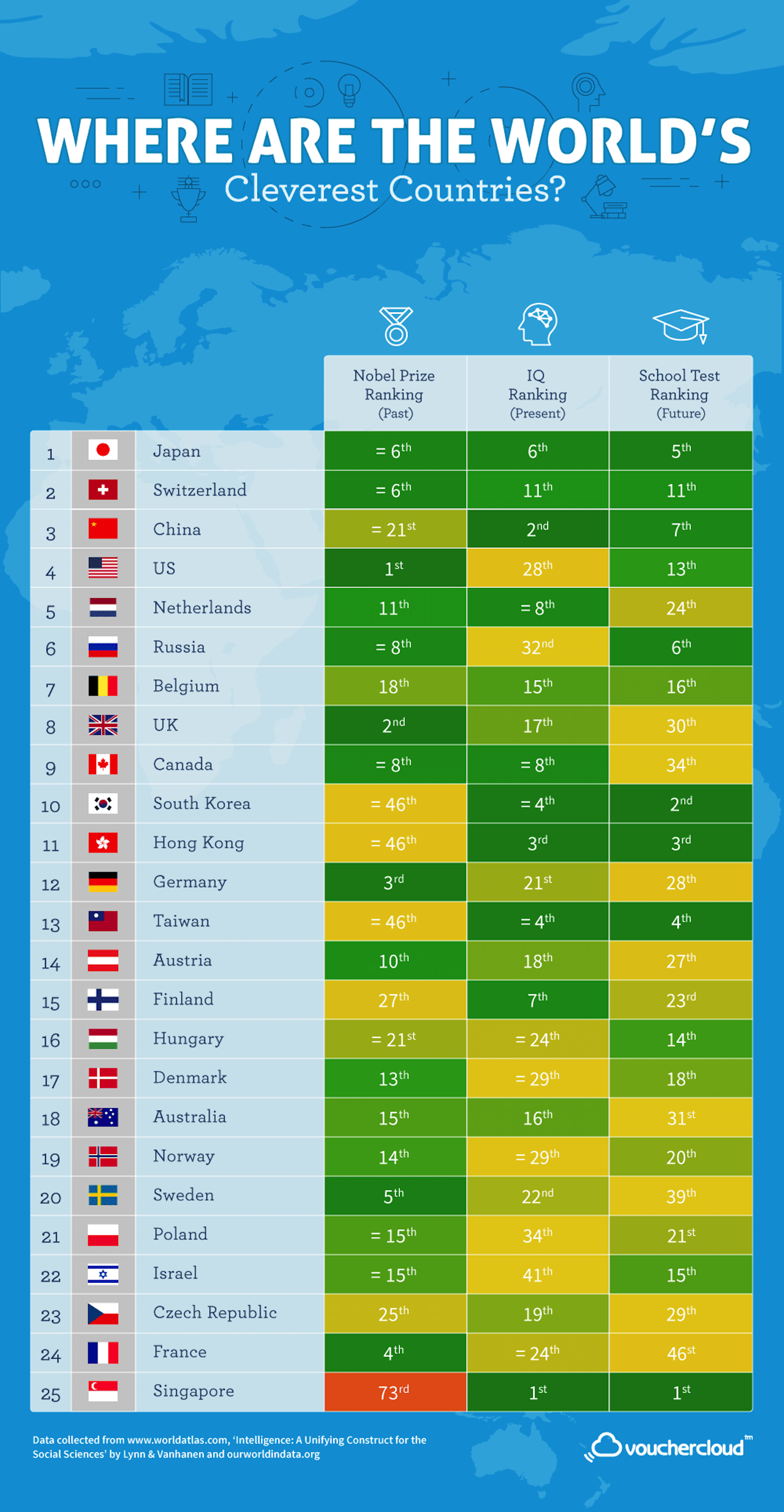
The OECD's PISA measures 15-year-old students in reading, mathematics, and science every three years. Rather than testing memorization, PISA evaluates functional application: can students extrapolate what they know to solve novel problems? Similarly, the Trends in International Mathematics and Science Study (TIMSS) tracks foundational curriculum mastery. East Asian jurisdictions (including Singapore, Japan, Taiwan, and South Korea) alongside European performers such as Estonia consistently dominate these assessments.
2. High-End Scientific and Technological Output
A nation's intellectual standing depends heavily on its research frontier. Metrics include:
- Per capita peer-reviewed scientific publications in high-impact journals.
- International patent filings via the Patent Cooperation Treaty (PCT).
- Research and development (R&D) gross domestic expenditure as a percentage of GDP.
3. Adult Workforce Problem-Solving (PIAAC)
The Programme for the International Assessment of Adult Competencies (PIAAC) evaluates the practical cognitive skills of working-age adults. It measures literacy, numeracy, and problem-solving in technology-rich environments, revealing whether a country maintains its intellectual advantage into adulthood.
Comparative Assessment: Global Leaders in Knowledge and Innovation
The following comparative table illustrates how top-performing nations demonstrate intellectual, educational, and innovative leadership across validated global benchmarks.
| Country / Economy | Primary Strengths | Standardized Testing Rank (PISA Math/Science) | Gross Domestic R&D Spend (% of GDP) | Notable Policy Driver |
|---|---|---|---|---|
| Singapore | Mathematics pedagogy, bilingual curriculum, vocational-academic integration | Top Tier (Consistently 1st–2nd) | ~2.2% | Centralized teacher training through the National Institute of Education; meritocratic civil service |
| South Korea | High tertiary attainment, digital infrastructure, patent density | Top Tier (Consistently Top 5) | ~4.8%–5.0% | Heavy private-public investment in STEM; intense cultural focus on higher education |
| Estonia | Digital governance, equitable primary schooling, early coding education | Top European Performer (Consistently Top 5–8) | ~1.8% | Universal early childhood education; complete integration of digital tools in public schools |
| Switzerland | Applied vocational training, pharmaceutical research, basic sciences | High Tier (Consistently Top 10–15) | ~3.3%–3.4% | Dual-track apprenticeship system; deep integration between universities (ETH Zurich) and industry |
| Japan | Engineering mastery, advanced manufacturing, universal literacy | Top Tier (Consistently Top 5) | ~3.3%–3.4% | High societal baseline in basic science; standardized national curriculum with equitable funding |
Economic Multipliers: Why Intellectual Capital Outperforms Natural Resources
Modern economic growth theory places knowledge and technological innovation at the center of long-term prosperity. Paul Romer’s Nobel Prize-winning work on Endogenous Growth Theory established that ideas, unlike physical capital or labor, are non-rival goods. Once developed, an algorithm, chemical formula, or logistical design can be replicated at near-zero marginal cost.
- Strong Foundational Education
- High-Skill Labor Force
- Technological Innovation
- High Per Capita GDP
Escaping the Resource Curse
Historically, nations accumulated wealth through mineral reserves, fertile agricultural land, or geographic transit chokepoints. In modern economies, physical resources offer diminishing returns and expose nations to price shocks. Countries like Singapore, Switzerland, and South Korea possess negligible mineral reserves yet generate extraordinary per capita wealth. They transformed their populations into high-density engines of software development, precision engineering, and financial infrastructure.
Total Factor Productivity (TFP)
Total Factor Productivity accounts for the portion of economic output not explained by traditional inputs like physical labor and machinery. TFP measures efficiency, organization, and technological sophistication. A workforce equipped with high cognitive and analytical capabilities executes complex manufacturing and service delivery with lower defect rates, faster iteration cycles, and superior process optimization.
Geopolitical Leverage and Technological Sovereignty
National intelligence shapes geopolitics through technological self-reliance and strategic leverage. The modern global balance of power rests on who controls advanced computation, materials science, biotechnology, and communication networks.
Semiconductor and Hardware Superiority
The semiconductor supply chain illustrates this dynamic clearly. Designing cutting-edge extreme ultraviolet (EUV) lithography systems, high-bandwidth memory, and sub-two-nanometer microchips requires concentrations of elite chemical engineers, materials scientists, and optical physicists.
- The Netherlands holds a virtual monopoly on advanced photolithography manufacturing through ASML.
- Taiwan produces the vast majority of the world's most advanced processor nodes via TSMC.
Neither country commands military scale comparable to global superpowers, yet their intellectual capital makes them indispensable to the global economy.
Artificial Intelligence and Algorithmic Dominance
As artificial intelligence reshapes military command-and-control, financial modeling, and drug discovery, the nations producing the most proficient computer scientists and mathematicians set international regulatory and technical parameters. Leading nations build internal foundation models, secure their digital borders, and export intellectual property, whereas dependent nations face continuous economic extraction and strategic vulnerability.
Social Dividends: Institutional Trust, Public Health, and Governance
The advantages of an intellectually rigorous population extend well beyond commercial balance sheets. High cognitive competence across the broader public directly correlates with stable democratic institutions, public health compliance, and social cohesion.
- Information Verification and Civic Resilience: Societies with widespread statistical literacy and critical analysis skills demonstrate higher resistance to foreign disinformation campaigns, financial fraud, and conspiratorial polarization.
- Healthcare Efficiency: Health literacy enables populations to manage chronic conditions proactively, navigate complex medical guidelines, and embrace preventative health measures, substantially lowering national public health expenditures.
- Institutional Quality and Low Corruption: Competent civil bureaucracies require administrators who can evaluate statistical evidence, audit public spending, and optimize municipal infrastructure. Countries prioritizing merit-based, analytically rigorous public hiring—such as Singapore’s administrative service—regularly rank lowest on global corruption indices.
Structural Vulnerabilities in High-Achieving Nations
Pursuing the top spot in global intelligence and academic testing rankings carries significant systemic trade-offs. Governments attempting to replicate top-performing models must navigate several structural challenges:
Extreme Academic Pressure and Mental Health Strain
In East Asian education hubs, high performance often stems from hyper-competitive environments characterized by intensive private tutoring (hagwons in South Korea, cram schools in Taiwan). This dynamic can cause substantial adolescent stress, chronic sleep deprivation, and elevated anxiety rates.
Demographic Imbalances
There is an acute inverse correlation between ultra-high academic/career optimization and fertility rates. In nations like South Korea and Singapore, the intense financial and temporal cost of preparing children for elite academic competition disincentivizes family formation, contributing to some of the lowest fertility rates in modern history.
The Innovation vs. Rote Mastery Dichotomy
Standardized testing excellence does not automatically yield disruptive creativity. While countries like Estonia and Singapore have modernized curricula to emphasize collaborative problem-solving, traditional testing systems frequently reward pattern recognition, conformity, and rote optimization over entrepreneurial risk-taking and unorthodox research.
Strategic Roadmap: How Emerging Economies Build Human Capital
Nations aiming to elevate their collective intellectual capacity cannot simply copy another country's testing manuals. Building enduring cognitive infrastructure requires targeted policy intervention across multiple life stages.
- Stage 1: Early Childhood Nutrition & Neurodevelopment (Ages 0–5)
- Stage 2: Foundational Numeracy & Scientific Literacy (Ages 6–15)
- Stage 3: Dual-Track Vocational & Academic Systems (Ages 16–22)
- Stage 4: Continuous Labor Market Reskilling (Adults)
Step 1: Secure Universal Early Childhood Nutrition and Pre-K Foundations
Cognitive potential develops long before primary school. Biological research shows that inadequate micro-nutrition, chronic stress, and lack of linguistic stimulation between ages zero and five irreversibly reduce cognitive capacity. High-performing nations invest heavily in targeted early-childhood support, parental leave, and universal preschool.
Step 2: Elevate Teacher Selection, Compensation, and Training
In Finland and Singapore, teaching ranks among the most prestigious professions. Candidates are recruited exclusively from top-tier university graduates, paid salaries competitive with the corporate sector, and given dedicated weekly hours for collaborative curriculum design and pedagogical research.
Step 3: Implement Dual-Track Vocational Education
Not every citizen needs an abstract academic degree. Switzerland and Germany maintain robust vocational education and training (VET) tracks. Students who pursue technical apprenticeships master advanced manufacturing, mechatronics, and electrical engineering, generating an adaptable workforce without burdening youths with unproductive student debt.
Step 4: Fund Basic Science Without Immediate Commercialization Demands
Breakthrough intellectual discoveries occur when research institutions receive baseline public funding to pursue high-risk, curiosity-driven inquiries. Sovereign funds dedicated to advanced physics, mathematics, and synthetic biology create the knowledge base that later drives commercial breakthroughs.
Frequently Asked Questions
Which country is currently considered the smartest in the world?
Determining the smartest country depends on the metric used. By standardized academic testing like PISA, Singapore, Japan, South Korea, and Estonia rank at the top. When measuring broader technological innovation and patent output, the World Intellectual Property Organization (WIPO) consistently places Switzerland, Sweden, and the United States at the head of its Global Innovation Index.
Why are single national IQ rankings considered unreliable?
National IQ rankings often rely on flawed, culturally biased tests that fail to account for language differences, local socioeconomic contexts, and testing familiarity. Furthermore, historical studies attempting to rank national IQ frequently used unrepresentative sample sizes and conflated lack of formal schooling with lack of cognitive ability.
Does a country's average intelligence guarantee economic success?
No. High cognitive ability requires supportive institutional frameworks to translate into economic productivity. If a country possesses an educated population but suffers from political corruption, rigid capital markets, or state censorship, it often experiences "brain drain," where its top talent emigrates to economies that reward their skills.
What is the relationship between the Flynn Effect and national education?
The Flynn Effect is the observed rise in average intelligence quotient test scores over the 20th century across various global populations. It proves that cognitive performance is heavily influenced by environmental factors—including improved nutrition, universal public schooling, sanitation, and exposure to complex, technology-driven environments—rather than fixed genetic traits.
How does artificial intelligence affect the value of a smart population?
Artificial intelligence increases the premium on elite analytical capability, prompt verification, and advanced systems architecture while automating routine cognitive tasks. Nations with high foundational math, science, and technical literacy are better equipped to build, audit, and deploy AI models safely and productively, preventing economic displacement.
Practical Takeaway: Auditing Human Capital
For policymakers, corporate leaders, and institutional investors, assessing a country's intellectual capability requires looking past aggregate test scores. Evaluate a nation's competitive potential by auditing three forward-looking indicators:
- The ratio of STEM graduates to total university completions, adjusted for workforce retention.
- Public and private R&D expenditure sustained above 2.5% of GDP across economic downturns.
- Net migration flows of advanced degree holders, which reveal whether a country's intellectual environment attracts or repels top global talent.
Tracking these indicators provides a clear view of which nations are building durable human capital—and which risk falling behind in the global knowledge economy.
Image Gallery