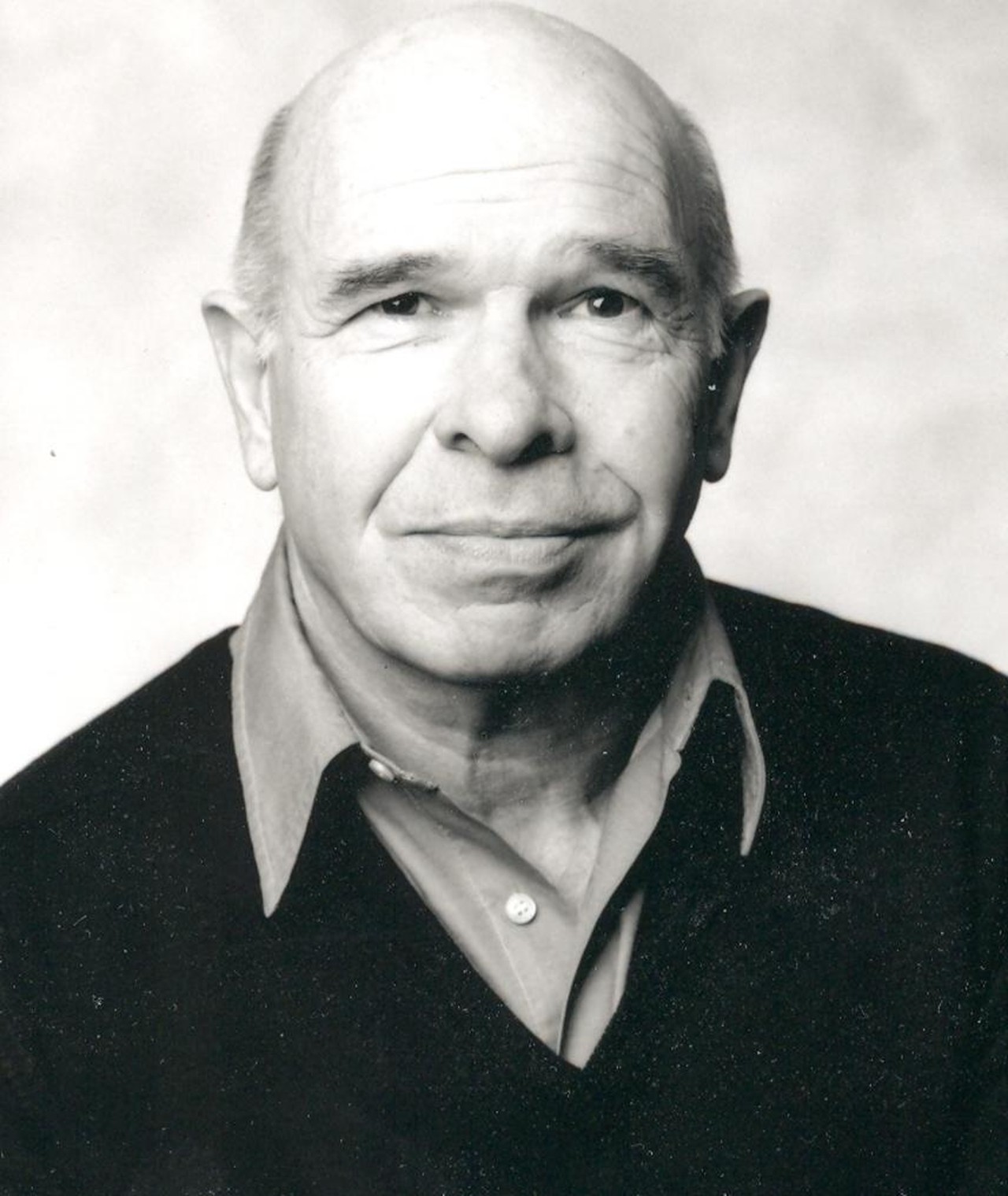
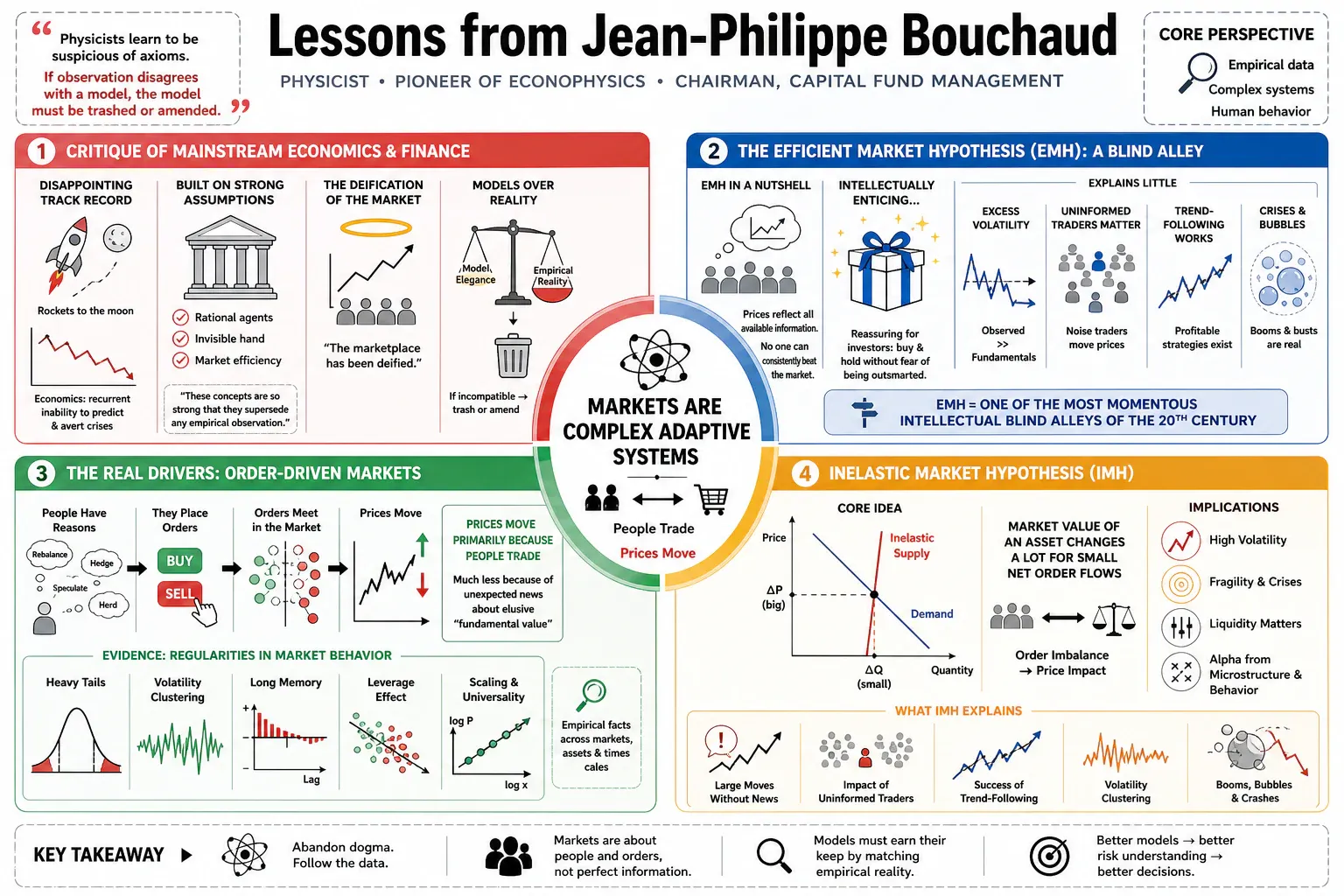
Jean-Philippe Bouchaud Net Worth: Financial Breakdown of the Econophysics Pioneer
Jean-Philippe Bouchaud's net worth is estimated to be in the tens of millions of dollars, derived primarily from his equity stake, management fees, and performance allocations as co-founder and Chairman of Capital Fund Management (CFM)...
Jean-Philippe Bouchaud's net worth is estimated to be in the tens of millions of dollars, derived primarily from his equity stake, management fees, and performance allocations as co-founder and Chairman of Capital Fund Management (CFM), a quantitative hedge fund managing over $10 billion in assets. Supplementary earnings come from academic appointments and publications.
Contents
Financial Overview and Estimated Wealth Standing
Evaluating the financial standing of Jean-Philippe Bouchaud requires examining the intersection of theoretical physics, institutional asset management, and quantitative finance. Unlike public company executives whose equity grants are disclosed in public SEC filings, principals of private European asset management firms operate under standard disclosure frameworks that protect precise personal wealth figures. However, financial analysis based on fund performance, assets under management (AUM), fee structures, and enterprise valuations provides a clear picture of his overall financial standing.
Bouchaud is widely recognized as one of the key pioneers of econophysics—the application of statistical physics concepts to financial markets and complex economic systems. In 1994, he co-founded Science & Finance, an applied research firm that merged with Capital Fund Management (CFM) in 2000. Under his leadership as Chairman and Chief Scientist, CFM expanded into a global quantitative asset manager with offices in Paris, New York, London, and Tokyo.
| ESTIMATED FINANCIAL PROFILE | |
|---|---|
| Key Source of Wealth | Equity & Revenue Share in CFM |
| Firm Assets (AUM) | ~$10 Billion+ (across quant strategies) |
| Secondary Sources | Academic roles, book royalties, consulting |
| Primary Jurisdictions | France, United States, United Kingdom |
| Estimated Net Worth | Multi-million USD range ($50M - $150M+) |
Because CFM remains a privately held partnership, Bouchaud's exact net worth is not published on public wealth registries such as the Bloomberg Billionaires Index or Forbes Rich List. Nevertheless, accumulated earnings over three decades in quantitative asset management place him among the most successful scientist-entrepreneurs in European finance.
Early Career and the Launch of Science & Finance
Jean-Philippe Bouchaud completed his doctorate in physics at the École Normale Supérieure (ENS) in Paris in 1985. He subsequently worked as a researcher at the French National Centre for Scientific Research (CNRS) and spent time at the Cavendish Laboratory at the University of Cambridge. His early scientific work focused on statistical mechanics, disordered systems, anomalous diffusion, and random matrices.
In the early 1990s, alongside collaborators such as Marc Potters, Bouchaud realized that mathematical models used to describe disordered physical systems could be applied to financial markets. Financial market returns, fat-tailed distributions, price impact, and volatility clustering mirrored physical phenomena in complex systems.
- Academic Foundations (ENS / CNRS)
- Launch of Science & Finance (1994)
- Merger with Capital Fund Management (2000)
- Global Expansion & Multi-Billion AUM Growth
In 1994, Bouchaud co-founded Science & Finance, a research-driven company dedicated to applying hard scientific principles to financial trading strategies. The firm's explicit philosophy was that quantitative trading should rely on empirical observations and scientific rigor rather than classical financial engineering assumptions, such as the Black-Scholes Gaussian framework.
The success of Science & Finance led directly to its merger in 2000 with Capital Fund Management, founded in 1991 by Jean-Pierre Aguilar. This merger laid the groundwork for modern CFM, uniting quantitative trading execution with fundamental physics-based market research.
Capital Fund Management (CFM) as the Core Wealth Engine
The majority of Jean-Philippe Bouchaud’s net worth stems from his long-term partnership stake and executive leadership at Capital Fund Management. CFM operates as a systemic, quantitative asset manager using automated algorithmic trading models to trade futures, equities, foreign exchange, and derivative contracts globally.
Assets Under Management and Fee Economics
Asset management firms generate revenue primarily through two mechanisms:
- Management Fees: Typically ranging from 1.0% to 2.0% per year on total assets under management.
- Performance Fees (Carried Interest): Typically 15% to 20% of net profits generated above specified performance benchmarks or high-water marks.
Historically managing between $8 billion and $15 billion depending on global market cycles, CFM generates substantial annual gross revenue. On a $10 billion asset base, a standard 1.5% management fee yields $150 million in annual gross revenue prior to operating expenses. In outperformance years, performance fees add significant variable upside.
As a principal partner, Chairman, and Chief Scientist, Bouchaud shares in the net profits distributed to CFM’s equity partners after compensating its multi-disciplinary team of researchers, quantitative software engineers, and administrative staff.
Quantitative Strategy Performance
CFM's flagship programs—including its trend-following (CTA) strategies, quantitative equity market neutral strategies, and multi-asset alternative risk premia programs—have provided steady institutional cash flows for over two decades. The durability of these quantitative strategies has protected partner capital during severe market disruptions, including the 2008 financial crisis and market shifts in subsequent decades.
Comparative Financial Analysis: Quantitative Pioneers
To contextualize Bouchaud's financial position within the quantitative finance landscape, it is helpful to compare institutional focus, estimated assets, and business models across leading quantitative hedge fund founders.
| Founder / Scientist | Key Enterprise | Primary Focus | Regulatory Status | Asset Scale (AUM) |
|---|---|---|---|---|
| Jean-Philippe Bouchaud | Capital Fund Management (CFM) | Statistical physics, trend-following, econophysics | Private Partnership (France/EU/US) | ~$10B+ |
| Jim Simons (Late Founder) | Renaissance Technologies | Pattern recognition, signal processing | Private Hedge Fund (US) | ~$50B+ |
| David Shaw | D. E. Shaw Group | Computational finance, algorithmic trading | Private Investment Firm (US) | ~$60B+ |
| Leda Braga | Systematica Investments | Systematic futures, CTA, trend-following | Private Partnership (UK/Europe) | ~$10B+ |
| Cliff Asness | AQR Capital Management | Factor investing, quantitative equities | Private Investment Firm (US) | ~$90B+ |
While American mega-funds operate at higher total AUM levels due to larger US capital pools, European quantitative firms like CFM occupy a highly lucrative market position, producing substantial equity distributions for a smaller core group of founding partners.
Academic Roles, Publications, and Intellectual Assets
Beyond asset management, Jean-Philippe Bouchaud maintains a distinguished academic career. He serves as a professor at the École Polytechnique and was elected to the French Academy of Sciences (Académie des sciences) in 2018 in the Integrative Biology and Mathematics section.
- Academic Appointments
- Professor, École Polytechnique
- Member, French Academy of Sciences (Elected 2018)
- Publications & Books
- "Theory of Financial Risk and Derivative Pricing" (with Marc Potters)
- "Trades, Quotes and Prices" (with Julius Bonart, Jonathan Donier, Martin Gould)
- Over 300 scientific papers in statistical physics & quantitative finance
Major Book Releases and Research Impact
Bouchaud has authored and co-authored foundational text books and hundreds of academic papers:
- Theory of Financial Risk and Derivative Pricing (co-authored with Marc Potters): A cornerstone textbook published by Cambridge University Press explaining fat-tailed distributions and non-Gaussian market dynamics.
- Trades, Quotes and Prices: Financial Market Microstructure by Statistical Physics: An in-depth exploration of order book dynamics, market impact, and liquidity.
While academic salaries and book royalties represent a modest fraction of his total wealth compared to hedge fund profits, these positions confer significant global authority, attracting top-tier physics and computer science graduates to research roles at CFM.
Net Worth Transparency and European Financial Regulation
Discussions surrounding the exact wealth of European asset managers must account for regional privacy regulations. Under European regulatory frameworks—including directives enforced by France's Autorité des marchés financiers (AMF)—private investment management partnerships are required to publish fund performance data and financial safety metrics for investors, but individual partner distributions remain confidential.
Jurisdictional and Taxation Context
- Jurisdiction: Financial activities operate primarily under French regulatory oversight (AMF) alongside US (SEC/CFTC) and UK (FCA) registrations for international offices.
- Corporate Structure: Private partnership structures ensure profits flow directly to holding companies owned by founding members and senior personnel.
- Disclaimer: Financial estimates in this article are derived from publicly reported institutional AUM, standard quantitative fund fee frameworks, published industry research, and corporate filings. They do not constitute official accounting disclosures or formal personal financial statements.
Frequently Asked Questions
What is Jean-Philippe Bouchaud's estimated net worth?
While private financial filings prevent an exact public accounting, Jean-Philippe Bouchaud's net worth is estimated in the multi-million to tens-of-millions of dollars (and potentially higher), primarily anchored by his ownership stake and long-term earnings as Chairman of Capital Fund Management (CFM).
How did Jean-Philippe Bouchaud make his money?
His principal source of wealth is Capital Fund Management (CFM), the quantitative asset management firm he co-founded via Science & Finance. The firm earns management and performance fees on billions of dollars in client assets. Secondary sources include academic appointments, executive consulting, and scientific publications.
What is CFM's total Assets Under Management (AUM)?
Capital Fund Management historically manages over $10 billion in institutional assets across its quantitative equity, trend-following, and alternative risk premia strategies.
What is econophysics and how did Bouchaud contribute to it?
Econophysics is an interdisciplinary research field applying theories and methods originally developed in statistical physics to solve problems in economics and finance. Bouchaud played a pioneering role by introducing empirical concepts like random matrix theory, non-Gaussian option pricing, and market impact dynamics to financial modeling.
Is Jean-Philippe Bouchaud a member of the French Academy of Sciences?
Yes. Jean-Philippe Bouchaud was officially elected to the French Academy of Sciences (Académie des sciences) in December 2018 in recognition of his contributions to statistical physics and quantitative finance.
Key Takeaways and Financial Verdict
Jean-Philippe Bouchaud represents a rare synthesis of top-tier academic scholarship and highly commercial quantitative finance leadership. His enterprise value is inextricably linked to Capital Fund Management, where three decades of quantitative trading algorithms have built a durable, highly profitable asset manager. Investors and quantitative finance professionals analyzing his financial standing should focus on CFM's ongoing AUM growth, quantitative strategy adaptation, and continuous research outputs in statistical physics.
Image Gallery