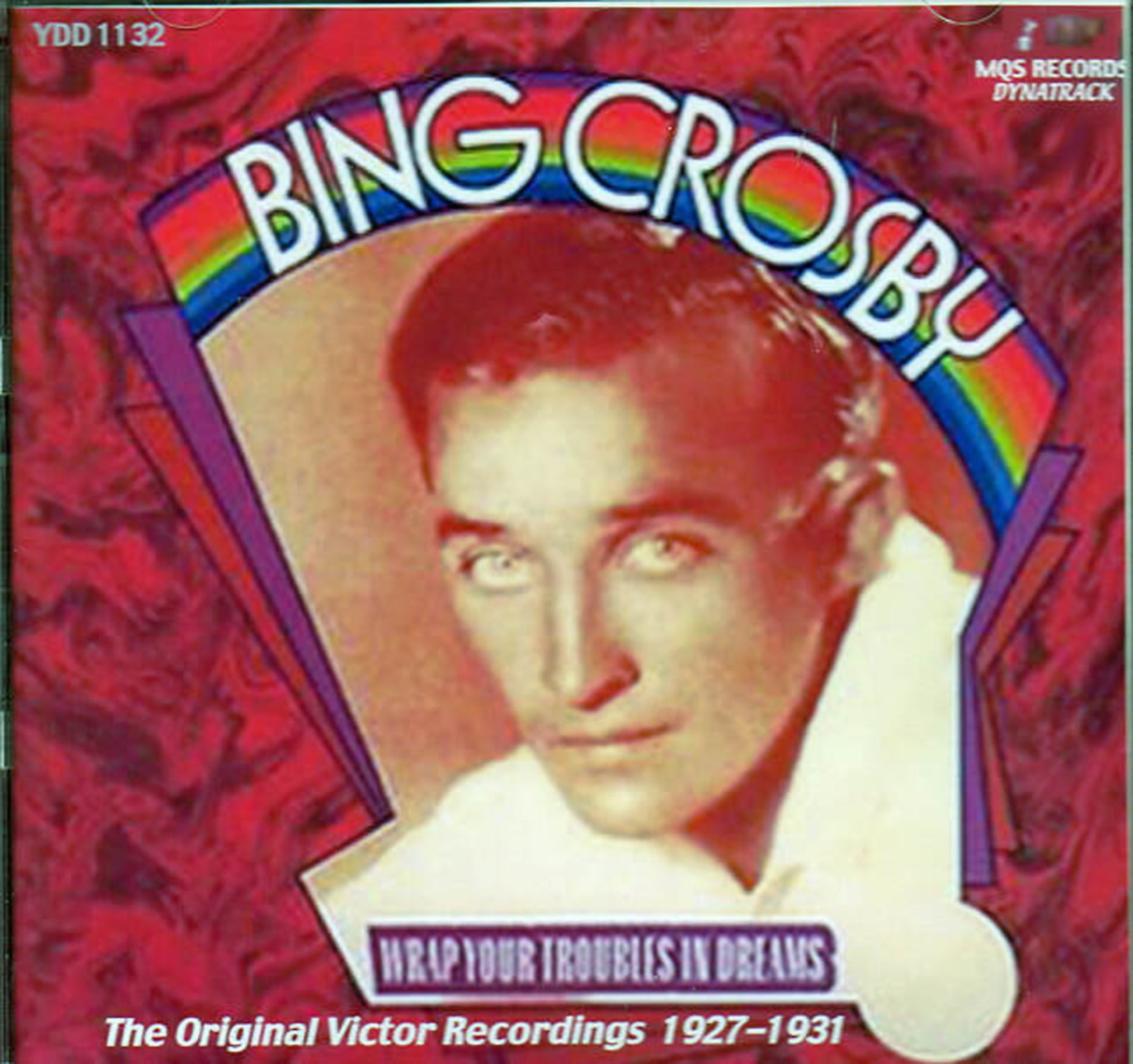
Exploring "I'll Be Seeing You": Bing Crosby’s Legacy in Classic Recordings
Bing Crosby’s 1944 recording of "I'll Be Seeing You" stands as a definitive cornerstone of 20th-century American music. Released during the height of World War II, Crosby’s version for Decca Records transformed a standard Broadway tune...
Bing Crosby’s 1944 recording of "I'll Be Seeing You" stands as a definitive cornerstone of 20th-century American music. Released during the height of World War II, Crosby’s version for Decca Records transformed a standard Broadway tune into a poignant anthem of hope and longing, eventually spending four weeks at number one on the Billboard charts.
Contents
The Origins and Resurgence of a Standard
To understand why Bing Crosby's "I'll Be Seeing You" is so revered in the catalog of classic recordings, one must first look at its humble beginnings. Written by Sammy Fain (music) and Irving Kahal (lyrics) in 1938, the song was originally featured in the Broadway musical Right This Way. The show was a short-lived production, closing after only fifteen performances, and for several years, the song remained largely forgotten by the general public.
However, as the global landscape shifted in the early 1940s, the lyrics took on a profound new meaning. The imagery of the song—the "small cafe," the "park across the way," and the "children’s carousel"—represented the everyday normalcy that millions of soldiers and their families were missing. When Bing Crosby entered the studio on February 17, 1944, he brought a specific sensitivity to the material that reflected the collective psyche of a nation at war.
As of 2026, music historians point to this specific era as the "Golden Age of the Crooner," a period where Crosby’s phrasing and microphone technique set the standard for every vocalist who followed. His ability to deliver the lyrics as if he were speaking directly to a loved one made this specific recording an enduring piece of cultural history.
The Technical Artistry of the Decca Recording
The 1944 Decca session remains a masterclass in mid-century recording technology. At the time, recordings were captured on wax masters, which allowed for little to no editing. This meant that the performance had to be perfect from start to finish. Crosby was backed by the John Scott Trotter Orchestra, his long-time collaborators, whose lush, understated arrangement provided the perfect canvas for Crosby’s baritone.
The Role of John Scott Trotter
John Scott Trotter’s arrangements were instrumental in defining the "Crosby Sound." In "I'll Be Seeing You," the orchestration avoids the bombast typical of earlier big band eras, opting instead for a legato string section and a gentle woodwind accompaniment. This arrangement forced the listener to focus on the narrative of the lyrics. Trotter’s use of space allowed Crosby’s natural resonance to fill the room, a hallmark of the classic recording style that modern digital remasters in 2026 strive to preserve.
Phrasing and Breath Control
Technically, Crosby’s performance on this track is noted for its "behind-the-beat" phrasing. He was one of the first vocalists to treat the microphone as a confidential instrument, allowing for a conversational tone that felt intimate even when played back on a loud phonograph. This approach allowed the emotional weight of "I'll Be Seeing You" to land with sincerity rather than theatricality.
Comparing Bing Crosby’s Different Versions
While the 1944 Decca studio version (Catalog No. 18595) is the most famous, Bing Crosby performed "I'll Be Seeing You" on numerous other occasions, each offering a slightly different perspective on the material. Collectors and audiophiles often seek out these variations to hear the evolution of his vocal style.
- The Kraft Music Hall Radio Transcriptions: Throughout 1944 and 1945, Crosby performed the song live on his radio program. These versions are often more spontaneous and slightly faster in tempo than the studio recording. They provide a "live" feel that captures the immediate energy of the home-front era.
- The 1954 Re-recording: For the musical autobiography project Bing: A Musical Autobiography, Crosby re-recorded many of his hits. The 1954 version of "I'll Be Seeing You" features a more mature voice, with a deeper resonance and a slightly more melancholic interpretation, reflecting a decade of reflection since the war ended.
- Television Performances: In the 1960s, Crosby performed the song on various television specials. These recordings are visually significant, showing his effortless stage presence, though the vocal arrangements were often updated to reflect contemporary "easy listening" styles.
| Release Type | Year | Label/Series | Notable Feature |
|---|---|---|---|
| Original 78 RPM Single | 1944 | Decca Records | The definitive #1 hit version; high historical value. |
| Radio Transcription | 1944 | Kraft Music Hall | Features live orchestral interaction and Crosby's banter. |
| LP Collection | 1954 | Bing: A Musical Autobiography | Hi-Fi re-recording with enhanced audio fidelity for the era. |
| Digital Remaster | 2020s | Bing Crosby Archive | Cleaned-up monophonic sound with reduced surface noise. |
| Vinyl Reissue | 2026 | Classic Standards Series | 180g heavyweight vinyl pressed from original analog tapes. |
The Cultural Significance of the "Soldier’s Song"
"I'll Be Seeing You" became more than just a popular recording; it became a psychological lifeline for those serving overseas. The genius of the song lies in its refusal to mention the war directly. Instead, it focuses on the mundane places where a person is missed.
By 2026, the song has been analyzed by cultural historians as a prime example of "nostalgia as a survival mechanism." Crosby, who spent much of the war performing for the troops in the USO, understood the emotional needs of his audience. When he sang, "I'll find you in the morning sun / And when the night is new," he wasn't just performing a lyric; he was validating the experience of millions. This emotional honesty is why Crosby’s version remains the standard against which all other covers—including those by Frank Sinatra, Billie Holiday, and Jimmy Durante—are measured.
Audio Preservation and Listening in 2026
For those looking to experience "I'll Be Seeing You" today, the quality of the recording depends heavily on the source material. The original 78 RPM records were made of shellac, a material prone to surface noise and "hiss."
Digital Restoration
In the current landscape of 2026, high-resolution digital audio has made it possible to hear Crosby with unprecedented clarity. The Bing Crosby Archive, in conjunction with specialist labels, has utilized AI-assisted de-mixing technology to separate his vocals from the background orchestra. This allows for a cleaner "center-channel" vocal presence while maintaining the warmth of the original 1944 analog signal.
Audiophile Recommendations
For the best listening experience, seekers of classic recordings should look for "FLAC" or "MQA" versions sourced from the original Decca masters. While streaming services offer convenience, many collectors still prefer the 180-gram vinyl reissues that preserve the monophonic depth of the original mono-mix. Listening in mono is crucial; the song was designed for a single-point audio source, and "re-channeled for stereo" versions often lose the cohesive warmth of the Trotter orchestra.
Key Considerations for Collectors
If you are hunting for physical copies of Crosby’s "I'll Be Seeing You," there are several factors to consider to ensure you are getting a "classic recording" rather than a low-quality budget reissue:
- Matrix Numbers: On original Decca 78s, look for the matrix numbers etched into the run-out groove. These indicate the specific take and pressing plant.
- Condition of Shellac: Shellac is brittle. Check for "graying" of the grooves, which indicates heavy play with a dull needle, resulting in permanent loss of high-frequency detail.
- Compilation Integrity: Many modern compilations "loudness war" the tracks, compressing the audio until the nuances of Crosby’s voice are flattened. Look for releases labeled "Original Mono Mix" or "Uncompressed."
Common Questions About Crosby's "I'll Be Seeing You"
Did Bing Crosby write "I'll Be Seeing You"?No, the song was composed by Sammy Fain with lyrics by Irving Kahal. Crosby was the artist who popularized it, but he did not have a hand in the songwriting process.
How many weeks did the song spend at number one?Bing Crosby’s version spent four consecutive weeks at the number one spot on the Billboard charts in 1944. It remained on the charts for a total of 24 weeks, making it one of the most successful songs of the WWII era.
Why is Crosby’s version considered the "definitive" recording?While other artists like Billie Holiday recorded it the same year, Crosby’s version was the most commercially successful and the most frequently played on the radio. His calm, reassuring vocal style was seen as a source of comfort for the public during the war, cementing its "definitive" status.
Is the 1944 version available in stereo?No. In 1944, all commercial recordings were monophonic. Any "stereo" versions you encounter are electronically processed "mock stereo," which usually degrades the audio quality. In 2026, purists strictly recommend the original mono versions for historical accuracy.
Practical Recommendation for Listeners
To truly appreciate "I'll Be Seeing You" in the context of Bing Crosby’s classic recordings, start by seeking out the "Decca Presents Bing Crosby" series of digital remasters. These are generally regarded as the most faithful to the original recordings. Once you are familiar with the studio version, look for the "Kraft Music Hall" radio broadcasts from July 1944 to hear how the song functioned as a real-time message to the troops. For the ultimate experience, a well-maintained original 78 RPM record played on a high-quality turntable with a dedicated mono cartridge offers a tonal richness that digital formats still struggle to perfectly replicate.
Image Gallery