CrossFit Saol: A Guide to the Community Built on Life
CrossFit Saol is a functional fitness facility founded on the core Irish Gaelic concept of saol, meaning "life." The gym prioritizes long-term health, scalable movement, and supportive group training to build real-world physical capaci...
CrossFit Saol is a functional fitness facility founded on the core Irish Gaelic concept of saol, meaning "life." The gym prioritizes long-term health, scalable movement, and supportive group training to build real-world physical capacity. Rather than focusing solely on elite competition, CrossFit Saol centers its programming on longevity, injury prevention, and everyday strength.
Contents
Understanding CrossFit Saol and the "Built on Life" Philosophy
The word saol (pronounced "seel" or "seh-ol") translates directly from Irish Gaelic to mean "life" or "living." In functional fitness, this term defines a movement philosophy that extends far beyond the gym floor. While traditional fitness centers often measure success purely through cosmetic metrics or max-effort competition PRs (personal records), CrossFit Saol approaches fitness as an investment in daily biological capability and long-term vitality.
- Longevity: Sustainable Work Capacity
- Mechanics: Safe Pattern Execution
- Scaling: Universal Accessibility
- Community: Accountability & Support
The core ethos rests on the premise that functional training must enhance your actual life outside the gym. Whether lifting heavy packages, playing with children, climbing stairs without joint pain, or maintaining independence into older adulthood, training should build work capacity across broad time and modal domains safely.
CrossFit Saol operationalizes this philosophy through three structural pillars:
- Movement Integrity Before Intensity: Technique and mechanics are strictly validated before adding weight or speed.
- Universal Scalability: Every workout can be modified to match an individual's current fitness level, age, or physical limitations without losing the intended stimulus.
- Community-Driven Accountability: Group classes operate on shared effort and mutual support, creating an environment where members stay consistent due to interpersonal connection.
Core Programs and Fitness Methodology
CrossFit Saol delivers structured group fitness, specialized skill development, and individual coaching using constant variation, functional movements, and high intensity relative to individual threshold limits.
1. Onboarding and Foundations
Before entering general group classes, all prospective members complete a dedicated onboarding program often called Foundations or On-Ramp. This program introduces fundamental movement patterns, ensures basic mobility, and establishes safety protocols.
- Fundamental Mechanics: Squat variations (air squat, front squat, overhead squat), presses (strict press, push press, jerk), and pulls (deadlift, clean, snatch).
- Gymnastics Basics: Ring rows, pull-ups, push-ups, hollow body positioning, and core stabilization.
- Conditioning Equipment: Proper setup and technique for rowers, Assault/Echo bikes, ski-ergs, and jump ropes.
- Safety Rules: How to bail safely during a failed lift, equipment storage, and communicating physical discomfort to coaches.
2. Daily Workouts of the Day (WODs)
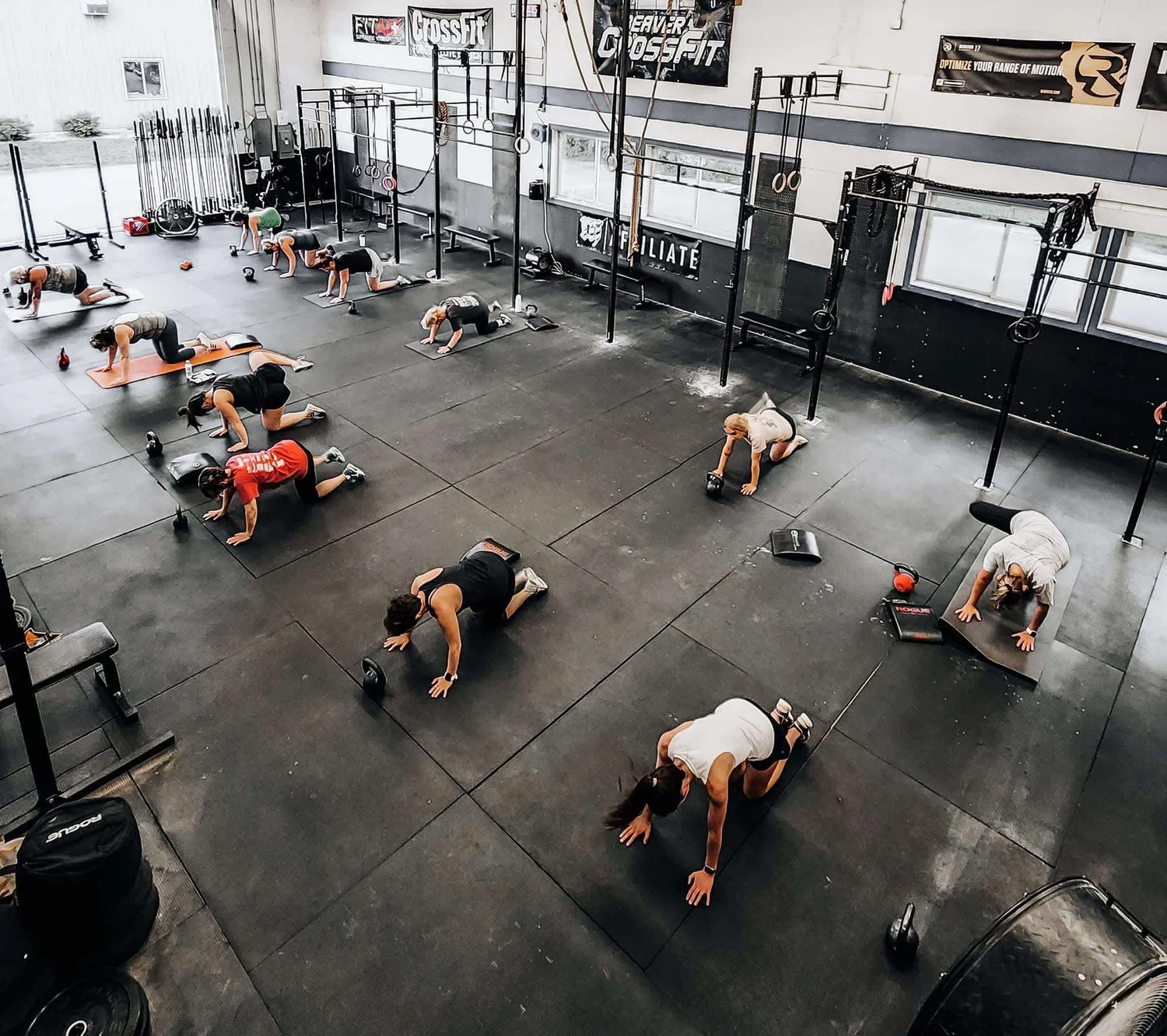
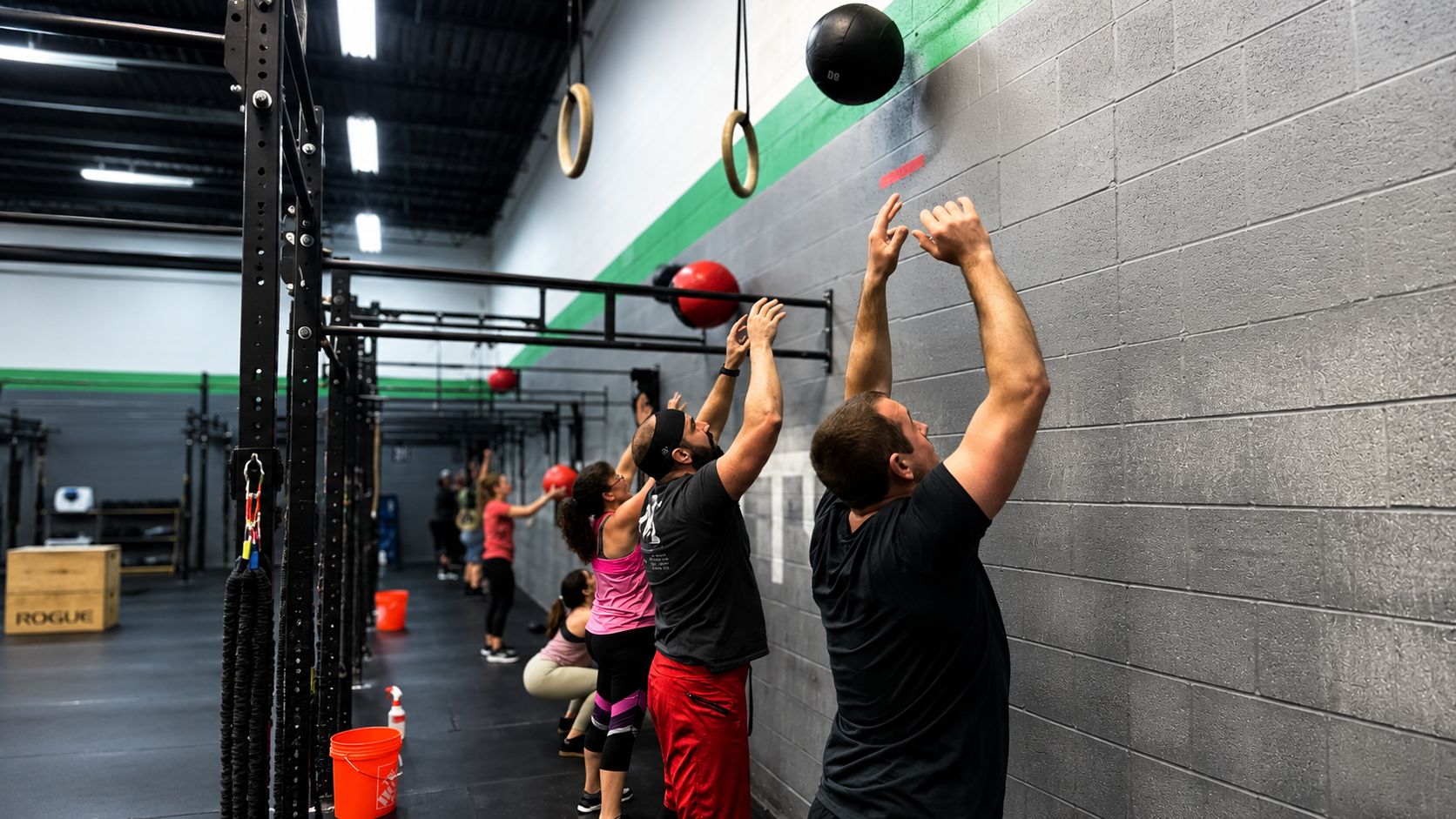
General group classes follow a structured 60-minute template designed to develop cardiovascular endurance, stamina, strength, flexibility, power, speed, coordination, agility, balance, and accuracy.
- Warm-Up (10–15 minutes): General dynamic movement followed by task-specific mobility to prime joints and raise core body temperature.
- Skill or Strength Component (15–20 minutes): Focused work on a primary lift (e.g., back squats, overhead presses, or snatch work) or a technical gymnastics skill (e.g., muscle-up drills, handstand walks).
- Conditioning WOD (15–20 minutes): High-energy metabolic conditioning combining mono-structural activities (running, rowing), weightlifting, and gymnastics.
- Cool-Down & Mobility (5–10 minutes): Guided static stretching, soft-tissue work, and heart-rate recovery down-regulation.
Typical 60-Minute WOD Flow:
- Dynamic Warm-Up (10–15 Min)
- Skill / Strength (15–20 Min)
- Conditioning WOD (15–20 Min)
- Cool-Down (5–10 Min)
3. Specialty Classes and Personal Coaching
For members seeking targeted development, facilities following the Saol framework offer specialized tracks:
- Olympic Weightlifting: Focused instruction on the technical execution of the snatch and clean & jerk.
- Endurance & Engine: Longer, lower-intensity aerobic capacity building designed to maximize cardiovascular health.
- Longevity & Masters Training: Workouts specifically modified for older adults, focusing on joint health, balance, and bone density preservation.
- One-on-One Personal Training: Custom programs designed for injury rehabilitation, specialized sports performance, or individual preference.
Service and Fitness Experience Comparison
Choosing where to invest your training time and financial resources depends on your goals, accountability needs, and budget. The table below compares the functional community model of CrossFit Saol with traditional commercial gyms and home fitness setups.
| Feature / Metric | CrossFit Saol (Functional Community) | Traditional Commercial Gym | Home Gym / Solo App Fitness |
|---|---|---|---|
| Primary Coaching Format | Small-group instruction with direct coach supervision | Unsupervised solo workouts or costly 1-on-1 PT | Unsupervised self-directed or pre-recorded video |
| Program Design | Expertly planned daily variation (Strength + Conditioning) | Self-programmed or generic routines | Pre-set generic app templates |
| Scalability & Modifications | Real-time movement adjustments tailored to individual injuries | User must self-modify based on personal knowledge | Self-directed; limited expert guidance |
| Community & Accountability | High; small class cohorts, social support, attendance tracking | Low to Non-existent; solitary user experience | Low; requires high internal self-motivation |
| Equipment & Variety | Barbells, bumper plates, rigs, rings, kettlebells, rowers | Selectorized machines, cardio rows, dumbbell racks | Limited to purchased equipment footprint |
| Focus on Longevity & Health | High; intentional focus on functional movement quality | Variable; frequently focused on aesthetics/hypertrophy | Variable; depends entirely on individual program choice |
| Average Monthly Investment | Higher ($150 – $250+ / month) | Low to Moderate ($10 – $70 / month) | One-time equipment cost or low app subscription ($10–$30/mo) |
Step-by-Step Onboarding Process
Joining CrossFit Saol follows a clear, step-by-step pathway to ensure prospective members enter the program safely and build consistent habits.
- Step 1: Free Consultation & Assessment
- Step 2: Complete Onboarding / Foundations
- Step 3: Integration into Group Classes
- Step 4: Periodic Re-Assessment & Goal Setting
Step 1: Free Consultation and Assessment
The journey begins with an initial sit-down consultation with a head coach. During this session, the coach reviews medical history, previous movement experience, current physical limitations, and personal health goals. A basic movement assessment (evaluating air squats, overhead range of motion, and hinge mechanics) is conducted to identify any movement dysfunctions.
Step 2: Complete the Foundations Program
New athletes complete a series of introductory sessions (typically 3 to 6 sessions held individually or in micro-groups). Coaches break down key barbell, gymnastics, and conditioning exercises, ensuring proper execution of movement patterns before adding external loads.
Step 3: Transition to Group Classes
After graduating from Foundations, members begin attending standard group classes. Coaches maintain active overwatch, reviewing scaled options prior to every WOD and adjusting weights or movement range based on the member’s current progression.
Step 4: Periodic Re-Assessment and Progress Tracking
Members use digital tracking apps (such as Wodify or SugarWOD) to log completed workouts, weights used, and benchmarks achieved. Periodic check-ins with coaching staff allow members to refine personal goals, review nutritional strategies, and update training parameters.
Essential Gear and Preparation Requirements
While CrossFit emphasizes movement quality over specialized gear, having appropriate equipment improves safety, comfort, and performance.
Recommended Gym Gear
| Recommended Gear | Details |
|---|---|
| Functional Footwear | Flat, rigid-soled |
| Athletic Clothing | Breathable, flexible |
| Hydration Bottle | 24–32 oz capacity |
| Optional Accessories | Grips, sleeves, belt |
- Functional Fitness Shoes: Flat, rigid soles with lateral support (e.g., Nike Metcons, Reebok Nanos, RAD Trainers, or TYR L-1 Lifters) provide a stable base for heavy lifting compared to cushioned running shoes.
- Hand Protection: Gymnastic grips (leather or synthetic) protect palms from friction tears during high-volume pull-ups and toes-to-bar routines.
- Neoprene Knee Sleeves: 5mm or 7mm knee sleeves help keep joint complex tissues warm, improving proprioception during heavy squats.
- Weightlifting Belt: A 4-inch nylon or leather belt aids intra-abdominal pressure bracing during heavy deadlifts or clean pulls.
- Hydration & Recovery: Bring a durable water bottle (24–32 oz) and consider electrolyte supplementation during hot weather or high-intensity conditioning.
Optimizing Safety, Injury Prevention, and Recovery
Maintaining consistency requires prioritizing recovery and proper movement mechanics over raw intensity.
1. The Priority Spectrum: Mechanics -> Consistency -> Intensity
CrossFit methodology follows a strict hierarchy of progression:
- Mechanics: You must perform the movement correctly and safely repeatedly.
- Consistency: You must display correct mechanics consistently across multiple reps, sets, and workout days.
- Intensity: Only after mechanics and consistency are proven should you increase weight, speed, or volume.
- Mechanics: Proper execution of movement patterns
- Consistency: Demonstrated across reps, sets, and workouts
- Intensity: Applied ONLY after mechanics & consistency are met
2. Nutrition and Hydration Fundamentals
To support high-intensity functional training, fuel your body with balanced macronutrients. A baseline nutritional approach focuses on whole foods:
- Protein: Lean meats, poultry, fish, eggs, and plant-based proteins (approx. 0.7–1.0 grams per pound of body weight) to support muscle repair.
- Carbohydrates: Complex sources like sweet potatoes, oats, rice, and fresh fruit to replenish glycogen stores.
- Fats: Healthy fats from avocados, nuts, seeds, and olive oil for hormone regulation and sustained energy.
- Hydration: Consume half your body weight in fluid ounces of water daily, adding electrolytes during intense training periods.
3. Active Recovery and Sleep
Muscular and neural adaptation occurs during rest, not during the workout itself.
- Sleep: Aim for 7 to 9 hours of quality sleep per night to maximize human growth hormone (HGH) release and neural recovery.
- Active Recovery Days: Incorporate light movement, such as 30-minute walks, easy swimming, or low-intensity cycling, to promote blood flow without adding central nervous system stress.
- Mobility Work: Use foam rollers, massage guns, and targeted dynamic stretching daily to maintain healthy joint range of motion.
Frequently Asked Questions
What does "Saol" mean, and why is it used in CrossFit?
"Saol" is the Irish Gaelic word for "life." The name emphasizes that fitness should support long-term health, vitality, and functional independence outside the gym, rather than focusing purely on competition metrics or aesthetic appearance.
Do I need to be in shape before joining CrossFit Saol?
No. Every movement, workout, and intensity level is scalable to match your current baseline physical fitness. The onboarding program introduces movements safely, allowing beginner, intermediate, and advanced athletes to train side-by-side at their own relative intensity.
How does scaling work during group fitness classes?
Coaches modify movements based on individual mobility, strength, and injury history. For instance, if a workout prescribes pull-ups, a coach may scale the exercise to ring rows or band-assisted pull-ups while retaining the exact cardiorespiratory stimulus.
How often should a beginner attend classes each week?
Beginners typically start with 3 classes per week on a non-consecutive schedule (e.g., Monday, Wednesday, Friday) to allow adequate tissue repair and central nervous system recovery. As physical adaptation occurs, attendance can increase to 4 or 5 sessions per week.
What should I bring to my first class or onboarding session?
Wear comfortable athletic apparel, flat training shoes, and bring a water bottle and a sweat towel. All required equipment—such as barbells, dumbbells, and bands—is provided on-site by the facility.
Actionable Next Steps
If you are evaluating CrossFit Saol or considering joining a life-focused functional fitness gym, follow these practical steps:
- Schedule an In-Person Consultation: Visit the official facility website or contact the head coach to book a low-pressure initial assessment.
- Review Medical and Physical Background: List any past surgeries, chronic injuries, or specific movement limitations to discuss during your initial interview.
- Commit to the Onboarding Curriculum: Complete all Foundations sessions consistently without rushing into high-intensity group classes before mastering fundamental mechanics.
- Log Workouts and Track Progress: Use a dedicated training app to track weights, scaling options, and recovery metrics, focusing on personal progress rather than comparing yourself to others.
- Establish Rest and Recovery Routines: Schedule rest days, prioritize baseline nutrition, and target at least 7 hours of nightly sleep from day one.
Image Gallery